
[Project Energy] The battle of the multi port chargers!

royfrosty

High Supremacy Member
Joined
Jul 23, 2009
Messages
27,342
Reaction score
1,159
[Project Energy] The battle of multi port chargers (Updated with Nexus 6P Type A to Type C Cable)

Project Energy

Ok after much consideration, i decided to embark on a very tedious multi port chargers testing project. Reason for this project is to check which type of chargers charge different device differently. And also hopefully help some decision making for any users out there looking for a multi port charger.

Why is it tedious? Cause it involves many days of testing on multiple devices on multiple chargers and furthermore the wait of every device hitting near deplete battery level and testing it on all 3 chargers.

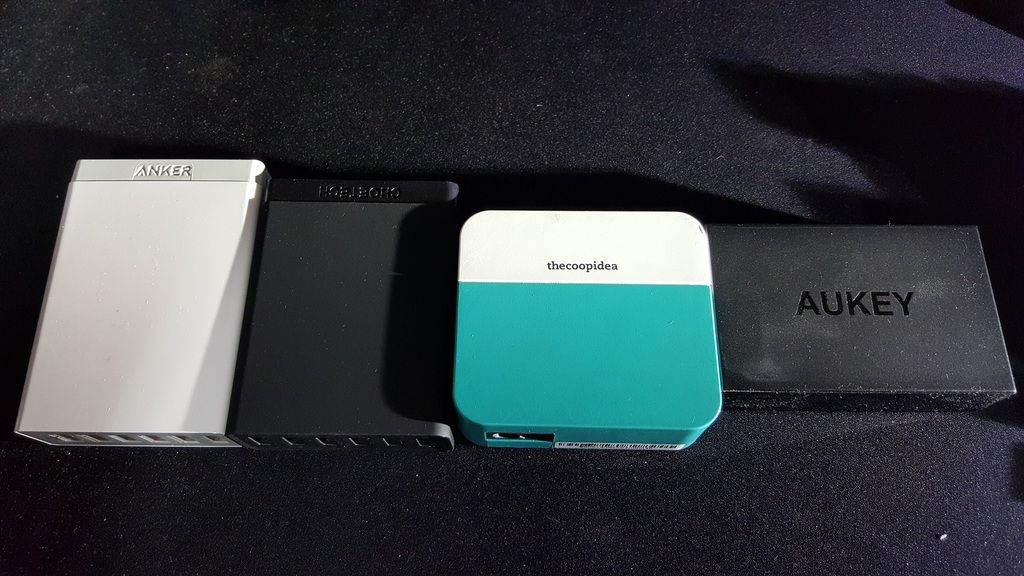
Here are the multi port chargers contender.

From the picture left to right:

1. Anker 6 Ports 60w
2. Choetech 6 Ports 60w with Qualcomm Quick Charge 2.0
3. Thecoopidea 5 Ports 55w
4. Aukey 5 Ports 53w with Qualcomm Quick Charge 2.0


More on each individual multi ports chargers


Anker 6 Ports 60w

Anker 6 Ports configuration is pretty standard supplying all ports at 2.4A max each. Using an IQ device detection, it is their terms for detecting any device connected to it and supply the fastest charging capabilities to each devices. However at 60w, this charger will have an issue if you managed to saturate all ports with 2.1A rated devices. Such as 6 iPad Minis or iPad Air etc. For example based on single port testing of 1 iPad Mini 4 took in at 2.03A @ 5.08V gives you 10.31W, if you gonna plug in all 6 ports it will only give you 60W in total. A small sum of wattage will be lost. And hence if the unit is too hot, it will throttle down the performance, and it will not charge at its full potential.


Thecoopidea

Thecoopidea is one of the best 5 Port Charger which is rated as it is. Despite the configuration is slightly different from the rest, it gives a total of 53w max output. It is still very "powerful" why? This charger has 4 Ports rated at 2.4A each out of all the 4 Ports, 1 of the Port is Smart USB charging, and lastly 1 Port 1A. Judging from just 1 Port charging the iPad Mini 4, it takes in 2.15A at 5.10V on Smart Port, and 2.05A at 5.12V on regular 2.4A Ports. This will give you an effective 10.96W + (10.49W * 3) + 5.16W = 47.60W. Leaving you a little more head room before hitting max 53w.


Choetech 6 Ports with Qualcomm Quick Charge 2.0

This charger is really under powered only if you use 2 quick charge 2.0 device to charge at the same time, and not only that, the rest of the 4 ports will not output the maximum capable output. Reason being that in theory, the 2 qc 2.0 ports max output is 36W. For some reason, the other time i tested my Aukey Powerbank which charges 1A @ 12v and Samsung S6 Edge at 1.6A at 8.89V which already hit 26.22W out of 36w that both qc 2.0 ports can handle. Note that it even throttles once in awhile when it is far too hot. And when you have 2 qc 2.0 enabled device charging, and you include a couple of 2A rated device on the remaining ports, it will be boiling hot, not only it will throttle to keep it cool, you will only have less that 9w per normal 2.4A ports. Which will effectively slow down in charging.

Aukey 5 Ports with Qualcomm Quick Charge 2.0

This charger is the smallest among the rest of the charger above. Since this comes with just 1 qc 2.0 port, the total output of this charger is 53W, since it has a maximum of 18W for 1 qc port. Leaving the rest of the 4 ports at 8.75W each, which in turns not really a powerful charger afterall. However if you are just charging mobile devices such as the S6 edge which only takes in a max of 14W, you are left with a rough 9.75W-10W region per port. Which is reasonable and also able to charge any other devices normally if you did not exceed the 14W qc port. And after testing for a few days, i did noticed that this charger is somewhat the most aesthetically inclined product against the rest of the multi ports charger. And lastly it is not as hot as the Choetech while charging. In fact it sits somewhere in between the Thecoopidea and Anker in terms of heat.


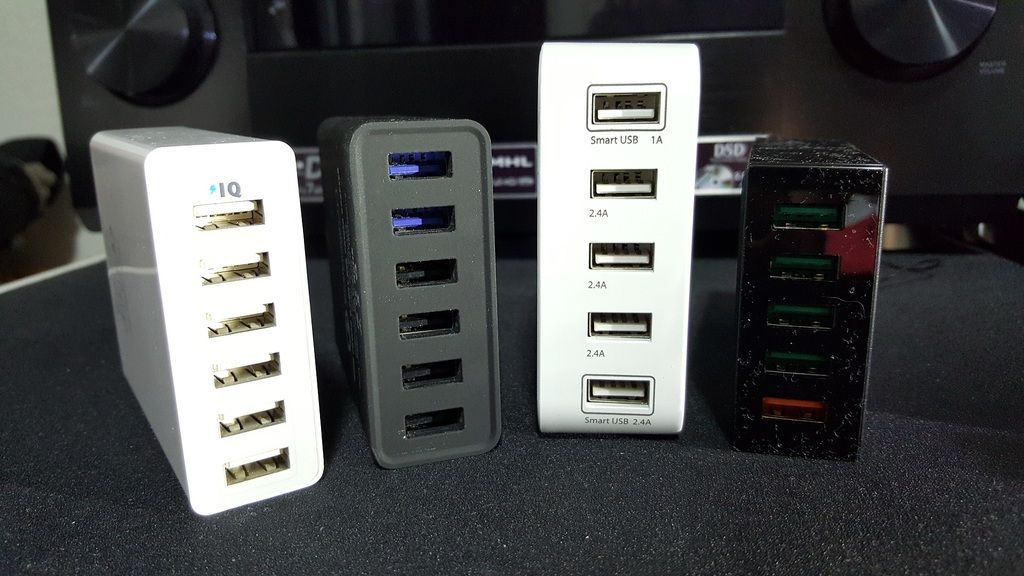
Overall outlook of the ports on all multi ports chargers


Testing Analogy

The devices that will be tested:

1. Samsung S6 Edge
2. Xiaomi mi4i
3. Iphone 6 Plus
4. Ipad Mini 4
5. Aukey 15000mAh powerbank with Qualcomm Certified Fast Charge 2.0
6. Samsung Note 3
7. Samsung Tab Pro 8.4
8. Samsung Note 5
9. Xiaomi 16000mAh powerbank
10. Huawei Nexus 6P (Coming Soon)

For 7, 8 & 9 will depends on my the other half permission.

For every device, once it hits below 5% battery level. It will take in the most power needed. Once it hits below 5% i will plug the device with every multi port chargers and measure it using the Drok Mini USB doctor that is capable to measure anything from 5v-12v and 0.01A- 2.4A.

The total power taken by the device will be shown in the "P" stated on the Drok display. Which is actually P=I*V. This will give the most acurate power drawn from the multi port.

The results will be posted in screenshots here, and eventually tabulate into graphs or excel form.

Also for Quick Charge 2.0 aka Adaptive charging for Samsung terms enabled devices such as Samsung S6 Edge, Aukey 15000mAh powerbank and note 5, there will be a seperated column on collected results.

So lets take off the first device.

Samsung Galaxy S6 Edge

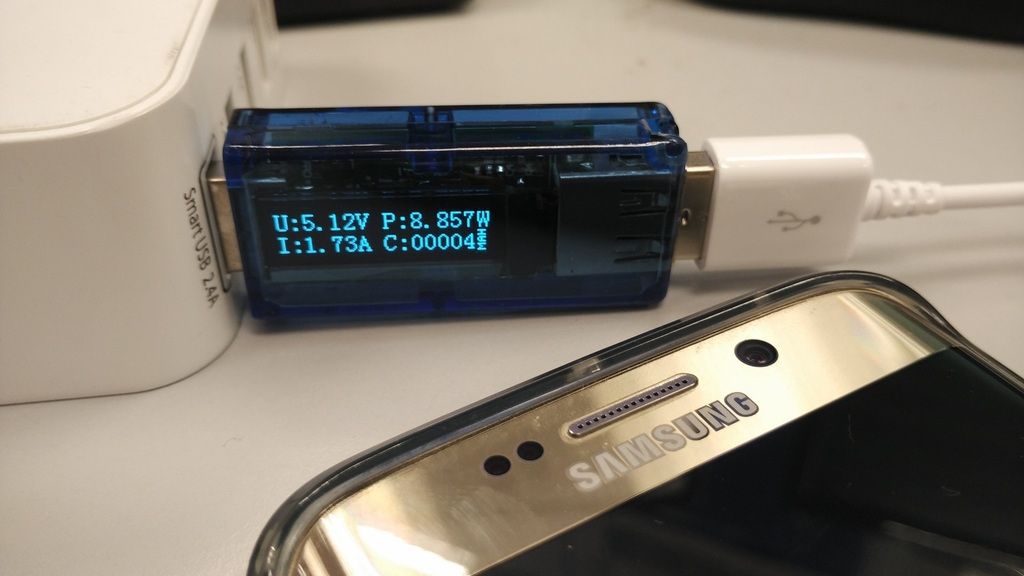
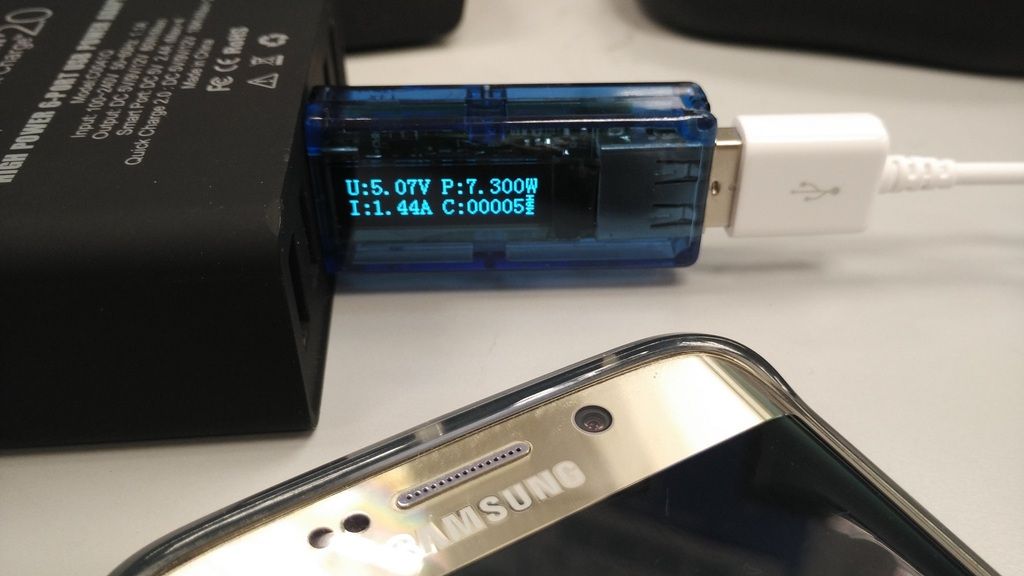
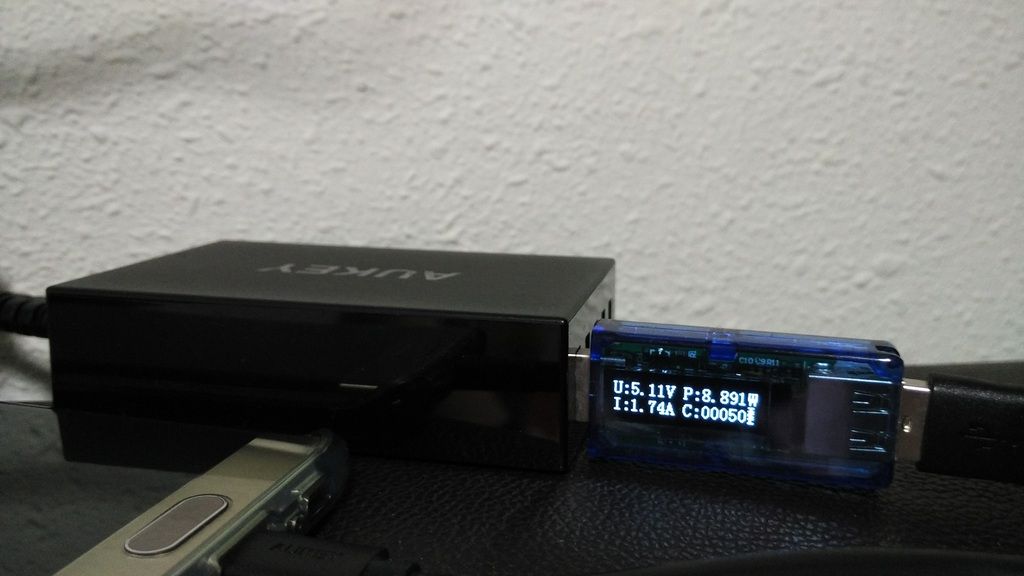
For the start, the Aukey took a lead with a total of 8.891W, followed by a tiny difference from Thecoopidea which managed to output a total of 8.857W, followed by Anker 8.364W, and the last would be Choetech at 7.3W, BUT however, since the phone has Samsung Adaptive Charging capabilities, both the Choetech QC 2.0 and the Aukey QC 2.0 will lead in fast charging. Results shown that the Aukey took the crown at 14.43W, and the runner up goes to Choetech which doesn't look shabby at 14.3W.

Anker


Thecoopidea


Choetech


Choetech QC 2.0


Aukey
 
Last edited:

royfrosty

High Supremacy Member
Joined
Jul 23, 2009
Messages
27,342
Reaction score
1,159
Continue....

Aukey QC 2.0


Aukey 15000mAh Powerbank with Qualcomm qc 2.0

This Aukey Powerbank is one of my favorite powerbank that i have ever used. It is able to accept QC 2.0 using a QC 2.0 certified charger. Also this powerbank is able to charge any QC 2.0 enabled devices with its QC 2.0 port.

All right for its charging capabilities, Thecoopidea and Choetech are somewhat drawing about the same wattage of 10.42W and 10.41W respectively. Unfortunately Anker did slightly below than the other two charger and drawing 10.34W. Which is still good. But then again, since it is a QC 2.0 enabled powerbank, the Choetech takes the crown again with its QC 2.0 ports delivering a massive 11.82W.

Anker


Thecoopidea


Choetech


Choetech qc 2.0

Note: I have reuploaded the measurement again for this test. The last time the wattage was not tallied against the current and voltages, it was not able to show 12V. But after testing it on Aukey multi ports, the Drok was able to display 12V, so i suspected that there was some error calculation with the Choetech qc ports. So to confirm the correct reading again, i did a re-measurement again just to make sure there is no error. However it is true that the Choetech somehow did not managed to hit 12V. So here is a new score for Choetech qc and yet there was a small error reading on wattage.


Aukey


Aukey QC 2.0


Apple iPhone 6 Plus

The iPhone 6 Plus may seems like a big phone with big power charging capabilities, but end up it isn't. Thecoopidea came in first as it deliver a solid 8.567W, Edging out the Anker, Aukey and Choetech. Aukey came in second but still a respectable 8.448W. Anker came in third with 7.991W, whereby the last will go to Choetech at 7.843W.

Anker


Continue.....
 
Last edited:

royfrosty

High Supremacy Member
Joined
Jul 23, 2009
Messages
27,342
Reaction score
1,159
Continue......

Thecoopidea


Choetech


Aukey


Xiaomi Mi4i

Xiaomi mi4i actually has QC 1.0. Which suppose to charge a max of 2A at 5v in theory. However it seems like it is unable to draw that much. Hence day to day whenever I'm charging this massive 3000mAh battery, it took longer than usual. And funny thing, Choetech QC 2.0 is suppose to be backwards compatibility with QC 1.0, however it doesn't seems to work, in fact it is even worse to charge on the Choetech QC 2.0 ports, it only managed to deliver 6.718w. Results shows that all 3 charges more or less the same, but Aukey managed to pull the highest among the rest at 7.27W. Thecoopidea managed to output a total of 7.205w, followed by Anker then Choetech at 7.176w and 7.134w respectively.


Anker


Thecoopidea


Choetech


Choetech QC 2.0


Aukey

 
Last edited:

royfrosty

High Supremacy Member
Joined
Jul 23, 2009
Messages
27,342
Reaction score
1,159
Apple iPad Mini 4

The iPad Mini 4 is one of the few devices able to take in a solid 2A. However the Choetech delivers below 2A, and hence a total power of 9.828W. Both the Anker and Thecoopidea charges the iPad Mini 4 at the same wattage of 10.31W. However the Aukey took the crown by outputting a total wattage of 10.40W.


Anker


Thecoopidea


Choetech


Aukey


Samsung Galaxy Note 3

The Note 3 is pretty minor difference among all 3 chargers. But yet again Thecoopedia takes the crown with a total of 8.618W, followed by Aukey at 8.601W. Anker took the 3rd place this time round charging at 8.568W and lastly the Choetech at 8.484W.

Anker


Thecoopidea


Choetech


Aukey

 
Last edited:

royfrosty

High Supremacy Member
Joined
Jul 23, 2009
Messages
27,342
Reaction score
1,159
Xiaomi 16000mAh Powerbank

Xiaomi 16000mAh powerbank is the only one that does not charge well with multi port chargers. Across all four multi ports chargers, it was all charging differently. Thecoopidea emerged the highest among the rest, it charges the powerbank at 1.7A 5.12V which gives a total 8.704W, followed by Aukey 8.635W, then Anker 7.94W and lastly the Choetech at 7.474W. To confirmed my suspicion, i took a standard Samsung 2.1A charger to charge the powerbank, and yes it did charge at 5.56V 2.04A which gives a total of 11.34W. It is far much faster than any of the multi ports charger.


Anker


Thecoopidea


Choetech


Aukey


Standard 2.1A Samsung Note 3 Charger


Samsung Galaxy Note 5

Once again, we have another QC 2.0 device, the Note 5 charges differently from different chargers being used, this time round Anker managed to pull 8.772W emerging as the fastest normal charging capability. Thecoopidea and Aukey charges both the same rate at 8.533W. And Choetech came in the last place at 8.231W. But then again, since it has Samsungs Adaptive Charge features, the Aukey QC 2.0 ports managed to emerged first with a massive 14.56W. And second came in the Choetech QC 2.0 ports managed to output a total of 14.49W. Really looking not too shabby after all.

Anker


Thecoopidea


Choetech


Continue....
 
Last edited:

royfrosty

High Supremacy Member
Joined
Jul 23, 2009
Messages
27,342
Reaction score
1,159
Continue....


Choetech QC 2.0


Aukey


Aukey QC 2.0


Samsung Tab Pro 8.4 LTE

Samsung Tab Pro 8.4 LTE seems like one of the few tablets that won't take in high ampere. And yet again Thecoopidea and the Aukey were on par with each other and takes the lead with 9.249w, followed by Anker at 9.231w. Lastly the Choetech which came in a shy 9.122w.

Anker


Thecoopidea


Choetech


Aukey

 
Last edited:

royfrosty

High Supremacy Member
Joined
Jul 23, 2009
Messages
27,342
Reaction score
1,159
Huawei Nexus 6P

The Nexus 6P comes with a all new charging standards, USB Type C. This test is more of a USB Type A to USB Type C charging capabilities. Before i continue, read the notes CAREFULLY.

Note #1: USB Type C to Type C new charging standards can handle 5V 3A in theory. But however, USB Type A was not able to handle that kind of current amphere which will only handle 2.4A at max. So this test is more on how much can the current gen worth of multi ports chargers able to detect properly and charge accordingly.

Note #2: There is no way that Type A to Type C is able to pull more than 2.4A off the wall. It will not and it should not be. If it is so, one would risk burning their chargers. Do take note that a COMPLIANT USB Type A to Type C has a 56ohm resistors to let the device detect as there is a legacy charging method. Cables like One Plus Two that was provided does not have any form of resistors in it. And using it on the Nexus 6P with any chargers will risk frying either the phone or the charger.

Note #3: So long as there is a converter in any form to convert any USB Type C to any form of Legacy Micro USB or USB Type A, it will not pull 5V 3A for rapid charging the Nexus 6P. And this type of converter MUST be compliant to have a resistors. If not, there is a risk frying of either the charger or the device itself.

With that said, i would like to thank lionelfoo for providing 2 different Type A to Type C cable from Belkin. One of it is the USB 3.1 standards and the other is USB 2.0. Note that there is no difference in charging standards of both. But the USB 3.1 standards allow users to transfer stuffs at a much faster rate to their devices than the USB 2.0. Also note that the USB 3.1 has a much thicker wire gauge and also a much more sturdier USB head as compared to the USB 2.0.


All right, lets move on to the results. Legacy charging Type A to Type C Belkin cables. For all the multi port chargers, it is a mix bag of results. The multi ports charger are not able to push more than 1.5A. But there are times when there is a detection of 2.2A. But it is rare, one have to keep reinsert in order to get 2.2A, which i'm very sure you will spoil the battery very soon if one keep doing an reinsert. But most of the time, these chargers will charge the Nexus 6P at 1.5A.

Just to make sure, i have used a Samsung traditional 2.1A charger. And yes i can conclude that legacy charging methods will only give you 1.5A. Nevertheless the Samsung 2.1A charger is able to provide a total of 8.31W!


As for the rest of the multi ports chargers, first came in the Aukey at 7.731W. Thecoopidea and Anker came in neck to neck at 7.716W and 7.071W respectively. And the last place goes to Choetech 7.640W.


Anker


Thecoopidea


Choetech


Aukey 7.731


Overall Performance

Overall from the performance chart, when it comes to normal charging, Thecoopidea takes the lead with most devices plugged into it. It is still a worthy charger that managed to edge out all the other chargers.

Anker seems to be trailing slightly behind Thecoopidea. Usually in some scenarios it went close to 1W difference. Which would affect charging time to differ about 5-10mins differences against Thecoopidea.

The last one that comes in is Choetech. This charger charges worse among the above two. It was the slowest, and if you compare it against Thecoopidea, it can differ between 10mins-15mins more which is bad, really bad.

But the table turn around when the Choetech QC 2.0 is connected to a Quick Charge 2.0 devices or Samsung Adaptive Charge. Which totally slams with strong output power. And charges much much faster than regular charging. For that we can expect devices to charge 40mins shorter in time.


Final Verdict


Thecoopidea

Now lets say you have any kind of devices that just want the best multi port charger out there, Thecoopidea will be at the top of the list. It charges faster in most scenarios. It is not that hot when it is on full load. But of cause, place it somewhere in a cooling environment would be a good idea.

However the pricing of Thecoopidea seems a little too expensive to some. Its SRP is a jaw drop $99. However there are some places that are able to get it at $89 such as lazada. And earlier this year, during National day SingTel Hello store was selling at $50 for SG50 model. And of cause it comes with 1 year warranty.

But nevertheless, it is still one of the most powerful multi port charger one could buy.

Aesthetically, Thecoopidea is interesting. It has many "ang kongs" to choose from. Various colors, hello kitty, etc.

For that I will rate this charger at a solid 9/10.


Anker

Anker is pretty much trailing behind Thecoopidea, which is also underpowered if you were to connect all iPad or any 2.1A rated device at near deplete level. But nevertheless it is still a very capable charger to charge any kinds of devices thrown to it. It is totally not hot when it is on full load. In fact, it is even cooler than Thecoopidea. So this charging unit could easily be fitted to any place or table etc.

The Anker 6 ports have garner many users to buy it because of the pricing. At just $40 which is less than half the price of Thecoopidea. Which is really good pricing for its performance. Which is why many people will buy Anker as compared to the other two brands. Also it comes with a 1 year warranty.

Aesthetically, this device is just boring Jane. It is made of thick strong ABS plastic. Which has a glossy surface on it, and being that, it is a huge fingerprint magnet.

For that I would give it a 8.5/10.


Aukey

Aukey is a serious contender against the Anker and thecoopidea. At certain devices, the Aukey surpass a little bit more than thecoopidea. While a certain devices it was sits right in between Anker and thecoopidea. Overall it is a 5 Ports charger with a single 18W Quick Charge 2.0 ports. Its overall rating is at 53W. It is still underpowered ONLY if you put in a Quick Charge devices that pulls up to 18W. Else you will be fine to do with 9.5W per port if you are charging a Quick Charge 2.0 enabled devices that does not exceed 15W.

Aesthetically, this charger is the best looking multi port charger among the rest. There is no wrong in this department. It is smaller than the rest, and also a perfect travel companion.

This charge is not available in Singapore, and there is only 2 ways to go about it. One is via Amazon and one is via Qoo10. Qoo10 will set you around $44. At this price range including shipping. It is slightly more expensive than the Anker, BUT what you get is a Quick Charge 2.0 Port with performance slightly better than Anker and slightly on par with thecoopidea. Which is great and of cause i would highly recommend this charger for anyone whom have Quick Charge 2.0 enabled devices.

I would rate this charger at 9/10.


Choetech

Now this charger is unique. Its a love hate relationship you will have on this charger. Its performance is really sub par charger, at the same time a great charger. What the heck am I talking? Well basically, if you have a lot of Quick Charge 2.0 enabled device, you will love the Choetech for what it is. But however, there is only 2 ports that allows Quick Charge. But however, it is not recommended to charge 2 Quick Charge 2.0 devices together as it is freaking hot, and when I mean hot, it is REALLY HOT. Its so hot that the charger would throttle in charging. Which in turns again wont be good for your device battery. So please place this device in a cooling area when charging using Quick Charge 2.0.

If you have a lot of non Quick Charge 2.0 devices. Then you would probably hate this charger to its core. In most of the results, it came in worse than the Anker and Thecoopidea charging capabilities. It does not deliver the most power to the devices that it detects. Hence it fails to charge up quickly. But it is much noticeably cooler if you touch it.

Pricing wise, this charger could only be bought in Qoo10 at this time of review. And it is still expensive at $53.80 inclusive of shipping fees.

Aesthetically, this device is made of thin cheap plastic with rubbery surface. But nevertheless due to its rubbery surface, it is good to put it almost on any surface without worrying that it will slipped off the table etc.

So for that I rate this charger at 6/10.


Thoughts and Conclusion

Every charger charges every devices differently. To some it can charge device A faster to some it can charge device B faster. So it really boils down to what you are looking for in a charger.

Of cause do not buy cheap multi port charger and expect it to work like how it suppose to be as compared to the rest of the charger here. Why?

Cause multi port chargers are not something that one should skimp on buying. It is a small PSU, which converts AC to DC. And it is really dangerous to buy something that is too good to be true. So a general thumb rule, usually good ones will be somewhere around $40-$100. It has a processing chip inside to determine what device is connected to it and deliver the best charging option to the devices.

At times, this chip will fail to detect the fastest charging output for the devices. So for that, you will need to re-sit the cable again. During my test, there are times where each charger may fail to be detected and no charging was done. So do expect this to happen when you are charging your devices. It is normal, so do not be alarm by it.

Overall if you have a lot of droid devices with Quick Charge 2.0 you would love the Choetech. As it is probably one of the best Quick Charge charger you can buy. For me, I would choose the Choetech or the Aukey among the rest, as it is the only charger that charges my S6 Edge and Aukey Powerbank faster.

But to some of you, you are bought over with pricing, then the Anker will entice you better. But do note that for Apple devices, the Anker will not be a good buy as it fails quite a number of detections.

As for Thecoopidea. It is probably an all rounder charger. And I would highly recommend this charger to any Apple users. Cause Apple devices are very sensitive to charging output. If it is unable to output the correct current and voltages, the device will reject it and won't charge it. But Thecoopidea have no issues with that, and it delivers as much power as the original stock charger that came with the Apple devices. So there should not be any issues with charging Apple devices not unless one uses a cheap cable to charge.

The newest contender the Aukey, is a serious multi charging port. In fact i find it as it is one of the strongest challenger against the Anker and Thecoopidea. The only draw back is that it has only 1 QC 2.0 ports. But IF it has 2 QC 2.0 ports like the Choetech has is gonna throttle if it is too hot. So i would say the Aukey is more of a practical charger than the Choetech has to offer.

As the results, at all times, please use the original cables that comes with the devices. Do not use any form of 3rd party cable that are not known, and it will affect the charging speed accordingly.

However there are some 3rd party cables that you can look at and tested proven that it will charge the same as stock cables.

- Anker
- Choetech
- Aukey

This are good ones and do not affect charging performance.

All right, this will come to an end to Project Energy. A very big thank you to all those whom take their time to read and give their support. Do PM me or discuss anything freely in this thread if you have any questions.

Also I would like to thank everybody whom is involved in this project. Mainly my other half, my dad, my mum whom help out. This project will not be successful without them.
 
Last edited:

commach

Great Supremacy Member
Joined
Apr 11, 2001
Messages
53,997
Reaction score
18
Looking forward for the results, one hell of a comprehensive reviews.

Thank you for the effort. :)
 

royfrosty

High Supremacy Member
Joined
Jul 23, 2009
Messages
27,342
Reaction score
1,159
pls use the factory given cable for the test

No issues. There is 2 ways that it can be done. I can standardise only Anker Cables only or like as per mentioned standard factory cables.

So far all my Anker Cables charges the same way as how the stock cables provided by factory default.

So for the record, since to be equal here, I will pull out all my stock cables out instead for this project.
 

Op_Valkyrie

Arch-Supremacy Member
Joined
Nov 9, 2009
Messages
13,167
Reaction score
1,309
Roy Kor Kor, next week give me live review on this can? :D

+1 for great effort
 

runeruin

Banned
Joined
Feb 22, 2008
Messages
6,507
Reaction score
1
No issues. There is 2 ways that it can be done. I can standardise only Anker Cables only or like as per mentioned standard factory cables.

So far all my Anker Cables charges the same way as how the stock cables provided by factory default.

So for the record, since to be equal here, I will pull out all my stock cables out instead for this project.

sometimes the cable and device just buey gam leh :s13:
maybe its just xiaomi phone issues..i charge using other cable but still slightly slower than original one
best to use original cable for test to find out which charger suits the device better
 

royfrosty

High Supremacy Member
Joined
Jul 23, 2009
Messages
27,342
Reaction score
1,159
For those wondering how does the Choetech throttle in terms of charging 2 qc 2.0 enabled devices? Here is an example.


It's freaking hot to charge an s6 edge together with the Aukey powerbank. It's total output power of 26w. And it's scalding hot, hence the power output for both devices keeps going up and down.

Here is it at start...


And just 10mins.


royfrosty

High Supremacy Member
Joined
Jul 23, 2009
Messages
27,342
Reaction score
1,159
Alright I'm halfway through. 5/9 devices tested.

Left with Note 3, iPad mini 4, Tab pro 8.4 and last Xiaomi 16000mAh powerbank.
 
Important Forum Advisory Note
This forum is moderated by volunteer moderators who will react only to members' feedback on posts. Moderators are not employees or representatives of HWZ. Forum members and moderators are responsible for their own posts.

Please refer to our Community Guidelines and Standards, Terms of Service and Member T&Cs for more information.
Top