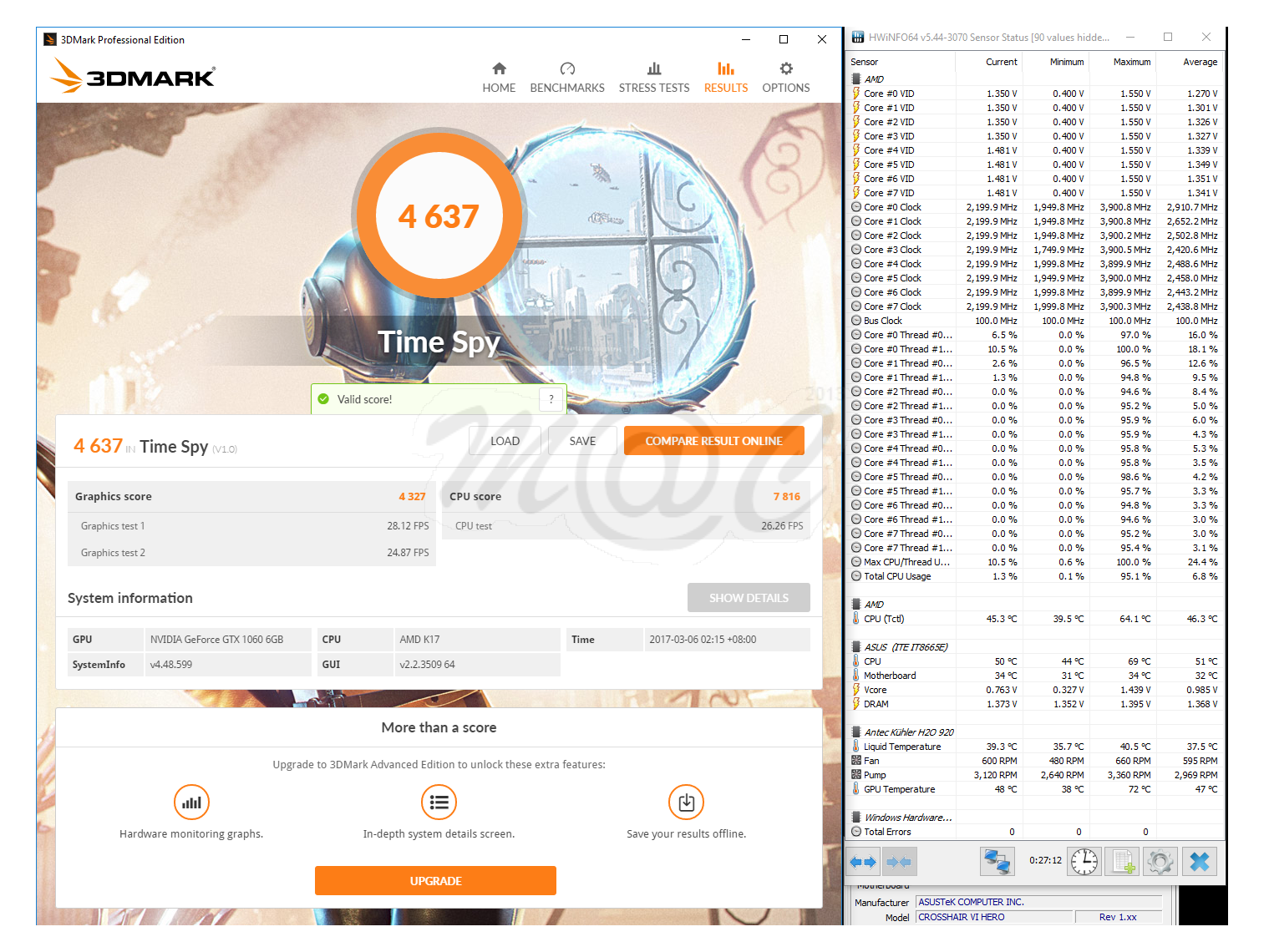
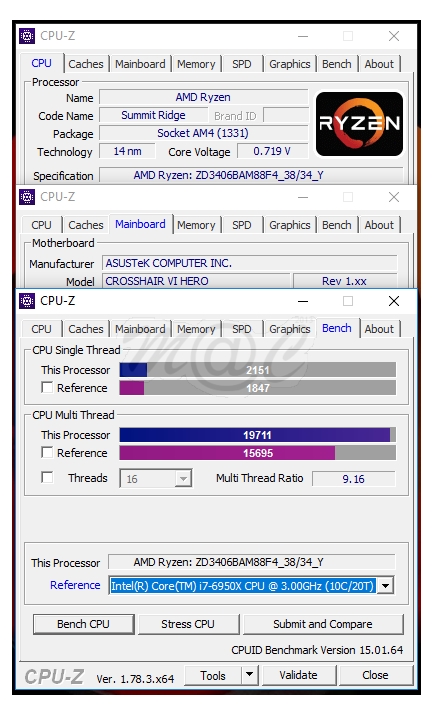
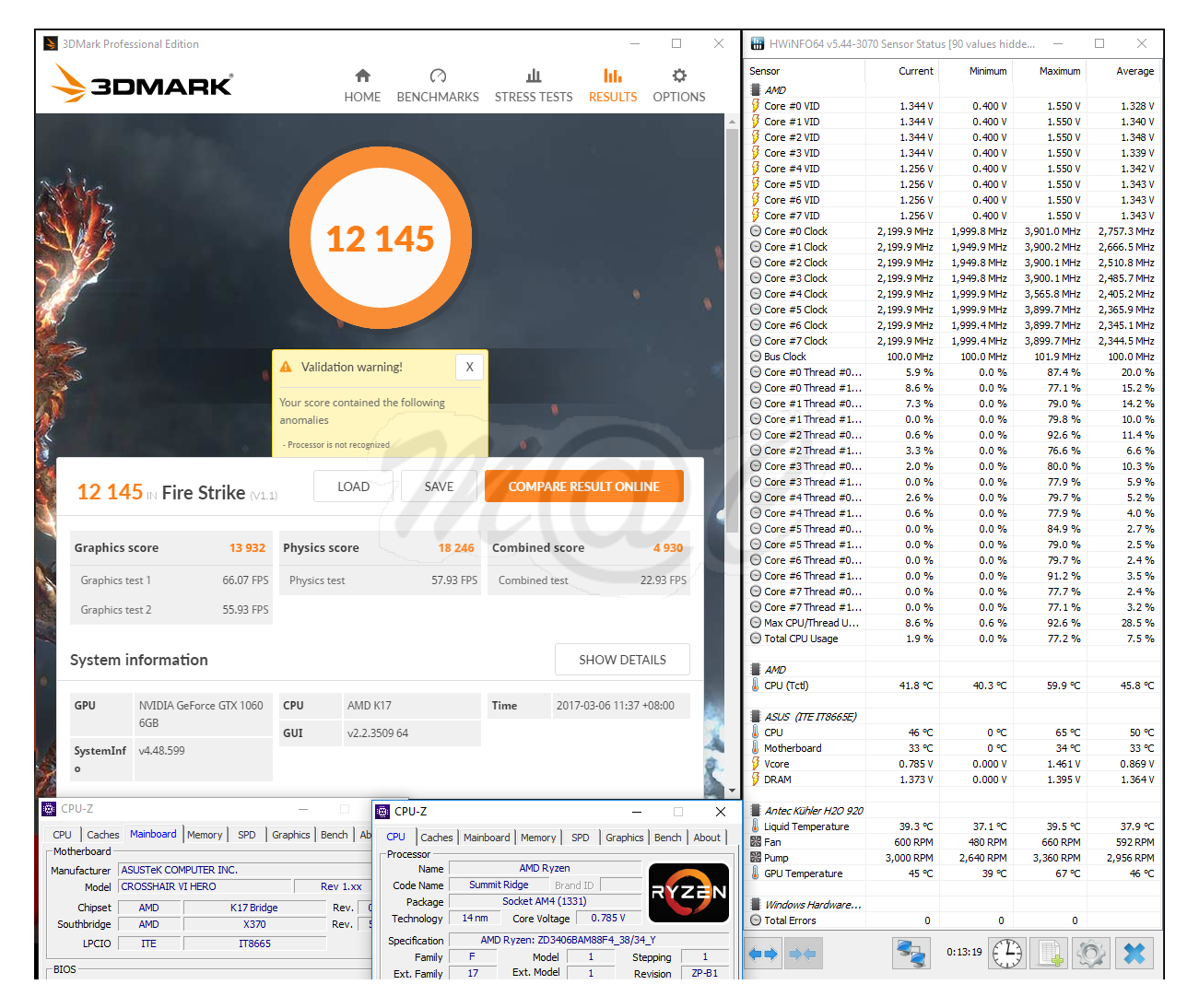
Alright, so I've spent the past few days trying to plot out the frequency/voltage/power consumption curve for my R7 1700. Basically what I did was set the speeds to 100 MHz intervals, and then adjusted the voltage until I managed to get it Prime stable for at least 2 hours*. Once I got the stable settings locked in, I ran at each speed for 2 minutes and recorded the actual voltage and CPU package power reported by HWInfo (average over the two minute period). I also got the total system power consumption by using a Kill-A-Watt and taking the number that was displayed most often (the total power fluctuated slightly, but this should be accurate within a few watts).
*3950 MHz may not be completely stable. Based on the power/heat being produced I didn't want to run P95 for many hours at this setting when it was obvious that I wasn't going to run at this speed.
Results:
Conclusions
- At least with this chip, going to 3.5 GHz on all cores is "free" from an energy efficiency standpoint. After that point the amount of power required for each additional 100 MHz starts to ramp up.
- I'd say 3.7 GHz is basically a "no brainer". There's a slight loss of efficiency compared to stock, but it's pretty small. The chip still runs cool and this preserves your single threaded boost level.
- 3.8 GHz is borderline: energy efficiency is worse and overall power consumption is higher, but they're still not unreasonable. Whether it's worth it depends on whether you favor efficiency or performance.
- At 3.9 GHz you see a pretty large jump in power consumption and heat produced. It takes 40 watts more and pretty high voltage for a rather marginal increase in frequency.
- After 3.9 GHz the chip starts to "go critical" and it's not even remotely worth it to push further.
Obviously there will be difference in other chips, with some running faster or slower at a given voltage, but assuming this general voltage curve is accurate for the architecture, I feel like going beyond about 1.3 volts isn't worth it unless you don't care about power consumption at all. The increase in performance you get is too small compared to the extra power and heat required.
I hope some of you may find this of interest. I ordered a couple of 1800X when B&H Photo had them on sale, so I may try to plot the voltage scaling for them next to see how they stack up.