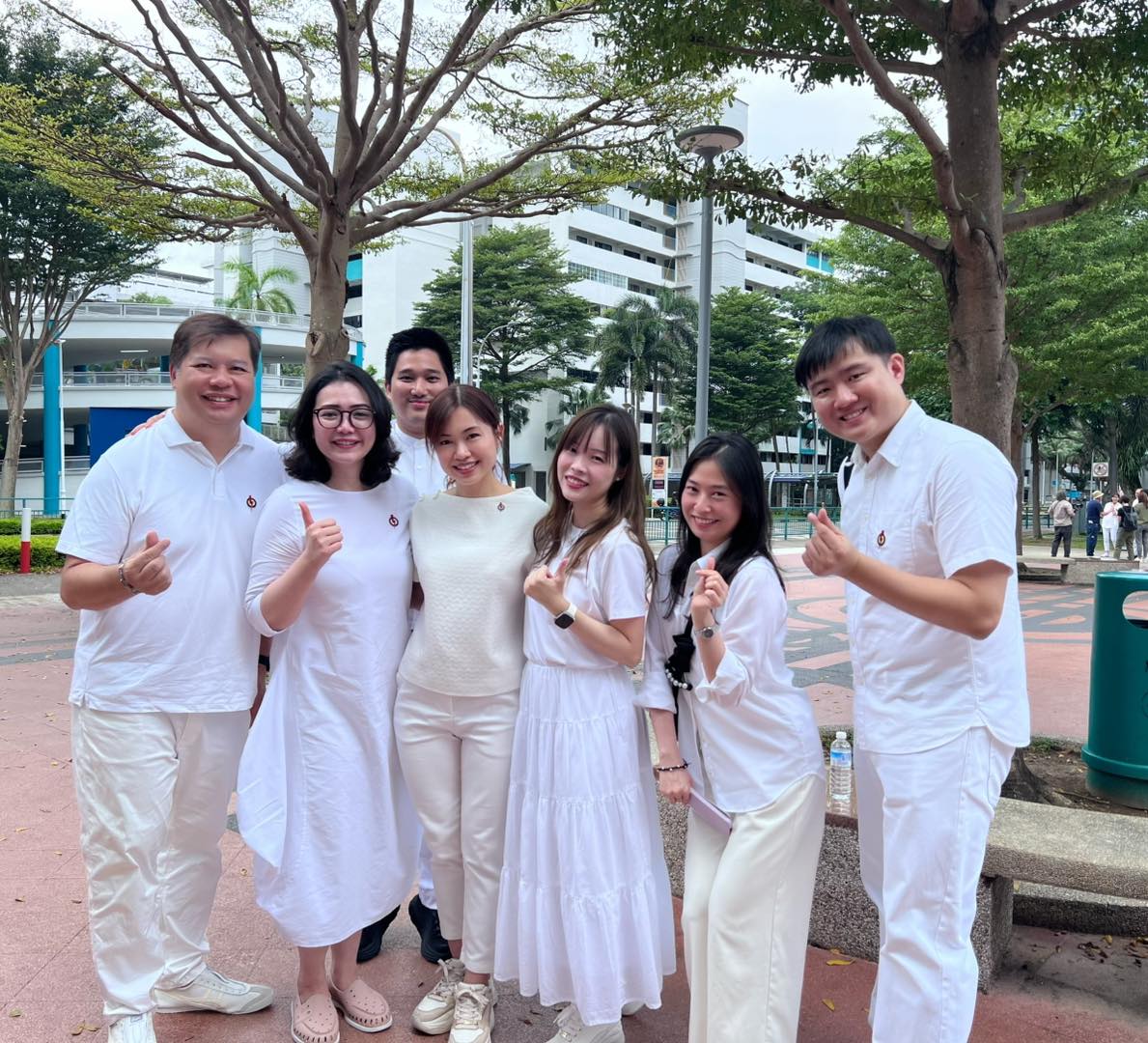
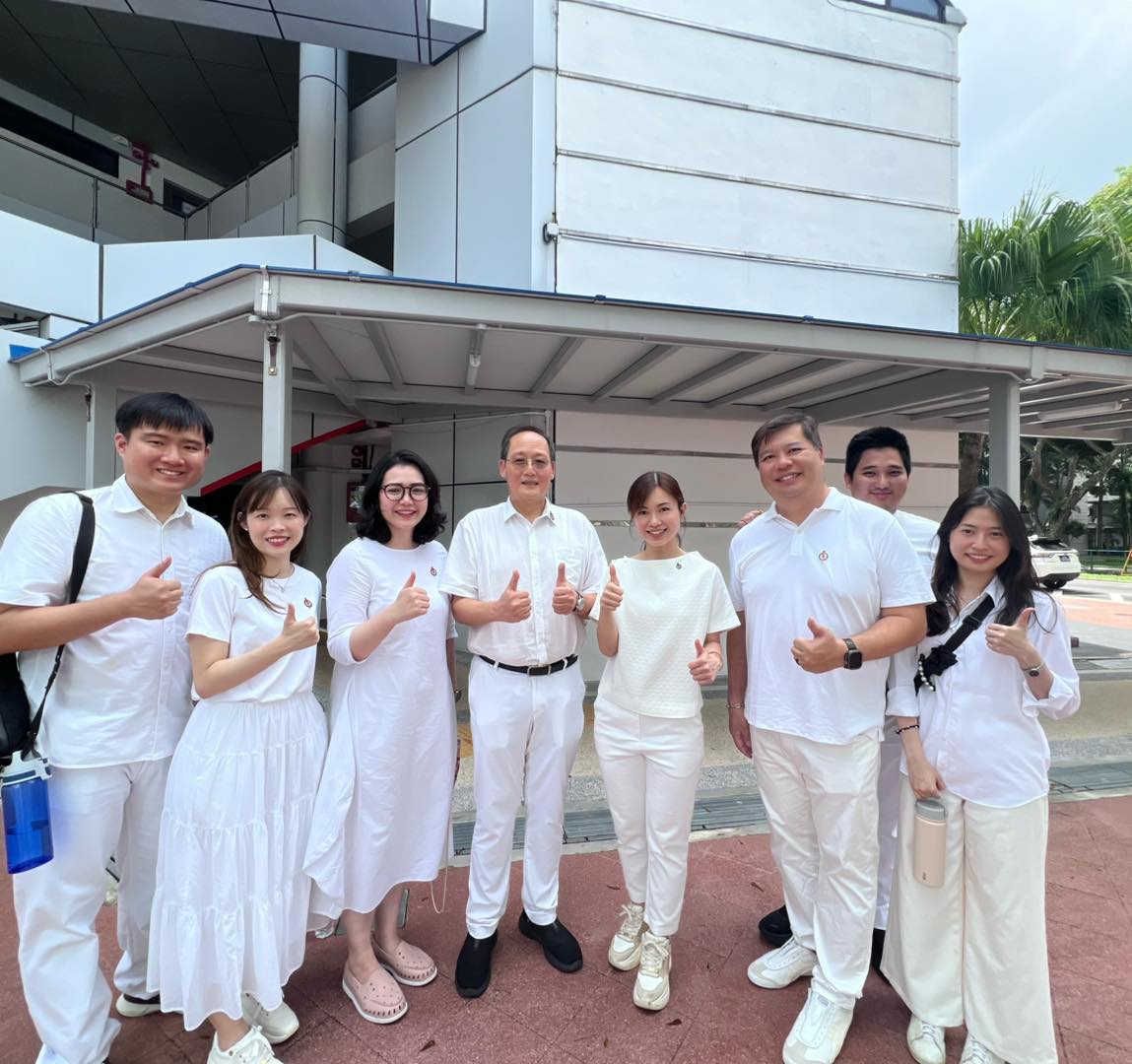
[CONSOLIDATED] Singapore General Election 2025 Discussion Thread

Top 4 agendas?

  • Immigration influx

    Votes: 469 54.8%
  • Cost of living/inflation

    Votes: 708 82.7%
  • Housing

    Votes: 384 44.9%
  • Lack of opposition in parliament

    Votes: 269 31.4%
  • Uncontested policy making by gahmen

    Votes: 343 40.1%
  • Lack of clear distinction between citizens/PR/permit workers

    Votes: 231 27.0%
  • Widening income gap

    Votes: 263 30.7%
  • Unemployment/Lack of opportunities for citizens

    Votes: 393 45.9%

  • Total voters
    856

AlmightyOnes

High Supremacy Member
Joined
Sep 16, 2010
Messages
25,687
Reaction score
14,503
flmqJ0X.jpeg

PlNAwGS.png

8lD7BvM.gif

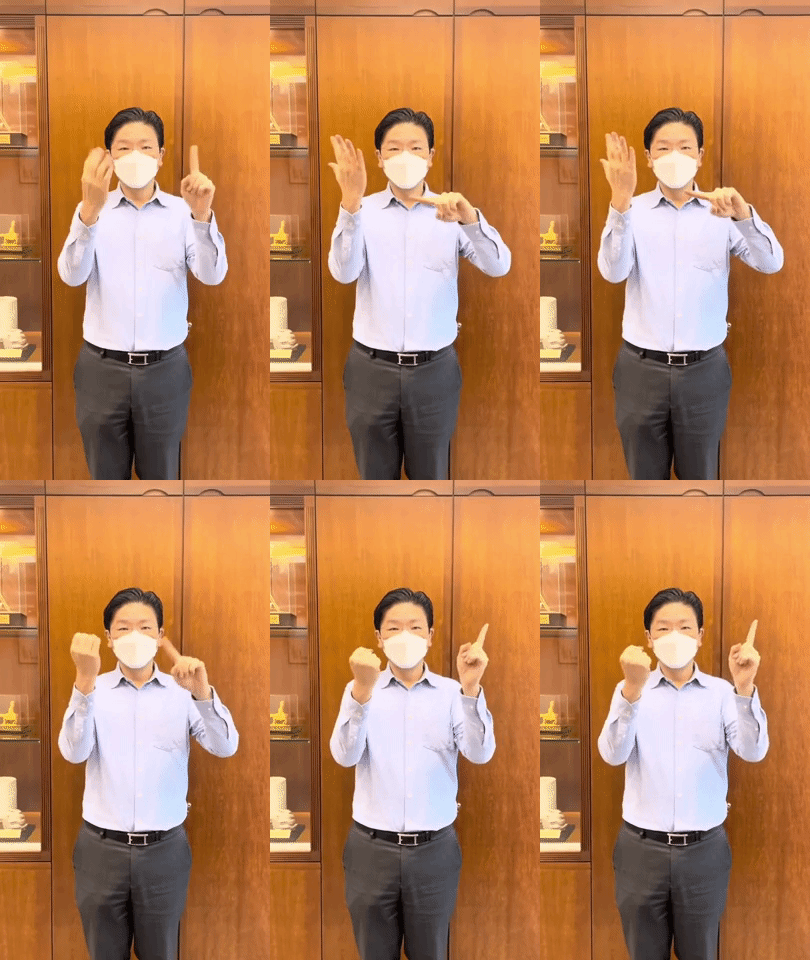
lawrence-wong-doing-pop-tiktok-trend-gif.gif

And everyone else in the party
 

sbv7230

Master Member
Joined
Dec 31, 2000
Messages
2,990
Reaction score
1,755
Why evey 4 years zhun zhun all suddenly become like local man in the street vibes ?
Just like local sinkies 🤭
 

yperic

Greater Supremacy Member
Joined
Jan 14, 2003
Messages
88,978
Reaction score
34,826

Ex-non-profit CEO Hazlina Abdul Halim spotted at PAP walkabout in Marine Parade​

She is the former chief executive officer of Make-A-Wish Singapore.

image


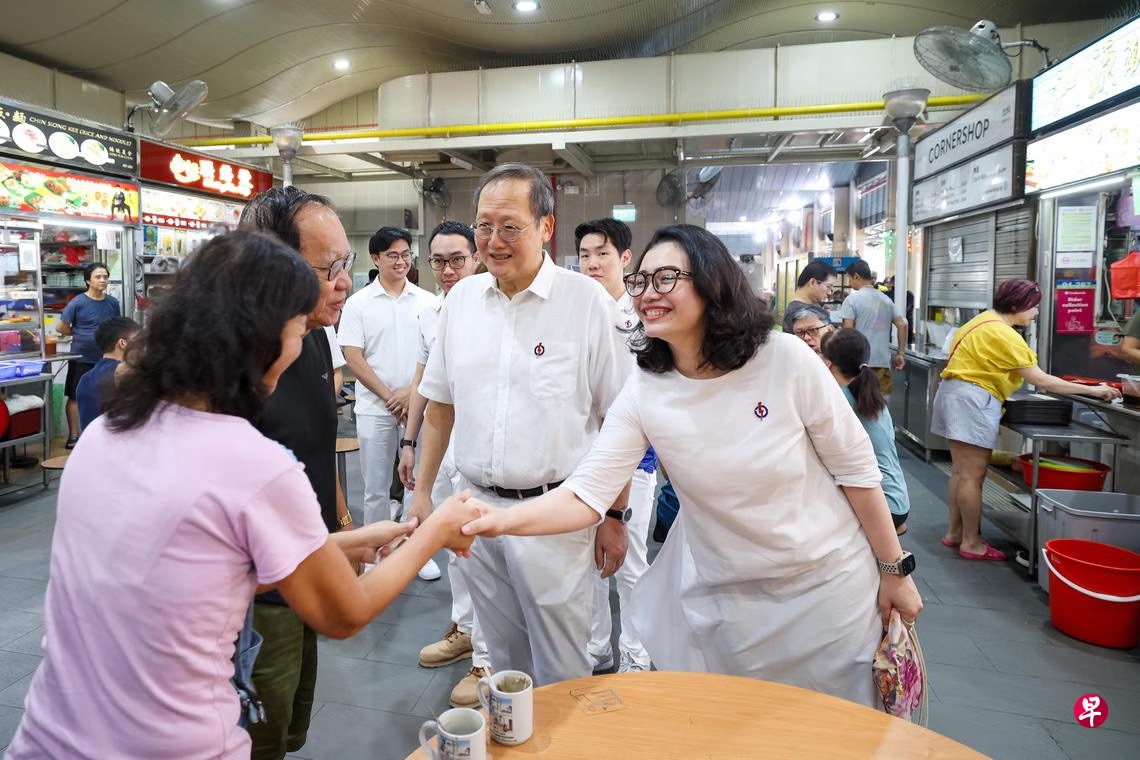
Hazlina Abdul Halim, the former chief executive officer (CEO) of non-profit organisation Make-A-Wish Singapore, was spotted going on a walkabout at block 50A Marine Terrace Market on Mar. 22, 2025.

Hazlina, 40, was seen engaging with residents alongside ministers and Members of Parliament (MPs) from the People's Action Party.

Engage-residents.jpeg
Photo via Lianhe Zaobao

Her appearance further fueled rumours that she might be fielded as a candidate for General Election (GE) 2025, which must be held by November.

The market, which fell under Marine Parade Group Representation Constituency (GRC) in GE2020, will be part of the new Marine Parade-Braddell Heights GRC in GE2025, following electoral boundaries changes.

Previously, Hazlina was seen helping MP for MacPherson Single-Member Constituency (SMC) Tin Pei Ling at a meet-the-people session, reported Lianhe Zaobao.

485140447_1204196311075997_3975417813762364810_n.jpg
Photo via Tin Pei Ling/Facebook

485059502_1204196217742673_2274251058659469085_n.jpg

Photo via Tin Pei Ling/Facebook

Seen alongside ministers, MPs & potential candidate​

According to a Facebook post published by Tin, besides PAP volunteers, a total of seven people, including Hazlina and Tin, went on the walkabout on Saturday morning.

Four of them are MPs for Marine Parade GRC, namely Minister for Manpower Tan See Leng, Minister for Culture, Community, and Youth Edwin Tong, Mayor of South East district Fahmi Aliman, and Speaker of Parliament Seah Kian Peng.

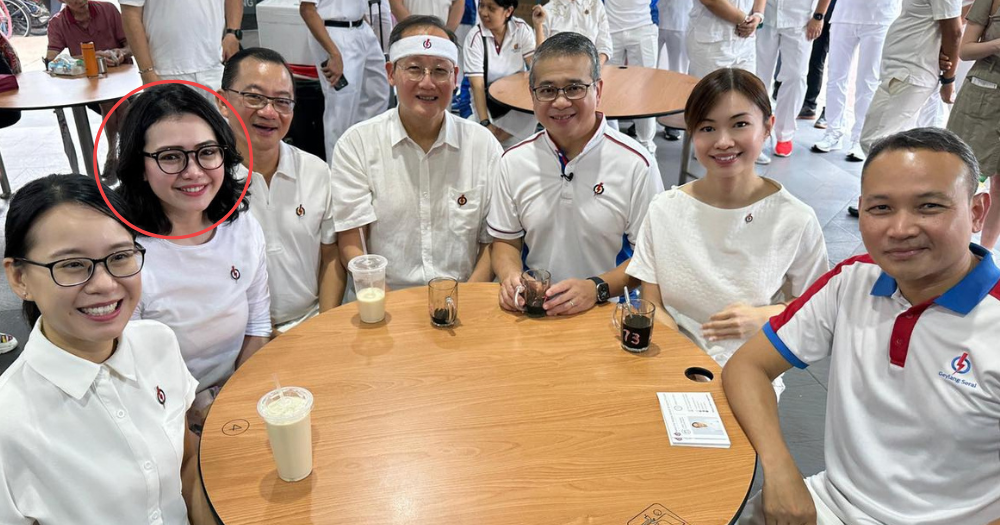
Neuroscientist and physiotherapist Choo Pei Ling, another possible candidate for GE2025, was also present at the walkabout.

According to The Straits Times, Tan, Tong, and Tin offered their endorsement for Hazlina and Choo during the walkabout, even though Tan said the line-up for the Marine Parade-Braddell Heights GRC has not finalised yet.


Why is Tin at the walkabout?​

In her post caption, Tin wrote that she joined the group at the walkabout because MacPherson SMC will be merged into Marine Parade-Braddell Heights GRC in GE2025.

Despite the change, she promised to "remain dedicated" to MacPherson and its residents.

Without stating explicitly whether she would be running in the new ward, Tin thanked the rest of the group for their "warm welcome".

Who is Hazlina?​

According to her LinkedIn profile, Hazlina graduated from the University of Western Australia with a bachelor's degree in communication studies and political science.

She also has a master's degree in film and television from Australia's Curtin University.

Between 2004 and 2014, Hazlina served as a presenter-producer-reporter at Mediacorp, covering news and current affairs, amongst others.

From 2011 to 2014, she also acted as a lecturer at Temasek Polytechnic, where she developed curriculum and syllabus for broadcast journalism and single-camera production.

In late 2014, Hazlina became an editor-presenter at Mediacorp, where she spearheaded the planning of news coverage for major global, regional, and local events.

In 2019, she joined the Public Affairs Section at the United States Embassy in Singapore, where she acted as a public affairs advisor to the embassy and its leadership.

Three years later, Hazlina became the CEO of Make-A-Wish Singapore before assuming her current role as a senior vice president at consulting firm Teneo.

Top image via Tin Pei Ling/Facebook

 

Evcats

Senior Member
Joined
Aug 21, 2024
Messages
2,245
Reaction score
1,039

1. Different Ideologies and Goals

Opposition parties in SG ah, like different flavors of cai png – some want more chili, some want less rice, and some anyhow chut pattern.

  • Workers’ Party (WP): They are the most established and focus on being a credible alternative to the PAP. Their approach is more moderate and pragmatic.
  • Singapore Democratic Party (SDP): They are more liberal and push for issues like freedom of speech and human rights. Sometimes their style too fierce, and other parties find it hard to align with them.
  • Progress Singapore Party (PSP): Founded by Tan Cheng Bock, they position themselves as a middle-ground party, but their focus on older voters and conservative values doesn’t always gel with other parties.
  • Other Smaller Parties: Some are single-issue parties, while others are just wayang for the sake of contesting elections.
With so many different flavors, it’s damn hard to find a common recipe for unity.


2. Ego and Leadership Clashes

Wah, this one ah, like hawker centre aunties fighting over who has the best char kway teow – ego damn big sia!

  • Leadership Styles: Some opposition leaders have strong personalities and want to be the main show. For example, WP’s Pritam Singh and SDP’s Chee Soon Juan have very different approaches, and their egos sometimes clash.
  • Historical Rivalries: Over the years, there have been beef between some opposition leaders. For example, Tan Cheng Bock (PSP) and Chee Soon Juan (SDP) have had their differences, making it hard for their parties to work together.
  • Territorialism: Some parties are protective of their constituencies and don’t want to share or cooperate with others.

3. Lack of Resources and Coordination

Opposition parties ah, like small cai png stalls – limited resources and no central kitchen.

  • Funding: Opposition parties don’t have the same financial resources as the PAP. This makes it hard for them to coordinate large-scale campaigns or share resources.
  • Manpower: Many opposition parties struggle to find enough quality candidates to contest elections. If they unite, they might still not have enough people to cover all constituencies.
  • Infighting: Instead of focusing on the PAP, some opposition parties spend time suan-ing each other. This wayang only weakens their overall position.

4. Fear of Losing Identity

Some opposition parties worry that if they unite, they might lose their unique identity and become just another generic brand.

  • Brand Loyalty: For example, WP has built a strong brand as a credible and moderate opposition party. If they join forces with more radical parties, they might lose their appeal to middle-ground voters.
  • Different Voter Bases: Some parties focus on specific groups (e.g., older voters, young liberals, etc.). Uniting might alienate their core supporters.

5. PAP’s Dominance and Electoral System

The PAP’s sibeh strong position and Singapore’s electoral system also make it hard for the opposition to unite.

  • First-Past-the-Post System: In our system, the party with the most votes in a constituency wins everything. This encourages parties to contest as many seats as possible, even if it means splitting the opposition vote.
  • PAP’s Strength: The PAP has a sibeh solid track record, strong resources, and a well-oiled machinery. This makes it hard for the opposition to gain traction, even if they unite.

6. Can They Unite in the Future?

Wah, this one ah, like asking if cai png prices will drop – possible, but not easy.

  • Common Ground: If opposition parties can focus on shared goals (e.g., more checks-and-balances, addressing cost of living issues), they might find a way to work together.
  • Strong Leadership: A unifying figure (like how Tan Cheng Bock tried with PSP) could help bring the parties together. But hor, this person must be sibeh steady and willing to put aside ego.
  • Voter Pressure: If voters demand a stronger opposition, the parties might feel pressured to unite. But this requires sibeh strong ground sentiment.

Conclusion

So ah, why SG opposition cannot unite all these years? It’s a mix of different ideologies, ego clashes, limited resources, and the PAP’s dominance. But hor, if they can find common ground and put aside their differences, they might stand a better chance in the future.

For now, the opposition is like a mixed cai png – some ingredients nice, some anyhow throw. But if they can cook together properly, who knows? Maybe one day they can give the PAP a run for their money. Until then, we just watch and see lor! 🇸🇬✨
 

boredom2012

Arch-Supremacy Member
Joined
Dec 27, 2012
Messages
24,943
Reaction score
10,831
Well they are pap media. Only say good news for pap and bad things about opposition
 
Important Forum Advisory Note
This forum is moderated by volunteer moderators who will react only to members' feedback on posts. Moderators are not employees or representatives of HWZ Forums. Forum members and moderators are responsible for their own posts. Please refer to our Community Guidelines and Standards and Terms and Conditions for more information.
Top