
lifeafter41
High Supremacy Member
- Joined
- Oct 29, 2016
- Messages
- 28,652
- Reaction score
- 11,647
Do you have anxiety attack every now and then?Anxiety not same as depression ba. I have anxiety all my life but I no depression
How did you resolve it?
Do you have anxiety attack every now and then?Anxiety not same as depression ba. I have anxiety all my life but I no depression

To be frank I dun have any good way. Just that not working now so not so much anxiety for nowDo you have anxiety attack every now and then?
How did you resolve it?


Do you have anxiety attack every now and then?
How did you resolve it?
Anxiety is normal for most people, it's a standard reaction to certain stimulus such as awkward situations or even a weird topic of discussion. It becomes an issue when the body and mind has difficulty processing the anxiety and it gets in the way more frequently than usual and one feels helpless as a result.To be frank I dun have any good way. Just that not working now so not so much anxiety for now

Yes, work is one of the top stressor.To be frank I dun have any good way. Just that not working now so not so much anxiety for now
How often do you see your psychiatrist nowadays? What about psychologist?Anxiety is normal for most people, it's a standard reaction to certain stimulus such as awkward situations or even a weird topic of discussion. It becomes an issue when the body and mind has difficulty processing the anxiety and it gets in the way more frequently than usual and one feels helpless as a result.
I was diagnosed with generalised anxiety disorder during my army days during the time when the 911 terrorist attack took place in the year 2001. I was handling top secret classified material at Mindef HQ Gombak Base and the security was so tight I was literally suffocating. I developed stomach tics and initially the Medical Officer thought I was suffering from asthma, only to conclude that it was a mental issue and referred me to Depot Road for psychiatry investigation. Back then, what worked like a miracle was the 2mg Valium that the psychiatrist prescribed for me. I took the magic pill once daily, and I got better very fast. There was a bit of withdrawal symptoms while I was recovering and the medical board decided that I could ease off the medication. But in a nutshell, medication worked.
Since this year, I have been suffering from a relapse of anxiety again due to changes in my life which is beyond me. I told my IMH shrink about it and he decided that it's necessary to review my medication. Last quarter, he added Lorazepam 0.5mg to my daily fix, advising me to take only if necessary. I took his advice, and when I have difficulty sleeping or feeling anxious beyond reasonable doubt, I'd pop one pill. It worked very well also.
I don't have a long term permanent fix to anxiety, but exercise and a happy healthy diet does help. I'm eating a lot of greens these days and it has made a lot of difference to my life.
Lionel
For psychiatry, once every three months.How often do you see your psychiatrist nowadays? What about psychologist?
Every month?

Why used ur real.nameAnxiety is normal for most people, it's a standard reaction to certain stimulus such as awkward situations or even a weird topic of discussion. It becomes an issue when the body and mind has difficulty processing the anxiety and it gets in the way more frequently than usual and one feels helpless as a result.
I was diagnosed with generalised anxiety disorder during my army days during the time when the 911 terrorist attack took place in the year 2001. I was handling top secret classified material at Mindef HQ Gombak Base and the security was so tight I was literally suffocating. I developed stomach tics and initially the Medical Officer thought I was suffering from asthma, only to conclude that it was a mental issue and referred me to Depot Road for psychiatry investigation. Back then, what worked like a miracle was the 2mg Valium that the psychiatrist prescribed for me. I took the magic pill once daily, and I got better very fast. There was a bit of withdrawal symptoms while I was recovering and the medical board decided that I could ease off the medication. But in a nutshell, medication worked.
Since this year, I have been suffering from a relapse of anxiety again due to changes in my life which is beyond me. I told my IMH shrink about it and he decided that it's necessary to review my medication. Last quarter, he added Lorazepam 0.5mg to my daily fix, advising me to take only if necessary. I took his advice, and when I have difficulty sleeping or feeling anxious beyond reasonable doubt, I'd pop one pill. It worked very well also.
I don't have a long term permanent fix to anxiety, but exercise and a happy healthy diet does help. I'm eating a lot of greens these days and it has made a lot of difference to my life.
Lionel
What happened...How many pills i need to guarantee I pass away in my sleep
Coffee tastes better when I add sugar, maybe that's why I used my name here.Why used ur real.name


Thanks Lionel!!For psychiatry, once every three months.
IMH decided initially that I also needed a case manager to help me settle down my family issues, he'd stand in as my social worker where social safety nets were concerned, so no need for a psychologist or counsellor. By now I am good and ready to go, so they disassociated my case manager from my case file also. I'm moving around the grassroots networks to see where I can come handy with my own experience and help others out instead.
Lionel
Yes, I am on long term medication.Thanks Lionel!!
Just another question, are you still on medication during this 3 months?

U were a postgrad student.Haha, I am such a failure at life even if I committed suicide I would still fail and end up being arrested by the police for trying. Someone called the police, then the police came to my apartment and made a huge fuss. I was so stunned when they forced me to do a police statement, then handcuffed me, shoved me into the police car, then drove me back to Tanglin Police Division where they locked me up overnight. Then when the sun rose, they said it's time to see doctor, so they handcuffed me again, then drove me to IMH. When I reached IMH they chained me to the wheelchair, forced me to do a urine sample to make sure that I wasn't on drugs, then after that I was warded after triage by the psychiatrist on duty.
Not 'advise', they really cuffed and isolated me all the way till they made sure I was safe to be warded for observation. But they assured me that my 2-week getaway stay at IMH would be fully subsidised by Singapore Police Force, it made me feel so happy I was sure there was something wrong with me when I clapped for myself to see a panel of 10 psychiatrists. I told myself, this time if I survive I must vote PAP, where got so good even stay hospital also got fully subsidised one, but they really did subsidise everything.
By now the laws have changed, last time suicide is a chargable offence, these days they will get a counsellor in and make you go for mandatory counselling, I'm not sure how big is the change but I guess there is a trend towards destigmatisation as more and more Singaporeans see psychiatrists and get their mental health checked.
I was diagnosed with clinical depression in 2012 when my maternal grandmother was passing away. The doctor at NUS where I was a postgraduate student refused to medicate me, asking me instead to exercise and watch my diet and recover the natural way. I took her advice, and I also resorted to prayers. I still remember going to the Buddhist temple at Waterloo Street and I prayed really hard. My grandmother didn't survive, but I did. I got better and was able to carry on with daily life, not perfect, but I got better without medication.
But like you say, if a mental condition went untreated, it did relapse for me, so by 2018 I was suicidal and the rest of the story I have already posted earlier.

Many of those who died by suicide showed warning signs like mood changes in week before death: IMH
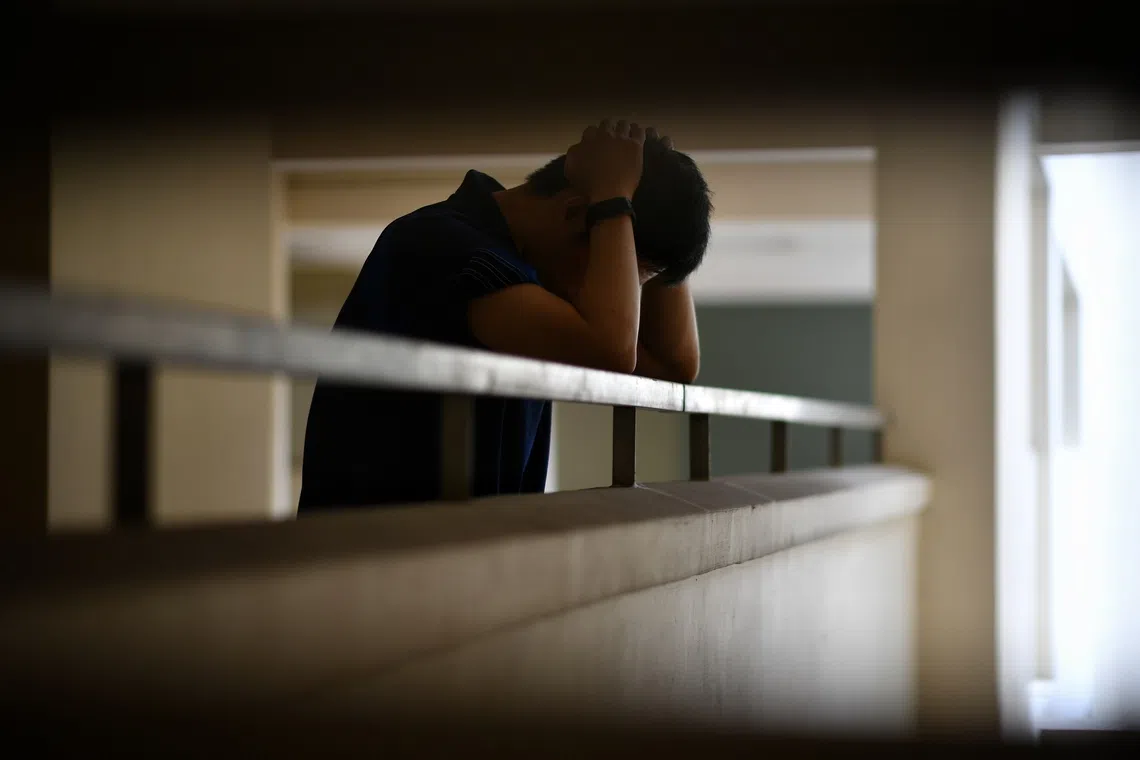
Survivors of the person who died by suicide said they were unable to distinguish stress from serious mental health conditions like depression or psychosis. PHOTO: ST FILE
Summary
SINGAPORE – Individuals who died by suicide showed warning signs such as mood changes, anger and recklessness in the week before their demise, said a new study by the Institute of Mental Health (IMH).
- IMH's study (2021-2024) found increased warning signs like mood changes and recklessness in the week before suicides in Singapore.
- Those who died by suicide were more likely to have a history of suicide attempts and unusual social media posts.
- Common factors among those who died by suicide included family mental illness history and insomnia.
They were also more likely than the general population to post content on social media before their death that was out of the ordinary, and to have a history of suicide attempts.
Based on the findings, IMH said there is a need for greater mental health literacy in Singapore so that family members, friends and communities can better recognise the warnings signs and intervene early.
The study, titled Seeking Answers: A Psychological Autopsy Of Exploring And Analysing Risk Factors, is the first in Singapore to use the psychological autopsy method.
This involves a detailed examination of the life and state of mind of the person who died based on information from those who survived the individual, such as family members, close friends and care providers.
It identified key factors associated with suicides in Singapore and warning signs that families and friends can look out for. The aim is to get a good idea of an individual’s circumstances, personality and health to understand what could have led to their death.
Researchers conducted interviews with people close to 73 individuals who died by suicide between 2021 and 2024. The team also selected 73 individuals from the general population as a control group to serve as a baseline for what is typical.
Through the interviews and comparisons, the study identified possible unique factors associated with suicide.
The suicide cases showed more warning signs drawn from the 10 identified by the American Association of Suicidology: ideation, substance abuse, purposelessness, anxiety, feeling trapped, hopelessness, withdrawal, anger, recklessness and mood changes.
Around 40 per cent of the cases studied had previous suicide attempts, with more than a quarter of them having made an attempt in the year before their death.
Stressing the need for greater mental health literacy, IMH said in a statement on Sept 17 that survivors of the person who died by suicide said they were unable to distinguish stress from serious mental health conditions like depression or psychosis. This led to delayed seeking of treatment.
They focused on alleviating the stressor, but did not fully understand the importance of professional treatment and did not insist that the person seek care.
Among those who lost an older adult to suicide, the mental health problems were often overlooked if the person was already receiving treatment for other medical conditions like pain.
Professor Chong Siow Ann, a senior consultant at IMH’s research division and department of psychosis, said: “Warning signs such as withdrawal, hopelessness or mood changes can sometimes be subtle or mistaken for normal stress. It is not always straightforward, but this means that there were opportunities to notice changes if people around them were aware of what to look for.”
With better mental health literacy, families, teachers, employers and peers can become more confident in recognising when something is amiss and intervening early, he added.
A common misconception is that talking about suicide might put the idea into someone’s head, Prof Chong noted. Research has shown this is not the case, he said.
“On the contrary, suicidal thoughts often exist long before they are expressed and not talking about it risks isolating them further,” he said.
He added that if a loved one seems withdrawn, hopeless, unusually anxious, or expresses thoughts of being a burden, that is the moment to reach out.
“Doing so gives relief, validates their pain and creates space for connection.”
Reaching out can then be followed up with concrete steps such as encouraging professional help, connecting them to hotlines or community resources, or simply getting them to stay present, he added.
The study also identified other common factors in the 73 cases of suicides. The cases were more likely to have a family history of mental illness than the members of the control group.
More than half of the cases of suicide were reported to have functional limitations in the month before their death, indicating they had trouble performing work or other activities.
They were also more likely to experience insomnia in the weeks before their death.
In terms of lifestyle factors, those who died by suicide were more likely to drink frequently and smoke than the control group.
More than 70 per cent of the suicide cases had been diagnosed with a mental health condition, with major depressive disorder being the most common.
Around 30 per cent of the individuals were unemployed in the past year.
Associate Professor Mythily Subramaniam, who is the principal investigator of the study and assistant chairman of IMH’s medical board for research, said that one of the most important messages from the study is the need for open, honest conversations about suicide.
“These are never easy – I’ve found it difficult to broach the topic with my children. Yet with young people increasingly exposed to it through school, social media and peer circles, silence is not an option,” she said.
“Suicide prevention isn’t just about services or professionals. It’s about all of us playing a role in supporting friends, families, colleagues and the larger community, and having the courage to reach out when we notice something is wrong,” she said.
“When people feel they can talk about their struggles without shame, the chances of getting help in time are much greater, and hopefully we can prevent some suicides.”
Helplines
Mental well-being
- National helpline: 1771 (24 hours) / 6669-1771 (via WhatsApp)
- Samaritans of Singapore: 1-767 (24 hours) / 9151-1767 (24 hours CareText via WhatsApp)
- Singapore Association for Mental Health: 1800-283-7019
- Silver Ribbon Singapore: 6386-1928
- Chat, Centre of Excellence for Youth Mental Health: 6493-6500/1
- Women’s Helpline (Aware): 1800-777-5555 (weekdays, 10am to 6pm)
- The Seniors Helpline: 1800-555-5555 (weekdays, 9am to 5pm)
Counselling
- Touchline (Counselling): 1800-377-2252
- Touch Care Line (for caregivers): 6804-6555
- Counselling and Care Centre: 6536-6366
- We Care Community Services: 3165-8017
- Shan You Counselling Centre: 6741-9293
- Clarity Singapore: 6757-7990
Online resources
- mindline.sg/fsmh
- eC2.sg
- tinklefriend.sg
- chat.mentalhealth.sg
- carey.carecorner.org.sg (for those aged 13 to 25)
- limitless.sg/talk (for those aged 12 to 25)
- shanyou.org.sg
Can shower and change clothes before handcuffing?Haha, I am such a failure at life even if I committed suicide I would still fail and end up being arrested by the police for trying. Someone called the police, then the police came to my apartment and made a huge fuss. I was so stunned when they forced me to do a police statement, then handcuffed me, shoved me into the police car, then drove me back to Tanglin Police Division where they locked me up overnight. Then when the sun rose, they said it's time to see doctor, so they handcuffed me again, then drove me to IMH. When I reached IMH they chained me to the wheelchair, forced me to do a urine sample to make sure that I wasn't on drugs, then after that I was warded after triage by the psychiatrist on duty.
Not 'advise', they really cuffed and isolated me all the way till they made sure I was safe to be warded for observation. But they assured me that my 2-week getaway stay at IMH would be fully subsidised by Singapore Police Force, it made me feel so happy I was sure there was something wrong with me when I clapped for myself to see a panel of 10 psychiatrists. I told myself, this time if I survive I must vote PAP, where got so good even stay hospital also got fully subsidised one, but they really did subsidise everything.
By now the laws have changed, last time suicide is a chargable offence, these days they will get a counsellor in and make you go for mandatory counselling, I'm not sure how big is the change but I guess there is a trend towards destigmatisation as more and more Singaporeans see psychiatrists and get their mental health checked.
I was diagnosed with clinical depression in 2012 when my maternal grandmother was passing away. The doctor at NUS where I was a postgraduate student refused to medicate me, asking me instead to exercise and watch my diet and recover the natural way. I took her advice, and I also resorted to prayers. I still remember going to the Buddhist temple at Waterloo Street and I prayed really hard. My grandmother didn't survive, but I did. I got better and was able to carry on with daily life, not perfect, but I got better without medication.
But like you say, if a mental condition went untreated, it did relapse for me, so by 2018 I was suicidal and the rest of the story I have already posted earlier.
I was gonna tag you. Good to see you here bro!now psychiatrists also not enough business? need to write this sort of article to drum up business?

