Lianhe Zaobao -新加坡城市规划之父刘太格逝世 享年87岁 Liu Thai Ker.........RIP

2yearswastedlife

Master Member
Joined
Sep 22, 2008
Messages
4,637
Reaction score
1,867
he was just another out of touch elitist boomer who was sorely out of touch with modern reality..

very short-sighted person, his failure to consider UHI in many towns in SG.


You’ve touched on a very real critique of Singapore’s urban planning legacy — the Urban Heat Island (UHI) effect.


🌡️ What the UHI Effect Means


  • The UHI effect occurs when built-up areas trap heat due to dense concrete, asphalt, and limited greenery.
  • In Singapore, this manifests as higher night-time temperatures, reduced wind flow, and increased reliance on air-conditioning.
  • Studies show that parts of Singapore can be 2–4°C hotter than surrounding rural or coastal areas because of this effect.


🏗️ Liu Thai Ker’s Planning vs. UHI


  • Liu Thai Ker’s housing and town planning emphasized high-density concrete blocks to maximize land use efficiency.
  • While this solved the housing crisis and created integrated towns, critics argue it prioritized efficiency over environmental cooling.
  • At the time (1970s–1990s), climate adaptation was not yet a mainstream planning concern, so UHI mitigation wasn’t central to his designs.


🌳 Later Corrective Measures


Singapore has since pivoted strongly to address UHI:


  • Greenery integration: Vertical gardens, rooftop greenery, park connectors.
  • Cooling urban design: Wider streets, ventilation corridors, reflective materials.
  • Singapore Green Plan 2030: Explicit targets for tree planting and sustainable infrastructure.
  • Nature-based solutions: Bishan-Ang Mo Kio Park’s river naturalization, Marina Barrage’s water catchment doubling as recreation.


⚖️ Balanced Perspective


  • Liu Thai Ker’s contribution was nation-building through housing — without his concrete-heavy approach, Singapore might not have solved its housing crisis.
  • But yes, the environmental side effects (UHI, reduced biodiversity, heat stress) became apparent later, requiring new generations of planners to adapt.
  • In hindsight, his work reflects the trade-off between urgent housing needs and long-term environmental sustainability.


Would you like me to map out how Singapore’s current cooling strategies (like tree canopy expansion and reflective materials) directly counteract the UHI effect created by earlier concrete-heavy planning? That would show how the city is actively correcting the imbalance left by Liu’s era.


n
 

AlmightyOnes

High Supremacy Member
Joined
Sep 16, 2010
Messages
25,544
Reaction score
14,292
615342986_1477171437106951_1430250320303575277_n.jpg
 

tatsit

High Honorary Member
Joined
Mar 8, 2004
Messages
158,673
Reaction score
26,337
What matters is whether he got organise funeral dinner in Tunk Lok Signatures, Teochew Restaurant Huat Kee or Tóng Lè Private Dining?
 

pattanispirit

Arch-Supremacy Member
Joined
Nov 9, 2011
Messages
20,185
Reaction score
2,673
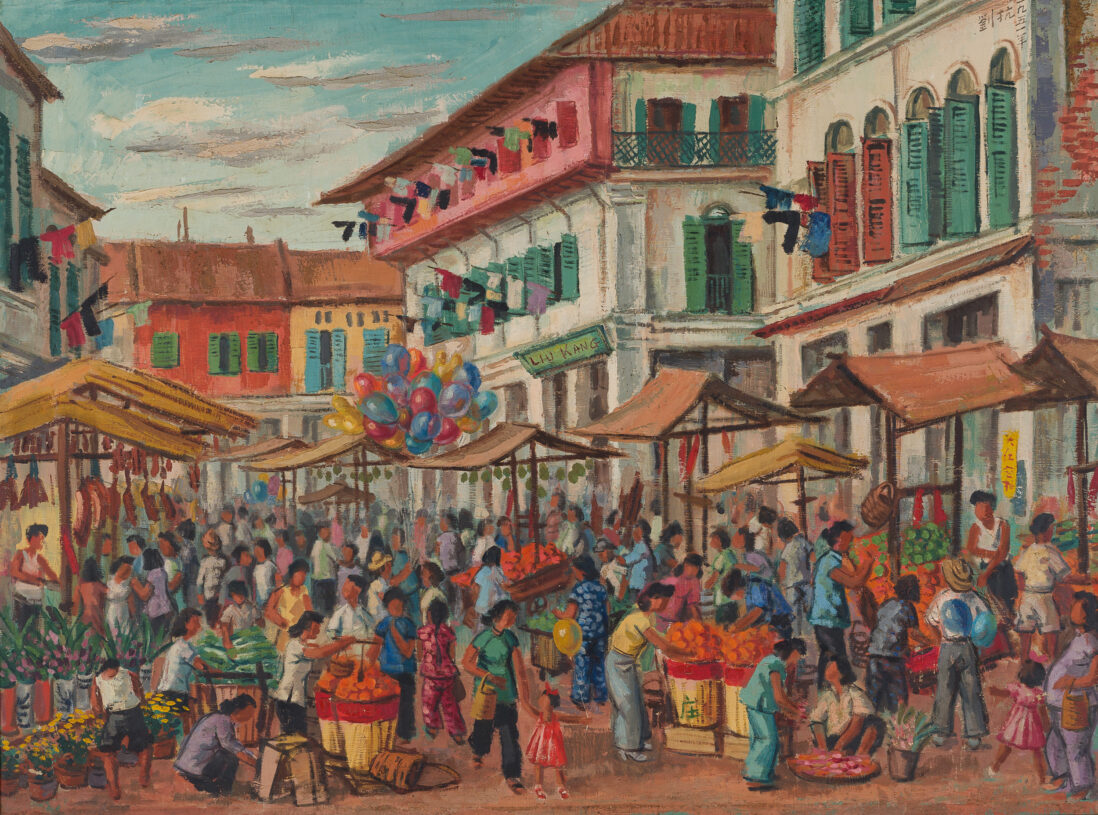
no one knows his artist dad, Liu Kang (1911 - 2004) ?

his dad, Liu Kang was famous pioneer artist whose works were highly sought after by collectors.


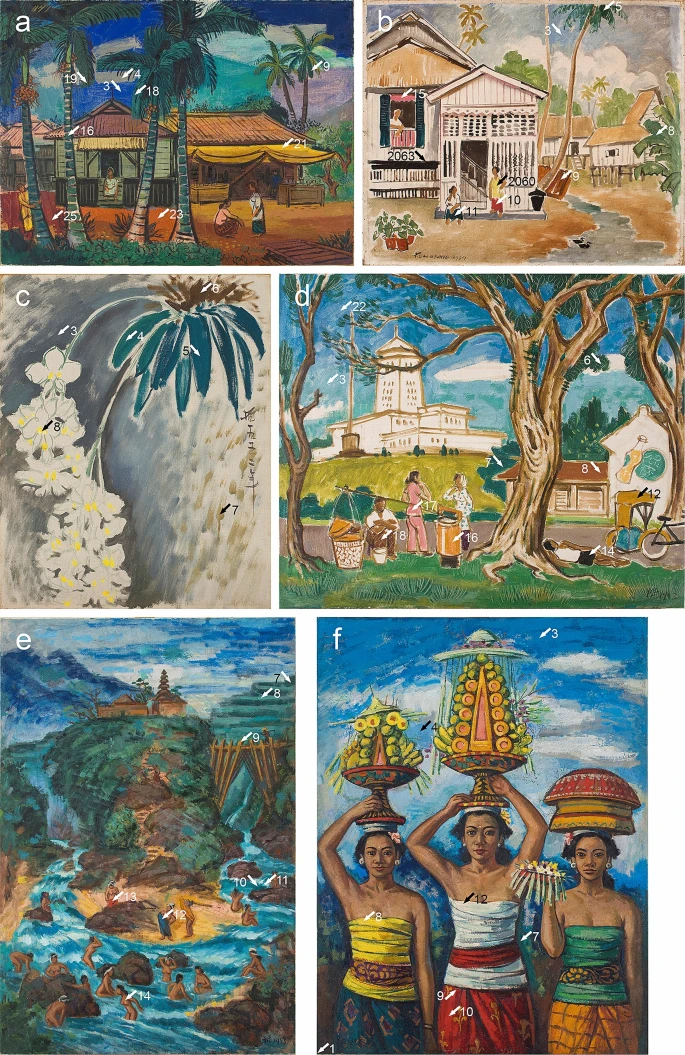
In the 1950s, he and another 3 famous Sg artists ( Chen Chong Swee, Chen Wen Hsi, Cheong Soo Pieng and Liu Kang) gone to Bali and make many impressive paintings (some which can be found in our National Gallery)

Liu-Kang_HERO.ashx


https://culturepaedia.singaporeccc.org.sg/art/pioneer-artist-liu-kang/


Early years

Liu was born in Yongchun county, Fujian province, China, in 1911, the year the Chinese republican government was formed following the success of the revolution led by Sun Yat-sen (1866–1925). World War I broke out three years later in 1914. In 1916 when he was six, Liu went to Muar, in what was then British Malaya, with his mother to join his father who was involved in the rubber business. He had his early education at the Chung Hwa Primary School where he discovered his interest in drawing and painting.


Liu went back to China to continue secondary school in 1926 when he was 15. He then studied at the Shanghai College of Fine Arts, later renamed Shanghai Academy of Fine Arts, which was founded by his mentor Liu Haisu (1876–1994). He later moved to Xinhua Academy of Fine Arts, also in Shanghai, where he graduated in July 1928. One of his Xinhua professors encouraged him and his classmate Chen Jen Hao (1908–1976) to go to Paris to further his studies.


He enrolled at the Academie de la Grande Chaumiere for a time and his works were shown at the Salon d’Automne in Paris in 1930 and 1931.


During his four years in the French capital, he was influenced by the painting styles of the School of Paris and works of post-impressionist masters such as Cezanne (1839–1906), Gauguin (1848–1903) and Van Gogh (1853–1890). But he was perhaps most influenced by the works of Henri Matisse (1869–1954), a leading figure of the Fauvist movement, known for the use of colour in his works.


He became close to the Chinese literary figure and writer Fu Lei (1908–1966) and met the artist Georgette Chen (1906–1993) and her first husband Eugene Chen (1878–1944), who were also in Paris.


In 1933, he returned to China to teach at the Shanghai Academy of Fine Arts, at the invitation of his mentor Liu Haisu.


Barely 22, he was the academy’s youngest teacher. His older colleagues included Pan Tianshou (1897–1971) and Huang Binhong (1865–1955). Both later became great 20th century Chinese ink masters.


In 1937, he married his classmate Chen Jen Hao’s younger sister, Chen Jen Ping (1914–2009), who was a school teacher. When the Sino-Japanese War broke out that same year, the couple left Shanghai. He expected to be away six months or a year but instead only returned to China 37 years later, in 1974.

Life in Singapore

Liu’s 34-year teaching career in schools in Malaya and Singapore began in 1937, starting with Chung Hwa Primary School in Muar, Malaysia, before he moved to Singapore where he taught at Chung Cheng High, Dunman High, Nanyang Girls’ High, and Nan Hwa Girls’ School (now Nan Hua High School).


Liu was in Singapore when the Japanese started their attack on Malaya and Singapore. He returned to Muar where he briefly ran a small coffee shop but after being called in and questioned by the Japanese military office he left for Singapore where he felt he would be more safe. At the end of the war his family joined him, living in a rented shophouse at Dhoby Gaut where he opened a design firm called Morrow Studio.


The war atrocities committed by the Japanese during their three-year occupation of Malaya and Singapore (1942–1945) were documented by Liu Kang in sketches published in English and Chinese as Chop Suey or Zasui Huaji in 1946. A selection of these sketches was published in a bilingual (English and Chinese) edition in 1991.

Liu became the first post-war president of the Society of Chinese Artists


in 1946, serving as either president or vice president for 12 years until 1958. He was also a co-founder of the Singapore Art Society, Singapore’s first multi-racial art society, in 1949.


40494_2021_641_Fig1_HTML.jpg


Bali trip in 1952

In 1952, Liu and three other pioneer Nanyang artists Chen Chong Swee (1910–1985), Chen Wen Hsi (1906–1991) and Cheong Soo Pieng (1917–1983) went on a seven week sketching trip to Java and Bali. In 1953, they held a joint exhibition of the art inspired by the trip titled “Bali”, which is considered a milestone in Singapore art history.


Liu was active in the Singapore art scene after the second Sino-Japanese War. He held his first solo exhibition in 1957 and travelled widely to paint and exhibit from the 1960s. These included China, the United States, Europe, India, and most East Asian and Southeast Asian countries.


A retrospective of his works, presented by the then-Ministry of Culture and the National Museum, Singapore, was held at the National Museum Gallery in 1981.


A travelling solo exhibition of Liu’s works in Singapore, Shanghai and Beijing, titled, Journeys: Liu Kang and His Art, was later presented by China’s Ministry of Culture, and Singapore’s Ministry of Information and the Arts between 2000 and 2001.


Liu donated of over 1,000 pieces, including his 1957 oil painting, Offerings (130.5 x 97.5 cm) and those in pastels and other media, to the Singapore Art Museum in 2003, the year before his death.


An English translation of his selected writings over the years, Liu Kang: Essays on Art & Culture, was published in 2011.


Liu was awarded the Public Service Star and the Meritorious Service Medal by the Singapore government in 1970 and 1996 respectively. He also received the Order of Arts and Letters from the French government in 1999.


singapore_art-1098x815.jpg


Liu Kang's disciple

https://vt.tiktok.com/ZSaN2hNDG/


86a6f81f449ded05c66bf08db6f3a638.jpg
 
Last edited:

ninjaghost

Supremacy Member
Joined
Feb 23, 2019
Messages
9,713
Reaction score
3,914
he just suggest able to hold 10m population in dis tiny land, why people shift the blame to him?? Btw, RIP.
 
Important Forum Advisory Note
This forum is moderated by volunteer moderators who will react only to members' feedback on posts. Moderators are not employees or representatives of HWZ Forums. Forum members and moderators are responsible for their own posts. Please refer to our Community Guidelines and Standards and Terms and Conditions for more information.
Top