Google Pixel 10 series

ecneret_eel

Supremacy Member
Joined
Aug 19, 2008
Messages
6,465
Reaction score
96
hmm wow challenger no longer carries google phones ah? went to vivo challenger and they didn’t have the phones
 

TomCool

Member
Joined
Jan 1, 2000
Messages
376
Reaction score
57
Have issues on my Fold. Setting up banking failed Singpass facial recognition scanning. Fall back on my old phone Facial recognition passed.
Anyone with same issue?
 

limmk

High Supremacy Member
Joined
Jul 5, 2001
Messages
39,472
Reaction score
7,984


Since the 2021 Google Pixel 6, Google’s in-house Tensor chip has remained one of the biggest drawbacks of its phones.

While steady improvements in other areas have boosted Pixel’s popularity, the lineup still lags behind other Android flagships — all because of the underwhelming Tensor chip.

With the Pixel 10’s Tensor G5, Google finally had the chance to turn things around.

It could have finally offered a flagship that delivered a proper balance of performance and battery life. Instead, it fumbled that opportunity.

Google’s Tensor problems trace back to Samsung​

A partnership that never should have been​

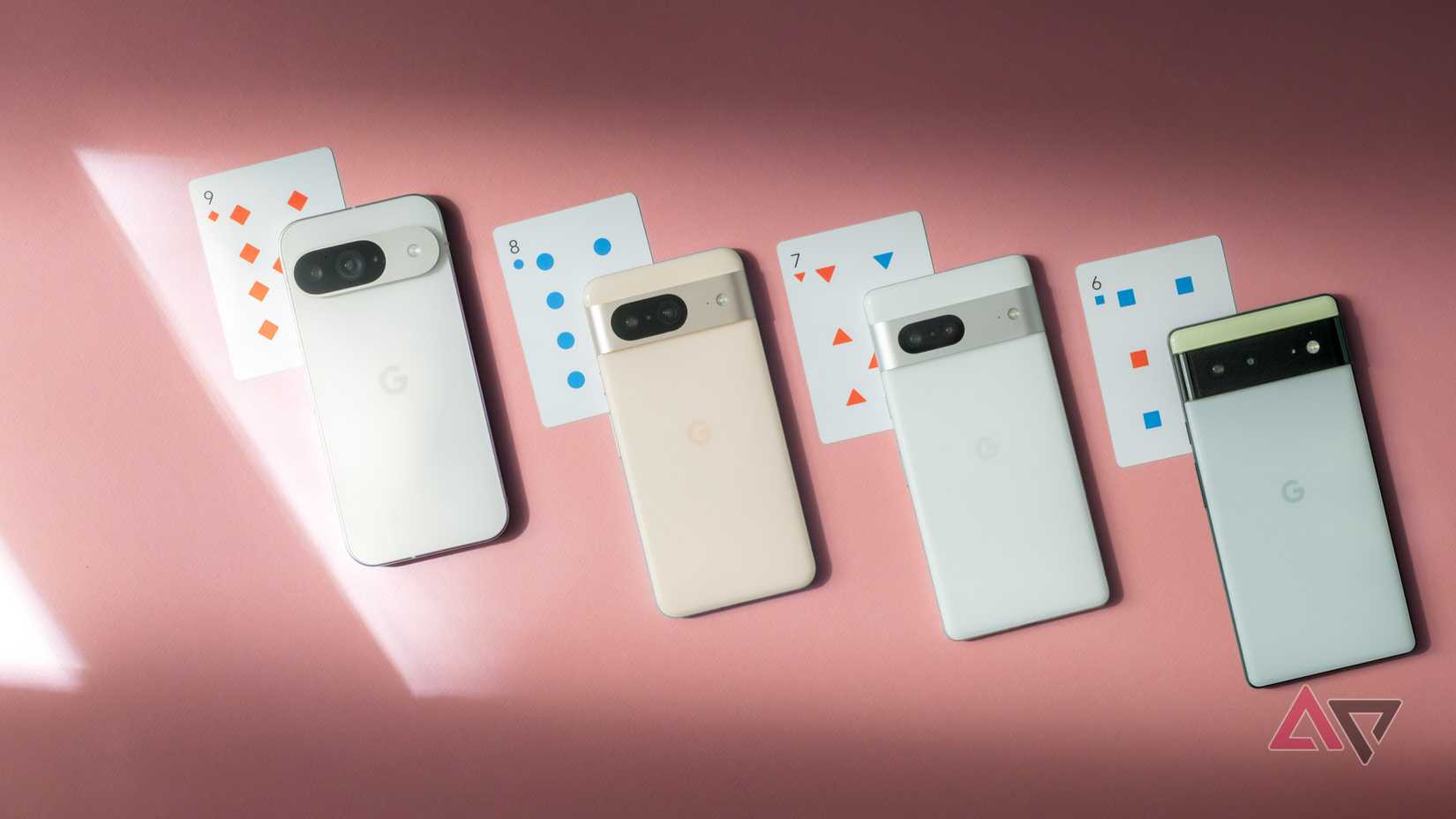
Four Google Pixel phones arranged on a pink surface next to playing cards


Designing and building an SoC in-house is expensive.

So, to get a head start, Google used Samsung’s Exynos chip as a base platform. It also used Samsung’s process node to fabricate the chip.

Since the 2021 Pixel 6, Pixel fanboys have blamed Samsung — and, to a certain extent, Google — for the issues plaguing Tensor chips.

While Google gradually shifted to off-the-shelf CPU and GPU designs from Arm, it continued to rely on Samsung’s foundry and modem for Tensor chips.

This led to all Pixel phones suffering from two major issues: poor thermal performance and mobile connectivity issues.

The Exynos 5400 modem inside the Pixel 9 largely fixed the latter problem, though it arrived a couple of years too late.

Samsung and TSMC rank among the world’s largest foundries, capable of producing the latest chips on cutting-edge process nodes.

However, the two are not alike, with TSMC pulling ahead of its Korean competitor with its fabrication technology in the last few years.

The same chip fabricated on TSMC’s and Samsung’s process nodes can show significant differences in power efficiency and performance.

The 2022 Galaxy S22 is the prime example of this. It launched with a 4nm Samsung-fabricated Snapdragon 8 Gen 1 chip, which was widely criticized for its poor thermal performance.

A few months later, Qualcomm switched to TSMC for the Snapdragon 8+ Gen 1. The underlying CPU architecture remained the same; just the switch alone brought a massive improvement in thermals and power consumption.

Since then, Qualcomm has stuck to TSMC’s node for fabricating its new Snapdragon chips.

Likewise, Apple has close ties with TSMC, booking out its newest node for the initial few months for its new A-series chips. If Apple’s ready to pay billions of dollars to TSMC, there has to be a good reason for it.

After years of growing criticism from the Pixel community, Google finally turned to TSMC’s foundry to fabricate the Tensor G5 this year.

Given TSMC’s solid track record, it raised expectations ahead of the Pixel 10’s launch that the move would finally fix one of the Pixel lineup’s biggest flaws — poor battery life.

Tensor G5 proves TSMC alone can’t fix Google’s problems
Google fell way short with its execution
A person taking a photo with the Google Pixel 10 Pro XL
With the Pixel 10 lineup now out for over a month, it’s clear that Google’s move to TSMC hasn’t translated into a major boost in battery life. Other chips from Qualcomm and Apple still deliver far better efficiency.

Yes, the Pixel 10 runs cooler than previous Pixels, and while that’s an equally important improvement, it alone is not enough.

It wouldn’t be as disappointing if Google had used the available thermal headroom to boost the Tensor G5’s CPU performance instead.

But that’s not the case either, with the Pixel 10’s Tensor G5 failing to beat even flagship Snapdragon chipsets from two years ago. The company stuck to older ARM CPU cores, instead of adopting the latest option available.

Worse, the new PowerVR GPU has turned out to be a major disappointment, delivering average to below-par gaming performance.

The unusually low benchmark scores suggest outdated drivers on the Pixel 10 could be to blame. But until Google acknowledges and addresses the issue, nothing is certain.

The Tensor’s AI performance is impressive, but that alone won’t be sufficient in the long run. Plus, when you spend $1,000 on a smartphone, you expect to play all popular Android games on it smoothly.

Google didn’t capitalize on the Tensor G5’s TSMC advantage
A new foundry, but the same old Pixel problems
Google Pixel 10 Pro in hand (Moonstone color)
Despite using one of TSMC’s latest process nodes, the Tensor G5 falls short on all key metrics.

Its performance lags far behind the latest flagship chips from Apple and Qualcomm, and the GPU is underwhelming. And the new Pixels don’t even offer standout battery life to make up for the average performance.

If anything, this highlights Google’s lack of ambition and effort with its Tensor lineup.

When a company like Xiaomi can nearly match the best chips on the market with only its second in-house SoC, there’s little excuse for Google still struggling to catch up after five generations.

As a longtime Pixel fan, I hoped the Pixel 10’s Tensor G5 would finally fix the lineup’s long-standing issues with performance and battery life. I wasn’t expecting flagship-level power, but I did think improved endurance would make up for it.

Sadly, that’s not the case either, with the Pixel 10 Pro XL delivering above-average battery life.

This would have worked a couple of years ago, but not now, when the likes of the OnePlus 13 and other Android phones can easily survive 1.5 days of heavy use.

At this point, it’s hard to expect Google to make any major leaps with its Tensor chips. The company seems content on focusing on AI, and it’s likely using it as a reason to sidestep meaningful performance gains elsewhere.

 

Revolee993

Junior Member
Joined
Dec 21, 2019
Messages
82
Reaction score
23


Since the 2021 Google Pixel 6, Google’s in-house Tensor chip has remained one of the biggest drawbacks of its phones.

While steady improvements in other areas have boosted Pixel’s popularity, the lineup still lags behind other Android flagships — all because of the underwhelming Tensor chip.

With the Pixel 10’s Tensor G5, Google finally had the chance to turn things around.

It could have finally offered a flagship that delivered a proper balance of performance and battery life. Instead, it fumbled that opportunity.

Google’s Tensor problems trace back to Samsung​

A partnership that never should have been​

Four Google Pixel phones arranged on a pink surface next to playing cards


Designing and building an SoC in-house is expensive.

So, to get a head start, Google used Samsung’s Exynos chip as a base platform. It also used Samsung’s process node to fabricate the chip.

Since the 2021 Pixel 6, Pixel fanboys have blamed Samsung — and, to a certain extent, Google — for the issues plaguing Tensor chips.

While Google gradually shifted to off-the-shelf CPU and GPU designs from Arm, it continued to rely on Samsung’s foundry and modem for Tensor chips.

This led to all Pixel phones suffering from two major issues: poor thermal performance and mobile connectivity issues.

The Exynos 5400 modem inside the Pixel 9 largely fixed the latter problem, though it arrived a couple of years too late.

Samsung and TSMC rank among the world’s largest foundries, capable of producing the latest chips on cutting-edge process nodes.

However, the two are not alike, with TSMC pulling ahead of its Korean competitor with its fabrication technology in the last few years.

The same chip fabricated on TSMC’s and Samsung’s process nodes can show significant differences in power efficiency and performance.

The 2022 Galaxy S22 is the prime example of this. It launched with a 4nm Samsung-fabricated Snapdragon 8 Gen 1 chip, which was widely criticized for its poor thermal performance.

A few months later, Qualcomm switched to TSMC for the Snapdragon 8+ Gen 1. The underlying CPU architecture remained the same; just the switch alone brought a massive improvement in thermals and power consumption.

Since then, Qualcomm has stuck to TSMC’s node for fabricating its new Snapdragon chips.

Likewise, Apple has close ties with TSMC, booking out its newest node for the initial few months for its new A-series chips. If Apple’s ready to pay billions of dollars to TSMC, there has to be a good reason for it.

After years of growing criticism from the Pixel community, Google finally turned to TSMC’s foundry to fabricate the Tensor G5 this year.

Given TSMC’s solid track record, it raised expectations ahead of the Pixel 10’s launch that the move would finally fix one of the Pixel lineup’s biggest flaws — poor battery life.

Tensor G5 proves TSMC alone can’t fix Google’s problems
Google fell way short with its execution
A person taking a photo with the Google Pixel 10 Pro XL
With the Pixel 10 lineup now out for over a month, it’s clear that Google’s move to TSMC hasn’t translated into a major boost in battery life. Other chips from Qualcomm and Apple still deliver far better efficiency.

Yes, the Pixel 10 runs cooler than previous Pixels, and while that’s an equally important improvement, it alone is not enough.

It wouldn’t be as disappointing if Google had used the available thermal headroom to boost the Tensor G5’s CPU performance instead.

But that’s not the case either, with the Pixel 10’s Tensor G5 failing to beat even flagship Snapdragon chipsets from two years ago. The company stuck to older ARM CPU cores, instead of adopting the latest option available.

Worse, the new PowerVR GPU has turned out to be a major disappointment, delivering average to below-par gaming performance.

The unusually low benchmark scores suggest outdated drivers on the Pixel 10 could be to blame. But until Google acknowledges and addresses the issue, nothing is certain.

The Tensor’s AI performance is impressive, but that alone won’t be sufficient in the long run. Plus, when you spend $1,000 on a smartphone, you expect to play all popular Android games on it smoothly.

Google didn’t capitalize on the Tensor G5’s TSMC advantage
A new foundry, but the same old Pixel problems
Google Pixel 10 Pro in hand (Moonstone color)
Despite using one of TSMC’s latest process nodes, the Tensor G5 falls short on all key metrics.

Its performance lags far behind the latest flagship chips from Apple and Qualcomm, and the GPU is underwhelming. And the new Pixels don’t even offer standout battery life to make up for the average performance.

If anything, this highlights Google’s lack of ambition and effort with its Tensor lineup.

When a company like Xiaomi can nearly match the best chips on the market with only its second in-house SoC, there’s little excuse for Google still struggling to catch up after five generations.

As a longtime Pixel fan, I hoped the Pixel 10’s Tensor G5 would finally fix the lineup’s long-standing issues with performance and battery life. I wasn’t expecting flagship-level power, but I did think improved endurance would make up for it.

Sadly, that’s not the case either, with the Pixel 10 Pro XL delivering above-average battery life.

This would have worked a couple of years ago, but not now, when the likes of the OnePlus 13 and other Android phones can easily survive 1.5 days of heavy use.

At this point, it’s hard to expect Google to make any major leaps with its Tensor chips. The company seems content on focusing on AI, and it’s likely using it as a reason to sidestep meaningful performance gains elsewhere.

When Google was with Samsung fabs still can blame terrible efficiency and node on their foundries, but now using TSMC's fab liao still same issue really no excuses to hide liao.

Think Google's hardware division cut cost too much le, since their CPU cluster cores still using stock ARM cores and they had used Mali GPU before they should've just upgraded to Immortalis GPU instead. Will be an instant graphic performance boost but instead they went with PowerVR which no devs and OEMs optimized for in recent years which is really 🤦‍♂️

Pixel phones are great but they are really not worth the flagship prices especially at MSRP when the phones perform like mid rangers. Even mid rangers cost less and perform better. Also, really kena overshadowed by iP17 this year.

No wonder this year have another second "birthday" sale right after the initial preorder period, maybe actual sale figures not doing too well.
 

Loser

Arch-Supremacy Member
Joined
May 7, 2019
Messages
23,488
Reaction score
10,419
Have issues on my Fold. Setting up banking failed Singpass facial recognition scanning. Fall back on my old phone Facial recognition passed.
Anyone with same issue?
I also had problems with singpass facial scanning on my 10 pro. Had to do it many times.
 

limmk

High Supremacy Member
Joined
Jul 5, 2001
Messages
39,472
Reaction score
7,984
When Google was with Samsung fabs still can blame terrible efficiency and node on their foundries, but now using TSMC's fab liao still same issue really no excuses to hide liao.

Think Google's hardware division cut cost too much le, since their CPU cluster cores still using stock ARM cores and they had used Mali GPU before they should've just upgraded to Immortalis GPU instead. Will be an instant graphic performance boost but instead they went with PowerVR which no devs and OEMs optimized for in recent years which is really 🤦‍♂️

Pixel phones are great but they are really not worth the flagship prices especially at MSRP when the phones perform like mid rangers. Even mid rangers cost less and perform better. Really kena overshadowed by iP17 this year.

No wonder this have another second "birthday" sale right after the initial preorder period this year.
Ya lor, using TSMC already still can’t optimise properly, jin wasted sia. for the price Google is asking, performance really cannot justify :rolleyes:
 

Loser

Arch-Supremacy Member
Joined
May 7, 2019
Messages
23,488
Reaction score
10,419
When Google was with Samsung fabs still can blame terrible efficiency and node on their foundries, but now using TSMC's fab liao still same issue really no excuses to hide liao.

Think Google's hardware division cut cost too much le, since their CPU cluster cores still using stock ARM cores and they had used Mali GPU before they should've just upgraded to Immortalis GPU instead. Will be an instant graphic performance boost but instead they went with PowerVR which no devs and OEMs optimized for in recent years which is really 🤦‍♂️

Pixel phones are great but they are really not worth the flagship prices especially at MSRP when the phones perform like mid rangers. Even mid rangers cost less and perform better. Also, really kena overshadowed by iP17 this year.

No wonder this year have another second "birthday" sale right after the initial preorder period, maybe actual sale figures not doing too well.
You said it. It's their obsession with cost cutting yet still want to charge premium prices for it. Company culture issue?
 

Revolee993

Junior Member
Joined
Dec 21, 2019
Messages
82
Reaction score
23
Ya lor, using TSMC already still can’t optimise properly, jin wasted sia. for the price Google is asking, performance really cannot justify :rolleyes:
Ya ikr, really liked pixel phones a lot after changing from Samsung a few years ago but even now Samsung's seems better but pixel software is just chef's kiss hard to leave when everything so minimal and straightforward with day 1 updates urgh. :rolleyes:
 

Revolee993

Junior Member
Joined
Dec 21, 2019
Messages
82
Reaction score
23
You said it. It's their obsession with cost cutting yet still want to charge premium prices for it. Company culture issue?
Yah could be, or they really don't care and just wanna focus AI which is also abit bull* when you need more computing power to process. Also abit gong jiaowei. :rolleyes:

Let's hope Google can get their act together ba, assuming they playing the long game for vertical integration like Apple used to do.
 

omelet

Senior Member
Joined
Dec 9, 2006
Messages
2,252
Reaction score
348
Ya ikr, really liked pixel phones a lot after changing from Samsung a few years ago but even now Samsung's seems better but pixel software is just chef's kiss hard to leave when everything so minimal and straightforward with day 1 updates urgh. :rolleyes:
Same here, like everything about Pixel phones except the chipset and modem/gps...argh...
Since Google like Samsung so much, they should learn from Samsung mah...
Pixel non-pro/A series = Tensor line
Pixel Pro series = Snapdragon 8 Elite line
 

limmk

High Supremacy Member
Joined
Jul 5, 2001
Messages
39,472
Reaction score
7,984
Ya ikr, really liked pixel phones a lot after changing from Samsung a few years ago but even now Samsung's seems better but pixel software is just chef's kiss hard to leave when everything so minimal and straightforward with day 1 updates urgh. :rolleyes:
Ya lor, Pixel software really shiok and clean one, but ah, moi don’t recommend the Pixel 10 series... those who got Pixel 9 series better hold on first lor. upgrade only if you really need the few extra things
 

omelet

Senior Member
Joined
Dec 9, 2006
Messages
2,252
Reaction score
348
Ya lor, Pixel software really shiok and clean one, but ah, moi don’t recommend the Pixel 10 series... those who got Pixel 9 series better hold on first lor. upgrade only if you really need the few extra things
Too late...already bought. Some app stutter alot on P10PXL, but my P9PXL is fine...:rolleyes:
 

kEvinErd

Supremacy Member
Joined
Dec 28, 2008
Messages
5,669
Reaction score
389
Same here, like everything about Pixel phones except the chipset and modem/gps...argh...
Since Google like Samsung so much, they should learn from Samsung mah...
Pixel non-pro/A series = Tensor line
Pixel Pro series = Snapdragon 8 Elite line
What's the issue you face with the modem and GPS ah?
 
Important Forum Advisory Note
This forum is moderated by volunteer moderators who will react only to members' feedback on posts. Moderators are not employees or representatives of HWZ Forums. Forum members and moderators are responsible for their own posts. Please refer to our Community Guidelines and Standards and Terms and Conditions for more information.
Top