

FatalethaL
Supremacy Member
- Joined
- Dec 17, 2008
- Messages
- 6,561
- Reaction score
- 346
Last edited:



TL;DR
- The Pixel 10 Pro and Pixel 10 Pro XL can shoot in 12-bit 4K video with dedicated third-party apps.
- The high bit depth is possible thanks to Samsung’s Smart-ISO Pro technology within the image sensor.
- The Pixel 10 and Pixel Camera app are still capped at 10-bit video capture.
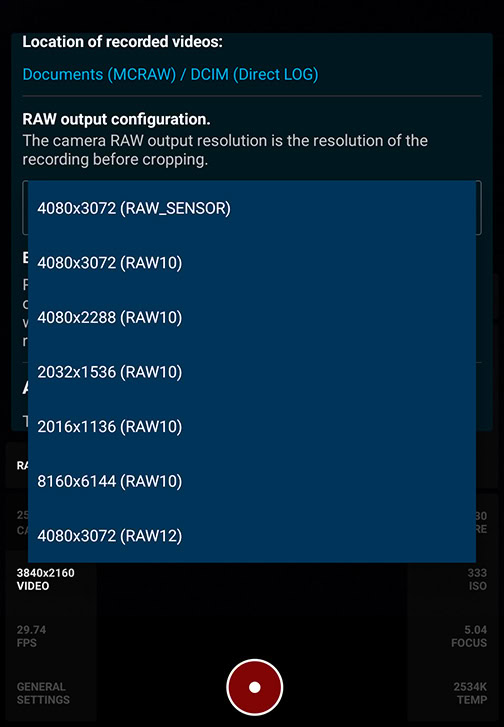
The new Google Pixel 10 series already sports some impressive new photo and video capabilities, but it appears that the Pro models are capable of even more than Google advertises. Reddit user RagSaucy has spotted that the Google Pixel 10 Pro and 10 Pro XL support 12-bit 4K RAW video capture — a first for the series.
In theory, a higher bit-depth allows the phone to capture a wider dynamic range, resulting in additional shadow or highlight detail with less risk of over- or underexposure. Previous Pixel flagships are capped at 10-bit video capture, and that’s still the case if you shoot via the Pixel Camera app on the 10 series. To “unlock” the Pixel 10 Pro’s 12-bit option, you have to install a third-party camera app with advanced video shooting modes, such as MotionCamPro.
PIxel 10 Pro XL video options
PIxel 9 Pro XL video options
12-bit 4K RAW video support is possible thanks to a clever noise reduction technique included as part of the phone’s Samsung ISOCELL GNV image sensor. It sports Smart-ISO Pro technology, which is essentially Samsung’s take on Dual Conversion Gain (DCG).
Unlike multi-frame HDR techniques that combine multiple exposures taken at different times, DCG takes two images of differing ISO values captured at exactly the same time. This sensor hardware-level technique combines data from two ISO gain circuits (hence the name) to produce and merge the two images without the risk of motion blur. The result is vivid colors from low ISO gain with the shadow detail of higher ISO gain. In this case, Samsung’s image sensor presents the output as a 12-bit RAW file to give users access to additional data for editing.
Other sensor makers — like Omnivision’s straightforward DCG name and Sony LYTIA with their Hybrid Frame-HDR technology — also use similar approaches to extend dynamic range. The concept itself isn’t new: I remember writing about the topic back in 2020 for the Xiaomi Mi 10 Ultra, and it’s even older in dedicated cameras. It’s quite likely already used in some of today’s high-end smartphones to improve image quality, even if the high bit-depth data isn’t always presented to users.
Returning to the latest Pixels, this 12-bit video mode is only available on the Pixel 10 Pro and Pro XL main cameras, as these are 50MP Samsung ISOCELL GNV sensors that sport 12-bit Smart-ISO Pro. The Pixel 10 has a Samsung GN8, which also supports DCG and 12-bit output, but seemingly not with sufficient bandwidth for 4K video capture. It may also not be worth enabling on a much smaller sensor due to quality or power constraints.
In any case, the Pixel 10 Pro and Pixel 10 Pro XL offer serious content creators impressive new capabilities for capturing significantly better-looking video. It’s just curious that Google didn’t say a word about it during launch. Hopefully, brands will soon start incorporating higher bit-rate options into the default camera apps.
IkrWhy not just incorporate this into the native app... Using third party apps still need fork out a huge sum for the pro version.. plus probably need to have a high speed external SSD attached to capture all those high res footage for long term...which is another huge investment cost ...

Have you tried to disable charging optimization/adaptive charging?Any Pixel 10 users have slow charging speed?
I am using Ugreen 65w Gan charger with the original cable, charging from 50% to 100% need 2 hours. The phone did not show fast charging, I wonder why,
Appreciate some sharing of other users with phone charging speed. Do you find it slow?
I have log a ticket to Google support, will need to submit some data from the phone for them to analyse. I suspect the software is doing some background throttling.
Yes I did , no difference, I also reboot the phone ,Have you tried to disable charging optimization/adaptive charging?
If it is still within the first week of optimisation, then leave it be.Yes I did , no difference, I also reboot the phone ,
If it is still within the first week of optimisation, then leave it be.
I believe the phone is still "learning" usage pattern. For previous pixels, i typically noticed better charging speeds after 14 days. This qualitative finding is consistent with a few of my friends who uses Pixel phones (a handful using Pixel 9 Pro).
Another thing to cross check is the Ugreen charging specs versus the new Google charger 45W and 67W.Yes, still within first week of optimisation, will continue monitoring.
I am confused with the charging profiles/spec. Should we look at PD (3.0, 3.1, 3.2) or PPS (21V) or other specs that i missed?Could be also the Ugreen charger does not have the specific PPS charging profile that Pixel uses for fast charging


USB-C chargers that support USB PD may include PPS, but not all USB-C chargers with USB PD actually support PPS. confuse boh?
The funniest comment i read is about seeing a bmw with right turn signal
seems like the problem with bmw drivers is not a Singapore thing
 True sia, universal law of BMW: neber turn on the signal light

