Why does the Pixel 9 look so much like an iPhone? You can blame the EU
Thanks to insight from iFixit, we have a good possible explanation for Google's design decisions this year.
Earlier this year, when Google first teased
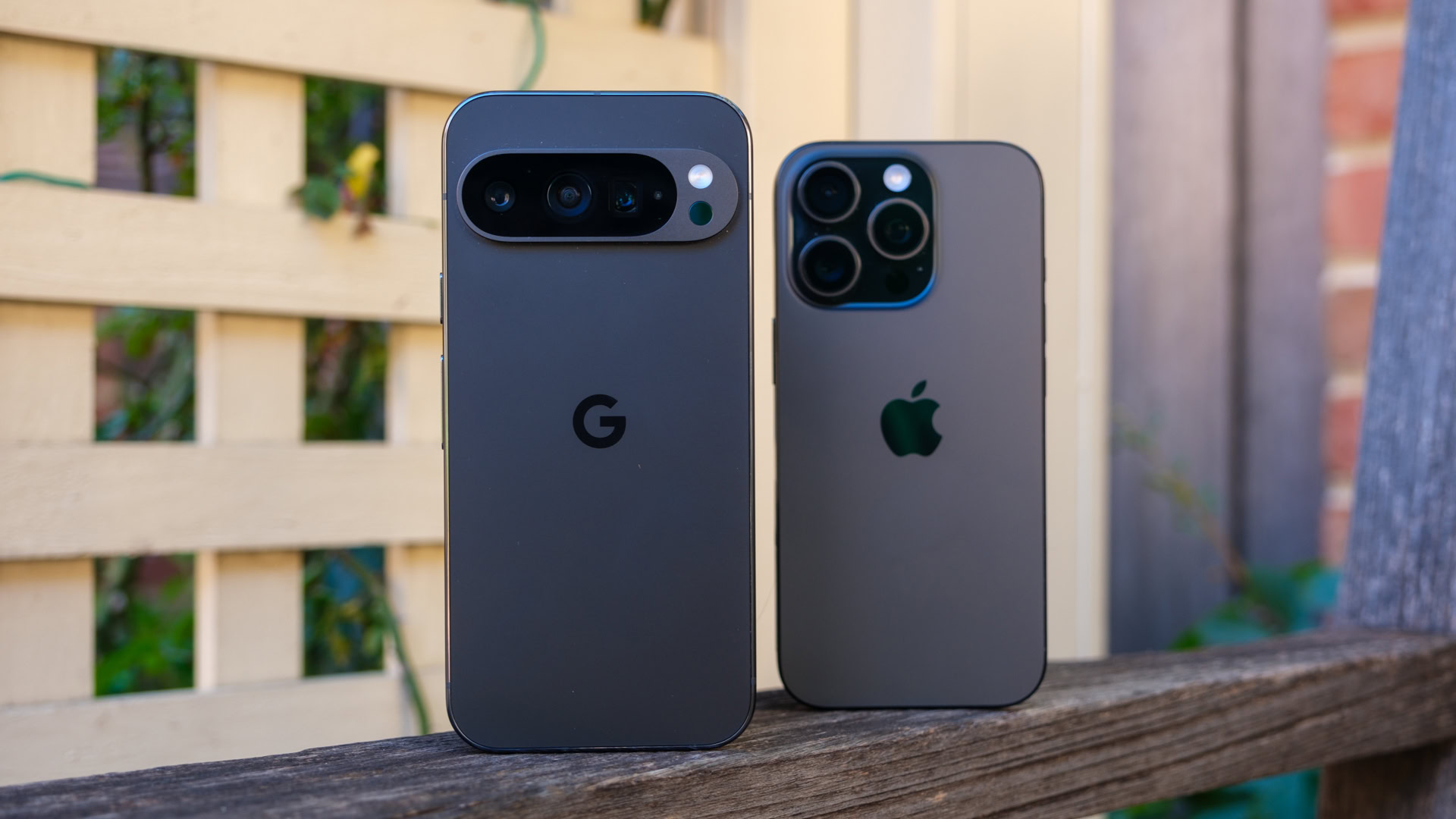
the Pixel 9 series, a collective groan could be heard around the world. While the phones look great (at least, in my opinion, they do), it is immediately apparent that the Pixel 9 looks a lot like an iPhone. While the
Android vs iPhone rivalry has died down in recent years, Android fans still don’t appreciate seeing their favorite brands copy from Apple. After all, one of the biggest reasons we flock to Android is because we have the choice
not to have a phone that looks like everyone else’s. I mean, just look at the image above…it’s an uncanny resemblance!
The easy way to explain Google’s design strategy for the Pixel 9 series is laziness. One could look at the Pixel 9 and say, “Google didn’t want to bother figuring out a unique design for itself, so it just copied the United States’ market leader.” However, I recently talked with Kyle Wiens, the CEO of iFixit, and Shahram Mokhtari, a “Teardown Tech” at iFixit, and we concluded that laziness is probably not why Google leaned on the iPhone for the newest Pixel look. Yes, Google is very likely copying from the iPhone’s design, but “laziness” isn’t the whole story.
To explain our theory properly, let me start by discussing something you might not expect: the European Union.
iPhones, the EU, and repairability
On June 14, 2024, the EU adopted a new regulation that aims to create
standard rules for device repairability. Regulation like this starts with the European Commission adopting it and then issuing a date on which Member States — all the countries in the EU — must incorporate the rules into their respective lawbooks. For this one related to device repairability, that date is July 31, 2026.
The regulation is very specific about what’s expected, and Wiens — a passionate advocate for repairability — is quite excited about it. “We’re currently trapped in this world where we have two sheets of glass with a consumable glue between them, and we need to find a way to make them last longer,” Wiens explains. This is most notable when discussing smartphone batteries. “What the EU battery directive says is that starting in 2026, manufacturers need to make batteries replaceable by users without crazy tools,” Wiens says. “That is going to require substantial design changes across every smartphone.”
Smartphone makers have until August 2026 to make their designs meet new EU repairability standards.
Right now, to replace a battery in a recent flagship smartphone from Apple, Samsung, or Google, you need specialized tools and varying levels of repair skills. Famously, Apple offers
a 79lb repair kit that includes a custom jig just to open up an iPhone. The jig — which only works on one specific iPhone model — applies a certain amount of heat and pressure evenly across the phone to melt the adhesive glue and pull it apart. This jig is rented for $49, and you have seven days from receipt to fix your phone and then ship it back or get charged a penalty. It’s laughably convoluted to the point where very, very few general consumers would ever be able to perform the repair successfully. Even professional repair shops find the process overly complicated.
“[Apple’s jig] is a way of adapting the manufacturing process to repair,” Wiens says. “What the European director is saying is you can’t do that because that’s not realistic. Every repair shop I know has a closet in the back with like, 50 jigs from phones that they’re not even fixing anymore. It’s a crazy amount of waste.”
In order to open up a phone without specialized tools, OEMs will need to fundamentally redesign their devices — and Apple is the furthest along.
Apple has made headway in this area, though, likely due to the impending EU regulation. For example, the iPhone designs of the past few years allow you to get to the inside of the phone from either the front or the back. This allows repair technicians to only open the front if they’re doing a display fix and only open the back if they’re doing a battery fix, something that wasn’t possible in earlier designs. Additionally, Apple introduced a new battery with
the iPhone 16 series that is both covered in metal and connected to the phone’s body using a voltage-release adhesive. To remove the battery, you simply apply 12V of electricity to two tabs on it, and it pops right out, saving technicians from needing to apply heat directly to the cell to melt any glue — a dangerous process for obvious reasons. These are just two examples of how Apple has been slowly but steadily working to meet the 2026 guidelines looming on the horizon.
Of course, we have no idea if the iPhone 18 — likely launching in September 2026, after these new regulations take effect — will be fundamentally different in design than what we see today. But we do know that, as it stands right now, Apple is closer to meeting the EU regulations than any other major smartphone OEM, and it’s doing it in a way that still preserves the overall design elegance that people expect from premium smartphones. This, of course, brings us to the Pixel 9.
How the EU likely altered the Pixel design
The designs of
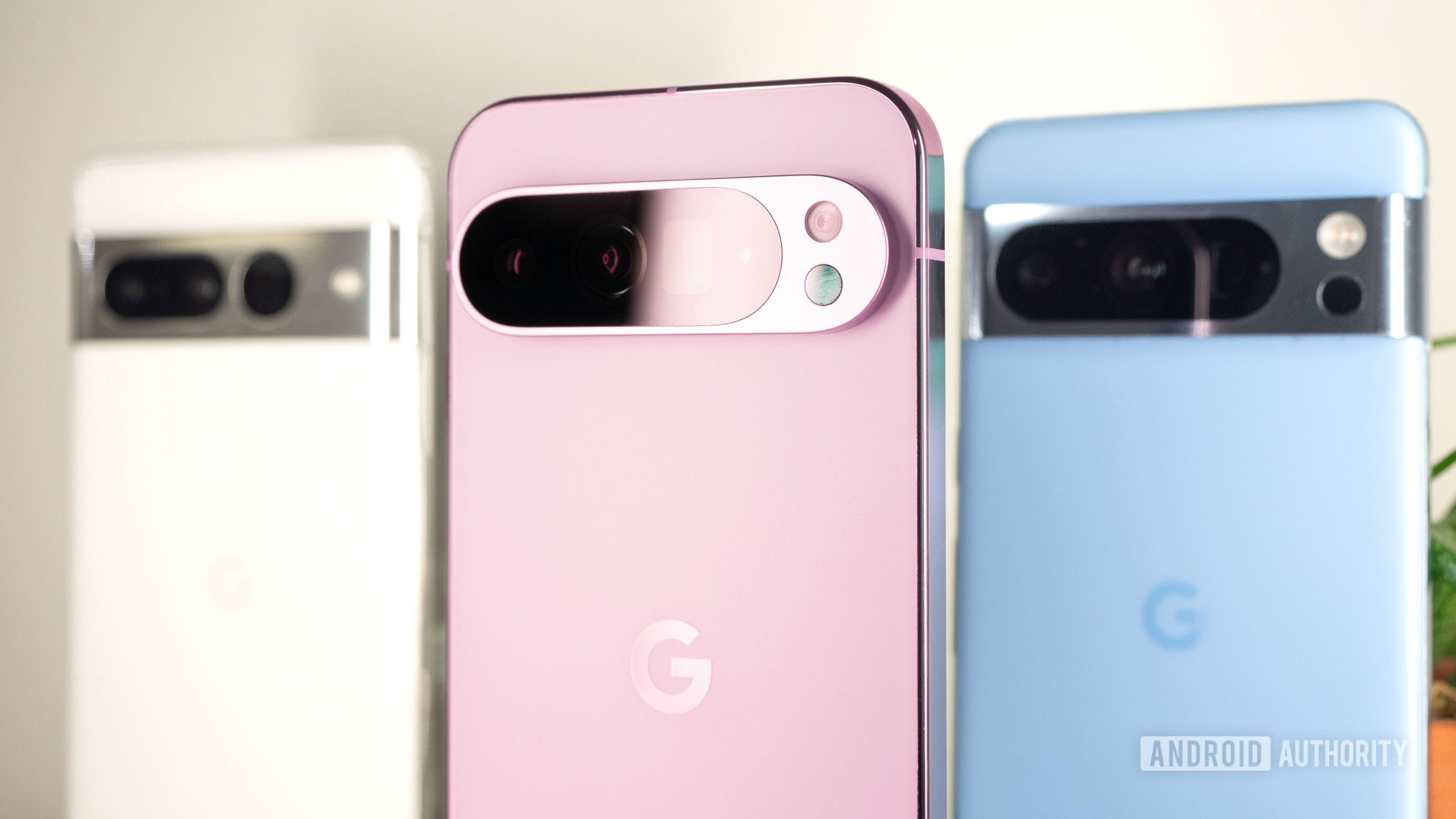
the Pixel 8 series were not great in terms of repairability. Unlike recent iPhones, to get into a Pixel 8 or Pixel 8 Pro, you needed to go through the front exclusively. The back was a more complex setup with the camera bar cutting it in half and wrapping around to meet the frame in a single metal piece. This meant that
repairing the battery required disassembling the entire phone, a laborious and complicated process that needlessly made accidentally damaging the display a real possibility with every battery repair.
The Pixel 9, though, allows entry from both the front and the back. Now, you can
replace a Pixel 9’s battery without taking the whole thing apart. Unfortunately, you still need to remove multiple components to get the battery out, including the camera, the mmWave antenna, the logic board, and more. Additionally, the battery is still glued down, forcing technicians to apply heat to remove it. Mokhtari had this to say: “It is a little bit more difficult to access the battery in the Pixel 9 than the Pixel 8. But broadly speaking, Google does have this architecture for front or back opening that we like.”
Google probably adopted an iPhone-like design for the Pixel 9 because the iPhone is closer to meeting EU regulations than the Pixel 8 was.
It doesn’t take an engineer to connect the dots here. The iPhone’s design is the one furthest along when it comes to meeting the future EU regulations. The Pixel 9 looks a lot like an iPhone and is now slightly closer to having the same repairability as one. Could it be that Google is copying the iPhone’s style not out of laziness but out of a crunch for time? It’s evident that if the company has two years to get its devices to be more repairable, it’s easier, cheaper, and faster just to take design ideas from Apple than it would be to start from scratch.
In other words, it is possible — even likely — that the Pixel 9’s design isn’t the result of laziness but the result of crunch. The clock is ticking, and Google doesn’t have the luxury of figuring things out at its own pace.
It might not be laziness pushing the Pixel to look like an iPhone — it might be crunch.
Of course, even with cribbing from Apple’s design strategies, Google is still way behind, as made clear by the previously described limitations of fixing a Pixel 9’s battery. The question now becomes whether or not Google will have a solution in place for the expected
Google Pixel 11 series before that August 2026 deadline. After all, it can’t wait for Apple to introduce its own designs because it’s likely the Pixel 11 will launch before the iPhone 18. Perhaps Google could push up the launch of the Pixel 11 to late July 2026 to come in just under the wire and buy another year before it needs to be fully in compliance with the Pixel 12? Hey, with the recent news about
Android 16 moving up in the schedule by multiple months, it’s certainly possible.
Remember that Google and Apple are not the only players on this field. All other OEMs will need to play ball, too.