You are using an out of date browser. It may not display this or other websites correctly.
You should upgrade or use an alternative browser.
You should upgrade or use an alternative browser.
Google Pixel 9a
- Thread starter limmk
- Start date
More options
Who Replied?
- Joined
- Jul 5, 2001
- Messages
- 45,468
- Reaction score
- 8,598
- Joined
- Jul 5, 2001
- Messages
- 45,468
- Reaction score
- 8,598
Pixel 9a Tech specsLooks tempting. What's the display? 6.3?

- Joined
- Jul 5, 2001
- Messages
- 45,468
- Reaction score
- 8,598
Yeah, true. 5400 would’ve been the better choice—so either save the $400 or just get the Pixel 9Given the fact that the modem perform not so good... wouldn't get the 9a.
Should have gone with the 5400
- Joined
- Jul 5, 2001
- Messages
- 45,468
- Reaction score
- 8,598
“… for less then $800”
“799”
Lmao

“799”
Lmao
- Joined
- Jul 5, 2001
- Messages
- 45,468
- Reaction score
- 8,598
In less than a month, Apple and Google both released their newest budget smartphones for 2025. Apple has the iPhone 16e, while Google has the Pixel 9a. At first glance, the phones are similar enough. They’re both the cheapest value offering for their flagship siblings, have a big focus on AI features, and have similar price tags.
There’s an argument to be made for each phone. If you need to be in Apple’s ecosystem but don’t want to pay $799 or $999 for an iPhone 16 or iPhone 16 Pro, the iPhone 16e gives you all the essentials (with a decent splash of Apple Intelligence) for $599. The Google Pixel 9a is the same type of phone for people who prefer Android, standing in as a lower-cost alternative to the Pixel 9 and Pixel 9 Pro with capable specs and its own AI goodies — all for just $499.
While the sum of the iPhone 16e and Pixel 9a may be identical, the parts they consist of are where things get very different. Each phone attempts to do the same thing, but when you look at them side by side and think about what each is giving you for your money, the Pixel 9a quickly highlights how bad of a value the iPhone 16e really is.
How the Google Pixel 9a bests the iPhone 16e
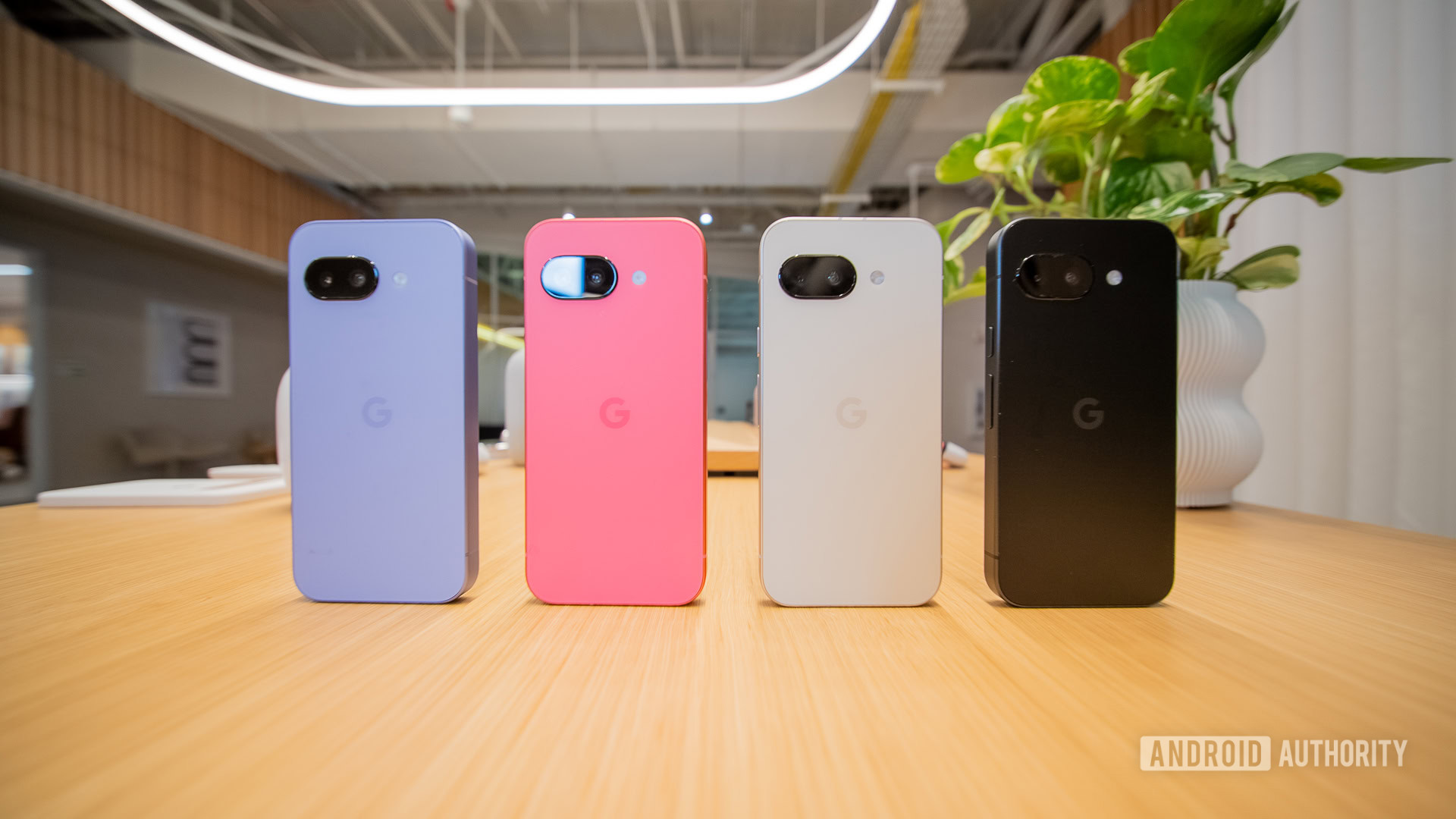
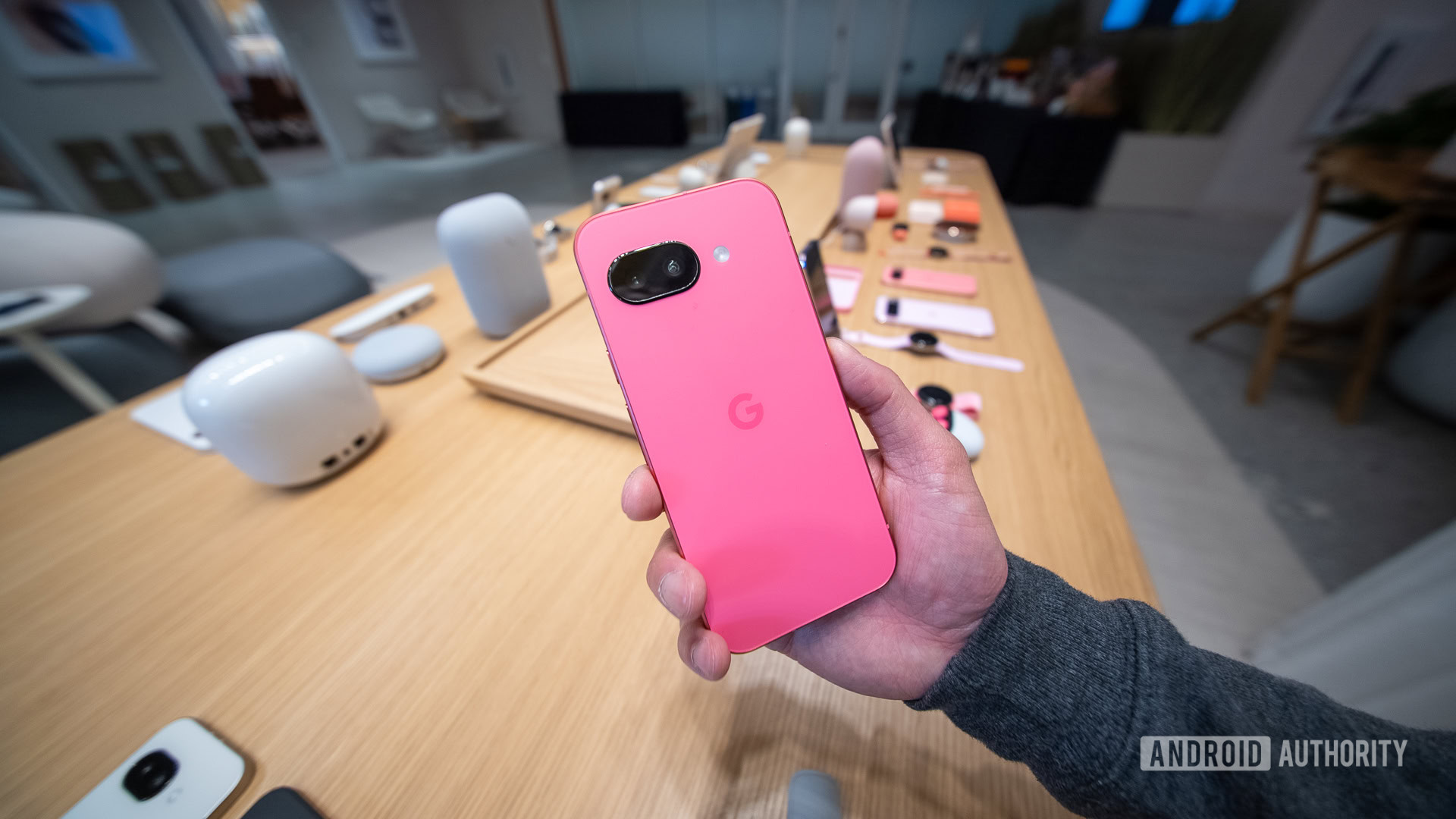
From a hardware perspective, the Pixel 9a and iPhone 16e have a few things in common. Each one has an aluminum frame, an IP68 dust/water resistance rating, and a 48MP primary camera. Both phones also support wireless charging and wired charge speeds of around 20W. But it’s with the rest of the spec sheet where things fall apart for the iPhone.
It starts with the display. I love how compact the iPhone 16e’s 6.1-inch screen is, and it being an OLED panel is great, too. But you know what’s not great? Having an outdated 60Hz refresh rate and a measly peak brightness of just 1200 nits. Meanwhile, the Pixel 9a also has an OLED panel and pairs it with a 120Hz refresh rate with up to 2700 nits of peak brightness — meaning it has much smoother animations and a lot more brightness for outdoor visibility. So far, not a great start for the iPhone.
What about cameras? There's a big disparity there, too.
What about cameras? There’s a big disparity there, too. As I mentioned above, both phones have a 48MP primary camera sensor on the back, though the Pixel sports a larger physical sensor for more light and details. Also, in the case of the iPhone 16e, that’s the only rear camera it has. Comparatively, the Google Pixel 9a has an extra 13MP ultrawide camera with a 120-degree field of view. Is it the best ultrawide sensor on the market? No, but it still allows for a much greater level of shooting flexibility than what’s possible on the iPhone 16e.
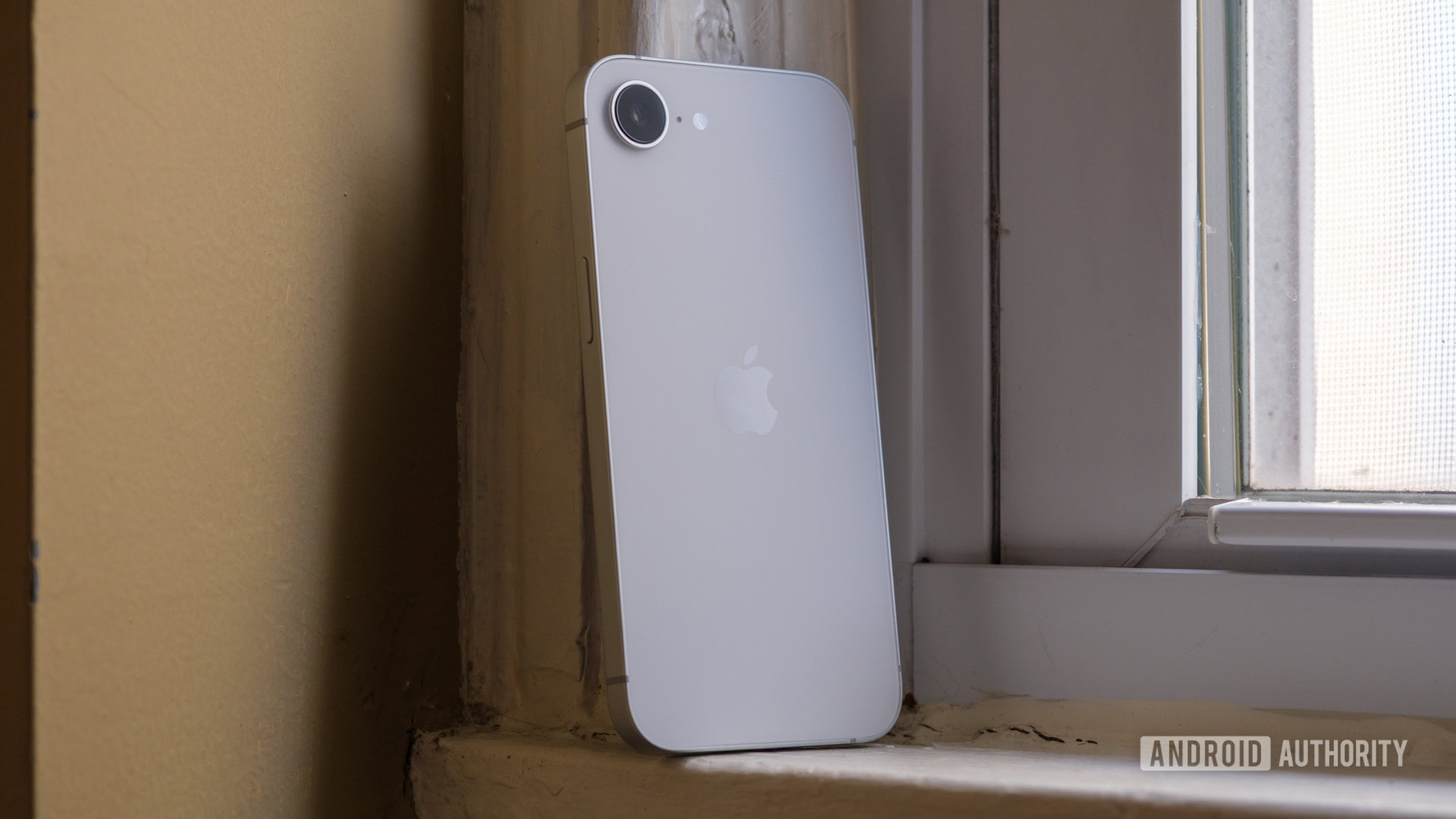
Battery capacity is another thing to look at. The iPhone 16e’s battery capacity is a little over 3,900mAh. The Pixel 9a’s battery size? 5,100mAh. We still need to test the Pixel 9a for ourselves to see just how good its battery life really is, but at least on paper, that’s a big advantage in the Pixel’s favor.
Finally, there are a lot of other quality-of-life aspects where the Pixel 9a continues to best Apple’s budget iPhone. The Pixel 9a has a USB-C 3.2 port and Wi-Fi 6E connectivity. Further, in addition to its under-display fingerprint sensor, it also has the same excellent face unlock as the regular Pixel 9/9 Pro, allowing you to unlock sensitive apps and authenticate Google Wallet purchases using just your face. The iPhone 16e, by comparison, has a slower USB-C 2.0 port, the slightly older Wi-Fi 6 standard, and just Face ID for biometric security.
The AI of it all
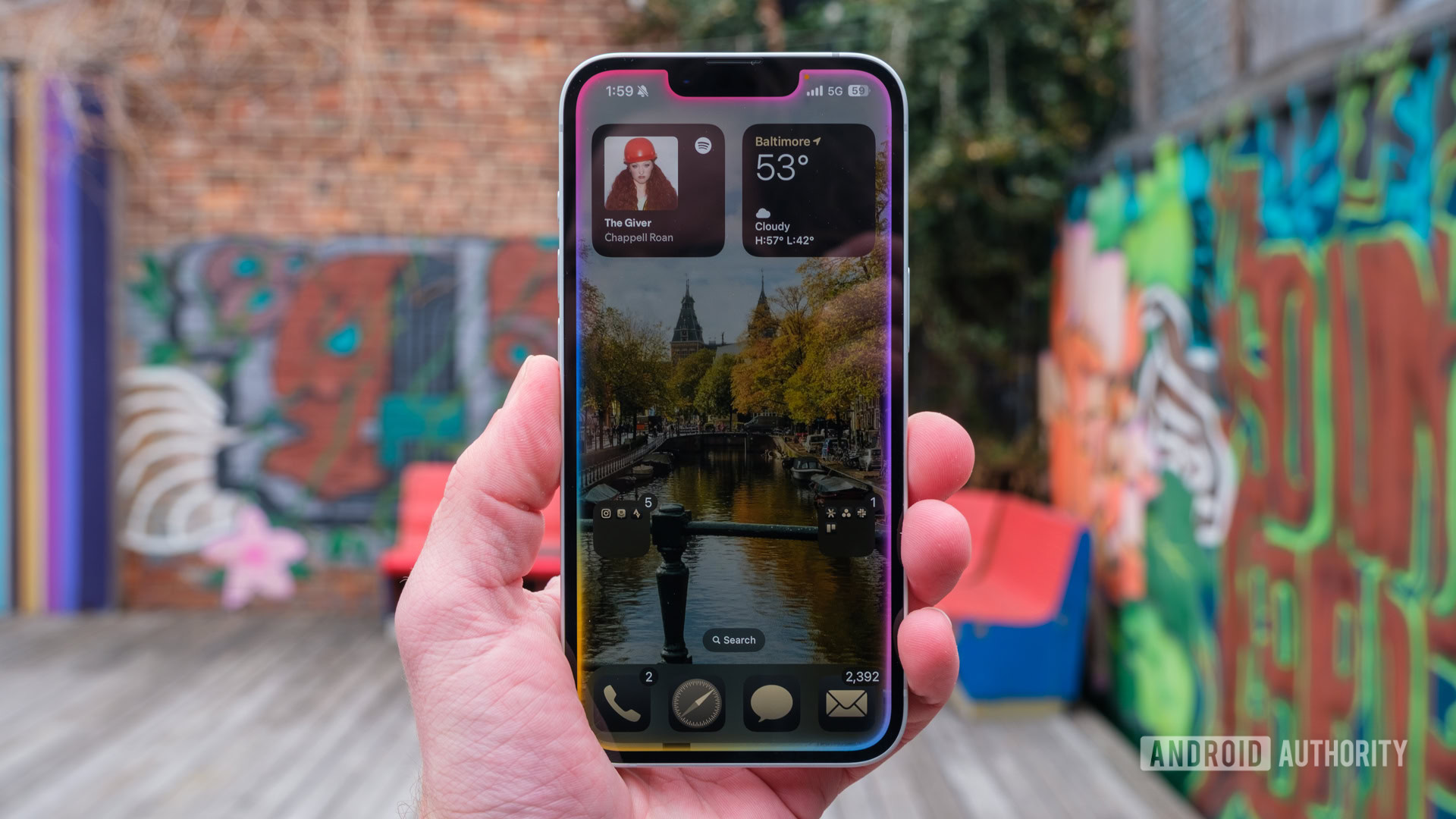
Of course, there is a counterargument to all of this. The iPhone 16e isn’t trying to be a spec powerhouse. Instead, Apple’s main goal with the phone is to offer its Apple Intelligence suite on a lower-cost handset. In that regard, the iPhone 16e is a success. It’s the cheapest phone in Apple’s current lineup with all the Apple Intelligence features you’d expect — including Writing Tools, phone call and recording transcripts, Genmoji, Image Playground, and the improved Siri.
That’s a fair point, but there’s a counter to that counterargument: the Google Pixel 9a achieves the exact same thing.
The Pixel 9a supports most of the Pixel-exclusive features we’ve come to expect over the years, such as the Pixel Recorder app, all of the Call Assist tools, and more. It also has Circle to Search, the Pixel Studio app, Gemini Live, Google’s usual suite of AI photo editing tools, and so on.
Simply put, the iPhone 16e and Pixel 9a are both “AI phones.” If the argument is that Apple had to sacrifice so many hardware specs to deliver its AI features, that doesn’t hold much weight when the Pixel 9a is equally capable on the AI front — if not more so — and still manages to one-up so many of the iPhone 16e’s specs while also costing $100 less.
Two similar (but very different) phones
On their own, some of the spec differences highlighted above may not matter to you. I prefer a 120Hz refresh rate, but you might be OK with a 60Hz one. A newer Wi-Fi standard and a faster USB-C port are nice, but they aren’t the end-all-be-all. The problem with the iPhone 16e isn’t just one or two spec compromises like that. It’s the fact that the iPhone 16e has so many of them that the Google Pixel 9a does not, all while costing $100 more. And as we just covered above, the iPhone 16e can’t lean on its AI features as a crutch to explain these shortcomings.
If you’re knee-deep in the Apple ecosystem, features like iMessage, Apple Watch support, and AirDrop are still things you can only get on an iPhone. In that case, the iPhone 16e probably makes the most sense as the phone you should buy. But even so, it’s important to be aware of the other options out there.
The Pixel 9a is a better deal than the iPhone 16e in almost every conceivable way.
To someone who’s only shopping for or looking at iPhones, the iPhone 16e can seem like a good value. But that changes the second you bring a phone like the Google Pixel 9a into the equation. The Pixel 9a proves you can make an AI-capable phone with good hardware, modern specs, and a price tag under $500, while the iPhone 16e may lead you to believe that’s impossible. The Pixel 9a is a better deal than the iPhone 16e in almost every conceivable way, and if I were in the market for a $500-$600 phone today, the Pixel is the one I would choose. Hands down.
- Joined
- Jul 5, 2001
- Messages
- 45,468
- Reaction score
- 8,598
I’m probably the only person on the Android Central staff that has not owned an iPhone.
I’ve expressed my interest in buying an iPhone a few times, much to the surprise of my friends and family. It grew mostly out of a desire for Apple to bring back the iPod Touch, which it clearly has no interest in doing. I would frankly prefer not to commit to a whole-ass iPhone in order to get the iOS experience. However, if I must, then I would prefer not to spend iPhone 16 Pro Max amounts of money to do it, even if it’s the most intriguing device of the bunch.
So, I decided that I would wait for the iPhone 16e. At the time, I assumed it would fall under the iPhone SE moniker, and while the 2022 model was enticing as an iPod Touch replacement, I figured I could hold out for the next model.
As the years went by, rumors would emerge about what the iPhone 16e would be. That included talk of an OLED display (finally) and a more modern design. Conflicting rumors went back and forth on whether it would have a notch or Dynamic Island, but it seemed like the iPhone 16e would be the cheap iPhone of my dreams.
And for a quick second, it was. Kind of.
The iPhone 16e is asking a lot for a little
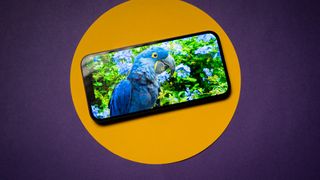
When the iPhone 16e launched, I found myself quite perplexed and at odds over the choices Apple made.
Sure, it has an OLED display for richer blacks and better contrast, but the display is stuck at 60Hz. I don’t remember the last time I used a phone with that refresh rate, and I regularly review the best cheap Android phones from companies like Motorola, phones that easily cost half the price of the iPhone 16e. Even the $399 Moto G Stylus 5G 2024 has a 120Hz OLED panel, which looks great, I might add.
Then, there’s the camera. Singular. The iPhone 16e has a single rear camera on the back, which is kind of unacceptable for a $600 phone. I’m not saying Apple should stick four cameras on the phone just for the sake of having multiple cameras, but the lack of even a secondary sensor is perplexing.
Nearly everything about the iPhone 16e was telling me not to buy it. Even Harish Jonnalagadda says in his iPhone 16e review that it's "a good phone, but a bad value right now." However, with it currently being the most affordable “new” iPhone that I can buy, I was close to pulling the trigger… that is, until the Pixel 9a launched.
The 9a pretty much affirmed my apprehensions: Apple doesn’t really know how to do value.
The Pixel 9a proves Google knows how to make a value phone
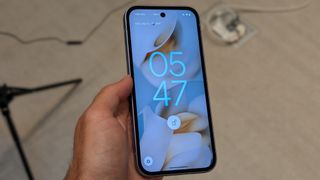
I’m not the biggest fan of Pixel phones, but I can’t deny that they’re some of the best phones you can buy. That’s why I wasn’t surprised to see that Google pretty much nailed the Pixel 9a. Based on the specs and the Pixel 9a hands-on from Android Central senior editor Michael Hicks, the phone feels like everything the iPhone 16e should’ve been.
The phone has a larger OLED display that’s more than 2x brighter and with a faster 120Hz refresh rate. It features a secondary 13MP camera for ultrawide shots, something (I learned from using the Razr Plus 2024) I realized I can’t really go without.
You also get a faster USB standard on the Pixel, and while I can’t speak to battery life just yet, the 5,100mAh battery and 30+ estimation from Google sounds pretty good compared to the 4,005mAh unit found in the iPhone 16e.
Furthermore, Apple has also been fumbling its AI rollout, delaying its long-awaited Siri upgrade. Meanwhile, Google has been going full-stream ahead with Gemini, to the point where it’s now prepping to replace the tried-and-true Google Assistant later this year. The Pixel 9a won’t have every feature from the Pixel 9, and not all AI features will be processed on-device, but Google’s software and AI are pretty solid, with plenty of fun features for Pixel 9a users to take advantage of.
I’ll also mention that you get more interesting color options with the Pixel, which is more than I can say for the rather bland black or white iPhone 16e.
This is all for a phone that costs $100 less than the iPhone 16e.
| Category | Google Pixel 9a | iPhone 16e |
|---|---|---|
| Processor | Google Tensor G4 | Apple A18 |
| Display | 6.3-inch Actua pOLED display, 1080 x 2424 resolution, 120Hz, 2700 nits peak brightness | 6.1-inch OLED, 2532 x 1170 resolution, 60Hz, 1,200 nits peak brightness |
| Operating System | Android 15 | iOS 18 |
| Memory | 8GB | 8GB |
| Storage | 128GB, 256GB | 128GB, 256GB, 512GB |
| Battery | 5,100mAh | 26 hours of video playback (exact mAh unknown) |
| Charging | 23W wired, Qi wireless charging | 20W wired, Qi wireless charging |
| Rear camera(s) | 48 MP wide camera, 13MP ultrawide camera | 48MP single camera |
| Front camera | 13MP front camera | 12MP front camera |
| Durability | IP68, Gorilla Glass 3 | IP68, Ceramic Shield |
| Colors | Obsidian, Porcelain, Iris, Peony | White, Black |
| Weight | 185.9 grams | 167 grams |
| Dimensions | 154.7mm x 73.3mm x 8.9mm | 146.7mm x 71.5mm x 7.80mm |
The iPhone 16e still as some good things going for it
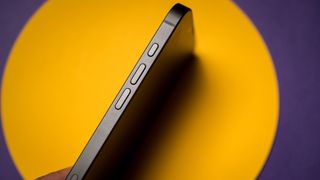
That’s not to say the iPhone 16e doesn’t have some pretty compelling specs. The A18 chip is mighty impressive and is probably much more performant than the Tensor G4. And despite having just one camera, I've always been impressed with Apple's imaging, and it looks like it still takes great images and videos, even if you miss the option to take wider shots.
There’s no doubt Apple’s FaceID is a superior facial authentication method (although I do prefer fingerprint sensors), and the Action Button is a feature I would like to see on more phones.
Aesthetically, the iPhone 16e just looks a lot better. The new camera housing on the Pixel 9a just looks awkward.
You also get more storage options with the iPhone 16e, going all the way up to 512GB. The downside is that it will obviously cost you much more, with the 128GB iPhone priced $100 higher than the 128GB Pixel 9a.
The Pixel 9a and iPhone 16a are gateway phones
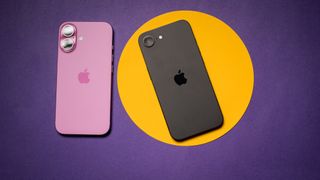
Ultimately, the Pixel 9a and iPhone 16a are both affordable ways to get hold of some of the latest hardware and software on both Android and iOS. If you’re already baked into one OS and holding onto a previous A-series Pixel or iPhone SE, then these may be worth upgrading to. They’re also good ways to bring in younger family members without breaking the bank on a new phone.
Harish says the iPhone 16e is aimed at "older iPhone users looking to switch to a (relatively) affordable model with the latest hardware," and this could also be said for the Pixel 9a.
That said, it feels like the Pixel 9a is a much better deal, with mostly better specs and a lower price tag for someone looking to save money on a new phone. Even if you’re an iPhone user, if you don’t have any allegiance to iOS, this is a phone worth keeping an eye on.
As for me, maybe I’ll just wait until Apple releases an iPhone 17e or iPhone Flip.
- Joined
- Jul 5, 2001
- Messages
- 45,468
- Reaction score
- 8,598
- Joined
- Jul 5, 2001
- Messages
- 45,468
- Reaction score
- 8,598
Last edited:
- Joined
- Jul 5, 2001
- Messages
- 45,468
- Reaction score
- 8,598
- Joined
- Jul 5, 2001
- Messages
- 45,468
- Reaction score
- 8,598
TL;DR
After months of anticipation and leaks, the Pixel 9a is here! Sort of, at least. Google announced the Pixel 9a, but you can’t actually pre-order or buy the phone yet. Google cited a “component quality issue affecting a small number” of Pixel 9a devices as the reason for the delay. A new rumor suggests that there could be more to the Pixel 9a’s delay.
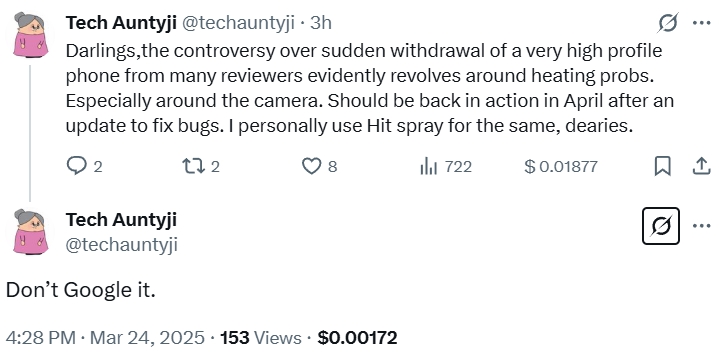
Leaker Tech Auntyji cryptically mentions that a “very high profile” phone was suddenly withdrawn because of heating issues, especially around the camera. The device is said to return in April after an update fixes its bugs, which aligns with the general timeline Google has set for the Pixel 9a and gives hope to users who want to see the device succeed as potentially the best mid-range camera phone. To end the post, the leaker says not to “Google it,” leaving little doubt about the phone the post refers to.
The Pixel 9a had already gone on sale unofficially in some regions like Dubai before it was even announced. Thanks to this gaffe, we can look back at early hands-on to assess what could be happening. For instance, YouTube Sahil Karoul got their hands on the Pixel 9a early, and they posted this nighttime video from the Pixel 9a, giving us some idea of what could be happening:
Sahil Karoul‘s early unboxing and hands-on video also has some benchmarks:
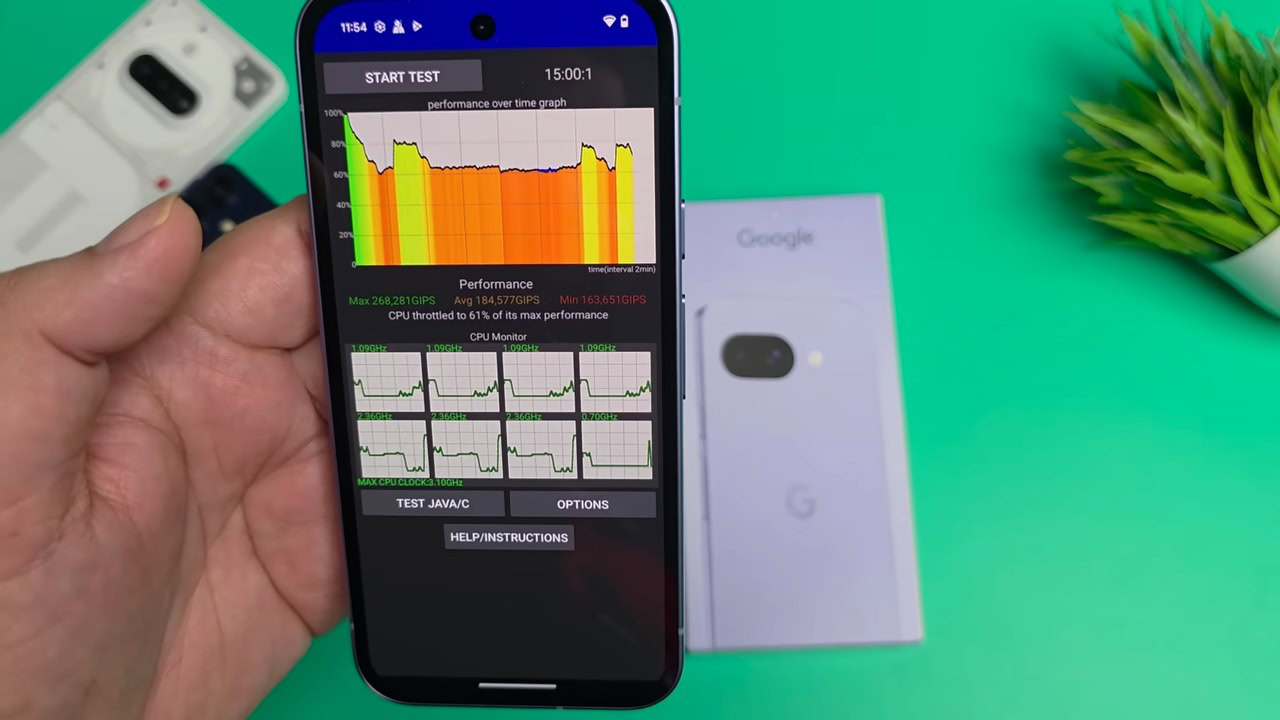
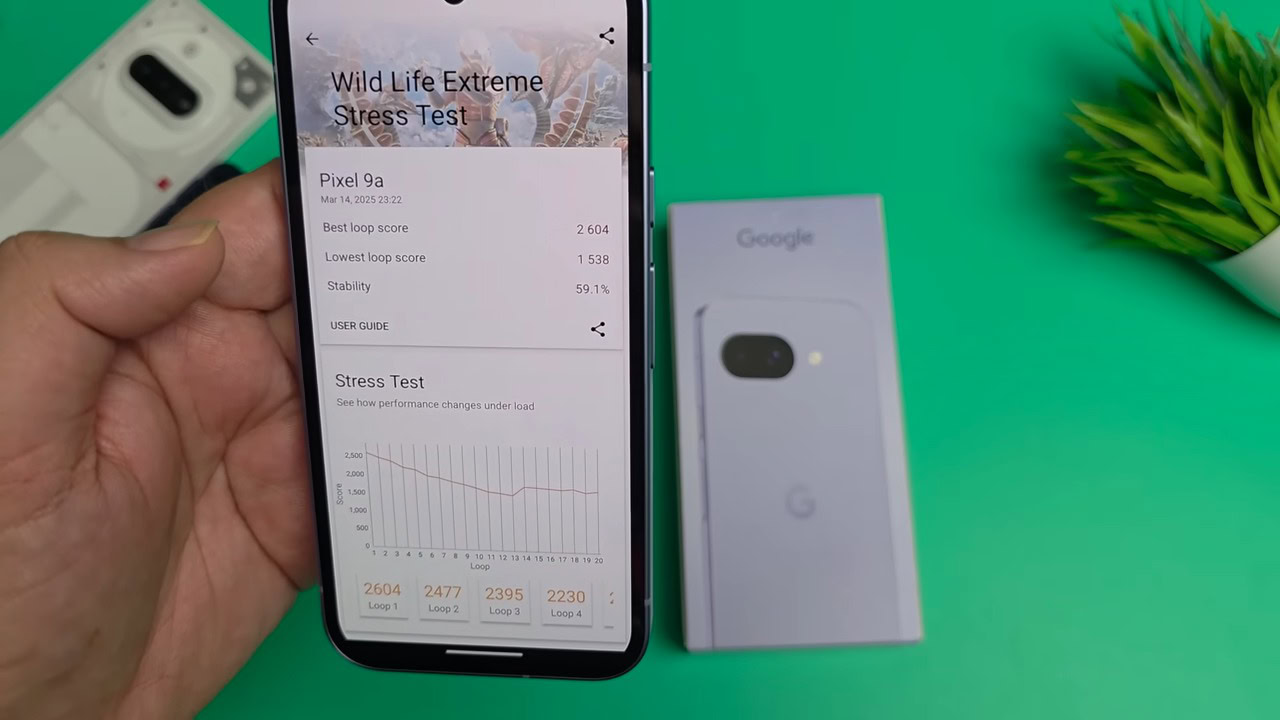
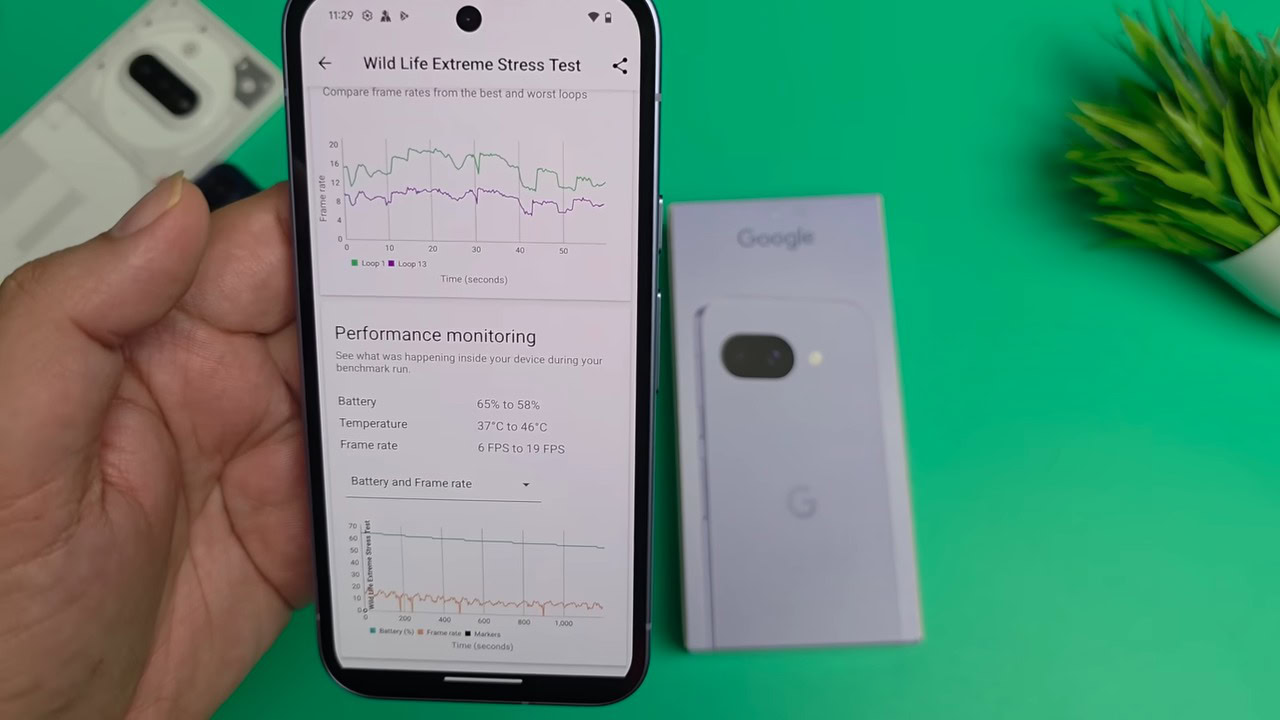
We can see the Pixel 9a throttling to about 60% of its performance in looped benchmark runs. Further in the video, the YouTuber also mentions lag when playing BGMI/PUBG, and we also spot weirdness in the Active Stabilization video (which the YouTuber calls “ultra stabilization”). However, the YouTuber does conclude that they found the Pixel 9a’s camera quite impressive.
We’ve contacted Google for further clarification on what’s happening with the Pixel 9a. We’ll also assess these claims independently with our unit when we receive it.
What are your thoughts on the Pixel 9a’s delayed availability? What could be the reason behind it? Let us know your thoughts in the comments below!
- Google announced the Pixel 9a but delayed its release due to a “component quality issue affecting a small number” of devices.
- A leaker suggests that overheating around the camera may be a silent factor in the delay.
- Early hands-on footage shows potential throttling and lag issues.
After months of anticipation and leaks, the Pixel 9a is here! Sort of, at least. Google announced the Pixel 9a, but you can’t actually pre-order or buy the phone yet. Google cited a “component quality issue affecting a small number” of Pixel 9a devices as the reason for the delay. A new rumor suggests that there could be more to the Pixel 9a’s delay.
Leaker Tech Auntyji cryptically mentions that a “very high profile” phone was suddenly withdrawn because of heating issues, especially around the camera. The device is said to return in April after an update fixes its bugs, which aligns with the general timeline Google has set for the Pixel 9a and gives hope to users who want to see the device succeed as potentially the best mid-range camera phone. To end the post, the leaker says not to “Google it,” leaving little doubt about the phone the post refers to.
The Pixel 9a had already gone on sale unofficially in some regions like Dubai before it was even announced. Thanks to this gaffe, we can look back at early hands-on to assess what could be happening. For instance, YouTube Sahil Karoul got their hands on the Pixel 9a early, and they posted this nighttime video from the Pixel 9a, giving us some idea of what could be happening:
Sahil Karoul‘s early unboxing and hands-on video also has some benchmarks:
We can see the Pixel 9a throttling to about 60% of its performance in looped benchmark runs. Further in the video, the YouTuber also mentions lag when playing BGMI/PUBG, and we also spot weirdness in the Active Stabilization video (which the YouTuber calls “ultra stabilization”). However, the YouTuber does conclude that they found the Pixel 9a’s camera quite impressive.
We’ve contacted Google for further clarification on what’s happening with the Pixel 9a. We’ll also assess these claims independently with our unit when we receive it.
What are your thoughts on the Pixel 9a’s delayed availability? What could be the reason behind it? Let us know your thoughts in the comments below!
- Joined
- Jul 5, 2001
- Messages
- 45,468
- Reaction score
- 8,598
- Joined
- Jul 5, 2001
- Messages
- 45,468
- Reaction score
- 8,598
This morning I should be putting the final touches on my Pixel 9a review, before the embargo lifts. But thanks to Google’s delay, no one has a review unit just yet. And now we’re starting to learn a bit more about this delay, it sounds like it could be due to the phone overheating.
According to a leaker on X, using the handle @techauntyji, Google has had to delay the Pixel 9a overheating problems. The leaker says “especially around the camera. Should be back in action in April after an update to fix bugs.”
Google said that this issue was affecting “a small number of units” but when Google decided to delay review units going out to reviewers, that sounds like it is definitely an overheating problem. And that’s something they didn’t want to be mentioned in reviews. Especially if they are able to fix it with an update.
Keep in mind that this is coming from a rather unknown leaker, but this does make sense. As you might expect, Google will never say what the actual issue is.
Overheating is not a surprise, given what we know about Pixel 9a
The Pixel 9a is using the newer Tensor G4, but not the newer modem. In fact, it’s using the modem from the Tensor G3, which was notoriously bad. And it’s likely what caused the Pixel 8 series to get pretty hot all the time. And now that appears to be happening to the Pixel 9a. The decision to go with this older modem is quite puzzling to say the least. Since the processor is an entire unit, this means that Google has to source different Tensor G4 units with this older modem, specifically for the Pixel 9a. Which should drive up the price.Though, interestingly, the Pixel 9a is already on sale (and was before the announcement) in a few regions like Dubai. So there are a few people with the phone already. Though, from those that have the phone, I have not heard of any overheating just yet. So it’s possible that this does affect a small number of people.
samferguson
Master Member
- Joined
- Jan 26, 2024
- Messages
- 3,547
- Reaction score
- 1,935
Looks like the active stabilization is overcompensating. Heating issues likely with the modem. Bad google, bad.

- Joined
- Jul 5, 2001
- Messages
- 45,468
- Reaction score
- 8,598
Google’s lineup of phones is becoming bloated, and I think the company should have merged the Pixel 9 and 9a into one phone and changed specs and pricing options.
The 9a launched on March 19, coming with a new design and ditching the usual pill-shaped aluminum camera bar for a flat rear panel. Priced at $499, the phone comes with AI features, including Gemini Live, Add Me, Magic Editor, the Tensor G4 chip, and seven years of OS and security updates.
So, with all of these great features at a fantastic price, why should anyone bother buying the Pixel 9 (starting at $799) when it seems the 9a has similar, if not better, features and is $300 cheaper?
Like my colleague, Andrew Myrick, wrote last year, it’s time for Google to rethink its lineup of devices and streamline its offerings.
And it turns out I'm not the only one who thinks Google needs to revamp its Pixel lineup. So does Android Authority in their recent article. That said, I don't know if I agree that Google should take the iPhone route with its lineup.
Google thinks I am wrong and here’s why
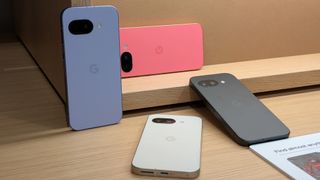
I asked Google if there were really enough consumers to justify releasing a Pixel 9 and a 9a, and I was told there was.
“When we look at our devices, the goal is really to deliver the core Pixel experience and deliver on that incredible camera, the incredible Google AI, and then access to the latest version of Android. [Pixel] 9 is leveling off of those experiences. So there’s a significant boost in image quality, based on the sensors we use in 9, and the capabilities of that camera are quite better than what we have in the A series.”
“Similarly, from a charging perspective, we find that the 9 serves a user that may be looking for that faster charging experience. And then finally, the display on our 9 devices tends to be of a higher quality than what’s on our A series,” said Shenaz Zack Mistry, senior director of product management for Pixel.
- Joined
- Jul 5, 2001
- Messages
- 45,468
- Reaction score
- 8,598
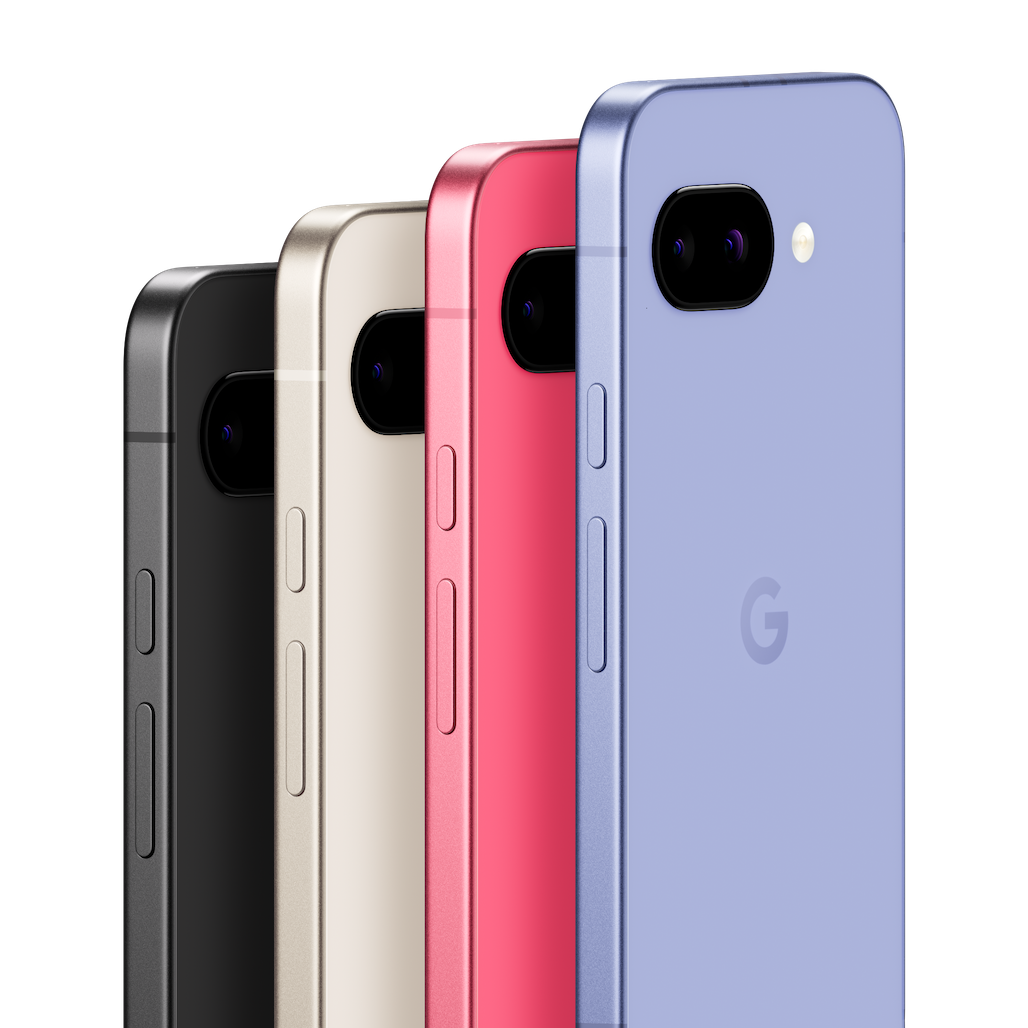
Introducing the Pixel 9a
Update: The Pixel 9a will be available on-shelf on the following dates:
- April 10th: US, Canada and UK
- April 14th: Germany, Spain, Italy, Ireland, France, Norway, Denmark, Sweden, Netherlands, Belgium, Austria, Portugal, Switzerland, Poland, Czechia, Romania, Hungary, Slovenia, Slovakia, Lithuania, Estonia, Latvia, Finland
- April 16th: Australia, India, Singapore, Taiwan, Malaysia
- Coming soon to Japan
Hey Pixel Community,
We’re excited to announce that the Pixel 9a is coming soon! Powered by our fastest, most efficient chip yet, Google Tensor G4, Pixel 9a comes with everything you expect from our Pixel 9 series — complete with a sleek redesign, upgraded main camera and Gemini built in.
You can learn all about the Pixel 9a in our latest blog post, and get all the details on tech specs on the Google Store.
Get Notified When Pixel 9a is available
Pixel 9a will be available at the Google Store and through our retail partners beginning in April, and you can sign up today to get notified as soon as it's available. Click the 'Get notified' button on the Google Store and enter your email address. You’ll be notified via email when the device is available for purchase.
Thanks,
The Google Pixel Team
- Joined
- Jul 5, 2001
- Messages
- 45,468
- Reaction score
- 8,598
- Joined
- Jul 5, 2001
- Messages
- 45,468
- Reaction score
- 8,598
Run your fingers across the back of the Google Pixel 9a, and you’ll notice something missing. The distinctive camera bar, a hallmark of recent Pixel design, is gone. By removing that signature element, Google hasn’t just flattened the phone’s profile but has also stripped away much of the Pixel’s unique character, leaving it looking bland to say the least.
For me, a phone isn’t just a functional tool. It should be visually appealing as well — something unique I actually enjoy looking at and holding. The latest Pixel 9a, with this design shift, has lost that vital spark, and frankly, I’m not a fan.
Personality, gone
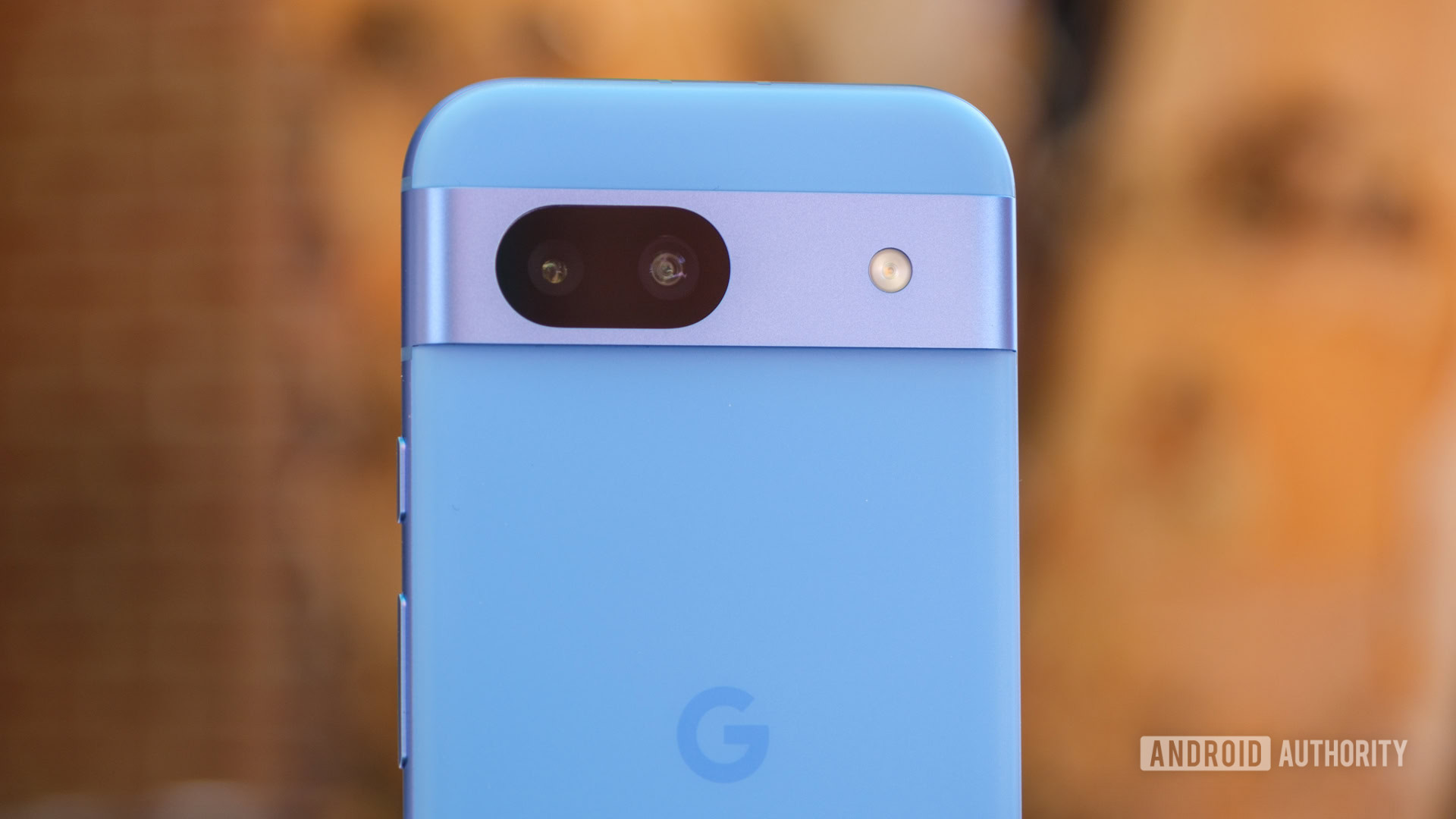
Let me start by saying that I think the Pixel 9a is a fantastic phone. I’ve consistently recommended the Pixel A-series to most people. It offers more than enough power for the average user, boasts a terrific software experience with a great support policy, and won’t break the bank. In terms of value and core functionality, you really can’t go wrong.
But design matters, and with the Pixel 9a, I can’t help but point out the obvious: the phone looks very generic. Sure, most Android phones share a similar facade these days — dominated by a screen with ever-shrinking bezels. There’s not much room for expression there. The back panel, however, is where the real design action is, or at least could be. It’s a canvas allowing manufacturers to experiment.
This is where we see various color choices, sometimes distinct patterns or textures, and, of course, the camera bar. Yes, the Pixel 9a offers a few appealing color options — Obsidian, Peony, Iris, and Porcelain — a few of which inject some life into the device, preventing it from being a totally monochrome slab. But let’s be honest: offering different colors is the bare minimum expected in today’s market. It’s standard practice, hardly a defining design characteristic that screams personality. A pleasant color doesn’t compensate for removing a truly unique, structural design element that defined its predecessors.
That camera bar that spans horizontally across the back of most recent Google smartphones is distinctively Pixel. If you know your smartphones, you could spot a Pixel from afar because of it. It’s not just a bump; it’s a confident design choice, a visual statement that adds character and personality. It provides a pleasing contrast, often featuring a different finish or color (like polished metal against a matte backplate), breaking up the monotony and giving the phone a clear visual anchor. It’s thoughtfully designed. It’s unique. It’s a Pixel.
Not anymore. The absence of the distinctive camera bar on the Pixel 9a genuinely bothers me. As someone who deeply appreciates design — the look, the feel, the story a product tells through its form — a phone’s aesthetics need to resonate. The Pixel 9a’s design simply doesn’t speak to me. At all. It feels like a retreat from boldness, and it’s big enough of an issue for me personally to make it a dealbreaker.
The differences between devices in terms of raw power, screen quality, and core features aren’t as vast as they used to be. Looking at flagships, for example, they all offer plenty of performance, great software support, premium materials like glass and metal, and extras like wireless charging and water resistance. While smaller hardware and software differences certainly add up, design remains one of the areas where companies can truly stand out from the crowd. It’s an opportunity to be different and take a few risks. That’s what I want to see from tech companies, especially those known for innovation. It’s sad, then, that Google has gone the other way with the Pixel 9a, playing it way too safe.
Design isn't just about pure, sterile function.
I understand the counter-argument. Some people really dislike camera bumps. A perfectly flat phone might feel sleeker in the hand or pocket, and it won’t rock when laid flat on a table (although, that was rarely a significant issue with the wide Pixel bar). But design isn’t just about pure, sterile function. It’s also about expression. About creating something that evokes feeling. Good design, like art, can make you feel something; it brings up emotions, makes you think, and can enhance your connection to an object. While I wouldn’t claim the Pixel’s camera bar sparked immense joy in my day-to-day life, as it’s still just a phone, its unique visual identity makes holding and using it a more enjoyable experience.
What’s done is done for the Pixel 9a. I can only hope this design direction is limited to the A-series this year and doesn’t signal a permanent shift for the entire lineup. Based on the latest renders currently circulating for the upcoming Pixel 10 series, there might be reason for optimism. These early glimpses suggest the flagship Pixels will retain their distinct camera bar. If true, I’ll be relieved to see that Google hasn’t entirely abandoned the design personality its phones have become known for.
Important Forum Advisory Note
This forum is moderated by volunteer moderators who will react only to members' feedback on posts. Moderators are not employees or representatives of HWZ Forums. Forum members and moderators are responsible for their own posts.
Please refer to our Community Guidelines and Standards and Terms and Conditions for more information.