Google Tensor G3 and beyond

limmk

High Supremacy Member
Joined
Jul 5, 2001
Messages
41,198
Reaction score
8,166

Google Finishes Tensor G5 Design: Goodbye Samsung​

挑戰iPhone!台積電3奈米助攻 Google自研手機晶片奏捷

據傳Tensor G5晶片成功進入「流片」階段,將展現台積3奈米製程工藝​


圖/美聯社

Google自研手機晶片有重大進展,據供應鏈消息指出,Google與台積電達成合作,搭載於Pixel 10系列之Tensor G5晶片成功進入Tape-out(流片)階段。Google於自主研發手機晶片道路上邁出關鍵一步,也為其挑戰iPhone地位奠定了基礎;從過往三星獨家代工轉向台積電,更代表台積電在3奈米製程節點之成功。

Tensor G5是Google首款完全自主設計的手機晶片。此前四代Tensor晶片都是基於三星Exynos平台進行修改及客製;而Tensor G5不僅採用Google自主的架構設計,還將使用台積電最新的3奈米製程工藝,外界預估,將大幅提升晶片的性能表現。

據供應鏈透露,進入Tape-out重要性在於,能夠檢驗晶片設計是否成功,同時也真正考驗Google的關鍵階段,距離成功僅剩一步之遙。

對Google而言,成功研發Tensor G5意義重大,將使Google實現從晶片到作業系統、從應用程式到設備的全面掌控,增強在智慧型手機市場之競爭力;特別是在AI功能方面,Google有望借助自研晶片在行動設備上實現更強大的AI體驗。
自研晶片為Google帶來多方面優勢。首先,能更好地將軟硬體整合,提升整體使用體驗;其次,Google可以將最領先的AI技術更快地應用至硬體上,為用戶提供更智慧的功能。自研晶片有助於Google實現產品差異化,在競爭激烈的智慧型手機市場中脫穎而出。

然而,自研手機SoC是一項極具挑戰性的任務。目前全球僅有蘋果、三星和華為等少數幾家公司成功做到;Google做為晶片設計領域的新手,還需要克服諸多技術難關。Google採取漸進式的策略,自2021年發布的第一代Tensor開始,Google逐步減少對三星Exynos平台的依賴,同時不斷增加自主設計的元件,既降低風險、同時積累寶貴的經驗。

Tensor G5的成功對Google為關鍵里程碑。不僅代表Google在手機硬體領域的重大突破,更是挑戰iPhone、爭奪高階AI手機市場的關鍵一步。

// ctee
 

limmk

High Supremacy Member
Joined
Jul 5, 2001
Messages
41,198
Reaction score
8,166

台積電完勝三星!Google不忍了也轉單 外媒曝殘酷真相


外媒報導,Google Pixel 10系列手機的Tensor G5處理器(SoC),目前已進入 Tape-ou(流片)階段。圖/美聯社

【中時新聞網 邱怡萱】三星3奈米製程良率不佳,外傳低於20%,導致原有客戶出走,最新傳出Google Pixel 10搭載的Tensor G5晶片,將改為台積電代工生產。

綜合外媒報導,Google Pixel 10系列手機的Tensor G5處理器(SoC),目前已進入 Tape-ou(流片)階段。 Google首款完全自研手機處理器Tensor G5,前四代Tensor晶片都是三星Exynos修改,由三星代工生產,如今已從過往三星獨家代工轉向台積電。

報導稱,Tensor G5採用Google自研架構、台積電3奈米製程,晶片性能可望大幅提升。

外媒更直指三星和台積電代工的差異,以高通 Snapdragon 8 Gen 1和8 Plus Gen 1為例,前者三星代工廠、後者台積電製造,相比之下後者發熱量減少,效率提升30%,性能也改善。

三星良率不佳,另根據科技媒體《WccfTech》報導,三星3奈米製程良率低於20%,無法達到量產標準,新旗艦機恐怕棄用自家晶片,改用聯發科晶片。

// ctee
 

xonix

Arch-Supremacy Member
Joined
Mar 24, 2001
Messages
17,587
Reaction score
1,689

台積電完勝三星!Google不忍了也轉單 外媒曝殘酷真相


外媒報導,Google Pixel 10系列手機的Tensor G5處理器(SoC),目前已進入 Tape-ou(流片)階段。圖/美聯社

【中時新聞網 邱怡萱】三星3奈米製程良率不佳,外傳低於20%,導致原有客戶出走,最新傳出Google Pixel 10搭載的Tensor G5晶片,將改為台積電代工生產。

綜合外媒報導,Google Pixel 10系列手機的Tensor G5處理器(SoC),目前已進入 Tape-ou(流片)階段。 Google首款完全自研手機處理器Tensor G5,前四代Tensor晶片都是三星Exynos修改,由三星代工生產,如今已從過往三星獨家代工轉向台積電。

報導稱,Tensor G5採用Google自研架構、台積電3奈米製程,晶片性能可望大幅提升。

外媒更直指三星和台積電代工的差異,以高通 Snapdragon 8 Gen 1和8 Plus Gen 1為例,前者三星代工廠、後者台積電製造,相比之下後者發熱量減少,效率提升30%,性能也改善。

三星良率不佳,另根據科技媒體《WccfTech》報導,三星3奈米製程良率低於20%,無法達到量產標準,新旗艦機恐怕棄用自家晶片,改用聯發科晶片。

// ctee
No way Samsung will use mediatek chips for their flagships
 

limmk

High Supremacy Member
Joined
Jul 5, 2001
Messages
41,198
Reaction score
8,166


Google may continue relying on TSMC, and use its 2nm fabrication process, for its Tensor G6 chipset. The Taiwanese company’s foundries are ready to mass-produce the Google Tensor G5.

Google to tap TSMC’s 2nm fab platform for Tensor G6 SoC​

Google launched the Pixel 9 series of flagship Android smartphones a few days ago. The lineup includes the Pixel 9, the Pixel 9 Pro, the Pixel 9 Pro XL, and the Pixel 9 Pro Fold. The Google Tensor G4 SoC (System on a Chip) powers all these devices.

The next generation of the Pixel smartphones would have the Tensor G5 chipset. Google has reportedly partnered with the Taiwan Semiconductor Manufacturing Company or TSMC for this SoC.

Several reports have suggested Google severed ties with Samsung Foundry and shifted production of the Tensor G5 over to TSMC. A new report claims Google would continue relying on TSMC for the Tensor G6 as well.

“If Google collaborates with TSMC, it could take a considerable amount of time before they return to Samsung for production. Improving yield rates to prove product performance is the best course of action,” Business Korea reported,

TSMC’s gain is Samsung’s loss?​

Google initially relied on Samsung to manufacture the Tensor chipset. However, Samsung Foundry has been struggling with yield. Some experts have suggested Samsung is struggling with low yield on its production of 3nm chips, which may be as low as 20%.

Google has reportedly designed the Tensor G5 from the ground up. The company may have optimized the chipset to be manufactured by TSMC.

TSMC is expected to fabricate the Tensor G5 on its second-generation 3nm process node (N3E). The company has already perfected its latest advanced chip-production technology for the upcoming iPhone 17 series, which will be 2nm. TSMC could start shifting production of some chips by late next year.

Simply put, Samsung appears to have lost Google’s business. The company has hinted it working on improving its production yield but it would certainly take time to improve yields.

Incidentally, the Google Pixel experience isn’t dependent on the highest clock speeds. Buyers acquire a Pixel smartphone for its clean Android OS and Google’s innovative features. Hence, it would be interesting to see how well the TSMC’s 2nm chips work in the upcoming Pixel devices.
 

limmk

High Supremacy Member
Joined
Jul 5, 2001
Messages
41,198
Reaction score
8,166


Google is currently developing its next-gen Tensor G5 and Tensor G6 mobile processors. The former is expected to be in charge of handling operations on the upcoming Pixel 10 series devices. The company is developing the new chipset using TSMC’s 3nm fabrication process. Some details about the new SoC were leaked earlier. Now, the Google Tensor G5 processor has appeared on Geekbench, which shows its performance potential.

Google Tensor G5 chipset’s performance details have leaked via Geekbench​

The upcoming Google Tensor G5 processor has been benchmarked by Geekbench, which has revealed its performance potential. The SoC has been benchmarked with the codename “Google Frankel”. It was previously rumored to be called “Laguna”. The chip has managed to achieve a single-core score of 1,323 points, while the multi-core score is mentioned as 4,004 points.
It looks like the Tensor G5 has lower benchmark results than the Tensor G4. Even, it has a lower multi-core score than the Apple M4 Max chipset’s single-core scores. However, the SoC could have better results in its final commercial version.

Tensor G5 SoC will have a new “1+5+2” CPU cluster​

It appears that Google will utilize a new “1+5+2” CPU cluster in the Tensor G5 chipset. The processor is benchmarked with a main core with a clock speed of 3.40GHz. There also are five cores featuring 2.86GHz and two 2.44 cores. The listing also mentions the presence of an Imagination Technologies PowerVR D-Series DXT-48-1536 GPU. The SoC was tested with 12GB of RAM.
Furthermore, the Geekbench results suggest that the early version of the Google Tensor G5 SoC needs significant improvements. That said, the Tensor G5 will be Google’s first SoC to utilize TSMC’s 3nm “N3E” architecture. It will certainly improve the performance of the Pixel phones significantly. It will support the AI capabilities on-device itself. We can expect the rumor mill to reveal more details of the processor in the coming weeks or months, so stay tuned for regular updates.

Google Tensor G5 Geekbench performance
Google Tensor G5 Geekbench performance 1
 

limmk

High Supremacy Member
Joined
Jul 5, 2001
Messages
41,198
Reaction score
8,166


he mobile industry finds itself at yet another crossroads. On the one hand, we have Qualcomm’s new Snapdragon 8 Elite, offering astronomical levels of CPU and GPU performance that push our humble smartphones ever closer to the laptop sphere. On the other hand, we have Google and its Tensor project, seemingly far more content with “good enough” performance as long as it can power unique AI and photography features.

Of course, it would be wrong to frame this performance gap as solely an engineering choice. Qualcomm is reaping the benefits of a very expensive CPU division acquisition and decades of industry experience, while Google is only just crawling out of Samsung’s shadow to start on its independent chipset journey.

Still, if you’re debating whether to buy a new Google Pixel 9, wait for the Samsung Galaxy S25, or pick up something from China, you have a tough choice to make about whether performance or features are your top priority. Which one should you pick?

Snapdragon 8 Elite vs Tensor G4 specs​

Snapdragon 8 EliteTensor G4
CPU Config2x 4.32GHz (Oryon)
6x 3.53GHz (Oryon)
1x Arm Cortex-X4 (3.1GHz)
3x Arm Cortex-A720 (2.6GHz)
4x Arm Cortex-A520 (1.92GHz)
GPUAdreno @ 1.1GHz
(ray tracing support)
Arm Mali-G715 (MC7?) @ 940MHz
AIHexagon
(fused scalar, tensor, and vector)
Third-gen Tensor Processing Unit
RAM supportLPDDR5XLPDDR5X
4G/5G ModemX80 LTE/5G (integrated)
4G LTE
5G sub-6Ghz and mmWave
NB-NTN (satellite) support
Exynos 5400 LTE/5G
4G LTE
5G sub-6Ghz and mmWave
NB-NTN (satellite) support
Other networkingBluetooth 6.0
Wi-Fi 7, Wi-Fi 6/6E (802.11ax), Wi-Fi 5 (802.11ac), 802.11a/b/g/n
Bluetooth 5.3
Wi-Fi 7, Wi-Fi 6/6E (802.11ax), Wi-Fi 5 (802.11ac), 802.11a/b/g/n
ProcessTSMC 3nmSamsung 4nm

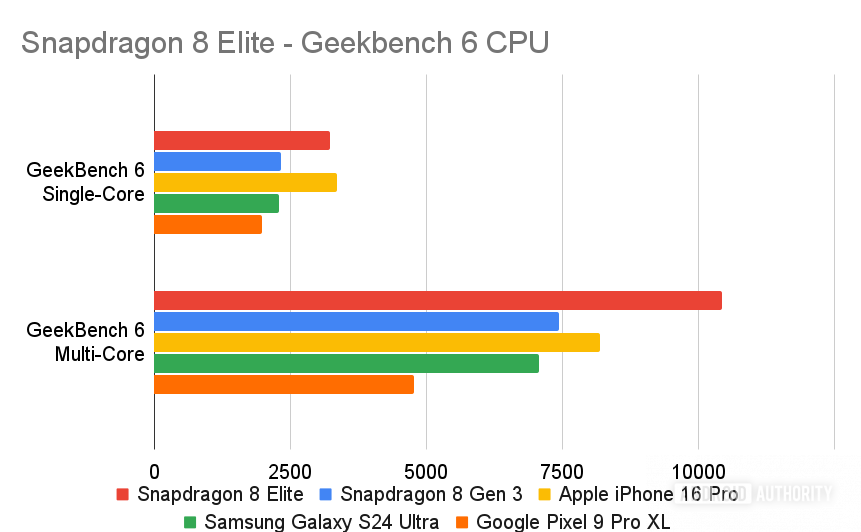
To start, let’s quickly recap a few key differences between the Snapdragon 8 Elite and the Tensor G4. Qualcomm’s in-house developments are the headline feature this year, beginning with its Oryon CPU core. It’s based on the Arm architecture, like all smartphone CPUs, but appears to be a larger-than-typical implementation that also allows for aggressive clock speeds as high as 4.32GHz. The 8 Elite features two Prime cores and six Performance cores, the latter of which has a lower but still significant 3.53GHz clock speed.

Google’s Tensor G4 is built from Arm’s Cortex series of “off-the-shelf” CPU parts, with one big Cortex-X4 core, three mid-tier Cortex-A720s, and four A520 efficiency cores. It has as many cores in total and is far from a sluggish setup, but its far lower clock speeds and slightly older architecture put it well behind the Snapdragon 8 Elite based on our benchmark numbers. Qualcomm’s new CPU is up to twice as fast.

Snapdragon 8 Elite Geekbench 6 CPU


This performance differential is reflected in the graphics department. Tensor’s GPU setup has long trailed Snapdragon, offering performance that is more equivalent to flagship chips from a couple of generations ago. Its Mali-G715 GPU still lacks ray tracing capabilities, which is hardly a major feature but one that mobile gamers looking for a future-proof purchase should take note of.

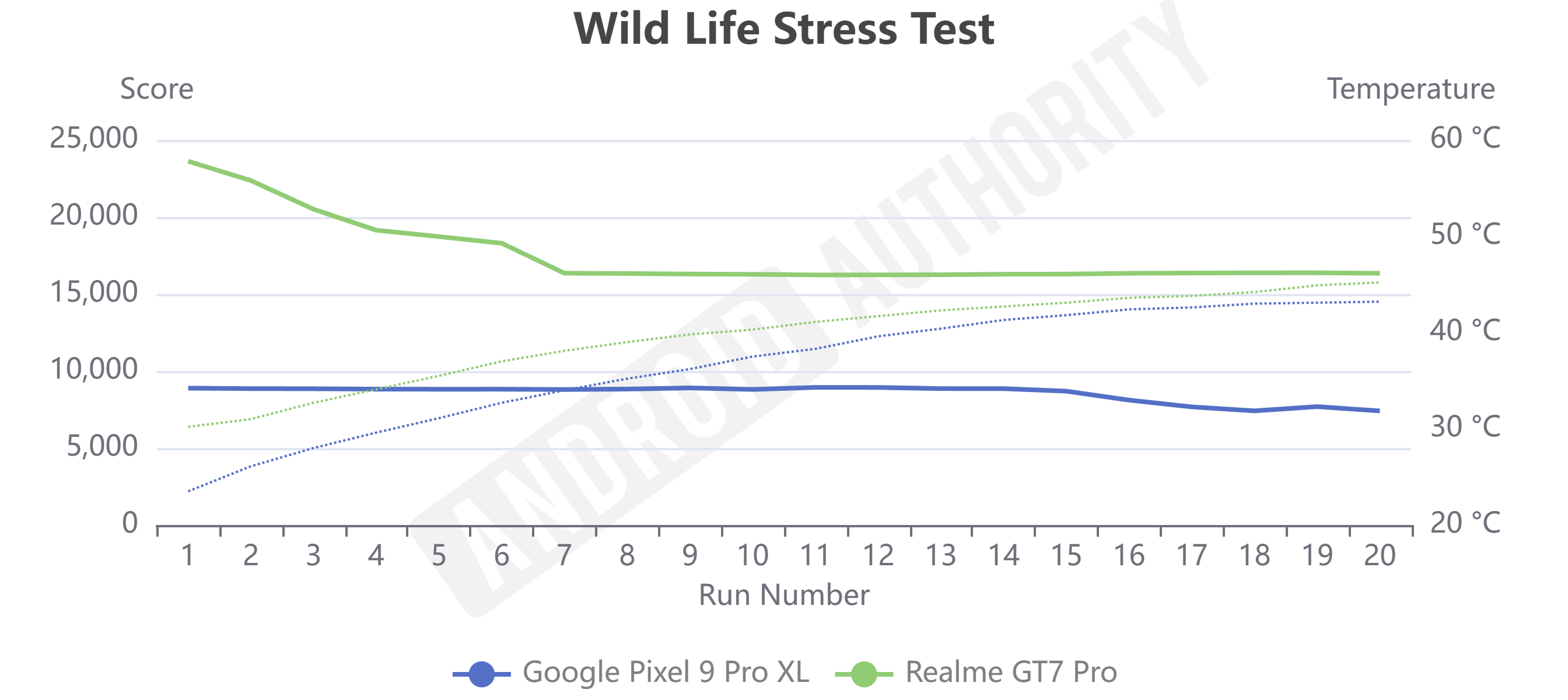
8 Elite vs TG4 Wild Life Stress Test


Meanwhile, the Snapdragon 8 Elite jumps ahead with an up to 40% improvement over its already industry-leading Adreno GPU. Sustained performance is looking a bit wobbly, but Qualcomm’s new sliced architecture is the fastest GPU in the mobile space by some distance. With ray tracing and support for advanced game engine features, like Unreal’s Nanite, it’s clear that Snapdragon is by far the better choice for gamers.

When it comes to raw speed, Tensor is miles behind. But how much performance do you really need?

Clearly, the Snapdragon 8 Elite is the chip to pick if you want the very best performance a smartphone has to offer. That said, it’s currently overkill for the vast majority of daily tasks, which the Tensor G4 handles more than competently as well.

Elsewhere, you’ll find broadly similar capabilities, with both sporting 6GHz and mmWave 5G capabilities, Wi-Fi 7 support, and even NTN satellite capabilities. Google’s Pixel series isn’t behind when it comes to these all-important connectivity features. Qualcomm has fancy extras in its XPAN, aptX, and Snapdragon Seamless tools, but these are more niche features that haven’t seen broad adoption quite yet. Still, if you have some fancy aptX audio gear, a capable Snapdragon phone nets you those benefits too.

Features vs performance, what matters most?​

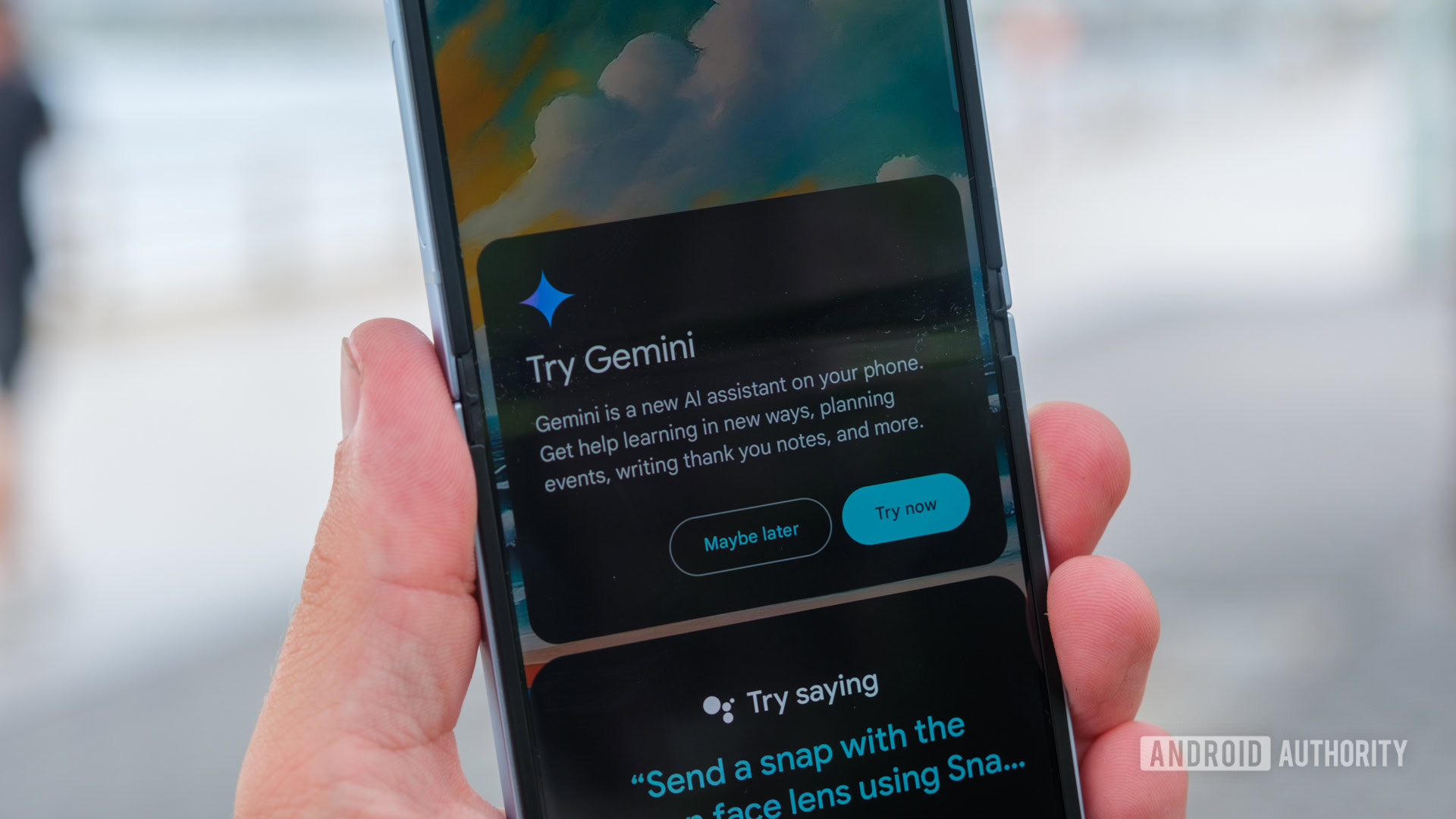
Samsung Galaxy Z Flip 6 gemini pop up


Qualcomm promises to support the Snapdragon 8 Elite for eight years, allowing partners to keep their phones ticking along just as long as Google’s Pixel series. With long-term support available from both platforms, future-proof performance is clearly in Snapdragon’s favor.

Still, Google has done a mostly solid job Feature-Dropping new additions to its Pixel smartphones, and it’s those exclusive goodies that lend the series continued appeal despite being far from the performance bleeding edge.

Whether it’s first access to Gemini Live, its renowned computational photography consistency, or exclusive tools like Best Take, software is the Pixel’s unique selling point, and no one builds on the core Android experience better than Google. That said, the TPU in the Tensor G4 is the same as in the G3, so we’re in a holding pattern for Google’s on-device AI advancements. The next jump might come with the Pixel 10 and its Tensor G5 chip.

None of Qualcomm's partners do software quite as well as Google .

That said, Qualcomm places heavy emphasis on its AI and imaging capabilities too, and the Snapdragon 8 Elite is even more powerful in this regard. While it’s difficult, if not impossible, to benchmark the wide range of AI workloads between chips, Snapdragon’s weakness is that its partners don’t have the AI development experience that Google has.

Partner implementations of Qualcomm’s unique chipset features have been historically hit and miss, and that’s being kind. Few have taken advantage of the various demos we’ve seen, from object segmentation to Stable Diffusion. Even fewer have robustly backported features to older generations as Google does, with Samsung standing out as the obvious exception.

Still, the Snapdragon 8 Elite supports Gemini Nano if you’re into AI assistants, and its imaging capabilities already power some of the industry’s best camera phones, such as the Xiaomi 14 Ultra. It’s not like Snapdragon owners have to compromise a lot on these core features, but Pixel clearly does more with less.

Snapdragon vs Tensor: Which should I pick?​

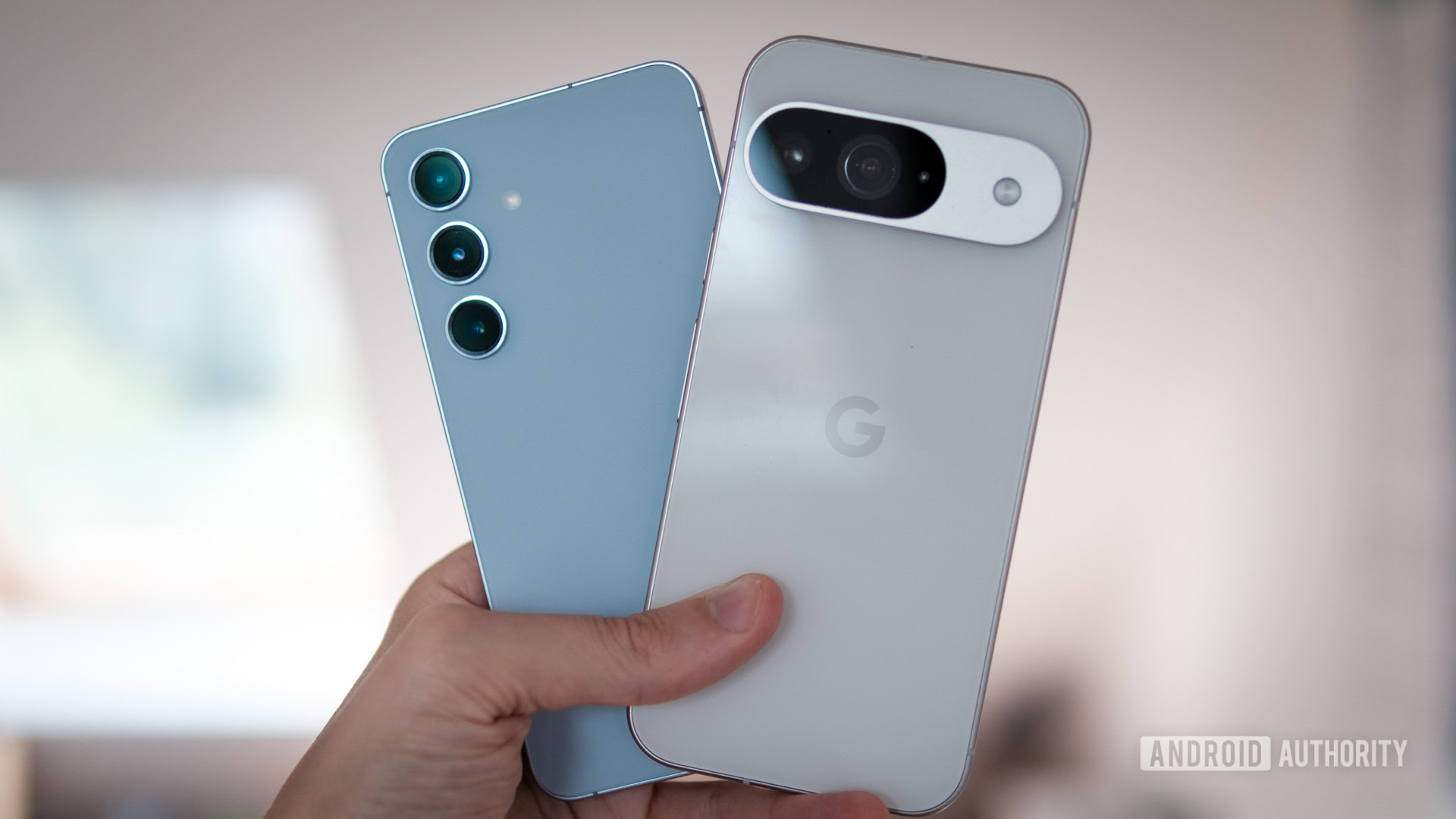
Google Pixel 9 and Samsung Galaxy S24 in hand


Obviously, there’s a lot more than chipsets when it comes to picking out your next smartphone. Cameras, multimedia capabilities, and price, of course, all weigh probably even more heavily on the mind these days.

Still, when it comes to Google’s Pixel series versus the fleet of Snapdragon 8 Elite-powered smartphones that’ll be hitting the market soon, there’s a pretty stark choice. If you’re looking to keep your next phone for five or more years, the Snapdragon 8 Elite is going to hold up much better for next-gen use cases and gaming.

Snapdragon is the better chip, but updates, repairability, and other specs matter too.

However, you also have to consider how the manufacturer’s update policy is going to play out over that time, too. Prompt updates and a steady stream of new features remain Google’s domain for now, but we’ll see how Samsung and others do this generation. Similarly, battery replacements and repair costs are significant factors in a long-term purchase, and Google does pretty well here, too.

 

limmk

High Supremacy Member
Joined
Jul 5, 2001
Messages
41,198
Reaction score
8,166


Google’s Pixel smartphones pride themselves on superb software but haven’t quite garnered the same reputation for their processor hardware. Despite custom silicon in the form of Google’s Tensor chip, performance and power consumption have been hit-and-miss. However, things have anecdotally improved in recent generations, including the new Pixel 9 series.

But is there any data to back up many of our gut feelings? We’ve been testing smartphones for years, so I dug out our results for the Pixel 6 Pro and its original Tensor processor to compare against the latest Pixel 9 Pro XL and its Tensor G4, and every model Pro in between. Let’s get into it.

Google’s Tensor under the microscope​

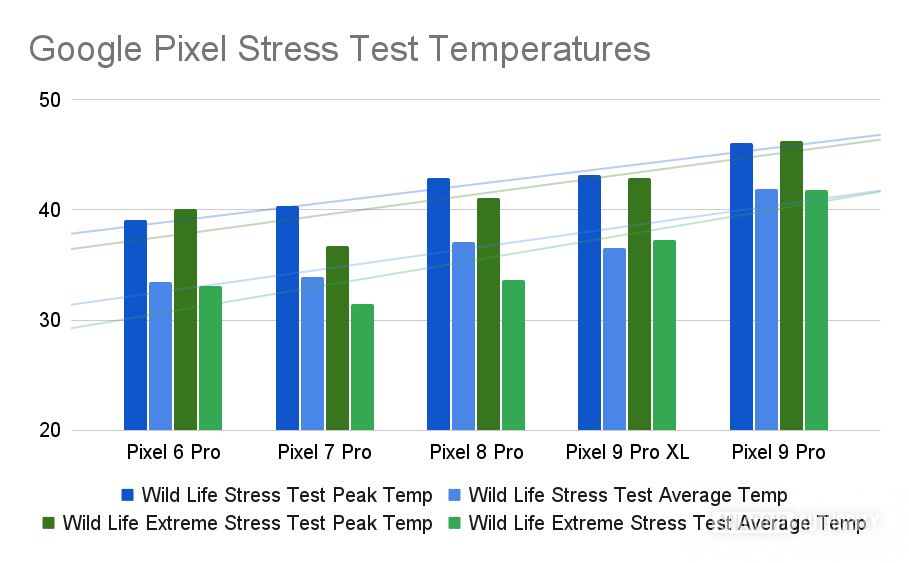
First, stress test runs through 3DMark’s Wild Life benchmarks provide us with a very good look at how the phones handle sustained performance when running under heavy load. We’ve tracked the phones’ internal/battery temperature (so how warm the phone feels to the touch rather than inside the CPU) to see if newer models are running hotter or cooler. Think of this as a worst-case scenario rather than anything close to the temperatures you’ll experience scrolling Instagram or flipping through web pages.

Google Pixel Stress Test Temperatures


Still, the bad news is that temperatures have risen quite sharply. Over the course of the 20-minute test, both the maximum and average temperatures on the Pixel 9 Pro XL were higher than those on the Pixel 6 Pro—from peaks of 40.1°C to highs of 43.2°C. That said, the latest model suggests this trend is slowing when compared to the Pixel 8 Pro, showing only marginal increases in peak and average temperatures.

Shrinking down the Pixel 9 Pro means it runs hotter than the XL.

The exception here is the Pixel 9 Pro; it runs considerably hotter than the 9 XL model and the Pixel 8 Pro. Clearly, the smaller enclosure space leaves less space for robust cooling to move heat away, meaning a warmer phone in hand and the potential for increased performance throttling.

Google Pixel Stress Test Stability


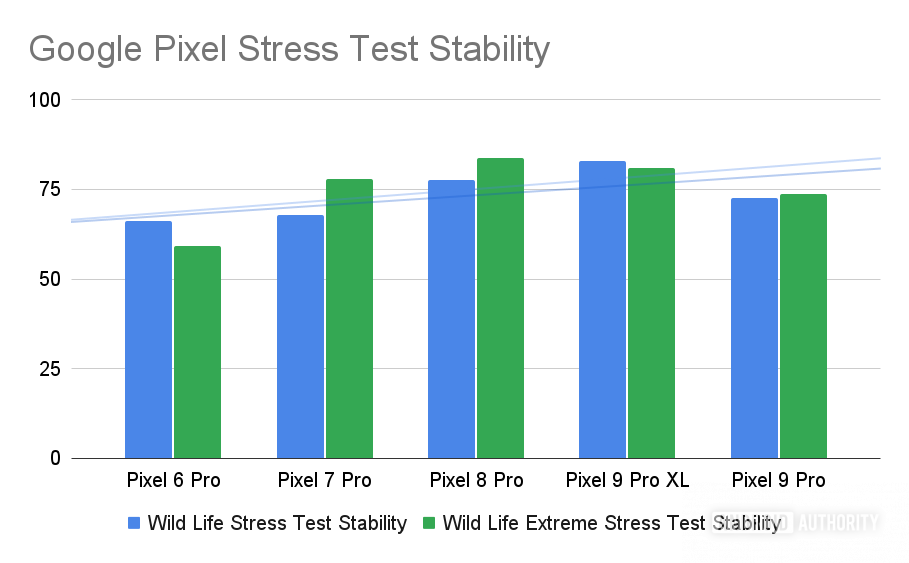
However, temperatures don’t paint the entire picture. While internal heat has gone up, each Pixel Pro model has vastly improved its stress test stability score. This seems counterintuitive but highlights that more recent phones are happy working in higher temperatures environments before throttling performance. How can this be?

Better cooling is most likely to influence these results. These temperatures reflect the heat throughout the device rather than just in the processor. Superior cooling will move that heat away from the SoC and throughout the device. So while your handset may feel warmer, the chip inside is actually running cooler. The Pixel 9 Pro versus Pro XL is again a great example of this; it’s the same chip, but a smaller area to dissipate heat results in higher temperatures and more aggressive performance throttling on the Pro.

Efficiency can also help in this regard. A processor that’s better at converting power into performance and wasting less as heat is less likely to need to throttle back performance to keep temperatures under control. Thermal runaway is far less likely. The Pixel 6 Pro demonstrates this quite well; it appears to run the coolest and yet has the worst stability score, suggesting a higher build-up of heat inside the chip. Meanwhile, the Pixel 7 Pro produces similar temperatures and yet offers improved stability. Google acknowledged that the Tensor G2’s 5nm node was more efficient than the original Tensor’s.

What about efficiency and battery life?​

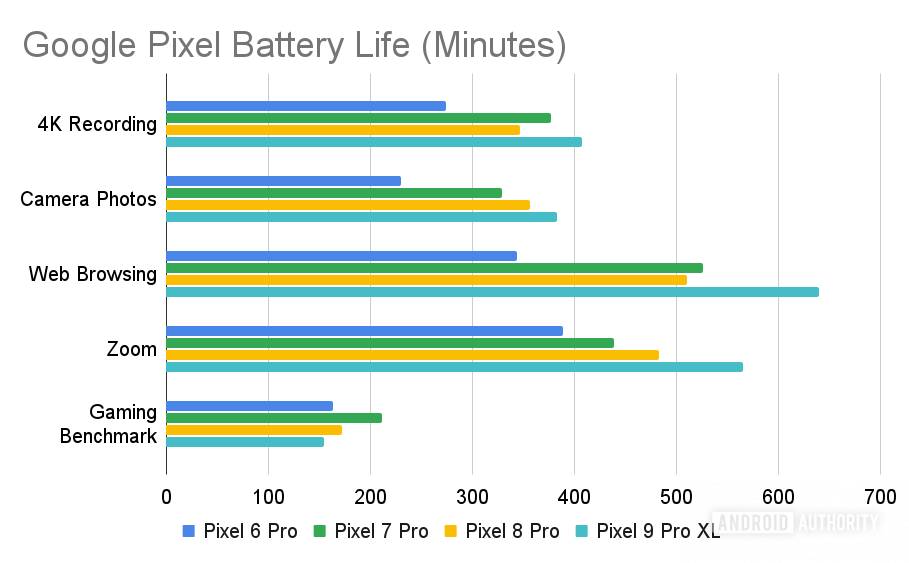
Power consumption is the other half of the equation, and for that, we can turn to our in-house battery test to see if there have been any gains here to support the theory about improved efficiency. We look at a variety of metrics to get a solid overview of various typical scenarios, from web browsing to video recording. The Pixel Pro series’ cameras and displays have changed a bit, so there’s some leeway in the results. Still, battery capacities have barely changed over four generations, at 5,003mAh, 5,000mAh, 5,050mAh, and 5,060mAh, respectively.

Google Pixel Battery Life (Minutes)


There’s a clear trend in longer battery life with the move to newer models. Whether you’re browsing the web, recording video, or making video calls, we can see a notable jump between the original Tensor and Tensor G2 in the 6 Pro and 7 Pro. We’ve seen a further leap with the move to the Pixel 9 Pro XL, owing to the move to a more efficient manufacturing process, as the rest of the chip is virtually unchanged. Our gaming benchmark is the only exception, but that’s likely because performance gains come at the expense of the efficiency wins — hence the higher temperatures too.

There’s a clear trend in longer battery life with the move to newer models. Whether you’re browsing the web, recording video, or making video calls, we can see a notable jump between the original Tensor and Tensor G2 in the 6 Pro and 7 Pro. We’ve seen a further leap with the move to the Pixel 9 Pro XL, owing to the move to a more efficient manufacturing process, as the rest of the chip is virtually unchanged. Our gaming benchmark is the only exception, but that’s likely because performance gains come at the expense of the efficiency wins — hence the higher temperatures too.

Peak temps may be up, but the Tensor G4 is clearly a much more frugal chip for battery life.

Averaged across our tests, the Pixel 7 Pro is 35% more battery efficient than the 6 Pro, the 7 Pro and 8 Pro are roughly the same, and the 9 Pro XL sees an 11% jump over the 8 Pro. There’s a whopping 48% battery longevity boost from the first-gen Tensor chip inside the Pixel 9 Pro to the Tensor G4 inside the Pixel 9 Pro XL. That’s quite an improvement over just four years.

Of course, we expect processors to become more efficient every generation or two, owing to the move to more efficient manufacturing nodes. Google’s Tensor has gone from Samsung’s dubious 5nm LPE to a much improved Samsung 4nm (possibly 4LPP+) process with the Tensor G4, and the results outlined here show clear benefits of the newer chip and its manufacturing process.

Pixel 9 Pro Fold and Pixel 9 Pro

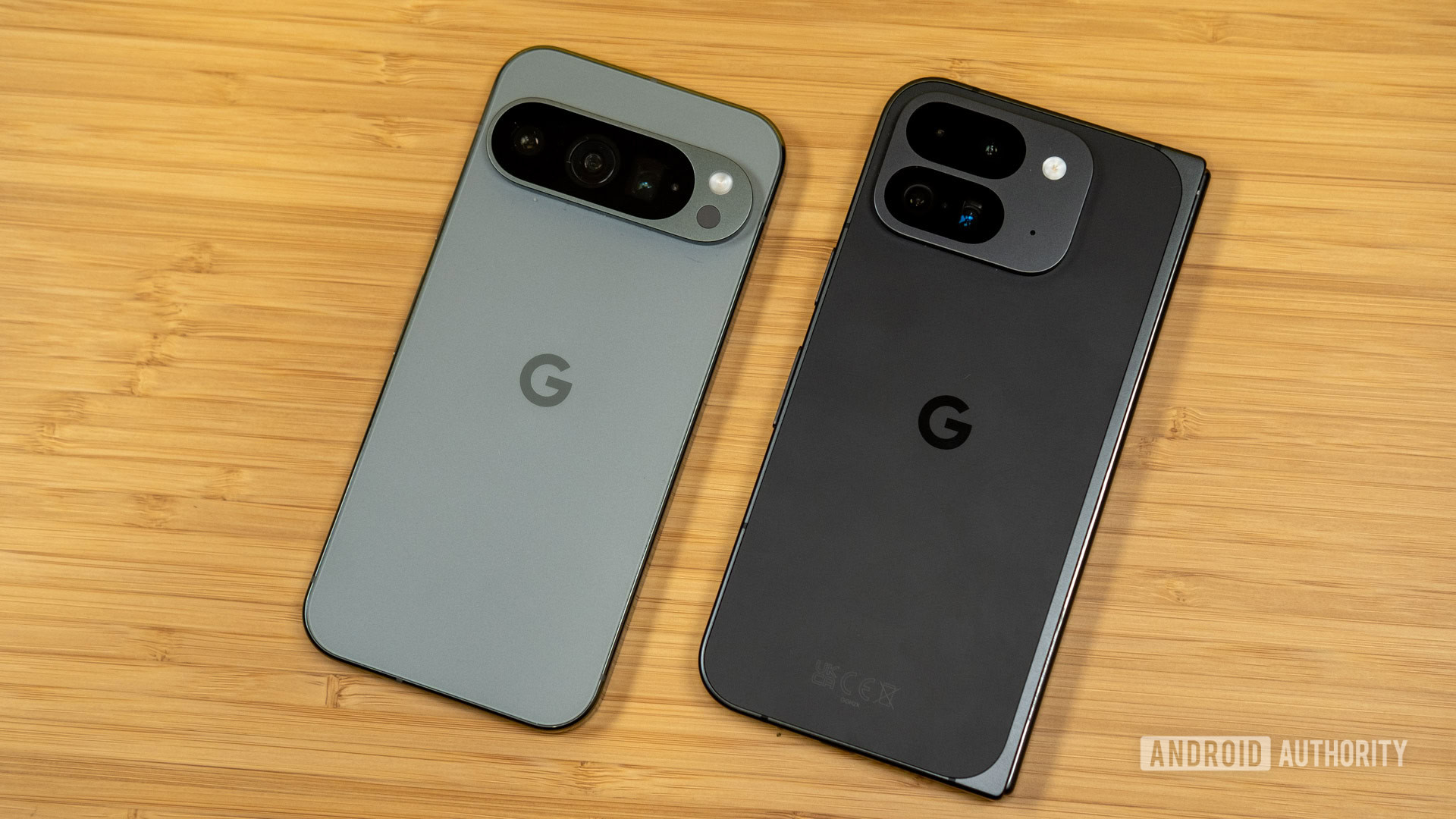
Left: Pixel 9 Pro, Right: Pixel 9 Pro Fold

The picture’s clear, but there’s even more to the story that falls outside of testing. Google’s choice of modem, for instance, impacts networking efficiency and temperatures, which are particularly noticeable when roaming in poor signal areas. Tensor has adopted newer Samsung Exynos modems, including in the latest Pixel 9 series, which boast far greater efficiency, bringing the phones much closer to Samsung’s flagship Galaxy S series. Anecdotally, we’ve noticed much-improved connectivity and less battery drain as the generations have gone by.

That said, we’ve still felt these phones heat up from time to time (but what phone doesn’t), suggesting future Pixels could still benefit from more cutting-edge manufacturing processes like TSMC’s 3nm, which you’ll find in flagship handsets arriving by early 2025. Next year’s Tensor G5 is expected to move over to TSMC, suggesting that the series’ best years are still yet to come with the Pixel 10.
 

limmk

High Supremacy Member
Joined
Jul 5, 2001
Messages
41,198
Reaction score
8,166


Anyone who’s peered behind the scenes at Tensor’s development issues might be pretty down on Google’s custom chipset project, but going its own way has scored the Pixel series a few notable wins. Solid photography and bleeding-edge AI smarts are the regular headliners, but news that Google is adding two more years of support to the Pixel 6, Pixel 7, and Pixel Fold might just be Tensor’s biggest win yet.

The Pixel 6 launched with Android 12 and was scheduled for three years of OS updates, which would have made this year’s Android 15 upgrade the last major update outside of security patches. Likewise, the Pixel 7 was scheduled to reach the end of its OS upgrades next year, but these models will now see Android 17 and 18, respectively. That’s quite the boon for consumers who had perhaps been pondering a new model soon, despite the fact that these phones still rock hardware that’ll remain capable for another few years.

As an aside, Google has shown up much of the wider smartphone world, with surprise longevity for older flagships, to which it certainly had no obligation to throw a lifeline. The fact that a three-year-old Pixel will receive OS updates for as long as the brand-new ROG Phone 9 Pro is rather embarrassing if you’re ASUS. Unfortunately, Android rivals won’t necessarily be able to rise to Google’s challenge, and the why has a lot to do with Tensor.

Google's Pixel 6 will now receive OS upgrades for as long as some flagship phones launched this year.

So, what does Tensor have to do with all this? Well, OS updates are strictly tied to chipset hardware support — it’s unfortunately not as simple as just pushing new software onto existing devices. While the exact ins and outs are pretty complicated, the TL;DR is that chipset manufacturers must implement Google’s low-level HAL and Linux kernel requirements to be certified for Android updates, which spirals in complexity and costs the more OS versions a chipset supports. To help, 2020’s Google Requirements Freeze (GRF) program relaxed the rules, allowing for certification as the vendor software supports HAL and kernel requirements from the past four years. So, a chipset that shipped with Android 12 could support Android 13, 14, and 15 without an update to the low-level hardware code, reducing engineering costs for longer-term support. The drawback is that these updates won’t necessarily include new Android hardware features.

You’ll note, however, that this is short of the four- to seven-year promises that some recent flagship smartphones ship with. MediaTek and Qualcomm seemingly spend some engineering resources updating their chip software to provide extended support, but this depends entirely on the processor. Expensive flagship silicon has the longest lifespans, while cheaper models mostly miss out.

If you’re ASUS, OnePlus, Xiaomi, or any other brand that relies on MediaTek or Qualcomm processors, you’re pretty much stuck with whatever level of support the chip vendor supplies as the upper limit on your update policy, which seems to be about four years. Unless you pay a hefty fee to extend support or, in Samsung’s case (which also has Exynos to maintain), go the equally expensive route of keeping the chip implementation up-to-date yourself. That being said, some manufacturers don’t even provide all the OS upgrades they could due to their own cost considerations, so a lack of updates is not always a chipset issue.

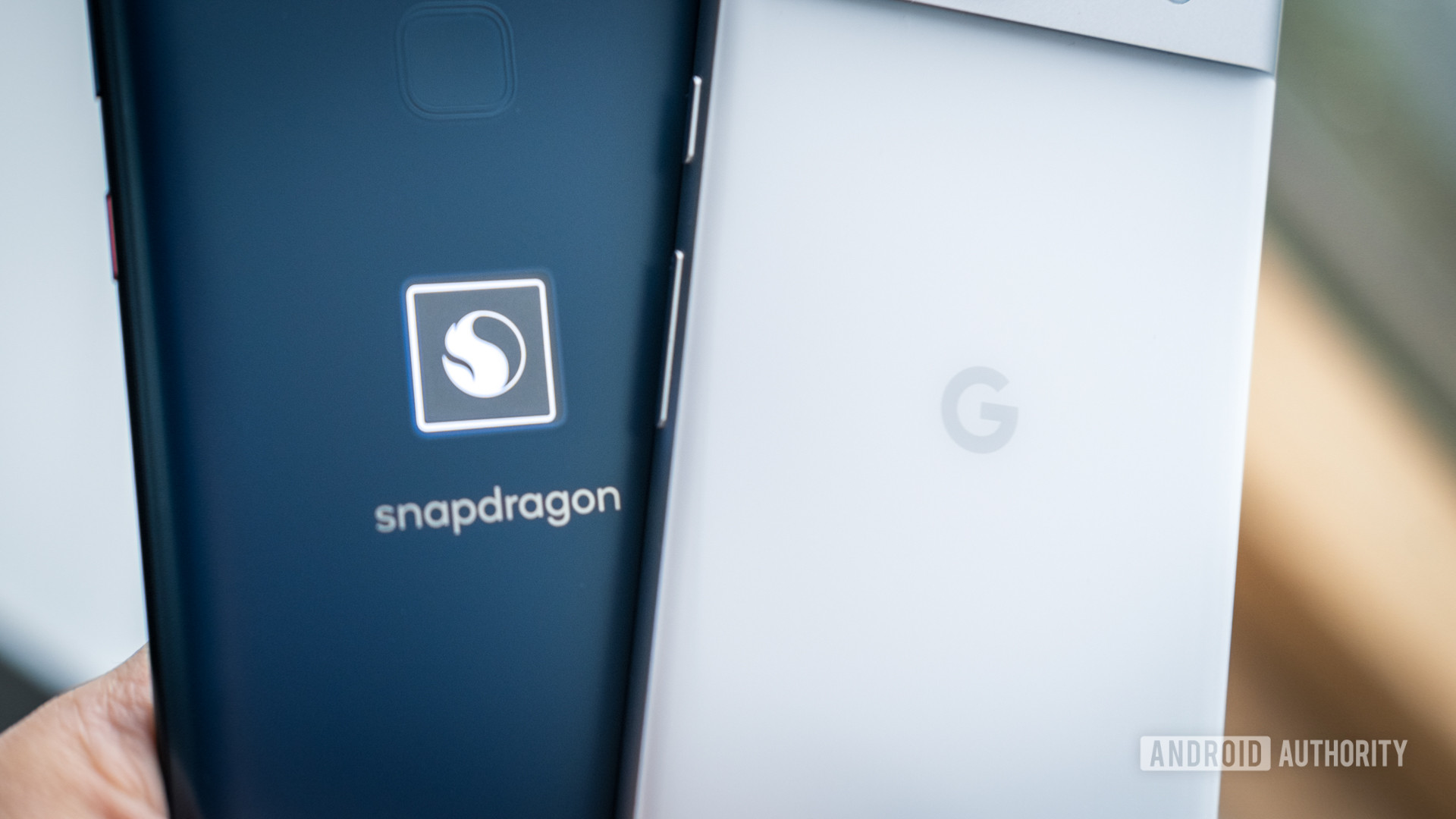
Google Tensor vs Snapdragon logos


By developing Tensor in-house, Google has the control needed to support its chips as it sees fit. This is how it’s been able to offer longer-term support than the vast majority of Android rivals for both flagship and budget handsets and how it can surprise us with extra support for older models seemingly out of nowhere.
That’s a luxury you only get by being at the helm of the entire processor development process, but it comes at a cost, both in terms of designing silicon and continuing to update the low-level software. And that’s on top of developing the actual OS updates for each phone.

As for the Pixel 6 and 7, Google has presumably gone back to the original Tensor and Tensor G2, patched up the low-level software to a sufficient level, and can now continue to support these chipsets and phones for another few years. Because Google uses the same chips across price points, affordable smartphones have benefitted too. In theory, it could do this for as long as it wanted — or at least until it became uneconomical or too few handsets remained active for it to be worthwhile. That said, we certainly shouldn’t count on Google adding additional years of support to its Pixel phones again in the future. The Pixel 8 series and onwards already offer extensive seven-year update policies that’ll probably outlast their hardware.

Unfortunately, we shouldn't expect rivals to match Google's lifespan extension for older flagships.

Google’s Tensor might face plenty of (fair) criticism for not being a benchmark-topping chip and looks set to fall further behind its competitors in upcoming generations. But in terms of providing value for money, it’s hard to argue against the Pixel series’ market-leading update pledges, and we have Tensor to thank for that in part.

Thankfully, Google is making it easier for all Android devices to see seven years of updates with its similarly named but newer Longevity GRF program, allowing phone manufacturers to reuse up to seven-year-old chipset software (up from four) when applying Android updates, with a kernel update required after every three years. Qualcomm’s Snapdragon 8 Elite is one of the first chipsets in the Longevity GRF program, meaning that upcoming flagships should see longer-term support than their predecessors, at least in theory. Of course, that doesn’t help today’s smartphones, many of which are stuck with a handful of OS upgrades. Unless MediaTek, Qualcomm, and their partners suddenly decide they want to spend a lot of money improving support for older models, we shouldn’t expect Android rivals to match Google’s surprise lifespan extension for its older flagships.
 

limmk

High Supremacy Member
Joined
Jul 5, 2001
Messages
41,198
Reaction score
8,166
Google Tensor G5 (laguna) specs :-
• Built upon TSMC N3E node

• 1x Cortex-X4 (3.4GHz)
• 5x Cortex-A725 (2.86GHz)
• 2x Cortex-A520 (2.25GHz)
• ARM v9.2

• Modem: Samsung S5400

• GPU: PowerVR D-Series DXT-48-1536, clocked at 1.1GHz.
Integrated Virtualization, Ray Tracing and FSR support

• TPU: Improved version of EdgeTPU (18 / 9 TOPS), around 10-15% faster


limmk

High Supremacy Member
Joined
Jul 5, 2001
Messages
41,198
Reaction score
8,166

What you need to know​

  • President Trump excluded smartphones, chips, and electronic parts as part of tariffs.
  • He imposed 125% tariffs on products from China earlier this month, and China responded with retaliatory tariffs.
  • This could mean there may not be a price hike on electronic devices.


According to new guidance from the U.S. Customs and Border Protection, smartphones and other electronic components will be exempt from U.S. President Donald Trump's tariffs.

Multiple sites, including CNBC and Bloomberg, reported the news.

Android Central's Jerry Hildenbrand explains how these tariffs aim to bring manufacturers back to the U.S. and that if phone prices go up, it might be a good reason to keep your existing phone.

However, if Trump decides that phones and other electronic parts are exempt from tariffs it means we may not see a price hike for these gadgets.

Earlier this month Trump imposed 125% tariffs on products from China, one of the main countries where many U.S. companies make most of their products. However, China didn't back down either— it levied retaliatory tariffs on the U.S. as well.

We saw a gist of the trade war impact the most recent OnePlus Watch 3, as its price went up from $330 to $500 just this week. While we don't know the reason behind this price hike, many suspect that these tariffs were at play.

This trade war has got several people on edge, as China manufactures not just smartphones but also several other electronic components. And to be able to produce them in the U.S. domestically would take several years. So this move comes as a relief for many.

CNBC reports that devices that will be part of the exclusion will be semiconductors, solar cells, flat panel TV displays, flash drives, memory cards, and solid-state drives used for storing data.
 

limmk

High Supremacy Member
Joined
Jul 5, 2001
Messages
41,198
Reaction score
8,166


Based on a new report, Google has committed to TSMC for years to come, as a chipmaker for its Tensor chips. TSMC will be making them until at least 2029. Samsung seems to be out of the picture.

As many of you know at this point, we’ll be getting the very first TSMC-made Tensor chip this year, and the Pixel 10 series will use it. Well, some new information just surfaced, claiming that Google is doubling down on TSMC, as Tensor chips will be manufactured by TSMC for years to come, Samsung seems to be out of the equation.

Google is committing to TSMC as its go-to chipmaker for years to come, Samsung’s out of the picture​

Based on a report by DigiTimes, Google will continue its Tensor partnership with TSMC for 3-5 years, at least. That means that TSMC will manufacture Tensor processors for Google’s devices until at least the Pixel 14 in 2029.

Why is that important, and why are users eagerly awaiting a TSMC version of a Tensor chip? Well, because of TSMC’s superior fabrication node and tech in general. The Tensor’s thermal efficiency should improve, amongst other things.

Users are expecting that the upcoming Tensor chip, probably named Tensor G5, will be on par with the offerings from Qualcomm, MediaTek, and Apple. Both of those companies rely on TSMC to manufacture their processors.

Samsung has been manufacturing Tensor chips thus far​

Samsung manufactured previous Tensor chips, and it’s worth noting that the latest one, the Tensor G4, is not half bad. It’s not on par with the competition, but it runs considerably cooler than the previous ones. The new Exynos 5400 modem helped in a number of ways, too.

The Google Tensor G5 processor is expected to be made using the TSMC 3nm node. That is the same foundry tech that was used for several other high-end mobile processors out there.

First TSMC-made Google Tensor chip will be announced later this year, along with the Pixel 10 seires of phones. We’ve exclusively revelaed the designs of the Pixel 10, Pixel 10 Pro, Pixel 10 Pro XL, and Pixel 10 Pro Fold back in March. All of those phones are expected to utilize the Tensor G5 chip. Do note that the Pixel 10 wallpapers also surfaced recently, in case you’re interested.
 
Important Forum Advisory Note
This forum is moderated by volunteer moderators who will react only to members' feedback on posts. Moderators are not employees or representatives of HWZ Forums. Forum members and moderators are responsible for their own posts. Please refer to our Community Guidelines and Standards and Terms and Conditions for more information.
Top