
You are using an out of date browser. It may not display this or other websites correctly.
You should upgrade or use an alternative browser.
You should upgrade or use an alternative browser.
[Official] SingTel SIM Only Plans
- Thread starter fake_oranges
- Start date
More options
Who Replied?- Joined
- Sep 16, 2018
- Messages
- 36,768
- Reaction score
- 12,452
thanks for the info
Now I know its 300GB + 50GB but not 50GB only
That makes sense
300GB (extra data added in August 2026 without informing user + 40GB (base plan) --> 340 GB
I just hope that something similar to what I have now would be offered - 500GB data at the price of $15.xxNot so sure what you mean by better deal, it is either the S$15.28 plan or the S$19.25 Enhanced Lite plan if you want to stick to Singtel SIM Only.
When is your contract end date?
Do you need Malaysia Roaming data? If not I believe you can continue using your plan untill August 2028. After your contract end date, you will lose the 50GB Malaysia Roaming data, but you will have 340GB local data, free 5G and free Caller ID at S$15.28 per month until August 2028, same as my second line which got rejected for the Recontract of S$15.28 plan.
$19.xx is okay but still a 30% increase
I also notice that Singtel Hi is more competitive? https://www.singtel.com/personal/products-services/mobile/hi
Like the roaming part is way better than common postpaid package?
I think I have seen ppl reporting in the other post that Singtel Hi does not provide Voice/SMS roaming, while the common postpaid is eligible for those (though very expensive). And the customer support is different.
Not sure if there is any more difference between the Hi and the common postpaid
Not sure if there is any more difference between the Hi and the common postpaid

dragonics
Senior Member
- Joined
- May 5, 2001
- Messages
- 1,066
- Reaction score
- 30
I chatted with Sales then to another team. Insisted $15.28 plan obsolete. And offer me $19.25 plan. Then i told him my bill state until Aug2028 then change to say it is a promo! Checked the free callerID he say the Aug2028 promo will include.You may want to check with SingTel again.
My second S$15.28 line contract ended on 10 October 2026 but got extension until 24 August 2026 except the Malaysia Roaming (340 GB data, free 5G, free caller ID).
I have not received my October 2026 bill. But my September 2026 bill (17 September 2026 to 16 October 2026) did not charge anything extra, just S$15.28.
I will monitor my October 2026 bill when it comes later this week.
- Joined
- Sep 16, 2018
- Messages
- 36,768
- Reaction score
- 12,452
I think I have seen ppl reporting in the other post that Singtel Hi does not provide Voice/SMS roaming, while the common postpaid is eligible for those (though very expensive). And the customer support is different.
Not sure if there is any more difference between the Hi and the common postpaid
1) The main thing is that Priority may be different between SingTel 5G+ (S$15.28 plan) versus SingTel hi! 5G+ (S$15/20/25 plans), and between SingTel 5G+ Enhanced (S$19.25 special offer, S$35/40 plans, or S$24.5/S$36 now with port-in offer) versus SingTel hi! 5G+ Enhanced (S$35 and S$35 plans).
There are no SingTel hi! PostPaid plans with 5G+ Priority label.
2) Billing wise SingTel SIM Only has prorated billing and it is monthly based. SingTel hi! PostPaid is 30-day based billing and no prorated billing.
3) Then "hi! by SingTel" PostPaid plans do not support the following features.
Note: the first one may not be clear, you should still be able to receive free incoming SMS if you have active roaming data plan when connected to overseas 4G LTE and 5G NSA network as per the reports.
https://www.singtel.com/personal/products-services/mobile/hi/hi-plan-faq
hi! Plan does not support these features:
• Roaming calls and SMS services are not available while overseas. However, you can still receive OTPs in destinations that support 3G networks.
• Outgoing local calls to 1900 numbers
• Incoming and outgoing video calling
• Incoming and outgoing MMS
• Outgoing Global SMS
• Transfer of ownership
4) In the end, if you need the roaming benefits from Singtel hi! PostPaid, or Gomo, or Zym/Zero1/VIVIFI/CMLink, just go ahead to try it out.
You can also stick with SingTel SIM Only, but add eight/Max/SIMBA as secondary line for roaming and backup, if you are willing to pay two lines.
Last edited:
I am in similar case for 3 of my family mobile lines; as it only stated on the bill; to be sure, I have requested SingTel to send me all 3 new revised service agreement and they have sent me.I chatted with Sales then to another team. Insisted $15.28 plan obsolete. And offer me $19.25 plan. Then i told him my bill state until Aug2028 then change to say it is a promo! Checked the free callerID he say the Aug2028 promo will include.

Mine remained as $15.28/month for my October billing, 5G access and caller ID auto extended to Jul 2028 without do anything.Hi xiaofan, are u being charged the caller-id after your $15.28 contract ends? My agreement extended to 2028 but i recieved sms stating caller id will be charged after my oct 26 contract ends.
xcruelsinx
Junior Member
- Joined
- Apr 12, 2018
- Messages
- 5
- Reaction score
- 1
Hi,
anyone got charged $5.09 for 5g mobile access after recontracting the $15.28 plan from $15.28 contract
anyone got charged $5.09 for 5g mobile access after recontracting the $15.28 plan from $15.28 contract
Last edited:

netzach
High Supremacy Member
- Joined
- Nov 28, 2011
- Messages
- 40,565
- Reaction score
- 3,172
Mine remained as $15.28/month for my October billing, 5G access and caller ID auto extended to Jul 2028 without do anything.
wah solid... 2028 sia... shiok...how you do the re-contract ah?
- Joined
- Sep 16, 2018
- Messages
- 36,768
- Reaction score
- 12,452
Hi,
anyone got charged $5.09 for 5g mobile access after recontracting the $15.28 plan from $15.28 contract
If your recontract is successful then 5G Access is free. Contact SingTel to fix the billing issue.
When is your contract end date? When is the billing date?
xcruelsinx
Junior Member
- Joined
- Apr 12, 2018
- Messages
- 5
- Reaction score
- 1
If your recontract is successful then 5G Access is free. Contact SingTel to fix the billing issue.
When is your contract end date? When is the billing date?
Thanks xiaofan. Already recontracted last month, this month billing come out wonder why extra $5.09. contacted SingTel waiting for reply. I read my service agreement and its seem the singtel person forgot to add the 5g+ access promo in my service agreement.
I think this T&C for DATA X Infinity is outdated already.It is not 50GB, but rather 50GB above the base data allocations. In this case 300GB + 50GB = 350 GB.
Whether that is good enough for you or not will depend on your use case. Most users should be fine.
Enhanced Lite Plan Unlimited local data at $19.25 (first 12 months): Customers must subscribe to a SIM Only Plan that is bundled with 300GB local data and DATA X INFINITY add-on, subject to DATA X’s terms and condition and our Fair Usage Policy, with a 12-month minimum subscription period.
Data X Infinity terms and conditions.
https://cdn1.singteldigital.com/con...dd-ons/datax/pdf/DATA-X-Consolidated-TnCs.pdf
DATA X INFINITY is solely for personal and non-commercial use only. To ensure that the activities of some users do not impact the ability of other Customers to have access to reliable services, fair usage policy of 50GB above the plan allocated data bundle is applicable on DATA X INFINITY. (Example: Combo 12 customers will enjoy 12GB + 50 GB). When the monthly usage exceeds 50GB (over & above plan allocated data bundle), data speeds will be set at 1Mbps. Normal speed will resume 00:00 hours on your next billing cycle.
The new T&C is always on https://www.singtel.com/personal/terms/postpaid-mobile-terms
12.2 DATA X INFINITY
Data Usage
(i) In addition to our Fair Usage Policy, to ensure that the activities of customers do not impact other customers’ ability access our Postpaid Mobile Services, if excessive or abusive data usage is detected under your existing Mobile Plan, your data speed may be set to 1 Mbps until 00:00 on the first day of your next billing cycle.
(ii) To provide the best possible experience for our customers, we reserve the right to implement a daily fair usage policy that allows us to prioritise different customers’ data usage, which will be lifted at 00:00 hours the following day.
(iii) For the avoidance of doubt, you will not be charged for any excess data usage apart from the Data X monthly subscription fee, except that Data X Infinity does not offset data charges incurred prior to the date your subscription is activated.
wah solid... 2028 sia... shiok...how you do the re-contract ah?
Nope, I didn't do anything and it was auto extended.
Most of us here gotten auto extended to year 2028 but Singtel didn't inform us on this. The only different is they removed monthly Malaysia Roaming and my local data was reduced from 250GB to 160GB.
Lonelyoldman80
Senior Member
- Joined
- Mar 19, 2024
- Messages
- 775
- Reaction score
- 727
Singtel fined S$1 million over mobile service disruptions in March that affected 720,000 users
The disruptions on Mar 16, Mar 18 and Mar 19 could have been prevented by Singtel and were not due to a cyberattack, IMDA's investigation found.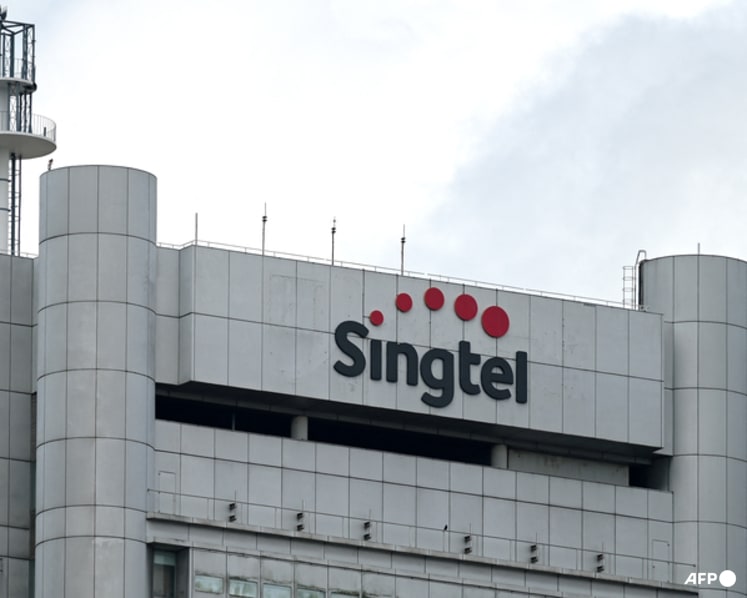
Singtel company signage is seen on a building facade at the central business district in Singapore on Mar 14, 2025. (Photo: AFP/Roslan Rahman)
SINGAPORE: The Infocomm Media Development Authority (IMDA) has imposed a financial penalty of S$1 million (US$782,000) on Singtel for mobile service disruptions in March.
The disruptions, which occurred on Mar 16, Mar 18 and Mar 19 this year, affected about 720,000 of Singtel’s mobile consumer and business subscribers, IMDA said on Tuesday (Oct 20).
The disruption on Mar 16 lasted for about nine hours.
Singtel users started experiencing mobile connectivity issues from about 10.30am, with 4G services restored by around 1.30pm. The telco’s 5G services were progressively restored from 2.45pm but full 5G services were not restored until about 8pm that day.
The disruption on Mar 18 was resolved within an hour, Singtel’s CEO Ng Tian Chong said previously.
INVESTIGATION FINDINGS
IMDA’s investigation found that the service disruption on Mar 16 was caused by a chiller system failure at a Singtel exchange.This caused the mobile network equipment at the exchange to overheat and shut down, IMDA said.
“This resulted from a failure by Singtel’s vendor to follow standard operating procedures to reopen a manual valve controlling water flow after a scheduled maintenance, and the lack of active monitoring by Singtel of its manual valves or water flow to the chiller system,” the authority added.
Investigations by IMDA also found that the disruptions on Mar 18 and Mar 19 arose after 5G mobile traffic was redirected from the affected exchange to another Singtel exchange after the disruption on Mar 16.
“The increased 5G mobile traffic load, coupled with a disabled network packet optimiser and a software bug at the other exchange, resulted in intermittent connectivity for some Singtel subscribers during the evenings on both days,” IMDA said.
The packet optimiser optimises data throughput and latency by routing data packets using the most optimal pathways.
IMDA said its investigation concluded that the incidents were within Singtel’s control to prevent and that they were not due to a cyberattack.
The disruption on Mar 16 could have been prevented if Singtel had implemented robust frameworks, procedures, and systems to better monitor the operations of its chiller system at the affected exchange, it said.
“The service disruptions on Mar 18 and Mar 19 could also have been prevented if Singtel had exercised greater diligence to ensure that the other Exchange was able to handle the increased traffic load that arose from the switchover from the affected exchange,” IMDA said.
In determining Singtel’s financial penalty of S$1 million, IMDA said it took into account the scale and impact of the disruption.
The authority said the impact of the disruptions was “significant” given the number of subscribers affected.
However, IMDA also took into account several other factors, such as Singtel’s full cooperation during the investigations.
The authority also considered the telco’s effort to progressively restore its mobile services for affected subscribers with 4G services restored first, followed by the progressive restoration of 5G services over the duration of the incident.
Lastly, IMDA also took into account the goodwill rebates of S$5 to S$10 that Singtel proactively extended to affected subscribers, with the total payout amounting to about S$8 million for consumer and business subscribers.
Since the disruptions, Singtel has taken necessary remediation measures to prevent the incidents from recurring, IMDA said.
These include enhancing maintenance procedures and monitoring for the chiller system, rectifying the systems in the other exchange and conducting exercises to test how effectively the network can switch traffic elsewhere during a failure.
IMDA said it holds telcos, which are key service providers, to a high level of service reliability.
“These service providers are required to plan, design and operate resilient networks, and put in place measures to ensure speedy recovery with minimal inconvenience to end-users in the event of a disruption,” the authority said.
“IMDA will not hesitate to take strong action under the Telecommunications Act, including imposing financial penalties, should any lapses be identified.”
Separately, in December last year, Singtel was also fined S$1 million over a 2024 landline outage that affected half a million users and emergency services.
Source: CNA/co(gf)
- Joined
- Aug 8, 2012
- Messages
- 9,684
- Reaction score
- 4,222
Fallback not tested and not working when needed, so common in corporations.Singtel fined S$1 million over mobile service disruptions in March that affected 720,000 users
The disruptions on Mar 16, Mar 18 and Mar 19 could have been prevented by Singtel and were not due to a cyberattack, IMDA's investigation found.
Singtel company signage is seen on a building facade at the central business district in Singapore on Mar 14, 2025. (Photo: AFP/Roslan Rahman)
SINGAPORE: The Infocomm Media Development Authority (IMDA) has imposed a financial penalty of S$1 million (US$782,000) on Singtel for mobile service disruptions in March.
The disruptions, which occurred on Mar 16, Mar 18 and Mar 19 this year, affected about 720,000 of Singtel’s mobile consumer and business subscribers, IMDA said on Tuesday (Oct 20).
The disruption on Mar 16 lasted for about nine hours.
Singtel users started experiencing mobile connectivity issues from about 10.30am, with 4G services restored by around 1.30pm. The telco’s 5G services were progressively restored from 2.45pm but full 5G services were not restored until about 8pm that day.
The disruption on Mar 18 was resolved within an hour, Singtel’s CEO Ng Tian Chong said previously.
INVESTIGATION FINDINGS
IMDA’s investigation found that the service disruption on Mar 16 was caused by a chiller system failure at a Singtel exchange.
This caused the mobile network equipment at the exchange to overheat and shut down, IMDA said.
“This resulted from a failure by Singtel’s vendor to follow standard operating procedures to reopen a manual valve controlling water flow after a scheduled maintenance, and the lack of active monitoring by Singtel of its manual valves or water flow to the chiller system,” the authority added.
Investigations by IMDA also found that the disruptions on Mar 18 and Mar 19 arose after 5G mobile traffic was redirected from the affected exchange to another Singtel exchange after the disruption on Mar 16.
“The increased 5G mobile traffic load, coupled with a disabled network packet optimiser and a software bug at the other exchange, resulted in intermittent connectivity for some Singtel subscribers during the evenings on both days,” IMDA said.
The packet optimiser optimises data throughput and latency by routing data packets using the most optimal pathways.
IMDA said its investigation concluded that the incidents were within Singtel’s control to prevent and that they were not due to a cyberattack.
The disruption on Mar 16 could have been prevented if Singtel had implemented robust frameworks, procedures, and systems to better monitor the operations of its chiller system at the affected exchange, it said.
“The service disruptions on Mar 18 and Mar 19 could also have been prevented if Singtel had exercised greater diligence to ensure that the other Exchange was able to handle the increased traffic load that arose from the switchover from the affected exchange,” IMDA said.
In determining Singtel’s financial penalty of S$1 million, IMDA said it took into account the scale and impact of the disruption.
The authority said the impact of the disruptions was “significant” given the number of subscribers affected.
However, IMDA also took into account several other factors, such as Singtel’s full cooperation during the investigations.
The authority also considered the telco’s effort to progressively restore its mobile services for affected subscribers with 4G services restored first, followed by the progressive restoration of 5G services over the duration of the incident.
Lastly, IMDA also took into account the goodwill rebates of S$5 to S$10 that Singtel proactively extended to affected subscribers, with the total payout amounting to about S$8 million for consumer and business subscribers.
Since the disruptions, Singtel has taken necessary remediation measures to prevent the incidents from recurring, IMDA said.
These include enhancing maintenance procedures and monitoring for the chiller system, rectifying the systems in the other exchange and conducting exercises to test how effectively the network can switch traffic elsewhere during a failure.
IMDA said it holds telcos, which are key service providers, to a high level of service reliability.
“These service providers are required to plan, design and operate resilient networks, and put in place measures to ensure speedy recovery with minimal inconvenience to end-users in the event of a disruption,” the authority said.
“IMDA will not hesitate to take strong action under the Telecommunications Act, including imposing financial penalties, should any lapses be identified.”
Separately, in December last year, Singtel was also fined S$1 million over a 2024 landline outage that affected half a million users and emergency services.
Source: CNA/co(gf)

Singtel going to get vendor to pay LD for operations f up.

Important Forum Advisory Note
This forum is moderated by volunteer moderators who will react only to members' feedback on posts. Moderators are not employees or representatives of HWZ Forums. Forum members and moderators are responsible for their own posts.
Please refer to our Community Guidelines and Standards and Terms and Conditions for more information.
