

You are using an out of date browser. It may not display this or other websites correctly.
You should upgrade or use an alternative browser.
You should upgrade or use an alternative browser.
The Leather Thread
- Thread starter scasi
- Start date
More options
Who Replied?

fire
High Supremacy Member
- Joined
- Jul 1, 2000
- Messages
- 33,938
- Reaction score
- 8,949
old school work, recall my grandpa using one....

yoz scasi,
this is the type for coin pouch i'm looking for

what's the dimensions?
fire
High Supremacy Member
- Joined
- Jul 1, 2000
- Messages
- 33,938
- Reaction score
- 8,949
wah so co-incident! Size 4 inch by 1.5inch. Using nappa leather, soft and durable.
already using one from picard for a few years...looking for another one with different material n colour
dothehippiedance
Senior Member
- Joined
- Jan 17, 2010
- Messages
- 1,953
- Reaction score
- 0
may i know what do u guys apply on ur leather goods?
and on beckman featherstone leather?
i heard mink oil is not suitable
obenauf's LP??
where can i get them in sg?
and on beckman featherstone leather?
i heard mink oil is not suitable
obenauf's LP??
where can i get them in sg?

--Lipsu--
Senior Member
- Joined
- May 8, 2010
- Messages
- 610
- Reaction score
- 0
Sneak Preview - NT Black Bow Bag

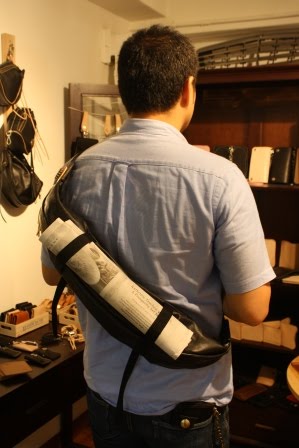
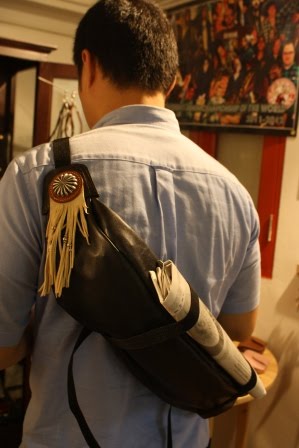
A sling bag, using soft black cowhide leathers, with nylon straps and a big iconic concho for styling. Zipper closure, able to store most of everyone's EDC.
A great storage material for bicyclist. Easily accessible and tough to withstand weather and time.
Coming soon!
A sling bag, using soft black cowhide leathers, with nylon straps and a big iconic concho for styling. Zipper closure, able to store most of everyone's EDC.
A great storage material for bicyclist. Easily accessible and tough to withstand weather and time.
Coming soon!

nicolnicolnicol
Senior Member
- Joined
- Jun 24, 2010
- Messages
- 543
- Reaction score
- 10
Looking good James! Would get it if I'm not looking for something which can fit my laptop.

ambivalence
Senior Member
- Joined
- Oct 28, 2008
- Messages
- 1,748
- Reaction score
- 1
nice! hope you will make small messenger bags for like casual use! to fit a few stuff inside
fire
High Supremacy Member
- Joined
- Jul 1, 2000
- Messages
- 33,938
- Reaction score
- 8,949
show more pics leh.
I been wanting to do something new too, but yet to have a concept...
yoz bro,
1 more photo of the inside...

yoz bro,
1 more photo of the inside...
thanks thanks
i might be thinking of something similar concept, but may incorporate in a simcard slot, and maybe something to slot in currency notes

Studded
Senior Member
- Joined
- Oct 16, 2008
- Messages
- 2,174
- Reaction score
- 2
old school work, recall my grandpa using one....
Hey looking for smth like this. To use it as a coin pouch. May i know where can i get it?
Thanks!
fire
High Supremacy Member
- Joined
- Jul 1, 2000
- Messages
- 33,938
- Reaction score
- 8,949
thanks thanks
i might be thinking of something similar concept, but may incorporate in a simcard slot, and maybe something to slot in currency notes
I do have sim card slots as well but its on the side which is cover by my passport Haha.
U can add another flip to the card slots side, make it similar to L shape. I do not wan it too bulky, tat why I refrain from having too many slots.
--Lipsu--
Senior Member
- Joined
- May 8, 2010
- Messages
- 610
- Reaction score
- 0
Alright, I have wanted to post this, and in fact it was prepared. But just couldn’t find the time to do it.
Since this is a Leather Thread, let's share some leather informations
So here it is some explanation and illustrations about Vegetable Tanned Leathers (Though I have some knowledge, that doesn’t mean I’m rocket scientist , please comments and feedback for more discussions)
Leathers
What is Leathers?
Leather is the result of the skin of an animal (cow, horse, pig, reptiles...) which will go through a process call Tanning at the Tannery.
Why do we need Tanning?
Tanning is a process which will make the leather last and not decompose easily.
How is the process of Tanning?
Various Tannins are require as agent for Tanning and he process of Tanning involves removing the hair to soaking in water for a long period of time. Video below shows of how the Tanning process from Herman Oak Tannery.
http://www.youtube.com/watch?v=XyCaonpEd70
After the above introduction of leather, we can touch on Vegetable Tanned Leather.
It is one of the many methods to Tan raw skin from the animal. Vegetable Tanning uses Tannin from natural plants, barks, woods, leaves, roots...etc, as Tanning agent. It is one of the oldest and most natural ways to Tan raw skin into leathers we have today.
Different Tannins used will give different colour tone to the leathers. For example: Bark Tannin give a bright colour whereas Chestnut Tannin gives the best colour.
With different kinds of Tanning method and different kinds of Tannins, we can get different results of leather, below is a picture of how to identify its tanning process from the leather we see every day.

After all the processes of Vegetable Tanning, what we get is the most natural type of leathers. When they are still skins on the animal, abrasions, cut, insect bites and even growth marks are developed throughout their lifetime. As such, with Vegetable Tanning as the most natural Tanning method, we will still be able to see these ‘hallmarks’ on the leathers.
I happened to download some descriptions of how some marks are form, see pics below.

Fig 1: Growth Marks and Veins – These are interesting indications of the age of the animal, just the grains of a timber.
Fig 2: Scars – Acquired by the animal due to cuts from other animals’ horns, barb wire of the farm or whatever your imagination runs.
Fig 3: Grain Variations – The differences between fibre texture of the animal’s body parts as like us, human. Belly potions usually looser than the backbone area.
Fig 4: Shades Variations – Due the varying grain structure of the animal, their skin can have different shades, again just like us.
All these marks are what make each Vegetable Tanned Leathers unique. No other same design of belts or wallets or other leathercrafts have the same grains and marks. Each and every one are the ‘Only One’ in the world.
Can visit my blog for more leather informations http://www.obbigoodfrance.blogspot.com/
*Some pics, videos and informations are excerpts from other websites. I consolidated the informations from these random sites with my own explanations.
Since this is a Leather Thread, let's share some leather informations
So here it is some explanation and illustrations about Vegetable Tanned Leathers (Though I have some knowledge, that doesn’t mean I’m rocket scientist , please comments and feedback for more discussions)
Leathers
What is Leathers?
Leather is the result of the skin of an animal (cow, horse, pig, reptiles...) which will go through a process call Tanning at the Tannery.
Why do we need Tanning?
Tanning is a process which will make the leather last and not decompose easily.
How is the process of Tanning?
Various Tannins are require as agent for Tanning and he process of Tanning involves removing the hair to soaking in water for a long period of time. Video below shows of how the Tanning process from Herman Oak Tannery.
http://www.youtube.com/watch?v=XyCaonpEd70
After the above introduction of leather, we can touch on Vegetable Tanned Leather.
It is one of the many methods to Tan raw skin from the animal. Vegetable Tanning uses Tannin from natural plants, barks, woods, leaves, roots...etc, as Tanning agent. It is one of the oldest and most natural ways to Tan raw skin into leathers we have today.
Different Tannins used will give different colour tone to the leathers. For example: Bark Tannin give a bright colour whereas Chestnut Tannin gives the best colour.
With different kinds of Tanning method and different kinds of Tannins, we can get different results of leather, below is a picture of how to identify its tanning process from the leather we see every day.
After all the processes of Vegetable Tanning, what we get is the most natural type of leathers. When they are still skins on the animal, abrasions, cut, insect bites and even growth marks are developed throughout their lifetime. As such, with Vegetable Tanning as the most natural Tanning method, we will still be able to see these ‘hallmarks’ on the leathers.
I happened to download some descriptions of how some marks are form, see pics below.
Fig 1: Growth Marks and Veins – These are interesting indications of the age of the animal, just the grains of a timber.
Fig 2: Scars – Acquired by the animal due to cuts from other animals’ horns, barb wire of the farm or whatever your imagination runs.
Fig 3: Grain Variations – The differences between fibre texture of the animal’s body parts as like us, human. Belly potions usually looser than the backbone area.
Fig 4: Shades Variations – Due the varying grain structure of the animal, their skin can have different shades, again just like us.
All these marks are what make each Vegetable Tanned Leathers unique. No other same design of belts or wallets or other leathercrafts have the same grains and marks. Each and every one are the ‘Only One’ in the world.
Can visit my blog for more leather informations http://www.obbigoodfrance.blogspot.com/
*Some pics, videos and informations are excerpts from other websites. I consolidated the informations from these random sites with my own explanations.

--Lipsu--
Senior Member
- Joined
- May 8, 2010
- Messages
- 610
- Reaction score
- 0
Nice info there!! Thanks for the knowledge!
Now I finally understand the marks that were initially present on my wallet.
No worries, check our Obbi Good Label Blog for more leathers informations. I'll keep posting whenever I got the time
We have made this bag few years back, and now we are relaunching it with better tweaks.


Gentlemen KeyPouch using Black Nappa leather


And also remaking watch straps!!!

Important Forum Advisory Note
This forum is moderated by volunteer moderators who will react only to members' feedback on posts. Moderators are not employees or representatives of HWZ Forums. Forum members and moderators are responsible for their own posts.
Please refer to our Community Guidelines and Standards and Terms and Conditions for more information.
