
USA Stocks discussion - Part 3

stanlawj

Supremacy Member
Joined
Jul 11, 2021
Messages
8,037
Reaction score
4,322
I sold about 1.3mil worth of nvda between 2023 till end of 2024.

Still got about 1.5mil in there. Whatever trump stuff come, it is what it is.

As far as I am concerned, I already made bank. The value of the remaining shares can go to 0 and I will still already made 1.3mil out of an investment of sgd12k so I think it's pretty good deal all things considered.
At least get educated on NVDA and AI theme?
Here's my recommendation for reading (need to pay for sub to read everything, but I think you got the money).

https://www.citriniresearch.com/p/thematic-primer-artificial-intelligence

Thematic Primer: Artificial Intelligence, Phase 2​

Our last update to the AI theme generated some controversy. Some felt DeepSeek would be a “nothingburger” and should not serve as a signpost to position ourselves short in the AI Semiconductor complex. We know how that turned out.

So far, the first phase has been scaling-centric. After ChatGPT’s debut, a moment that embodied the “tipping point” of investor awareness to generative AI, capital flowed primarily towards the foundation models and the infrastructure necessary to scale them. We called this race to LLM commoditization and the hardware revolution underlying it “Phase 1."

The thesis was simple: because these models would scale in a linear fashion with compute power, the pace and magnitude of capex spending would end up beating all current street estimates. We focused on the picks and shovels (Nvidia, SuperMicro, Dell, Broadcom, SK Hynix, etc.), the bottleneck wideners (Credo, Monolithic Power, Lumen, Coherent, Ciena, Constellation Energy etc.) and the enablers (Meta, Amazon, Microsoft, Alphabet, Oracle).

Our Phase 1 AI basket more than doubled over the following 18 months.

On December 8th 2024, at $140, we exited Nvidia entirely for the first time since we laid out the bullish thesis on AI infrastructure. On January 24th 2025, for the first time since 2022, we went short SMH (the semiconductor ETF) and NVDA, which we sized up prior to NVDA earnings and elaborated on in our “DeepSeeking Answers” piece.

Because of this short and our allocation shifts since January 24th, our dynamic AI basket outperformed our original AI Infrastructure basket and avoided a 20%+ drawdown in the first quarter.

The reasoning going forward for pivoting is even simpler: All shortages lead to gluts—and now the AI revolution is happening in a world of cheap inference and zero marginal compute constraints. If Phase 1 was about who could get a GPU, Phase 2 is about who knows what to do with one.

As we stated in January, our near-term bearishness on NVDA did not mean we are bearish on AI. In fact, we’re more bullish than ever on the advancement and adoption of the technology. Rather, in the near-term, we felt that the AI infrastructure trade had gotten so crowded that catalysts with even slight potential to be negative posed a risk.

More importantly, we believe it is time that the opportunities for alpha expand beyond just the physical infrastructure necessary for AI.

We’re unconcerned with questions like “when will we reach AGI?” and much more concerned with “when will companies begin seeing a durable benefit from utilizing AI?”. As the AI conversation inevitably shifts from the "what" of capabilities to the "how" of reliable implementation, the companies implementing this infrastructure will move from being perceived as tangential to the AI revolution to becoming its primary beneficiaries.

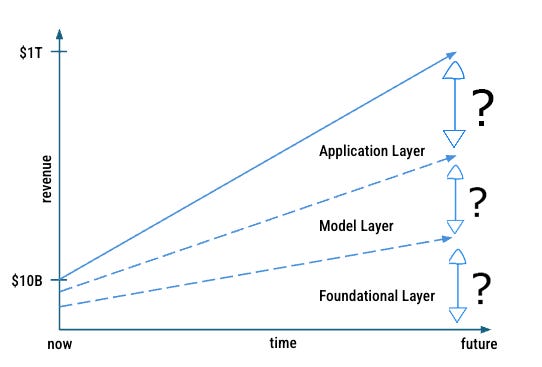
LLM scaling is great, and as it becomes commoditized it’s important to realize that the model doesn’t matter if no one sees it. The AI layer that wins is the one closest to the user, not the one buried deepest in a cluster. We’ve seen this movie before: Apple charges $100 for $20 of NAND because it owns the interface. In Phase 2 AI, whoever utilizes the model wins the margins.

Thesis: The winners of Phase 2 AI won’t be those building agents, but those with the preconditions to make them useful.

https%3A%2F%2Fsubstack-post-media.s3.amazonaws.com%2Fpublic%2Fimages%2F0760890b-b872-4e1b-9b79-bac678c89a4e_542x367.png
 

DevilPlate

Arch-Supremacy Member
Joined
Nov 22, 2020
Messages
12,199
Reaction score
5,140
At least get educated on NVDA and AI theme?
Here's my recommendation for reading (need to pay for sub to read everything, but I think you got the money).

https://www.citriniresearch.com/p/thematic-primer-artificial-intelligence

Thematic Primer: Artificial Intelligence, Phase 2​

Our last update to the AI theme generated some controversy. Some felt DeepSeek would be a “nothingburger” and should not serve as a signpost to position ourselves short in the AI Semiconductor complex. We know how that turned out.

So far, the first phase has been scaling-centric. After ChatGPT’s debut, a moment that embodied the “tipping point” of investor awareness to generative AI, capital flowed primarily towards the foundation models and the infrastructure necessary to scale them. We called this race to LLM commoditization and the hardware revolution underlying it “Phase 1."

The thesis was simple: because these models would scale in a linear fashion with compute power, the pace and magnitude of capex spending would end up beating all current street estimates. We focused on the picks and shovels (Nvidia, SuperMicro, Dell, Broadcom, SK Hynix, etc.), the bottleneck wideners (Credo, Monolithic Power, Lumen, Coherent, Ciena, Constellation Energy etc.) and the enablers (Meta, Amazon, Microsoft, Alphabet, Oracle).

Our Phase 1 AI basket more than doubled over the following 18 months.

On December 8th 2024, at $140, we exited Nvidia entirely for the first time since we laid out the bullish thesis on AI infrastructure. On January 24th 2025, for the first time since 2022, we went short SMH (the semiconductor ETF) and NVDA, which we sized up prior to NVDA earnings and elaborated on in our “DeepSeeking Answers” piece.

Because of this short and our allocation shifts since January 24th, our dynamic AI basket outperformed our original AI Infrastructure basket and avoided a 20%+ drawdown in the first quarter.

The reasoning going forward for pivoting is even simpler: All shortages lead to gluts—and now the AI revolution is happening in a world of cheap inference and zero marginal compute constraints. If Phase 1 was about who could get a GPU, Phase 2 is about who knows what to do with one.

As we stated in January, our near-term bearishness on NVDA did not mean we are bearish on AI. In fact, we’re more bullish than ever on the advancement and adoption of the technology. Rather, in the near-term, we felt that the AI infrastructure trade had gotten so crowded that catalysts with even slight potential to be negative posed a risk.

More importantly, we believe it is time that the opportunities for alpha expand beyond just the physical infrastructure necessary for AI.

We’re unconcerned with questions like “when will we reach AGI?” and much more concerned with “when will companies begin seeing a durable benefit from utilizing AI?”. As the AI conversation inevitably shifts from the "what" of capabilities to the "how" of reliable implementation, the companies implementing this infrastructure will move from being perceived as tangential to the AI revolution to becoming its primary beneficiaries.

LLM scaling is great, and as it becomes commoditized it’s important to realize that the model doesn’t matter if no one sees it. The AI layer that wins is the one closest to the user, not the one buried deepest in a cluster. We’ve seen this movie before: Apple charges $100 for $20 of NAND because it owns the interface. In Phase 2 AI, whoever utilizes the model wins the margins.

Thesis: The winners of Phase 2 AI won’t be those building agents, but those with the preconditions to make them useful.

https%3A%2F%2Fsubstack-post-media.s3.amazonaws.com%2Fpublic%2Fimages%2F0760890b-b872-4e1b-9b79-bac678c89a4e_542x367.png
Sibei chim

Jus hodl some QQQ, HST and BTC for noobs like me can liao :s13:
 

xoxozone

Member
Joined
Oct 14, 2010
Messages
471
Reaction score
52
The article from Citrini Research, titled "Thematic Primer: Artificial Intelligence, Phase 2," discusses the evolving landscape of artificial intelligence (AI) investments, particularly the shift from infrastructure-focused investments to application-centric opportunities.


Phase 1: Infrastructure Build-Up
Initially, the AI boom, especially after the release of ChatGPT, led to significant investments in the infrastructure necessary to support large language models (LLMs). Companies like Nvidia, SuperMicro, and Dell benefited as they provided the hardware required for AI computations. This phase was characterized by a race to acquire GPUs and build data centers, leading to substantial capital expenditures.


Transition to Phase 2: Application and Implementation
Citrini Research posits that the AI industry is now entering Phase 2, where the focus shifts from merely building infrastructure to effectively utilizing it. This phase emphasizes the importance of companies that can implement AI solutions to derive tangible benefits, rather than those solely providing the underlying hardware. The success in this phase depends on the ability to integrate AI into products and services that directly impact end-users.


Market Adjustments and Strategic Shifts
Recognizing the saturation in infrastructure investments, Citrini Research adjusted its investment strategy. They exited positions in companies like Nvidia and took short positions on semiconductor ETFs, anticipating a market correction due to overvaluation in the hardware sector. This move proved prudent as it helped avoid significant drawdowns.


Implications for Investors
The key takeaway is that future investment opportunities in AI will likely stem from companies that can effectively apply AI technologies to create user-centric solutions. As AI becomes more accessible and cost-effective, the competitive advantage will shift to those who can leverage AI to enhance products and services, rather than those who supply the computational tools.


Conclusion
In summary, the AI investment landscape is transitioning from a focus on building capabilities to applying them. Investors should consider focusing on companies that demonstrate the ability to integrate AI into their offerings in meaningful ways, as these are poised to be the primary beneficiaries in this next phase of AI development.

As we move into “Phase 2” of AI (where the focus is on applying AI rather than building the infrastructure), the companies most likely to benefit over the next 5–10 years are those that:
  1. Already have massive user bases or distribution channels, and
  2. Can implement AI in ways that improve productivity, personalization, efficiency, or customer experience.

📈 Potential Long-Term Winners (Application Layer — Phase 2)​

🧠 Tech Giants with Strong Platforms

These companies already have the infrastructure and are now layering AI into their core products:
  • Microsoft (MSFT) – Huge investment in OpenAI, integrating GPT into Office (Copilot), Azure, Teams, and GitHub.
  • Alphabet (GOOGL) – DeepAI + Search + YouTube personalization + Google Workspace. Their Gemini model will be applied across services.
  • Meta (META) – Strong moves in AI-driven recommendation systems (Instagram, Facebook), AI ads, and Llama models.
  • Amazon (AMZN) – Applying AI to AWS, Alexa, logistics, and advertising. Their Bedrock service powers custom AI for enterprise clients.
  • Apple (AAPL) – Quiet but strong: expect them to apply AI in iOS, Siri, Apple Health, and Vision Pro. They focus on UX, which will be critical in Phase 2.

🔧 Enterprise SaaS Players (AI-Powered Workflow Tools)

These are platforms businesses use every day — and AI upgrades can meaningfully drive retention and upsell:
  • Salesforce (CRM) – Rolling out Einstein GPT into its CRM platform.
  • ServiceNow (NOW) – Automating enterprise workflows with AI, strong moat in large corporates.
  • Adobe (ADBE) – Firefly and AI integrations in Creative Cloud and Experience Cloud.

💡 Emerging AI-First Application Companies

These are still earlier-stage or mid-cap companies that natively build around AI:
  • UiPath (PATH) – AI + RPA (Robotic Process Automation). Making enterprises more efficient by automating repetitive tasks.
  • Duolingo (DUOL) – Integrating AI tutors into language learning. Great engagement and network effects.
  • Palantir (PLTR) – Their AI-powered decision platforms are gaining traction in government and private sectors.
  • DataDog (DDOG) / Snowflake (SNOW) – Infrastructure monitoring and data warehousing companies turning increasingly AI-native.


🧭 How to Think About It​

  • Phase 1 = picks and shovels (Nvidia, SMCI, Broadcom).
  • Phase 2 = apps and utility layer (who can use the picks and shovels the best?).
“The model doesn’t matter if no one sees it.” → The user interface and use case matter most now.
 

stanlawj

Supremacy Member
Joined
Jul 11, 2021
Messages
8,037
Reaction score
4,322
I prefer Cybersecurity picks. Recession coming soon, and Mag7 will be doubly-hit by foreign funds reducing US exposure and earnings drop.
CIBR ETF
CRWD

📈 Potential Long-Term Winners (Application Layer — Phase 2)​

🧠 Tech Giants with Strong Platforms

These companies already have the infrastructure and are now layering AI into their core products:
  • Microsoft (MSFT) – Huge investment in OpenAI, integrating GPT into Office (Copilot), Azure, Teams, and GitHub.
  • Alphabet (GOOGL) – DeepAI + Search + YouTube personalization + Google Workspace. Their Gemini model will be applied across services.
  • Meta (META) – Strong moves in AI-driven recommendation systems (Instagram, Facebook), AI ads, and Llama models.
  • Amazon (AMZN) – Applying AI to AWS, Alexa, logistics, and advertising. Their Bedrock service powers custom AI for enterprise clients.
  • Apple (AAPL) – Quiet but strong: expect them to apply AI in iOS, Siri, Apple Health, and Vision Pro. They focus on UX, which will be critical in Phase 2.

🔧 Enterprise SaaS Players (AI-Powered Workflow Tools)

These are platforms businesses use every day — and AI upgrades can meaningfully drive retention and upsell:
  • Salesforce (CRM) – Rolling out Einstein GPT into its CRM platform.
  • ServiceNow (NOW) – Automating enterprise workflows with AI, strong moat in large corporates.
  • Adobe (ADBE) – Firefly and AI integrations in Creative Cloud and Experience Cloud.

💡 Emerging AI-First Application Companies

These are still earlier-stage or mid-cap companies that natively build around AI:
  • UiPath (PATH) – AI + RPA (Robotic Process Automation). Making enterprises more efficient by automating repetitive tasks.
  • Duolingo (DUOL) – Integrating AI tutors into language learning. Great engagement and network effects.
  • Palantir (PLTR) – Their AI-powered decision platforms are gaining traction in government and private sectors.
  • DataDog (DDOG) / Snowflake (SNOW) – Infrastructure monitoring and data warehousing companies turning increasingly AI-native.


🧭 How to Think About It​

  • Phase 1 = picks and shovels (Nvidia, SMCI, Broadcom).
  • Phase 2 = apps and utility layer (who can use the picks and shovels the best?).
 

d5dude

Arch-Supremacy Member
Joined
Nov 30, 2006
Messages
13,349
Reaction score
5,058
Humans lie but the price action never lies. We made a strong V shaped recovery at the halfback and is now headed back to test the upper bound. This is the second attempt. The first one didn't even come close before the test fizzled out. This market has been fairly brutal to both bulls and bears. Both sides have been mauled by the sharp reversals.

Most traders will lose money in this kind of market, only Trump and his cronies are making bank with all the insider trader and front running.

Long term investors should just do nothing, like I said Trump is not going to be president forever, in fact he could be lame duck by the end of next year.
 

d5dude

Arch-Supremacy Member
Joined
Nov 30, 2006
Messages
13,349
Reaction score
5,058
For those who hold US Treasury bonds, you may want to here this podcast:


He is not going to restructure anything because it'd do far more dmg to the US financial system than firing Jay powell, Bessent will make sure he understands this. This is just stupid fear mongering.
 

stanlawj

Supremacy Member
Joined
Jul 11, 2021
Messages
8,037
Reaction score
4,322
Last edited:

DevilPlate

Arch-Supremacy Member
Joined
Nov 22, 2020
Messages
12,199
Reaction score
5,140
Although I'm bearish after all the saga that happened, Trump's tariff has washed and deleveraged the market significantly. Powell will be forced to cut rates, whether he likes it or not.

Here's the bull prediction:


The bond market will take rates down regardless of what Powell does. We're likely to see the Fed ease in either May or June as the Fed wakes up to the slowing economy/recession & lower inflation but rates are headed lower whether he cuts or not.

@d9lives, got chance to earn back!

This David Hunter been saying the same thing but keep shifting time frame and goal post further down the road nia. :s13:
 
Important Forum Advisory Note
This forum is moderated by volunteer moderators who will react only to members' feedback on posts. Moderators are not employees or representatives of HWZ. Forum members and moderators are responsible for their own posts.

Please refer to our Community Guidelines and Standards, Terms of Service and Member T&Cs for more information.
Top