
*Official* Shiny Things club - Part 2

Status
Not open for further replies.

nekoarc

Member
Joined
Jul 3, 2017
Messages
438
Reaction score
2
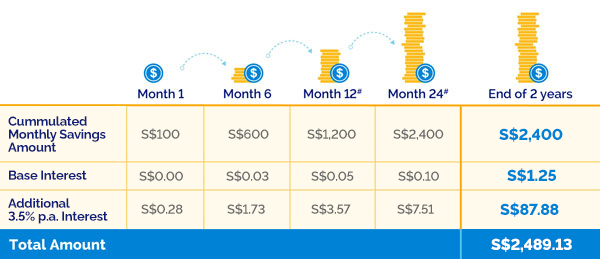
btw, anyone heard of POSB SAYE Account? what is the opinion of the POSB SAYE Account? is it a good saving tools?

It is an auto accumulating 0.25% pa interest rate account (min 1000, otherwise 0.05%) with a 2% pa bonus every year for two years, i.e. about 2.25%pa for two years. Without the bonus, it essentially turns into a 0.05-0.25% savings account after that.

It is a zero effort saving tool with 2.25% interest rate with the only prereq of putting $ in every month compared to other 'action' checking accounts like UOB one/DBS multiplier. If you already have a large lump sum or can get better interest than that, it would actually be worse off because the amortised interest would usually be less.

Moving money out of it is disastrous, as all accumulated interest not yet given for the year would be lost and the amount used to calculate bonus interest resets to 0, i.e. all the money stuck in there will remain 0.25%pa until you finally remove it. I accidentally moved money out of it, and lost 9 months of interest and POSB can't do **** about it. I'm still keeping the $ in there because I still get an additional 2%pa for the BYOB scheme.

It is probably a not a good idea to keep your emergency fund in there (same problem as the citi maxigain) because taking $ out will kill the interest rate. Also, the bonus is only for 2 years, so you'll have to chase interest rates elsewhere again (Shiny said he does not recommend doing things like this because you can keep it simple with SSBs, but some of us are ok with it).

TLDR: do the actual math for your own financial situation, it might be better or worse.
 

beefjerky

Senior Member
Joined
Jan 3, 2014
Messages
1,056
Reaction score
11
Would it be good if TS could compile a list of common QnA at the first post so those who have qn can read before asking? Some common ones I guess is IB vs SCB, Shiny's strategy, allocation, whether or not IB/SCB is safe cause not in CDP etc. etc
 

makav31i

Arch-Supremacy Member
Joined
Mar 1, 2008
Messages
12,851
Reaction score
35
I think ETF is the best option for now

hmmm POSB investsaver

btw, anyone heard of POSB SAYE Account? what is the opinion of the POSB SAYE Account? is it a good saving tools?

saye-table.jpg


https://www.posb.com.sg/personal/deposits/savings-accounts/saye

POSB Invest Saver is only good if the amount invested is $700 and below... Anything more, OCBC BCIP or even DBS Vickers Cash Upfront would be the better option....
 

BBCWatcher

Arch-Supremacy Member
Joined
Jun 15, 2010
Messages
23,412
Reaction score
4,900
Yep, I agree with wealthfarmer, it is not feasible to rebalance your CPF.
Rebalancing isn't something that you need to be maniacal about. Some people think you have to keep your 20-80 allocation at age 35 (for example) rebalanced daily or monthly to 20-80. No, not actually. It's OK to let it drift a bit and rebalance, say, once per year -- or even every couple years. (And rebalance "gently." Think of it like MAS, letting the Singapore dollar exchange rate float but stepping in to moderate its volatility within bands. Rebalancing should be something like that -- a gentle nudge every once in a while to keep your portfolio allocation within broad agreement with your allocation objectives, but not precise agreement at every instant.)

If you treat CPF as the bond-like part of your retirement savings portfolio -- and I think you should -- then it'll have two sources of growth. One is interest, and the other is ongoing contributions. So all you've got to do, really, is make sure those aspects are maximized, start off with 100% (for example) non-bond allocation outside CPF when you're younger -- except for your emergency reserve fund -- and "rebalance" by starting and adding to your bond position outside CPF as you age, especially around age 50. And that'll work pretty well, or even better than pretty well -- and pretty well is good enough for rebalancing purposes.
 

revhappy

Arch-Supremacy Member
Joined
Mar 19, 2012
Messages
12,208
Reaction score
2,662
Just curious, those people who were asking whether to do lump sum investment or split it out, during the beginning of the year, when markets were rocketing, what are you doing now? This seems to be a god send opportunity to deploy lump sums into the market. I have been increasing my allocation and have got my bonus as well, so most likely will increase even more, I guess my allocation will become like 40% to equities, up from 17% when I came to this thread.

Sent from Xiaomi REDMI NOTE 4 using GAGT
 

wealth_farmer

Senior Member
Joined
Dec 26, 2016
Messages
540
Reaction score
1
I agree about not needing to be too maniacal about the rebalancing part. It’s just that the target allocation between equities and bonds is one key factor on how much risk we want to take in the market relating to our capacity to withstand volatility versus our expected returns that’s actually within our control. The other is that rebalancing allows us to truly “buy low and sell high”, that holy grail of all investors :)

To the extent where I can (meaning it doesn’t take too much effort, and doesn’t incur me extra transaction costs), I try and keep my portfolio close to my target allocation ratio.

Rebalancing isn't something that you need to be maniacal about. Some people think you have to keep your 20-80 allocation at age 35 (for example) rebalanced daily or monthly to 20-80. No, not actually. It's OK to let it drift a bit and rebalance, say, once per year -- or even every couple years. (And rebalance "gently." Think of it like MAS, letting the Singapore dollar exchange rate float but stepping in to moderate its volatility within bands. Rebalancing should be something like that -- a gentle nudge every once in a while to keep your portfolio allocation within broad agreement with your allocation objectives, but not precise agreement at every instant.)

If you treat CPF as the bond-like part of your retirement savings portfolio -- and I think you should -- then it'll have two sources of growth. One is interest, and the other is ongoing contributions. So all you've got to do, really, is make sure those aspects are maximized, start off with 100% (for example) non-bond allocation outside CPF when you're younger -- except for your emergency reserve fund -- and "rebalance" by starting and adding to your bond position outside CPF as you age, especially around age 50. And that'll work pretty well, or even better than pretty well -- and pretty well is good enough for rebalancing purposes.
 

kehyi4

Senior Member
Joined
Aug 31, 2010
Messages
1,419
Reaction score
34
Iirc, you can top up 7k to your own SA, and your siblings etc. can top up another 7k. Meaning that you can increase a max of 14k per year to your SA. There's a limit on your OA and once that is full, all the would-be amount going to OA will be funneled to SA (if you have a salary). I don't think there's a limit on SA, you just get to take the excess amount back after you've chosen your basic/atas/most atas retirement sum.
erm, this para contains some inaccurate info...

1) You can cash top up any amount you like in your own SA, until your SA hits FRS. But only the first 7k gets tax relief. Seriously, if you are super cash rich, you can one-shot pump your SA until it reaches 171k if you like

2) You can similarly do cash top up to the SA of anyone you like, doesn't have to be a family member even. But only top up for: parents, parents-in-law, grandparents, grandparents-in-law, spouse and siblings; are eligible for tax relief. And for spouse and siblings tax relief, they have to have annual income less than 4k

3) There is no limit to OA. I don't know any way to "funnel" OA to SA, except through self-initiated CPF transfer

4) The part about there being no limit to SA is correct though :)
 

longfart

Senior Member
Joined
Sep 21, 2009
Messages
787
Reaction score
21
(Shiny said he does not recommend doing things like this because you can keep it simple with SSBs, but some of us are ok with it).
Hi, could you please elaborate on this part abt keeping it simple with SSBs? Thank you in advance!
 

shun07

Member
Joined
Feb 9, 2012
Messages
472
Reaction score
14
POSB Invest Saver is only good if the amount invested is $700 and below... Anything more, OCBC BCIP or even DBS Vickers Cash Upfront would be the better option....
So which etf should I buy from ocbc bcip? Is it just G3B?

Sent from Samsung SM-G955F using GAGT
 

swordsly

Master Member
Joined
Jan 16, 2008
Messages
3,400
Reaction score
0
Hi, could you please elaborate on this part abt keeping it simple with SSBs? Thank you in advance!

I think what it means is that for SSB, you can always do partial/full redemption whenever you want to (at an admin cost of $2). In the event you do a partial redemption if you need the money and it does not affect the interest rates unlike products like Maxigain where withdrawals will reduce your interest rates and thus not such a good place to park your emergency fund.
 

soulblader_89

Arch-Supremacy Member
Joined
May 17, 2016
Messages
18,302
Reaction score
7,142
I think what it means is that for SSB, you can always do partial/full redemption whenever you want to (at an admin cost of $2). In the event you do a partial redemption if you need the money and it does not affect the interest rates unlike products like Maxigain where withdrawals will reduce your interest rates and thus not such a good place to park your emergency fund.

Thank for the explanation

so SSB is the best place for "emergency fund" right?"
 

wealth_farmer

Senior Member
Joined
Dec 26, 2016
Messages
540
Reaction score
1
You should be aware of the time lag between applying for SSB redemption and the cash proceeds hitting your bank account. Can be as long as six weeks, I think (please check on SSB website FAQ)

Depending on the nature of your emergency, so long as you have enough cash in your bank account, you can dump the rest into SSBs.

This is especially beneficial because the interest rates for SSBs go up over time so you can benefit from that if you never have to tap into your SSB for emergency needs.

Thank for the explanation

so SSB is the best place for "emergency fund" right?"
 

BBCWatcher

Arch-Supremacy Member
Joined
Jun 15, 2010
Messages
23,412
Reaction score
4,900
Here's the "rule of thumb."

Emergency Months 1 and 2: your ordinary bank account and, optionally, the credit limit on your credit card (paid in full, on time).
Emergency Months 3 to X: Singapore Savings Bonds.

X should be no less than 6, and some people would argue it should be 12. Emergency funds should sustain your base monthly living expenses -- what's required to "keep the lights on." Exclude purely discretionary and luxury expenditures that can be easily skipped in an emergency.

The most typical "emergency" is job loss, but other types of emergencies are possible.
 

soulblader_89

Arch-Supremacy Member
Joined
May 17, 2016
Messages
18,302
Reaction score
7,142
Here's the "rule of thumb."

Emergency Months 1 and 2: your ordinary bank account and, optionally, the credit limit on your credit card (paid in full, on time).
Emergency Months 3 to X: Singapore Savings Bonds.

X should be no less than 6, and some people would argue it should be 12. Emergency funds should sustain your base monthly living expenses -- what's required to "keep the lights on." Exclude purely discretionary and luxury expenditures that can be easily skipped in an emergency.

The most typical "emergency" is job loss, but other types of emergencies are possible.

Usually 6 month is enough right? :D:D
 

revhappy

Arch-Supremacy Member
Joined
Mar 19, 2012
Messages
12,208
Reaction score
2,662
depends how risk averse you are. 6 months is just a guide. if you are facing some uncertainties in your life, you may want to increase the amount as required.
Typically if a person goes jobless and if they are not that skillful then it can take quite a long time to find another job. I know people who took more than a year. Worst part they left the job voluntarily and their new job was lower salary than old one in addition to the loss of income.

Basically you must put into equities anything that you don't need for atleast 3 years ideally 10 years. So the bond component should be large enough to last 3 years of expenses atleast, just in case you decide you want to quit working.

Sent from Xiaomi REDMI NOTE 4 using GAGT
 
Last edited:

BBCWatcher

Arch-Supremacy Member
Joined
Jun 15, 2010
Messages
23,412
Reaction score
4,900
Usually 6 month is enough right? :D:D
"Usually" less than 6 months is enough, but that's a low standard. "Usually" means something greater than 50% probability.

How much risk do you feel comfortable taking? It really depends on the context and your personal risk profile. As one factor, Singapore, overall, has a relatively tight labor market. Consequently bouts of joblessness due to redundancies should be, on average, less common and shorter. If you were living in Greece, as another example, you'd probably want to have a bigger emergency reserve fund given the labor market conditions there. On the other hand, Singapore doesn't have any unemployment insurance and only informal severance, unlike most developed countries. In most developed countries you can receive a relatively small but still quite important weekly unemployment benefit. To pick a random example, in New York State, if you're involuntarily terminated, you can receive up to US$420 per week (2018 figure) for up to 26 weeks in unemployment insurance (UI) benefits. UI is automatic and universal, for legal employment anyway. The amount of the weekly benefit depends to some extent on your prior wages before termination, of course.

So, try to figure out what emergencies you could experience -- joblessness ought to be on the list as one notable example -- and what you'd need to "keep the lights" on in your household per month, assuming you're going to cancel the lavish/discretionary stuff in an emergency. And then count months, considering the context of your situation and your risk tolerance. A "rule of thumb" can only be that. Adjust it, if necessary, for your situation.
 

longfart

Senior Member
Joined
Sep 21, 2009
Messages
787
Reaction score
21
Here's the "rule of thumb."

Emergency Months 1 and 2: your ordinary bank account and, optionally, the credit limit on your credit card (paid in full, on time).
Emergency Months 3 to X: Singapore Savings Bonds.

X should be no less than 6, and some people would argue it should be 12. Emergency funds should sustain your base monthly living expenses -- what's required to "keep the lights on." Exclude purely discretionary and luxury expenditures that can be easily skipped in an emergency.

The most typical "emergency" is job loss, but other types of emergencies are possible.

May I ask if putting part of the emergency fund into SSBs is a better choice (in your opinion) than leaving all of it in a savings account with additional interest rates (such as BOC SmartSaver, DBS Multiplier, Maybank SaveUp, etc.)?
How about the Phillip Money Market Fund? Since there’s full liquidity (if I read correctly), would it be a good place to park emergency funds?
 
Last edited:

soulblader_89

Arch-Supremacy Member
Joined
May 17, 2016
Messages
18,302
Reaction score
7,142
May I ask if putting part of the emergency fund into SSBs is a better choice (in your opinion) than leaving all of it in a savings account with additional interest rates (such as BOC SmartSaver, DBS Multiplier, Maybank SaveUp, etc.)?
How about the Phillip Money Market Fund? Since there’s full liquidity (if I read correctly), would it be a good place to park emergency funds?

Is it easier to withdraw cash from the bank than SSB

assuming u need the money asap when u face with emergency
 
Status
Not open for further replies.
Important Forum Advisory Note
This forum is moderated by volunteer moderators who will react only to members' feedback on posts. Moderators are not employees or representatives of HWZ Forums. Forum members and moderators are responsible for their own posts. Please refer to our Community Guidelines and Standards and Terms and Conditions for more information.
Top