
You are using an out of date browser. It may not display this or other websites correctly.
You should upgrade or use an alternative browser.
You should upgrade or use an alternative browser.
China & hk stocks/ etfs
- Thread starter dappermen
- Start date
More options
Who Replied?Equity - checklist
u needed for China!
https://sg.allianzgi.com/en/retail/insights/outlook-and-commentary/china-equities-checklist
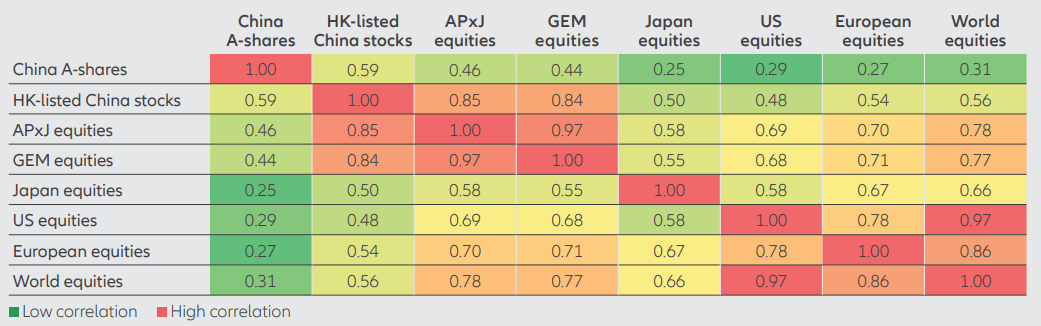
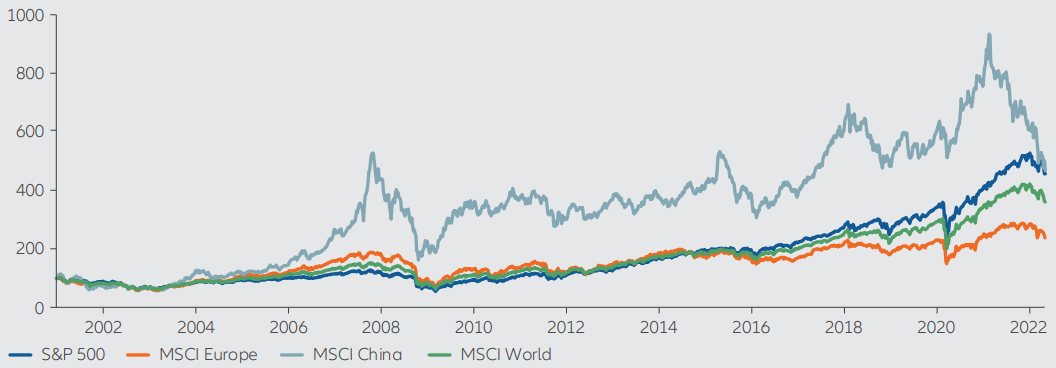
Surprise that China A shares and HK-listed China stks doesnt correlate strongly , instead Asia Pac Eq highly corr? that APac must have incld china stks
So dont wait:
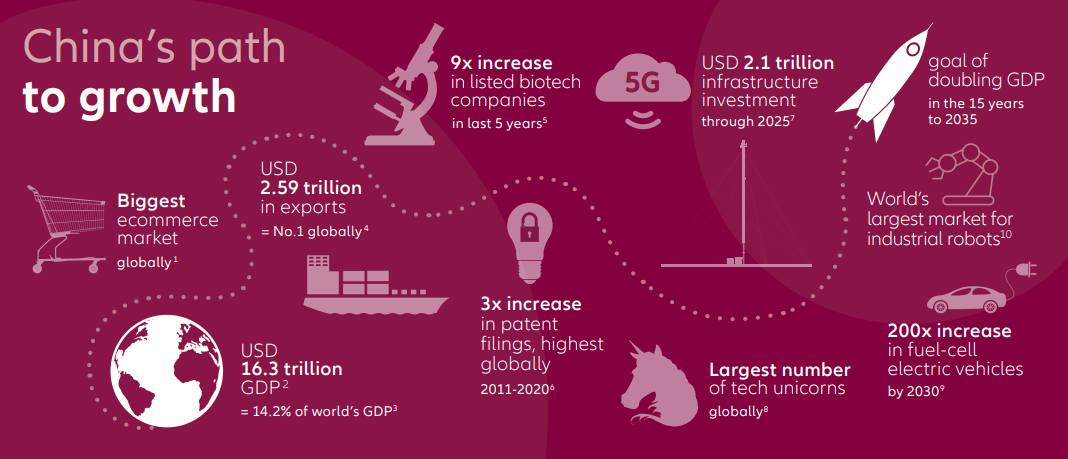
u needed for China!
https://sg.allianzgi.com/en/retail/insights/outlook-and-commentary/china-equities-checklist
Surprise that China A shares and HK-listed China stks doesnt correlate strongly , instead Asia Pac Eq highly corr? that APac must have incld china stks
So dont wait:
& it led all to a decline?
https://www.theedgesingapore.com/ne...eads-decline-china-tech-shares-report-inquiry
https://www.theedgesingapore.com/ne...eads-decline-china-tech-shares-report-inquiry
Pls dont turn away!!!!!
https://www.businesstimes.com.sg/gl...for-global-investors-as-xis-policies-backfire
https://www.businesstimes.com.sg/gl...for-global-investors-as-xis-policies-backfire

elvintay07
Arch-Supremacy Member
- Joined
- Jan 4, 2022
- Messages
- 11,798
- Reaction score
- 4,219
I am huge supporter of China but I kind of worry whether fundamentally they will screw up. Their banking issue could be tip of the ice berg
i think Xi JP has alrdy claimed he has to up the biz of china .... we posted in another thread
more testing again : Tianjin Shanghai !!!!!!
they realised CCP must act on it fast: https://www.zaobao.com.sg/forum/editorial/story20220718-1293873
more testing again : Tianjin Shanghai !!!!!!
they realised CCP must act on it fast: https://www.zaobao.com.sg/forum/editorial/story20220718-1293873
Last edited:
Xi faces surprise revolt from Chinese homebuyers on mortgage boycott - from bloomerg
https://www.businesstimes.com.sg/re...t-from-chinese-homebuyers-on-mortgage-boycott
now ordinary Chinese people are publicly revolting, with rapidly escalating boycotts on mortgage payments spread across at least 301 projects in about 91 cities. These homeowners accuse developers of failing to deliver apartments they’ve already paid for: the value of mortgages that could be affected has swelled to an estimated US$297 billion.
“Chinese homebuyers usually pool the whole family’s resources to buy a home,” said Alfred Wu, an associate professor at the National University of Singapore’s Lee Kuan Yew School of Public Policy. “It is a life-and-death matter for them if their homes become negative assets.”
For Xi, the timing couldn’t be worse: He’s just months away from a once-in-five-years Communist Party meeting, at which he’s expected to secure a third term in office. Moreover, he’s also expected to trumpet his policies as beneficial to achieving “common prosperity” for average citizens, part of the social contract that underpins the legitimacy of one-party rule in China.
For months Xi has stood firm in reining in over-leveraged Chinese developers, spurring a record wave of defaults that spooked global investors and brought at least 24 leading property companies to the brink of collapse. In the process, more than US$80 billion has been wiped from its offshore bond market.
He focused too much on "tech"
“If thousands of homeowners believe that their largest asset is in trouble, they could protest as individuals across China, creating a ‘systemic’ political crisis,” said Andrew Collier, a managing director at Orient Capital Research Inc.
The central bank is “dodging between support for the property industry and isolated acts of pain to curtail the property bubble,” he added. “It’s a dangerous dance.”
one of my stock related to "Developer/construction" listed on HKEX is badly affected esp after the "Evergrande effect" 
but the Dragging is due to Covid restrictions - so short term or ??
https://www.businesstimes.com.sg/opinion/property-crisis-traps-china-in-a-market-paradox

https://www.bloomberg.com/news/arti..._H8-9gx8AvFgVx_mfY5qbtnjqAM2jci5Lqw#xj4y7vzkg
https://www.channelnewsasia.com/asi...ZA_4Oiuej3Xp07rzIRb9-AWV1Xpd_kiWXGtWlGGTdsfAQ
but the Dragging is due to Covid restrictions - so short term or ??
https://www.businesstimes.com.sg/opinion/property-crisis-traps-china-in-a-market-paradox
https://www.bloomberg.com/news/arti..._H8-9gx8AvFgVx_mfY5qbtnjqAM2jci5Lqw#xj4y7vzkg
China Evergrande CEO, CFO Exit in Internal Probe of Deposit Use
- Developer cites former executives’ involvement with pledges
- Siu Shawn to become Evergrande’s new chief executive officer
https://www.channelnewsasia.com/asi...ZA_4Oiuej3Xp07rzIRb9-AWV1Xpd_kiWXGtWlGGTdsfAQ
Last edited:
in cantonese only
https://register.gotowebinar.com/register/8465910103934471692?source=SG
https://register.gotowebinar.com/register/8465910103934471692?source=SG
|
|


|
InterestingStuff
Banned
- Joined
- Jun 2, 2012
- Messages
- 5,767
- Reaction score
- 73
i look at the stock market, i look at chinese tech stocks
i look at twitch , i see a big disconnect
20 years ago , people will laugh at you when you say china can make good computer games
now everybuttie playing genshin impact
this is a generational leap the market has not seen it coming yet
this is not a fluke, from LOL-> 王者荣耀->原神 (surprise surprise top game in japan )
this is a trend
i look at twitch , i see a big disconnect
20 years ago , people will laugh at you when you say china can make good computer games
now everybuttie playing genshin impact
this is a generational leap the market has not seen it coming yet
this is not a fluke, from LOL-> 王者荣耀->原神 (surprise surprise top game in japan )
this is a trend
i read that Charlie Munger will not sell this off for the shortrun
https://www.theedgesingapore.com/ne...imary-hong-kong-listing-court-china-investors
https://www.theedgesingapore.com/ne...imary-hong-kong-listing-court-china-investors
Alibaba seeks primary Hong Kong listing to court China investors
China-related but not even good (in case any1 wanna dabble on china-stuff but dont wish to go thru the hassle of forex at all)
https://www.theedgesingapore.com/ca...aining-36-mil-financial-flexibility?fs=e&s=cl
“The au8u REIT’s portfolio weighted average lease expiry (WALE) stood at 2.1 years by gross rental income (GRI) and 2.3 years by net lettable area (NLA)”
https://www.theedgesingapore.com/ca...aining-36-mil-financial-flexibility?fs=e&s=cl
Note: we will notice for china-related reits, their wales tend to b around 2yrs+/- or lesser!!!!!the Lan CapLan!
I Dont find its price movement fascinating, 1 of my biggest mistake too
https://www.theedgesingapore.com/ca...sts-results-trigger-relook-capital-management
CLCT’s financing structure has changed over the years as the Chinese financial sector has developed from emerging market to a more developed financial sector. As a result, Chinese policy rates have fallen over the years. In May this year, the People’s Bank of China (PBOC) lowered loan prime rate (LPR) to 4.45% from 4.6%.
“We have moved from 100% offshore financing to 80% offshore, and 20% onshore. We will look at increasing onshore financing when we look at acquisitions because acquisition structuring requires onshore LTV (loan-to-value) for tax shield onshore,” says Tan Tze Wooi, CEO of CLCT’s manager.
Onshore loans are more restrictive, and loan proceeds may only be deployed for the certain purposes. “We are looking at possibility of grouping onshore borrowings whether to satisfy AEI or ongoing capex needs,” Tan says.
“In the longer term we may move to 70% offshore and 30% onshore. The cost of onshore loans have come down to 4.5% as LPR is 4.45% while offshore loans for 3-5 years on fixed rates is 3.5% so they are converging and we want to balance the capital structure so we are competitive in terms of cost of debt,” he elaborates.
Sasseur REIT’s debt maturity based on its 1QFY2022 business updates indicates its offshore and onshore debt expire in March 2023.
BHG Retail REIT is the only other Chinese S-REIT that has successfully refinanced its debt. All of its debt expired in March this year. Its FY2021 annual report had a footnote that said “Subsequent to the reporting date, the Group and the REIT finalised the refinancing of offshore and onshore secured borrowing facilities of $240.0 million and RMB232.0 million respectively, secured new offshore and onshore borrowing facilities of $12.0 million and RMB65.0 million respectively. The facilities mature in March 2025.”
so far in one S-REIT and one property trust facing issues upon refinancing – Dasin Retail Trust and EC World REIT – with both managing to roll over their debt only for a shorter time period. In addition, banks have imposed additional conditions to reduce their overall debt (25% repayment in ECW REIT’s case).
The REITs themselves need to be - and are usually - transparent with disclosure. The G in ESG stands for governance. Notably, in an ESG score, RHB Research lowered its ESG score and its price target for ECW REIT because of its intermittent disclosures around its refinancing.
“The au8u REIT’s portfolio weighted average lease expiry (WALE) stood at 2.1 years by gross rental income (GRI) and 2.3 years by net lettable area (NLA)”
Last edited:
Heard so muchh of the Wuxi too
WuXi AppTec - 1H22: Adjusted Earnings Up 75.7% yoy; Expecting Stronger Revenue Growth In 2H22 up 75.7% yoy; expecting stronger revenue growth in 2H22.
(Target: HK$155.00)
WuXi AppTec reported robust 1H22 results, with revenue and adjusted net profit growing 68.5% yoy and 75.7% yoy respectively, despite the impact from the strict COVID-19 measures in Shanghai. We expect the company to experience stronger revenue growth in 2H22, which would support its targeted revenue growth of 68-72% yoy for 2022. Maintain BUY and target price of HK$155.00…..
Meituan - 2Q22 results preview Near-term outlook dampened by Zero-COVID policy.
WuXi AppTec - 1H22: Adjusted Earnings Up 75.7% yoy; Expecting Stronger Revenue Growth In 2H22 up 75.7% yoy; expecting stronger revenue growth in 2H22.
(Target: HK$155.00)
WuXi AppTec reported robust 1H22 results, with revenue and adjusted net profit growing 68.5% yoy and 75.7% yoy respectively, despite the impact from the strict COVID-19 measures in Shanghai. We expect the company to experience stronger revenue growth in 2H22, which would support its targeted revenue growth of 68-72% yoy for 2022. Maintain BUY and target price of HK$155.00…..
Meituan - 2Q22 results preview Near-term outlook dampened by Zero-COVID policy.
Glad that seazen is not 1 of them being sued! But its price dropped alot…
butterfly effect!
https://www.theedgesingapore.com/ne...hina-builder-shimao-over-loan-terms?fs=e&s=cl
butterfly effect!
https://www.theedgesingapore.com/ne...hina-builder-shimao-over-loan-terms?fs=e&s=cl
baba went back down now, i even heard what Warren is not selling baba .......
Alibaba to pursue primary listing in Hong Kong, shares jump over 5%!!!!!!!!! but couldnt last https://www.moomoo.com/news/post/12...&data_ticket=8cbaad1a972a1ae75b755cc96610ae20
US-CHINA TENSIONS
https://asia.nikkei.com/Politics/In...lFptftglXTQbQ_Ckg25uSJxFsR9OiadEJmAkG7sFgL3wM
Alibaba to pursue primary listing in Hong Kong, shares jump over 5%!!!!!!!!! but couldnt last https://www.moomoo.com/news/post/12...&data_ticket=8cbaad1a972a1ae75b755cc96610ae20
but.........i read that Charlie Munger will not sell this off for the shortrun
https://www.theedgesingapore.com/ne...imary-hong-kong-listing-court-china-investorsAlibaba seeks primary Hong Kong listing to court China investors
US-CHINA TENSIONS
U.S. adds Alibaba to list of Chinese companies facing delisting risk
SEC demands full access to audit working papers of New York-listed enterpriseshttps://asia.nikkei.com/Politics/In...lFptftglXTQbQ_Ckg25uSJxFsR9OiadEJmAkG7sFgL3wM
Last edited:
Hst again proved its weakness again
But do i still believe in china? Of cos!
https://www.asiafinancial.com/chine...J6lif1aSFQ5dgL39a-pvamwKGWoG2klDHwo&fs=e&s=cl
But do i still believe in china? Of cos!
https://www.asiafinancial.com/chine...J6lif1aSFQ5dgL39a-pvamwKGWoG2klDHwo&fs=e&s=cl
Top 5 Gainers among ETFs; GX CN EV BATT (02845.HK) Surges 3.5% Topping Chart
https://www.moomoo.com/news/post/13...web_share&utm_campaign=news&utm_term=17347389
Hopefully ev& batt related china etfs will get to benefit from this:
transition to cleaner energy is boosting demand for battery ingredients, while supply has been hampered by Covid-related logistical woes and a lack of investment. That’s pushing up the prices of the raw materials and is denting profitability for some carmakers.
Zhejiang Huayou Cobalt Co. and CNGR Advanced Material Co. signed pricing agreements with the electric-vehicle giant!
Ganfeng Lithium Unit Completes $30.6 Million Share Subscription; Shares Climb 3%
Anyway Ganfeng planning to build china’s largest solid-state batt pdtn base!!!
https://www.moomoo.com/news/post/13...web_share&utm_campaign=news&utm_term=17349431
https://www.moomoo.com/news/post/13...web_share&utm_campaign=news&utm_term=17347389
Hopefully ev& batt related china etfs will get to benefit from this:
transition to cleaner energy is boosting demand for battery ingredients, while supply has been hampered by Covid-related logistical woes and a lack of investment. That’s pushing up the prices of the raw materials and is denting profitability for some carmakers.
Tesla inks battery materials deals with two Chinese suppliers
https://www.theedgesingapore.com/ne...terials-deals-two-chinese-suppliers?fs=e&s=clZhejiang Huayou Cobalt Co. and CNGR Advanced Material Co. signed pricing agreements with the electric-vehicle giant!
Ganfeng Lithium Unit Completes $30.6 Million Share Subscription; Shares Climb 3%
Anyway Ganfeng planning to build china’s largest solid-state batt pdtn base!!!
https://www.moomoo.com/news/post/13...web_share&utm_campaign=news&utm_term=17349431
xXxJavierxXx
Senior Member
- Joined
- Aug 23, 2004
- Messages
- 1,238
- Reaction score
- 21
Accumulate more Ping an 2318. $45. Too undervalued to ignore

Important Forum Advisory Note
This forum is moderated by volunteer moderators who will react only to members' feedback on posts. Moderators are not employees or representatives of HWZ. Forum members and moderators are responsible for their own posts.
Please refer to our Community Guidelines and Standards, Terms of Service and Member T&Cs for more information.
Please refer to our Community Guidelines and Standards, Terms of Service and Member T&Cs for more information.
