
You are using an out of date browser. It may not display this or other websites correctly.
You should upgrade or use an alternative browser.
You should upgrade or use an alternative browser.
Discussion | Beverage Container Return Scheme BCRS
- Thread starter iammole
- Start date
-
Have you been Scammed?Follow this advisory from National Crime Prevention Council (NCPC) or call ScamShield Helpline 1799. More info
More options
Who Replied?


Joe Mahmood
Arch-Supremacy Member
- Joined
- Jul 4, 2019
- Messages
- 23,439
- Reaction score
- 8,751
So, Singapore is not the first in the world to introduce BCRS for some of the residents earn some money back.

whatheheck
Great Supremacy Member
- Joined
- May 18, 2012
- Messages
- 63,569
- Reaction score
- 16,476
ts don't give them any ideas.
last I heard, a central bin centre cost $880k
last I heard, a central bin centre cost $880k

idolcritic
Great Supremacy Member
- Joined
- Sep 11, 2005
- Messages
- 58,679
- Reaction score
- 7,041
Cannot be. Singapore always the best in everything?


A Better Tomorrow
High Supremacy Member
- Joined
- Oct 12, 2016
- Messages
- 35,368
- Reaction score
- 6,423
Go long to see the effects of recycling.
Joe Mahmood
Arch-Supremacy Member
- Joined
- Jul 4, 2019
- Messages
- 23,439
- Reaction score
- 8,751
Emulate is the right word for it bro...our world class mgmt always like to pretend like as though they are very innovative, first mover in the world etc

Arbalest
Arch-Supremacy Member
- Joined
- Aug 4, 2001
- Messages
- 16,468
- Reaction score
- 761
Seem like done by the supermarket themselvesSiao liao will MIW come up with a new law?It looks like some cheeky boomer cover the slot but the machine not full
Is what true?@cyke69sg Is it true?
Post in thread 'Discussion | Beverage Container Return Scheme BCRS' https://forums.hardwarezone.com.sg/...ner-return-scheme-bcrs.7209348/post-160028917Is what true?

Heriophant
Arch-Supremacy Member
- Joined
- Jan 29, 2013
- Messages
- 12,222
- Reaction score
- 8,654
#sidehustle #bcrs #huatah #entrepenur


keewee0415
High Supremacy Member
- Joined
- Jan 6, 2010
- Messages
- 32,427
- Reaction score
- 11,676
Now they pretend like they are Apple.our world class mgmt always like to pretend like as though they are very innovative, first mover in the world etc
Not the first to deliver an innovation but beat the drums to say they deliver the best version of the innovation 10 years after their competitors debut the features on their products. So moving forward, our PM is going to say this will be the best version of Singapore during NDRs.

Jo13jo
Supremacy Member
- Joined
- Sep 29, 2008
- Messages
- 7,337
- Reaction score
- 3,499
The purpose is to make in inconvenient such that one don’t even bother to collect the refund back.Deposit one by one is a waste of time.

Don’t agree? Then sexplain why the machine got count down and forfeit feature.

tree trunk
Arch-Supremacy Member
- Joined
- Mar 22, 2013
- Messages
- 10,089
- Reaction score
- 271
The Nordic countries (Sweden, Norway, Denmark, Finland) make deposit return schemes look effortless because their infrastructure, geography, housing, and social contract were built for it, whereas Singapore tried to graft that exact system onto a completely incompatible blueprint.
The stark differences in why it works beautifully there but fails to connect in Singapore come down to five core factors:
1. Tropical Pests vs. Sub-Zero Freezers
• The Nordic Reality: Nordic weather is cold for most of the year. If you keep a bag of unwashed soda cans in your mudroom, garage, basement, or balcony for a month, nothing happens. There are no ants, fruit flies, or cockroaches waiting to invade.
• The Singapore Reality: Singapore is hot and humid year-round. An unwashed Milo or Coca-Cola can sitting in a compact HDB kitchen will attract ants and cockroaches within hours. Singaporeans are culturally conditioned to throw trash down the chute immediately to maintain hygiene—hoarding sticky garbage goes against survival instincts in the tropics.
2. Space Abundance vs. High-Density Living
• The Nordic Reality: The average Nordic home is spacious, often with a dedicated laundry room, garage, or large hallway closet where a big recycling bin can sit completely out of sight.
• The Singapore Reality: Over 80% of Singaporeans live in HDB flats. Space is a premium. Forcing a family to dedicate a corner of an already tight kitchen to store bulky, uncrushed plastic bottles and aluminum cans just to get $2 back is an unreasonable spatial tax.
3. Immediate Reward vs. Digital Friction
• The Nordic Reality: When you feed cans into a Nordic Reverse Vending Machine (RVM), it prints a physical paper voucher instantly. You walk straight to the supermarket cashier, hand them the voucher, and it is deducted from your grocery bill like cash. It is a seamless, zero-friction loop.
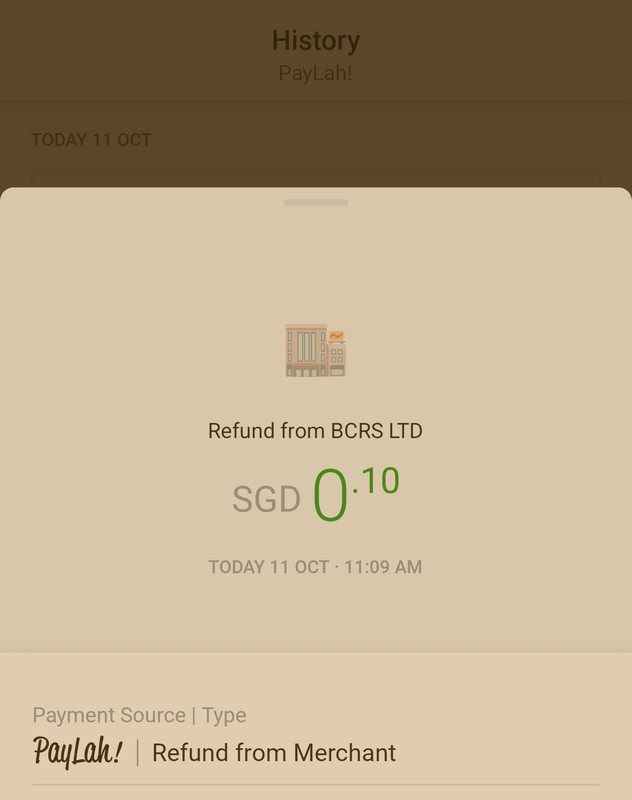
• The Singapore Reality: Singapore insisted on a cashless, digital-first system (SimplyGo, EZ-Link, PayLah!). When machines glitch, lose internet connection, or misread a barcode, users are left empty-handed. Having to navigate a digital refund portal and wait days for a 10-cent credit turns an errand into a tech-support nightmare.
4. Entrenched Habit vs. Abrupt Enforcement
• The Nordic Reality: Sweden introduced its aluminum can deposit system (Pant) in 1984, and plastic bottles in 1994. Multiple generations of Nordics have grown up doing this; it is as natural to them as brushing their teeth. Furthermore, supermarkets are legally obligated to take containers back, meaning machines are everywhere.
• The Singapore Reality: Singaporeans are used to the extreme convenience of the HDB refuse chute right outside (or inside) their doors. Moving from "throw everything down the chute" to "sort, store, protect from dents, and carry a bag of trash down to a specific RVM block away" is too massive a behavioral leap to enforce overnight.
5. High Trust in "The Common Good" vs. Practical Cost-Benefit
• The Nordic Reality: Nordic citizens pay some of the highest taxes in the world and have an deeply ingrained sense of collective environmental responsibility. They view the Pant system as a civic duty.
• The Singapore Reality: Singaporeans are highly pragmatic. If a system takes too much time, effort, and space for a minor payout, they will calculate the cost-benefit ratio. When the friction is too high, the 10 cents is written off as an annoying "green tax," and the bottles go straight into the regular trash.
The stark differences in why it works beautifully there but fails to connect in Singapore come down to five core factors:
1. Tropical Pests vs. Sub-Zero Freezers
• The Nordic Reality: Nordic weather is cold for most of the year. If you keep a bag of unwashed soda cans in your mudroom, garage, basement, or balcony for a month, nothing happens. There are no ants, fruit flies, or cockroaches waiting to invade.
• The Singapore Reality: Singapore is hot and humid year-round. An unwashed Milo or Coca-Cola can sitting in a compact HDB kitchen will attract ants and cockroaches within hours. Singaporeans are culturally conditioned to throw trash down the chute immediately to maintain hygiene—hoarding sticky garbage goes against survival instincts in the tropics.
2. Space Abundance vs. High-Density Living
• The Nordic Reality: The average Nordic home is spacious, often with a dedicated laundry room, garage, or large hallway closet where a big recycling bin can sit completely out of sight.
• The Singapore Reality: Over 80% of Singaporeans live in HDB flats. Space is a premium. Forcing a family to dedicate a corner of an already tight kitchen to store bulky, uncrushed plastic bottles and aluminum cans just to get $2 back is an unreasonable spatial tax.
3. Immediate Reward vs. Digital Friction
• The Nordic Reality: When you feed cans into a Nordic Reverse Vending Machine (RVM), it prints a physical paper voucher instantly. You walk straight to the supermarket cashier, hand them the voucher, and it is deducted from your grocery bill like cash. It is a seamless, zero-friction loop.
• The Singapore Reality: Singapore insisted on a cashless, digital-first system (SimplyGo, EZ-Link, PayLah!). When machines glitch, lose internet connection, or misread a barcode, users are left empty-handed. Having to navigate a digital refund portal and wait days for a 10-cent credit turns an errand into a tech-support nightmare.
4. Entrenched Habit vs. Abrupt Enforcement
• The Nordic Reality: Sweden introduced its aluminum can deposit system (Pant) in 1984, and plastic bottles in 1994. Multiple generations of Nordics have grown up doing this; it is as natural to them as brushing their teeth. Furthermore, supermarkets are legally obligated to take containers back, meaning machines are everywhere.
• The Singapore Reality: Singaporeans are used to the extreme convenience of the HDB refuse chute right outside (or inside) their doors. Moving from "throw everything down the chute" to "sort, store, protect from dents, and carry a bag of trash down to a specific RVM block away" is too massive a behavioral leap to enforce overnight.
5. High Trust in "The Common Good" vs. Practical Cost-Benefit
• The Nordic Reality: Nordic citizens pay some of the highest taxes in the world and have an deeply ingrained sense of collective environmental responsibility. They view the Pant system as a civic duty.
• The Singapore Reality: Singaporeans are highly pragmatic. If a system takes too much time, effort, and space for a minor payout, they will calculate the cost-benefit ratio. When the friction is too high, the 10 cents is written off as an annoying "green tax," and the bottles go straight into the regular trash.
Important Forum Advisory Note
This forum is moderated by volunteer moderators who will react only to members' feedback on posts. Moderators are not employees or representatives of HWZ Forums. Forum members and moderators are responsible for their own posts.
Please refer to our Community Guidelines and Standards and Terms and Conditions for more information.

