EDMW Retirement Thread

yokine3a

Arch-Supremacy Member
Joined
Aug 20, 2008
Messages
19,065
Reaction score
13,392
$1K passive income is quite power!

$500 expenses is really low.. utility, internet and mobile probably cost $200? If you throw in $100 for transport, you aren't spending much?
Utility got u-save to cover, no internet, only mobile plan cheap cheap<$10. Transport I am under concession scheme cos I am low wage worker 😊

I am not spending much is true, daily expenses got cdc... Dun go overseas travel dun eat restaurant, everyday eat 1.5 meals 🤣
 

Spike

High Supremacy Member
Joined
Apr 1, 2022
Messages
42,081
Reaction score
43,802
Utility got u-save to cover, no internet, only mobile plan cheap cheap<$10. Transport I am under concession scheme cos I am low wage worker 😊

I am not spending much is true, daily expenses got cdc... Dun go overseas travel dun eat restaurant, everyday eat 1.5 meals 🤣
🤔 No hobbies? What do you look forward to do? You can probably pick up an instrument if you wish so since you got the time.
 

Kum Jit Pow

Arch-Supremacy Member
Joined
Jan 10, 2014
Messages
14,550
Reaction score
6,817
🤔 Any inventory runs a risk of going obsolete.. and is difficult to value.
My inventory is based on blanket PO. No risk of obsolete or kena stuck. I am just sitting here and continue supplying until clients stop using. Can be considered passive income.
 

titusilvering

Banned
Joined
May 16, 2010
Messages
41,697
Reaction score
19,593
Thread for discussions related to retirement.

Come share what you are doing in retirement.
Food. Travels. Activities. Fitness. Health.
Also can discuss how you were able to retire. Money. Investments.

Realized there isn't really a thread in EDMW on this topic specifically.
Rely on cdc gstv lor
 

cyke69sg

High Supremacy Member
Joined
Mar 28, 2005
Messages
39,878
Reaction score
20,828
covered call etf a lot of withholding tax?
I am in Canada and the CC ETFs I have are Canadian with 25% modest leverage. I think this type of CC ETFs mostly in Canada.
No withholding tax for me. I checked with AI it said for SGreans is 15% withholding tax but still worthwhile.

Sorry you probably have to research it more yourself.
 

One Month Notice

Arch-Supremacy Member
Joined
Oct 2, 2008
Messages
15,001
Reaction score
1,814
https://drwealth.com/no-you-dont-need-us1-1-million-to-retire-in-singapore/

No, You Don’t Need US$1.1 Million To Retire In Singapore​

by Christopher Ng Wai Chung

August 17, 2026

The most consistent thing in the personal finance space is that journalists will continue to project how much Singaporeans would need to retire. The numbers fluctuate, but more importantly, you should analyse how the numbers are derived to see whether you agree with the methodology. This article examines the latest attempt to project your baseline retirement funds needed to live out your remaining years in Singapore.

The chart that’s making the rounds​

If you’ve been on LinkedIn or Instagram this week, you’ve probably seen it: a world map from Visual Capitalist titled “Mapped: How Much Americans Need To Retire Comfortably Around The World,” with Singapore lit up as the single most expensive country on the planet to retire in: a cool US$1.1 million (roughly S$1.4 million at current exchange rates).

It’s a great chart. It’s also, if you actually read the fine print, answering a completely different question than the one everyone assumes it’s answering and, consequently, Singaporeans are the group most likely to be misled by it.

Before you spiral into thinking your retirement number just went up by seven figures, let’s take the chart apart.

What the study is actually measuring​

The underlying data comes from NetCredit, a US consumer lending company, using cost-of-living inputs from Numbeo. Strip away the infographic polish and the methodology is quite simple:

  • Retirement window: a hypothetical retiree stops working at age 64 and lives to 78.4 years, the average American retirement age and US life expectancy. That’s 14 years and 8.4 months, or 176.4 months, of retirement.
  • Cost base: multiply that window by a monthly cost-of-living figure pulled from Numbeo for each country, built around an assumed lifestyle of inexpensive restaurant meals, weekly nights out, a couple of overseas holidays a year, moderate transport and no smoking.
  • Buffer: add a flat 20% “comfort” margin.
  • Currency: everything expressed in US dollars.
  • Exclusions: taxes and healthcare costs are explicitly left out.

That’s it. There’s no adjustment for local retirement age, local life expectancy, local currency purchasing power, or, critically, local retirement institutions. The 176.4-month runway is the same whether you’re retiring in Lagos, Lausanne, or on Lavender Street. Only the monthly cost figure changes from country to country.

In other words: this isn’t a model of “how much does it cost a Singaporean to retire in Singapore.” It’s a model of “how much would an American, retiring at an American retirement age, need to fund an American-style consumption pattern, if he paid Singapore’s prices for it.” Those are very different questions, and the gap between them is where the scary number comes from.

Four reasons the Singapore figure is inflated​

1. Numbeo’s Singapore price data is an expat’s price list, not a resident’s.​

Numbeo is crowdsourced, and its Singapore contributors skew heavily toward foreigners and higher-income residents, who price private rentals in the city centre, imported groceries, and Western dining. That’s a real market in Singapore, but it is not the market most citizens retire into. It systematically overstates the cost base for the median Singaporean household.

2. It assumes you’re renting, when 9 in 10 Singaporeans own their home.​

Housing is typically the largest line item in any retirement budget, and it’s the one the NetCredit model gets most wrong in Singapore. Roughly 77% of resident households live in HDB flats, and Singapore’s homeownership rate is above 91%. By age 65, most homeowners have long since cleared their HDB mortgage, often using CPF Ordinary Account savings rather than cash, so the largest “expense” in the model (renting an apartment in the city centre) simply doesn’t apply to the typical retiree. A model built around monthly rent will produce a wildly different number from one built around a paid-up flat.

3. The 14-year-8-month runway is imported wholesale from the US, and it doesn’t even match Singapore’s own numbers.​

This is the tell that the “life expectancy” figure was never localised. Singapore’s own life expectancy at age 65 is now 21.2 years (Department of Statistics, 2024). That’s several years longer than the 14.7-year US-derived runway baked into every country’s calculation, Singapore included. If you’re going to build a “how long does the money need to last” model, at a minimum, the number of years should change when you change countries. It doesn’t. The 176.4 months is a constant, not a variable.

4. It pretends CPF doesn’t exist.​

This is the big one. The entire premise of the NetCredit/Visual Capitalist model is that a retiree self-funds every dollar of spending from a lump sum they’ve saved and now have to draw down over a fixed period, the classic “4% rule”- style problem. That’s a reasonable way to think about retirement in a country with no compulsory pension system. It is not how retirement works in Singapore.

By the time a Singaporean turns 55, decades of compulsory CPF contributions from both the employee and the employer have already been building up a Retirement Account. Set aside the Full Retirement Sum, S$220,400 for those turning 55 in 2026, and CPF LIFE pays out an estimated S$1,780 a month for as long as you live, with no risk of outliving the money, because longevity risk is pooled across everyone in the scheme. Medisave and MediShield Life separately cover a large share of healthcare costs, which is precisely the expense category NetCredit excludes from its US-style number anyway. None of this appears anywhere in the “how much you need saved” figure that gets turned into a world map.

What a more realistic number looks like​

We don’t have to guess. The Department of Statistics’ Household Expenditure Survey 2023 found that households made up solely of non-employed persons aged 65 and above spent an average of S$2,349 a month. Even if you gross that up generously for a genuinely comfortable (not bare-bones) lifestyle, run it over the 21.2-year post-65 life expectancy, and layer on a margin of safety, you land nowhere near S$1.4 million (US$1.1 million). That’s before counting CPF LIFE payouts, a paid-up HDB flat, or Medisave as part of the picture, which the NetCredit


The article is basically playing a trick on you by using clever excuses to make Singapore look cheap when it really isn't.

First off, saying Singaporeans don't pay rent because they own a paid-off HDB flat completely ignores reality. A house isn't free just because the mortgage is paid. You had to lock up hundreds of thousands of dollars of your own hard-earned money into a 99-year decaying lease instead of investing it to build real wealth. On top of that, you still have to pay property taxes, town council fees, and massive renovation bills as the flat ages. Meanwhile, an American buying a house actually owns the land forever and can build real equity. You can't just pretend housing costs zero dollars in Singapore.

Second, the author tries to brush off high local prices by claiming those numbers only apply to rich expats. They argue that locals can just eat at hawker centers and take the bus. But changing the definition of a comfortable retirement to mean eating cheap meals in a hot food court every day just proves the point: the true cost of living here is so high that you have to downgrade your lifestyle just to survive. An American living in a low-cost state can own a big house, drive a car, and buy cheap groceries in bulk at places like Costco for a fraction of what that lifestyle would cost here. Plus, Americans can easily move to a cheaper state to lower their expenses, while Singaporeans are trapped in one of the most expensive city-states on Earth with nowhere cheaper to go.

Third, the author accidentally proves the opposite of what they meant to when talking about how long people live. They brag that Singaporeans live to be much older than Americans, so a retirement needs to last 21 years instead of 14. But if you have to fund an extra seven years of life in an expensive city, you need a way bigger bucket of cash, not a smaller one. Pointing out that Singaporeans live longer actually makes the $1.1M figure look even more reasonable.

Finally, throwing CPF into the argument is just a massive distraction. The question is how much stuff costs in retirement, not where you get the money. CPF isn't free government handouts; it's your own money that was forcibly locked away at low interest rates over your entire working life. In the US, money saved in a private retirement account invested in the stock market generates much higher returns, which can easily buy a far better income plan than CPF LIFE. Showing that CPF pays out a small monthly income only proves that the system gives you just enough to cover a bare-minimum survival lifestyle, not that Singapore is actually cheap to live in.
 

cyke69sg

High Supremacy Member
Joined
Mar 28, 2005
Messages
39,878
Reaction score
20,828
The article is basically playing a trick on you by using clever excuses to make Singapore look cheap when it really isn't.

First off, saying Singaporeans don't pay rent because they own a paid-off HDB flat completely ignores reality. A house isn't free just because the mortgage is paid. You had to lock up hundreds of thousands of dollars of your own hard-earned money into a 99-year decaying lease instead of investing it to build real wealth. On top of that, you still have to pay property taxes, town council fees, and massive renovation bills as the flat ages. Meanwhile, an American buying a house actually owns the land forever and can build real equity. You can't just pretend housing costs zero dollars in Singapore.

Second, the author tries to brush off high local prices by claiming those numbers only apply to rich expats. They argue that locals can just eat at hawker centers and take the bus. But changing the definition of a comfortable retirement to mean eating cheap meals in a hot food court every day just proves the point: the true cost of living here is so high that you have to downgrade your lifestyle just to survive. An American living in a low-cost state can own a big house, drive a car, and buy cheap groceries in bulk at places like Costco for a fraction of what that lifestyle would cost here. Plus, Americans can easily move to a cheaper state to lower their expenses, while Singaporeans are trapped in one of the most expensive city-states on Earth with nowhere cheaper to go.

Third, the author accidentally proves the opposite of what they meant to when talking about how long people live. They brag that Singaporeans live to be much older than Americans, so a retirement needs to last 21 years instead of 14. But if you have to fund an extra seven years of life in an expensive city, you need a way bigger bucket of cash, not a smaller one. Pointing out that Singaporeans live longer actually makes the $1.1M figure look even more reasonable.

Finally, throwing CPF into the argument is just a massive distraction. The question is how much stuff costs in retirement, not where you get the money. CPF isn't free government handouts; it's your own money that was forcibly locked away at low interest rates over your entire working life. In the US, money saved in a private retirement account invested in the stock market generates much higher returns, which can easily buy a far better income plan than CPF LIFE. Showing that CPF pays out a small monthly income only proves that the system gives you just enough to cover a bare-minimum survival lifestyle, not that Singapore is actually cheap to live in.
Tough to retire in Singapore?
I thought CPF is supposed to make it easier?
 

One Month Notice

Arch-Supremacy Member
Joined
Oct 2, 2008
Messages
15,001
Reaction score
1,814
Tough to retire in Singapore?
I thought CPF is supposed to make it easier?

I am pointing out the fallacy of the article you mentioned.

Hard or not isn't the issue.

You post it in your retirement thread, I have to point out that the VA article is spot on for highlighting Sg
high cost of retirement and the article does not address any points.


What has CPF got to do with anything? Its just a retirement saving scheme that US calls 401 (k) or Pension in Jp.
If the cost is high, your CPF doesn't help much right? People even have to bring their CPF to Malaysia to stretch it.
 

cyke69sg

High Supremacy Member
Joined
Mar 28, 2005
Messages
39,878
Reaction score
20,828
I am pointing out the fallacy of the article you mentioned.

Hard or not isn't the issue.

You post it in your retirement thread, I have to point out that the VA article is spot on for highlighting Sg
high cost of retirement and the article does not address any points.


What has CPF got to do with anything? Its just a retirement saving scheme that US calls 401 (k) or Pension in Jp.
If the cost is high, your CPF doesn't help much right? People even have to bring their CPF to Malaysia to stretch it.
Retirement is something I find very personal and individualized.

Too many variables to generalize. Each person has a lot of different circumstance.
 

Little turtles

Senior Member
Joined
Dec 18, 2023
Messages
741
Reaction score
356
Very Good to retire in Singapore
1. Good medical facilities
2. Lots of good and affordable (relative) food at hawker centres
3. Easy base to go for short haul or long haul holidays
4. City living- easy for retirees to be in easy reach / good transportation network
5. Very safe ( relative) and familiarity of surroundings

That is why a lot of wealthy folks are coming to Singapore as a base for residence
 

ahPpPp

Member
Joined
Dec 30, 2007
Messages
245
Reaction score
17
I feel very stressed about retirement, I got no hobby or passion. I don’t know how to spend my time.
 

cyke69sg

High Supremacy Member
Joined
Mar 28, 2005
Messages
39,878
Reaction score
20,828
Very Good to retire in Singapore
1. Good medical facilities
2. Lots of good and affordable (relative) food at hawker centres
3. Easy base to go for short haul or long haul holidays
4. City living- easy for retirees to be in easy reach / good transportation network
5. Very safe ( relative) and familiarity of surroundings

That is why a lot of wealthy folks are coming to Singapore as a base for residence
I think the big reason is also very low taxes

It is cheap to retire in Singapore if you consider taxation.
 

cyke69sg

High Supremacy Member
Joined
Mar 28, 2005
Messages
39,878
Reaction score
20,828
I feel very stressed about retirement, I got no hobby or passion. I don’t know how to spend my time.
If you really find it stressed to retire, it is perfectly fine in my opinion to continue working. As long as the work is not more stressful for you.
 

DragonFire

High Supremacy Member
Joined
Jan 1, 2000
Messages
42,272
Reaction score
13,180
Thread for discussions related to retirement.

Come share what you are doing in retirement.
Food. Travels. Activities. Fitness. Health.
Also can discuss how you were able to retire. Money. Investments.

Realized there isn't really a thread in EDMW on this topic specifically.
Most EDMWers are doomed to lifelong toil.

I think retirement in general is a fallacy.

if you enjoy your work, IMO it is better than retirement since work grants you purpose and provides a stipend on the side. My hobbies are expensive. I need active income to supplement them.

Most people seem to think though that the office is a battleground where everyone hides unsheathed daggers behind a smile. Sucks to be them i guess.

I will stay in employment as long as they will have me. And if they won't maybe that might be considered retirement if I can't find refuge elsewhere. Full time trading would be it at that point. I'd do it very conservatively and keep the risk profile low. Fsck I had a funny dream last night. Dreamt I was trading commodities. And I have never traded commodities before.
 

cyke69sg

High Supremacy Member
Joined
Mar 28, 2005
Messages
39,878
Reaction score
20,828
Most EDMWers are doomed to lifelong toil.

I think retirement in general is a fallacy.

if you enjoy your work, IMO it is better than retirement since work grants you purpose and provides a stipend on the side. My hobbies are expensive. I need active income to supplement them.

Most people seem to think though that the office is a battleground where everyone hides unsheathed daggers behind a smile. Sucks to be them i guess.

I will stay in employment as long as they will have me. And if they won't maybe that might be considered retirement if I can't find refuge elsewhere. Full time trading would be it at that point. I'd do it very conservatively and keep the risk profile low. Fsck I had a funny dream last night. Dreamt I was trading commodities. And I have never traded commodities before.
As with my other threads, I hope there is more positive participation than negative.

This thread is for those who are happily retired or working their way to be happily retired.

I agree with you that work is not necessarily a bad thing as long as it is not an unpleasant stressful activity.

For me the key about retirement is having freedom to choose what you want to do when you want to do it and how you want to do it.

And it isn't an ALL OR NOTHING type of situation with retirement.

One can work a bit here and there. Do other things during other times. Trade stocks other times. Basically whatever you want.

I'm glad to be happily retired now.
 

cyke69sg

High Supremacy Member
Joined
Mar 28, 2005
Messages
39,878
Reaction score
20,828
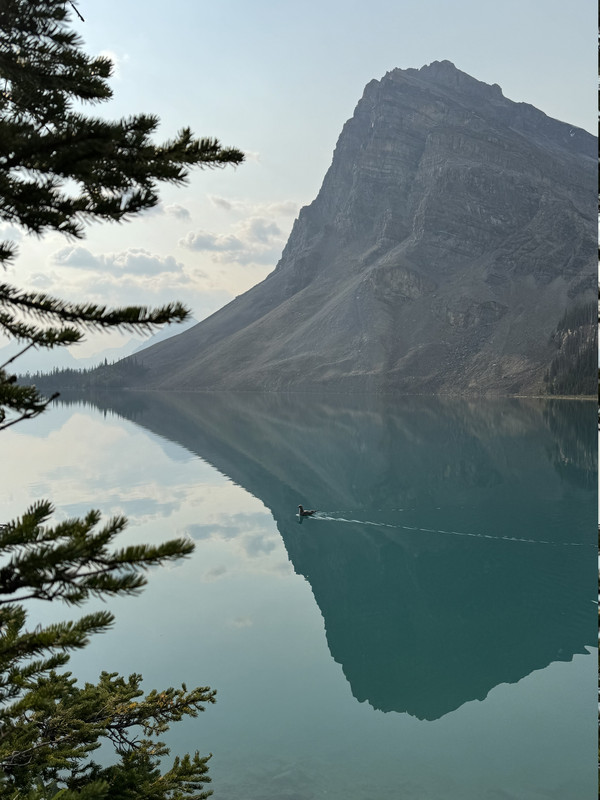
Anyone into photography during retirement?

IMG-6386.jpg
IMG-6366.jpg
IMG-6417.jpg
IMG-6420.jpg
 

d3n

Greater Supremacy Member
Joined
Aug 1, 2003
Messages
82,858
Reaction score
10,174
Very Good to retire in Singapore
1. Good medical facilities
2. Lots of good and affordable (relative) food at hawker centres
3. Easy base to go for short haul or long haul holidays
4. City living- easy for retirees to be in easy reach / good transportation network
5. Very safe ( relative) and familiarity of surroundings

That is why a lot of wealthy folks are coming to Singapore as a base for residence
IMO.

1. SG may have good medical facilities but comes at a price, else where in BKK, they are famous for medical treatments too (not just plastic surgery) and cheaper as well.

2. hawker food is no longer affordable, price has been increasing as well. You know, BKK street food or non touristy place is half the price of a hawker food. The same plate of chicken rice is only $2.50 in BKK and SG is $4 (some place still selling $3.50 but lesser and lesser), some hawker food (newer gen stall owners) even sell their food at $7-8! Look at those recent hype hokkien noodles, no $6 no talk. Once those old time stall owners close shop, those new gen will not sell you this kind of price anymore due to high rental cost.

3. Actually, BKK, as compared to SG, has cheaper flights anyway also; SG is not really the base of asia, and it is getting expensive, with higher fuel cost and airport tax. TIP: If you fly to China/Japan/Korea from BKK, the tickets are dirt cheap.
 
Important Forum Advisory Note
This forum is moderated by volunteer moderators who will react only to members' feedback on posts. Moderators are not employees or representatives of HWZ Forums. Forum members and moderators are responsible for their own posts. Please refer to our Community Guidelines and Standards and Terms and Conditions for more information.
Top