Google Pixel 10 series

limmk

High Supremacy Member
Joined
Jul 5, 2001
Messages
38,734
Reaction score
7,938


Ever since Google switched to its custom Tensor chips in its Pixel series, some have complained about the mediocre battery life and poor thermals they provided. This was in big part because of Google’s decision to task Samsung (more specifically, its S.LSI division) with handling many of the parts of the chip’s creation process, including manufacturing. Long story short, Samsung’s recent process nodes typically underperform those of its rival TSMC.

Fortunately, Google will soon rectify that mistake by dropping Samsung and designing its upcoming chips internally. Because of that, Google will also finally switch to TSMC, which we confirmed before. One thing that remained unclear about that, however, was which exact process would be used. Today, we can answer that question, not only for the Pixel 10’s Tensor G5 but also for the Tensor G6!

Thanks to an unprecedented leak from Google’s gChips division, Android Authority has viewed credible documents that confirm the new process nodes for Google’s upcoming chips.

No 2 nm, but still a great upgrade​

Google Tensor G5 (codename “laguna”), likely to be the chip in next year’s Pixel 10 series, will be manufactured on TSMC’s 3 nm-class N3E — the same exact process node Apple uses for the iPhone 16 Pro’s A18 Pro and its M4 chips. This is great news because it’s probably the best process node currently available and will definitely be a massive upgrade over Samsung’s 4 nm-class 4LPE node used in the Tensor G4, both in efficiency and performance.
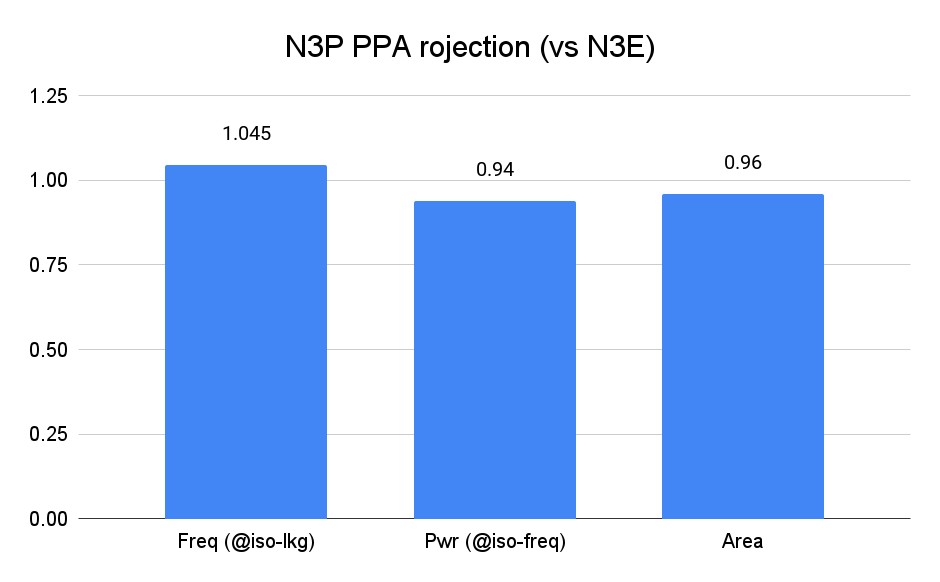
Probably the more interesting part of this leak, however, is the fact that the 2026 Tensor G6 (codename “malibu”) will be manufactured on TSMC’s upcoming N3P node, the same one rumored to be used for Apple’s A19 chip. While still a 3 nm-class node, it brings some improvements — the documents we viewed contained a chart that summarizes the changes. We are unable to share the original page. However, we recreated it below:

Tensor G5 vs G6 N3P PPA rojection


This might be a bit confusing, so let me give a bit of extra context: PPA stands for “Power, Performance, Area,” the three key components of any process node. The “Freq (@iso-lkg)” figure, with a 5% improvement, shows how much the frequency can be increased (which almost directly translates to performance) without affecting other characteristics of the chip (in this case, leakage, which is a concept far too complex to explain here). The second figure is “Power (@iso-freq),” which shows how much power usage can be reduced if the frequency stays the same, in this case, by 7%. It’s important to know that these two values aren’t additive — it’s either improved frequency or power usage. The last value (“Area”) shows how much smaller a finished ship can be, in this case 4%.

In summary, the Tensor G6 will also include considerable improvements to its process node, even if it is not 2nm, as previously rumored.
 

limmk

High Supremacy Member
Joined
Jul 5, 2001
Messages
38,734
Reaction score
7,938


Google’s Tensor G5, destined for next year’s Pixel 10, might be the most awaited chip in the series yet. For the first time ever, Google is designing the chip completely internally without relying on Samsung for the bulk of the work. The expectation is this will make it more competitive, as the previous and even current Tensor models lag behind other chipset manufacturers. But will it actually happen? So far we haven’t heard anything about the specs of the new chip, but that finally changes today.

Thanks to a massive leak from Google’s gChips division, Android Authority has viewed credible documents from around the end of the Tensor G5’s design that tells us everything about Google’s next-gen chip.
You're reading an Authority Insights story. Discover Authority Insights for more exclusive reports, app teardowns, leaks, and in-depth tech coverage you won’t find anywhere else.

More weird CPU decisions​

Pixel 9’s Tensor G4 featured an upgraded CPU cluster compared to its predecessor — at least on paper because, in practice, the performance is only marginally faster — just 6% quicker in our multi-core tests. This is because Google dropped a mid-cluster core, probably in an attempt to reduce power usage.
The Tensor G5 upgrades the CPU cluster again, but not in a way you’d probably expect. Google has decided to keep the same single Arm Cortex-X4 primary core, which is an interesting choice given the new Cortex-X925 promises some big improvements. It also decided to shift the core clusters around again: the mid cluster now has five Cortex-A725 cores, instead of three Cortex-A720 on Tensor G4, and the little cluster has been shrunk accordingly to only two Cortex-A520 cores. I’ve compiled the specs below:

Tensor G3 (“zuma”)Tensor G4 (“zumapro”)Tensor G5 (“laguna”)
Big cluster1x Arm Cortex-X31x Arm Cortex-X41x Arm Cortex-X4
Mid cluster4x Arm Cortex-A7153x Arm Cortex-A7205x Arm Cortex-A725
Little cluster4x Arm Cortex-A5104x Arm Cortex-A5202x Arm Cortex-A520
Obviously, it’s hard to predict performance based on specs alone, but a change like this should give the Tensor G5 at least a decent multi-core performance improvement. It is disappointing, however, to see the same Cortex-X4 used again.

A brand-new GPU​

One area that particularly surprised me about the Tensor G5 while reviewing the documents was the GPU. There aren’t many vendors providing GPU IP, and Google has been using Arm Mali for all its past Tensor chips, so why would that change now? Well, I don’t know, but it did. The Tensor G5 comes with a GPU from Imagination Technologies (or IMG) — the DXT-48-1536 running at 1.1 GHz.
Unfortunately, we don’t know much about the new GPU except for two interesting details: first, it will come with ray tracing support, which is new to Google chips, which typically skip such “gaming” features. The second and perhaps just as important detail is the support for GPU Virtualization, allowing the use of accelerated graphics in a virtual machine. Google has been working on various virtualization-based features for a while, so it makes sense this was included.

I’ve compiled the new GPU specs in the table below:
Tensor G3 (“zuma”)Tensor G4 (“zumapro”)Tensor G5 (“laguna”)
GPUArm Mali-G715 (7 cores)Arm Mali-G715 (7 cores)IMG DXT (2 cores)
Frequency890 MHz940 MHz1100 MHz
Ray tracingNot supportedNot supportedSupported
GPU VirtualizationNot supportedNot supportedSupported

Modest improvements for AI​

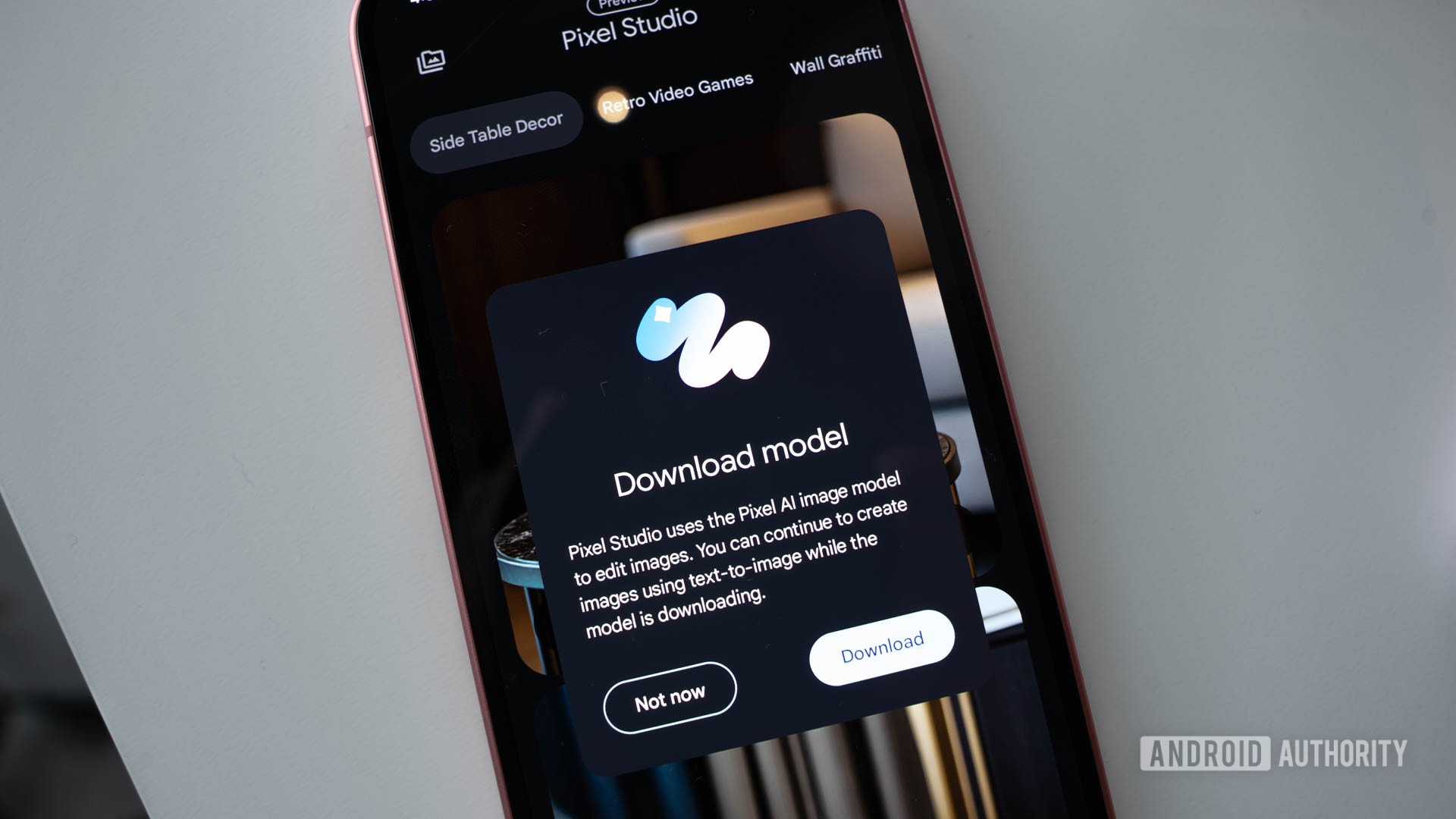
Google Pixel 9 with Pixel Studio app open showing a prompt to download a new AI image model


Google’s phones have always had great AI features, and AI is obviously one of the main reasons why Tensor chips even exist. By including custom-designed TPUs, Google can achieve much more impressive experiences than would otherwise be possible with an off-the-shelf chip.

The Tensor G5 comes with a modestly faster TPU compared to the Tensor G4 (which itself was exactly the same as the Tensor G3). The TOPS (Trillions of Operations Per Second) value is almost 40% larger, but that doesn’t translate well to real-world performance. Google’s internal benchmarks suggest the new TPU is only 14% faster. The improved TPU also comes with a few new features for Google’s developers, such as small embedded RISC-V cores to allow running operations that are not implemented in hardware, as well as support for on-device training. I’ve compiled the new TPU specs below:

Tensor G3 (“zuma”)Tensor G4 (“zumapro”)Tensor G5 (“laguna”)
TOPS13 / 6.5 TOPS (INT8/FP16)13 / 6.5 TOPS (INT8/FP16)18 / 9 TOPS (INT8/FP16)
Performance improvement over previous generation+65%0+14%


As we’ve already revealed, the Tensor G5 is built on TSMC’s 3 nm-class N3E process node, similar to Apple’s A18 Pro, for example. Interestingly the die size is 121 mm^2, whereas the Apple A18 Pro’s is only 105 mm^2, making the G5 a noticeable larger chip.

While the specs of Google’s upcoming Tensor G5 don’t look super impressive on paper, it’s worth remembering that it’s still a chip that will be in a Pixel phone, where software is arguably more important than the hardware. It will be interesting to see how Google utilizes the new hardware to bring new features to the Pixel 10 series.
 

limmk

High Supremacy Member
Joined
Jul 5, 2001
Messages
38,734
Reaction score
7,938
TL;DR
  • A leak from Google’s gChips division has revealed new AI tricks and software-based camera features for the Pixel 10 and Pixel 11.
  • Potential camera improvements include support for 4K 60fps HDR video, 100x zoom, an upgrade to the Cinematic Blur feature, and a new “Ultra Low Light” video mode for capturing quality footage in very dim lighting.
  • The upcoming Pixel devices may also introduce ML-based always-on features related to health monitoring and activity tracking.


The thing that usually leaks last about Pixel devices is the software features. While every detail of the hardware typically leaks months in advance, we usually only learn about the new software right before the launch.

This is not the case today, as thanks to a massive leak from Google’s gChips division, Android Authority has viewed credible documents that hint at a few new features we can expect from the Pixel 10 and Pixel 11.

Even more AI​

Google Pixel 9 with Pixel Studio app open showing a prompt to download a new AI image model


The big thing Google phones currently focus on is AI features, and it’s no different in the case of the upcoming Pixel phones.

Thanks to its improved TPU, Tensor G5 (expected to make its debut in the Pixel 10 series and newer), will be getting “Video Generative ML” features. While that’s a pretty vague name, learning the intended use case explains what the feature will do a bit better: “Post-capture Generative AI-based Intuitive Video Editing for the Photos app.” We can only guess what this means exactly, but it sounds like Google will let users edit their videos more easily by using AI that actually understands the video. The feature might also be available in the YouTube app, specifically for YouTube Shorts.

Pixel 11 may also offer 100x zoom capabilities

Google is also exploring several AI features for photo editing, including “Speak-to-Tweak,” which seems to be an LLM-based editing tool, and “Sketch-to-Image,” which is self-explanatory and resembles a similar feature offered by Samsung’s Galaxy AI. Additionally, there is prior evidence indicating that Google is developing a Sketch-to-Image feature for its Gemini project.
Google is also working on a “Magic Mirror” feature, but unfortunately, no extra context could be gathered from the leaked documents. Additionally, the Tensor G5 should also be capable of running Stable Diffusion-based models locally, which could be used in the Pixel Studio app, instead of the current server-based solution.

Promising camera improvements​

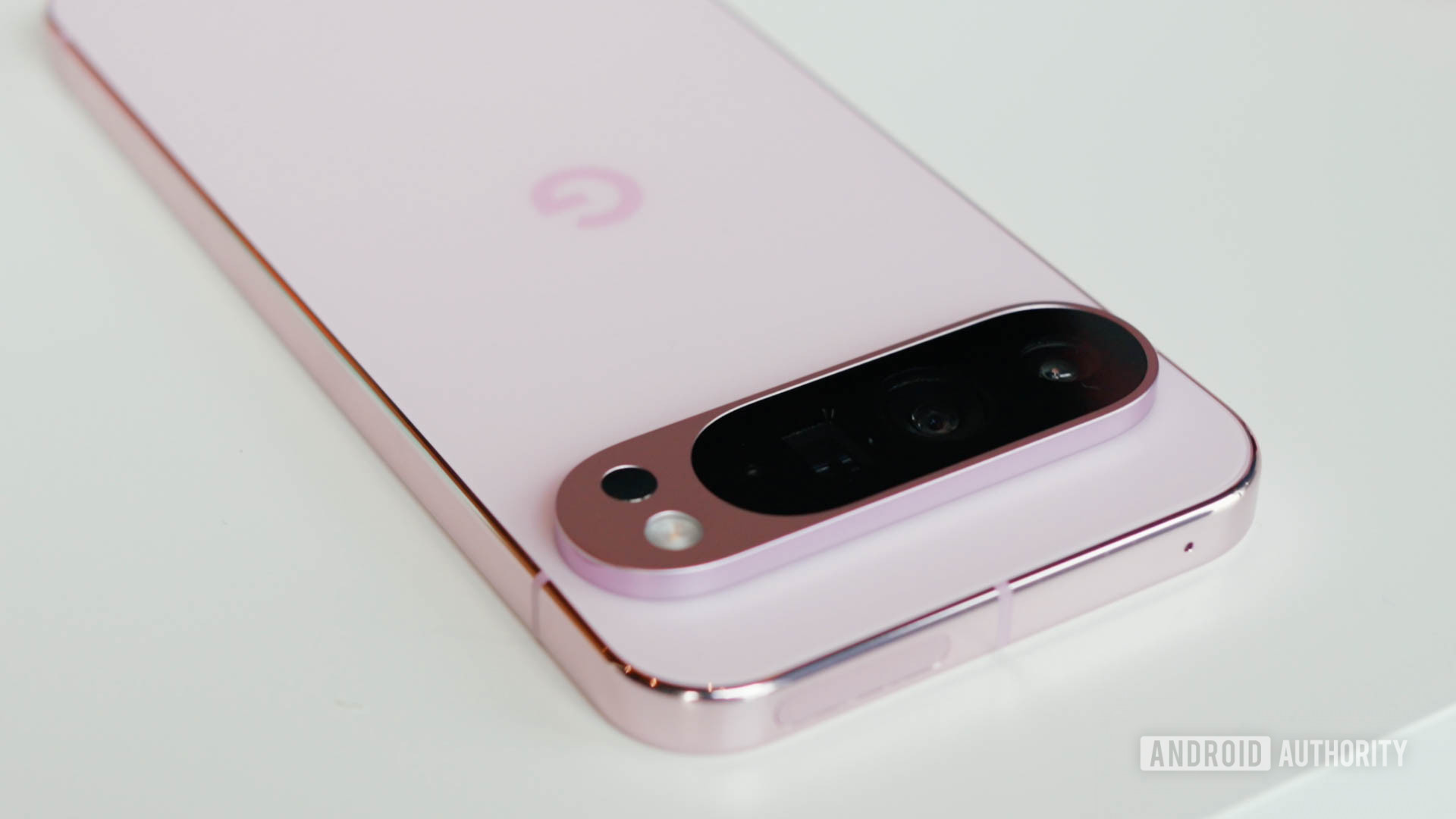
Google-Pixel-9-Pro-in-Rose-Quartz-laying-face-down-on-a-table-as-the-camera-views-it-upside-down.jpg


Google focuses heavily on the cameras of its phones, so it’s not surprising that many of the new features are related to this area. Firstly, Tensor G5 finally supports 4K 60fps HDR video, whereas previous models only allowed up to 4K 30fps video.
The Pixel 11 may also offer 100x zoom capabilities through Machine Learning for both photos and videos. However, we anticipate that the algorithms used for each will differ, so don’t expect identical quality across formats. Additionally, the documents reference a “next-gen” telephoto camera designed to enhance this feature, suggesting that significant hardware upgrades could be on the way as well.

The most exciting feature potentially coming to the Pixel 11 is Ultra Low Light video.

Cinematic Blur is getting an upgrade on the Pixel 11, too, with support for 4K 30fps and a new “video relight” feature that seems to change lighting conditions in videos. Both of these new features are made possible by a “Cinematic Rendering Engine” in the chip’s image signal processor. The inclusion of the new hardware block also reduces the power draw of video recording with blur by almost 40%.

Last, and perhaps the most exciting feature potentially coming to the Pixel 11 is “Ultra Low Light video,” also referred to as “Night Sight video.” A feature of this name already exists, but it relies on processing in the cloud, whereas this one is fully on-device. Google specifically mentioned 5-10 lux are the intended lighting conditions for the feature. This is considered very low light, similar to the illumination provided by a dimly lit room or the light from a cloudy sky at dusk; for example, it’s comparable to the brightness of a candle placed about one meter away. The new feature will also rely on new camera hardware to achieve the intended results.

New ambient features​

Thanks to the inclusion of a new “nanoTPU” in the low-power part of the Tensor G6, Google is planning on adding a few ML-based always-on features to the Pixel phones. A good chunk of these are health-related features, such as detection of “agonal breathing, cough, snore, sneeze, and sleep apnea, fall detection, gait analysis, and sleep stages monitoring.” There’s also emergency sound event detection.

Some of the features are also for activity tracking, like “Running ML,” which is a collection of tools for runners, such as “coachable pace” and “balance & oscillation” analysis.

Pixel 11 might also bring support for more Quick phrases, but unfortunately, no list was given.
 

limmk

High Supremacy Member
Joined
Jul 5, 2001
Messages
38,734
Reaction score
7,938


The new Google Pixel 9 series features a slightly revamped design, three different Pro models, a stronger emphasis on AI, and plenty of other changes. It also represents one of the biggest deviations from the Pixel formula that we’ve seen in years.

Despite several notable changes, the Pixel 9 still retains several of the most criticized aspects of the Pixel series, including limited storage options and a less competitive SoC compared to other phones. With all of this in mind, what can we expect from the Pixel 9’s successor? Here’s everything we know about the Google Pixel 10 series. It’s important to note that the Pixel 10 Pro Fold will not be included in this rumor hub.

Google Pixel 10: At a glance
  • When is it expected to come out? It's too early to say definitively, but we would expect Google to stick with tradition and launch the Pixel 10 sometime during fall 2025. There's a good chance we could see it in September or October.
  • What new features could there be? We expect to see a Tensor G5 chip produced by TSMC.
  • How much might it cost? It's unknown if Google will raise prices or stick to the same prices as the 2024 models. For now, we're leaning more toward the latter.

Will there be a Google Pixel 10?​

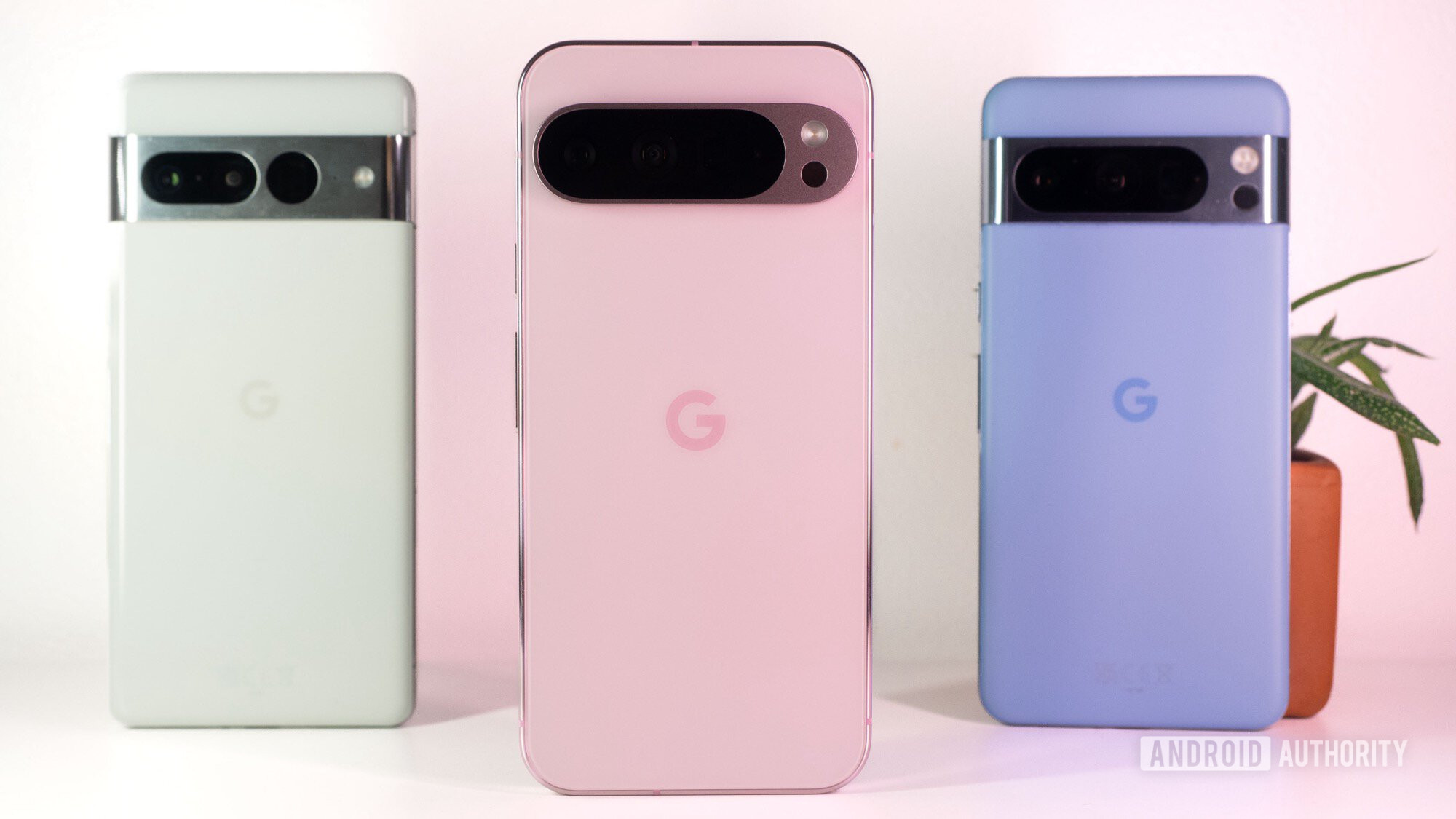
google pixel 9 pro xl pink vs 8 pro blue 7 pro whiite 1


Google’s Pixel 9 hit store shelves not long ago, so there’s still a lot of time before we’ll see the Pixel 10. But it’s extremely likely we’ll see it in late 2025 unless Google makes a major change to its usual strategy. That’s almost a full year away and so we’re still in the early days when it comes to rumors. That said, we’ve actually heard a fair amount considering how far away the release is.

Back in 2022, we revealed an exclusive look at Google’s Pixel roadmap through 2025, as detailed by sources familiar with Google’s plans. This included a few mentions of the Pixel 10, including even more models, and the possibility of a Z Flip competitor.
It’s hard to say if that original roadmap still holds today, though we can say many of its predictions were fairly accurate. Since then, we’ve also heard a few other bits about the Pixel 10. In May, rumors heated up that Google would ditch Samsung and start using TSMC, starting with the Tensor G5, which we later provided further evidence of. We’ve since heard reports that this chip has now entered production.

Perhaps the biggest piece of evidence for the existence of the Pixel 10 series is an Android Headlines report on September 16 which revealed apparent codenames. The Pixel 10 is said to be called Frankel, the Pixel 10 Pro is apparently called Blazer, and the Pixel 10 Pro XL is said to be called Mustang. The Pixel 10 Pro Fold will apparently be called Rango.

What is the most likely Google Pixel 10 release date?​

google pixel 9 pro xl pink 1


  • Google Pixel 9 — September 4, 2024
  • Google Pixel 8 — October 12, 2023
  • Google Pixel 7 — October 13, 2022
Looking at the Pixel’s historical release windows, the phone is typically announced in late September or early October. This changed with the Pixel 9, as the new series was announced in late August and arrived on September 4. It’s possible this was a one-time change to bring the Fold series into the mainline Pixel strategy, but at the very least, we are confident you’ll see the Pixel 10 series sometime in late summer or early fall of 2025.

What rumored specs and features could the Google Pixel 10 have?​

Goolge Pixel 9 Porcelain rear


We’re still in the early days of the rumor mill, but there’s more than enough information to start building a picture of what to expect. We’ll dive into all of the features and specs we’ve heard of so far.

Features​

AI has long been a focus on Pixel phones and that will be no different on the Pixel 10 series. We’ll get into it a little later on, but the Tensor G5 will have an improved TPU. Android Authority has reviewed documents from Google’s gChips division that say this upgrade will allow the Pixel 10 to have “Video Generative ML” features. The description for the feature reads, “Post-capture Generative AI-based Intuitive Video Editing for the Photos app.” This is only a guess, but it sounds like Google will let users edit their videos more easily by using AI that actually understands the video.

It seems we can also expect several AI photo editing features. One such feature is called “Speak-to-Tweak,” which seems to be an LLM-based editing tool. Another is called “Sketch-to-Image,” which would allow you to sketch something and have AI turn it into an image, similar to Samsung’s Galaxy AI feature. There’s also a feature called “Magic Mirror,” but we don’t have any information on what it could be. Tensor G5 should also be able to run Stable Diffusion-based models locally.
We don’t know what camera lenses Google will use for the Pixel 10 series yet, but we do have some camera details. In the documents we looked at, we learned that Tensor G5 supports 4K 60fps HDR video, in contrast to previous models that only supported 4K 30fps HDR video.


limmk

High Supremacy Member
Joined
Jul 5, 2001
Messages
38,734
Reaction score
7,938

Tensor G5​


Google has essentially used a modified version of Exynos to build its Tensor series in the past, leading to less-than-stellar performance. The Tensor G4 isn’t a bad chip, per se, but it lacks raw power and relies heavily on throttling during heavy loads to keep phone temperatures down. Although Snapdragon chips (produced by TSMC) also throttle to manage heat, their initial performance is strong enough that these drops are less noticeable. The good news is that several rumors, including our own exclusive report, suggest that Google is making a switch to TSMC next year.

Let’s start off with the earliest rumor of the bunch, which surfaced in July 2023. A report claimed that plans to develop a fully custom Tensor chip was delayed from 2024 to 2025 and that TSMC would produce this silicon on a 3nm process. In mid-May 2024, a leaker who goes by Revegnus on X (formerly Twitter) corroborated this rumor in a now-deleted post, saying that Tensor chipsets from the Pixel 10 series onwards will be manufactured by TSMC. They also asserted that the Tensor G5 will use TSMC’s 3nm process.
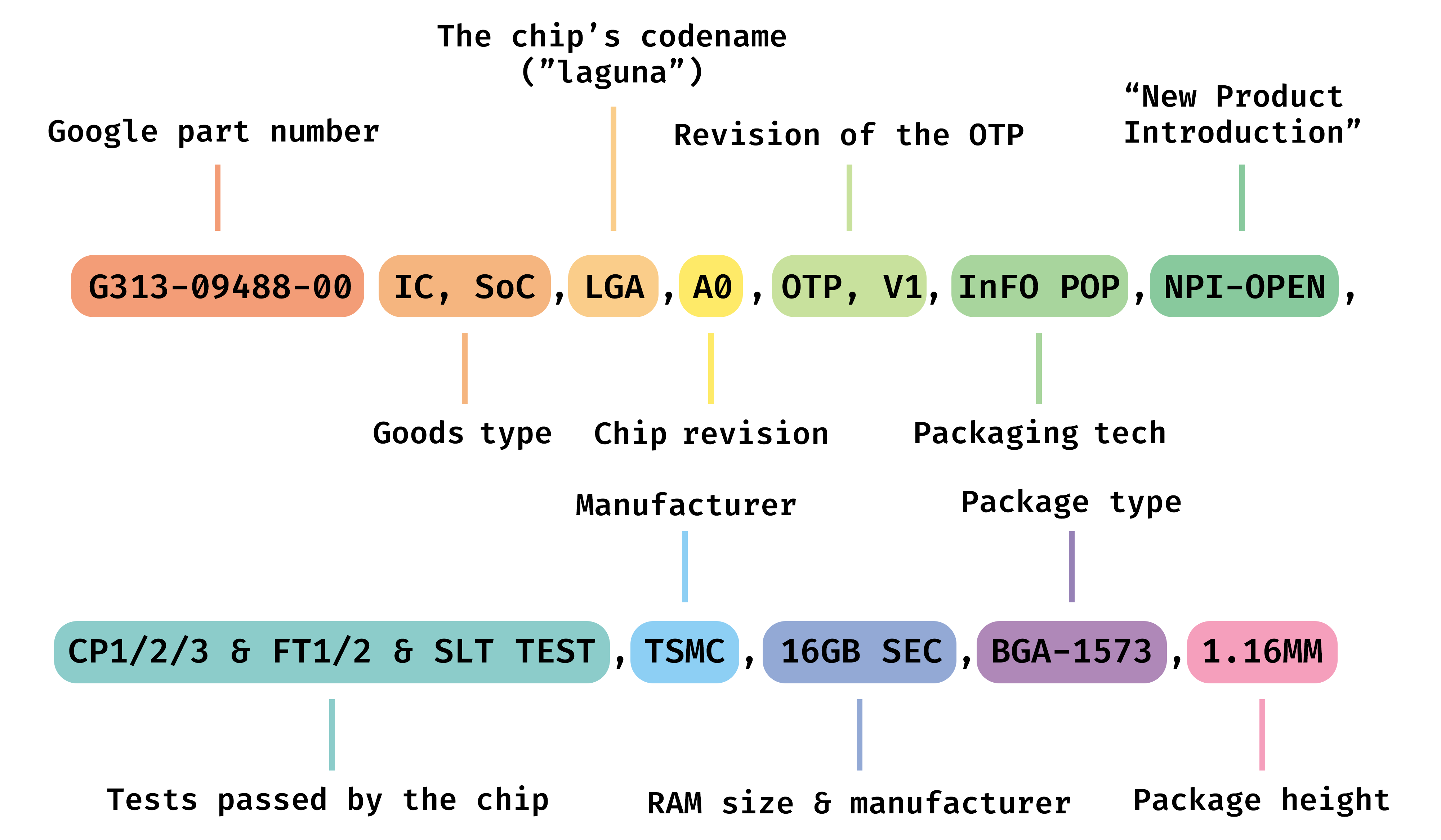
Our exclusive report, mentioned at the beginning of this section, provides further proof of this new Tensor by TSMC SoC. In a shipping manifest, we found proof of the existence of a Tensor G5 chip sample along with an abbreviation of its codename “Laguna.” It also directly mentions TSMC and InFO POP — packaging technology exclusive to TSMC. From this document, we also learned that it will have 16GB of package-on-package RAM manufactured by Samsung Electronics Company (SEC).

Tensor G5 shipping manifest description breakdown


If it wasn’t sure enough by now, a report from BusinessKorea also corroborates the switch to TSMC rumor. However, this report adds that Samsung’s 3nm process delivers 10-20% lower performance than TSMC’s 3nm process.
In July, we heard a rumor that cites “supply chain sources” claiming that TSMC was nearly ready for initial production of the Tensor G5 chip. At the time, it was said the processor was just reaching the tape-out stage.

Late October treated us to two big leaks regarding the Tensor G5. In documents from Google’s gChips division, viewed by Android Authority, we found confirmation that the Pixel 10’s chip will be manufactured on TSMC’s 3 nm-class N3E. This is the same process node Apple uses for the iPhone 16 Pro’s A18 Pro and its M4 chips.

The second leak from October also involves documents we reviewed from Google’s gChips division. We found that Google has upgraded the CPU cluster, giving the mid cluster five Cortex-A725 cores, with the little cluster shrinking to only two Cortex-A520 cores. However, the firm is keeping the same single Arm Cortex-X4 primary core from before.

Tensor G3 (“zuma”)Tensor G4 (“zumapro”)Tensor G5 (“laguna”)
Big cluster1x Arm Cortex-X31x Arm Cortex-X41x Arm Cortex-X4
Mid cluster4x Arm Cortex-A7153x Arm Cortex-A7205x Arm Cortex-A725
Little cluster4x Arm Cortex-A5104x Arm Cortex-A5202x Arm Cortex-A520

We don’t know as much about the GPU, but we have a few breadcrumbs to follow. It will have support for ray tracing, something new for Tensor chips. We’re also expecting support for GPU Virtualization, which would allow the use of accelerated graphics in a virtual machine.

Tensor G3 (“zuma”)Tensor G4 (“zumapro”)Tensor G5 (“laguna”)
GPUArm Mali-G715 (7 cores)Arm Mali-G715 (7 cores)IMG DXT (2 cores)
Frequency890 MHz940 MHz1100 MHz
Ray tracingNot supportedNot supportedSupported
GPU VirtualizationNot supportedNot supportedSupported

The final part of the leak touched on AI and the TPU. It appears that the Tensor G5’s TPU is modestly faster than the one on the Tensor G4. The trillions of operations per second (TOPS) value is almost 40% larger, but that doesn’t translate well to real-world performance as internal benchmarks suggest it’s only 14% faster. The new TPU also comes with new features such as small embedded RISC-V cores and support for on-device training.

Tensor G3 (“zuma”)Tensor G4 (“zumapro”)Tensor G5 (“laguna”)
TOPS13 / 6.5 TOPS (INT8/FP16)13 / 6.5 TOPS (INT8/FP16)18 / 9 TOPS (INT8/FP16)
Performance improvement over previous generation+65%0+14%

One other interesting detail we dug up is that the die size is 121 mm^2. Apple’s A18 Pro is only 105 mm^2, making the G5 a noticeably larger chip.

What might the Google Pixel 10 price be?​

Google-Pixel-9-Pro-in-front-of-9-series


  • Google Pixel 9 — $799
  • Google Pixel 8 — $699
  • Google Pixel 7 — $599
  • Google Pixel 9 Pro — $999
  • Google Pixel 8 Pro — $999
  • Google Pixel 7 Pro — $899
  • Google Pixel 9 Pro XL — $1,099
It’s still way too early for any leaks or rumors about the price of the Pixel 10 series. As such, we’ll just have to rely on previous trends to make a guess. Above, you can see what the prices were for the last three years. The Pixel 7 and Pixel 7 Pro sold for $599 and $899, respectively. Last year, unfortunately, the price shot up by $100 for both the Pixel 8 and Pixel 8 Pro. And this year, the Pixel 9 series launched with three models for the first time. The vanilla Pixel 9 went up to $799, while the Pro stayed at $999 and the Pro XL sold for $1,099.
If we had to guess, it’s probably more likely than not that the cost will remain the same for 2025. That said, we wouldn’t be surprised if one or even all three of the models jumped up by $100 as Google continues to angle its phones as premium devices. We’ll have to wait to see if this prediction comes true.

Should you wait for the Google Pixel 10?​

Official Google Pixel 9 case in hand


Considering the Pixel 10 is still far away, we’d usually advise against waiting. However, the situation is a bit more nuanced this time. The Pixel 9 is a solid device, but the Pixel 10 could represent a much larger leap forward in performance, thanks to the switch to TSMC. Additionally, next year’s Pixel is a significant milestone for the brand, marking ten years since the line debuted. This could mean we’ll see plenty of other enhancements to celebrate the occasion. Maybe even a Pixel 10 Flip?

If you don’t absolutely need a new phone (say, if you’re using a Pixel 6, 7, or newer and can hold out another year), the Pixel 10 might actually be worth the wait. This is especially true if you’re not thrilled with the design changes or new AI features in the Pixel 9. However, if you like what Google has done with the Pixel 9, there shouldn’t be anything holding you back from upgrading now. Just keep in mind that its successor may offer a much larger performance boost than any Pixel since the introduction of the Tensor processor.

If you’re looking for a device with strong AI capabilities and more raw performance but don’t want to wait for the Pixel 10, the Galaxy S24 series ($859.99 at Amazon) might be the right choice, particularly the S24 Ultra ($1419.99 at Amazon). While the latest Galaxy S series may not match Google in AI prowess, it’s a close second in the Android world.
 

limmk

High Supremacy Member
Joined
Jul 5, 2001
Messages
38,734
Reaction score
7,938


We’re barely through processing the arrival of the Pixel 9 series, yet our latest leaks are already looking ahead to the Pixel 10 and Google’s next-gen Tensor G5 processor. While the future chip’s CPU performance appears to be taking a sideward step, leaked specs suggest a bigger change in the graphics department with the adoption of Imagination Technologies’ DXT architecture — specifically a two-core DXT-48-1536 clocked at 1.1GHz.

Imagination Technologies might not be a name you’re super familiar with in today’s mobile chipset market. You’ll find its GPUs in the odd mid-range design like 2022’s MediaTek’s Dimensity 930, but you’re more likely to remember it from earlier iPhone silicon. Imagination’s PowerVR architecture powered models up to the A10 Fusion before Apple licensed its IP for more bespoke in-house GPUs. A return to flagship silicon with Google’s Tensor G5 is an exciting development.

How does Imagination’s DXT architecture stack up?​

Google Tensor G4 logo 2


To be blunt, Google’s Tensor series underwhelms in the graphics department, languishing at least two generations behind the fastest in the business in terms of performance. It’s also been slow to adopt new GPU designs and continues to dodge ray-tracing support, a niche feature but one that we now expect in a flagship-tier mobile GPU. That looks set to change, at least somewhat, with the Tensor G5 and the DXT-48 GPU.

I’m not going to fixate on specific performance numbers; it’s far too early for that, and the DXT architecture is an unknown quantity when it comes to mobile benchmarks and titles. Still, a two-SPU core “High Configuration” DXT setup boasts 1,536 FP32 FLOPs per clock, putting it at 1.69 TFLOPs at the G5’s reported 1.1GHz clock speed. While comparing TFLOPS across GPU architectures is fraught with caveats, there are benchmark numbers floating about online for a very rough comparison.

Qualcomm’s 1.7 TFLOP Snapdragon X Plus GPU scores around 3,200 in Wild Life Extreme. Somewhere in that ballpark would make the Tensor G5 about 20% to 25% faster than its predecessor, at least in this test. That would be the most significant leap in the Pixel’s graphic performance for generations, but we’d expect an even larger jump if Tensor adopted Arm’s latest Mali-G925 architecture on 3nm. Regardless, that works out slower than 2023’s Snapdragon 8 Gen 2 and, therefore, well off the pace of the fastest gaming phones you can buy today and upcoming 2025 rivals packing the powerhouse Snapdragon 8 Elite.

Google’s internal figures, as seen by Android Authority, suggest performance could jump a bit higher. The graphs aren’t well labeled but point to a 35% to 60% gain over the G4, depending on the benchmark. That would be more significant, but even Google’s data shows it landing well short of Apple and Qualcomm’s latest, offering performance that’s still not as zippy as leading 2023 silicon.

The Tensor G5's GPU will see the biggest boost in generations, but it won't be enough to catch the leaders.
The Tensor G5’s expected GPU won’t see it contesting the performance crown then, but sustained performance might still make for an interesting comparison point. Thankfully, the DXT architecture sports some interesting features that will close the gap on its rivals.

Ray tracing remains optional with DXT, as it is with Arm’s Mali/Immortalis split. Google is opting for the smallest Ray Acceleration Cluster (RAC) unit configuration it can (a DXT-48-1536-0.5RT2), with a half RAC in each core. Again, the G5 is not aiming for beastly performance.

Still, Imagination sports what it calls the industry’s only Level 4 ray tracing implementation, which might see it punch above its weight. Imagination sports full ALU offloading (freeing up GPU rendering resources), BVH processing (much faster intersection calculations), and Ray Coherency Sort (group processing of nearby rays) in hardware, thereby accelerating ray tracing performance. Neither Arm’s Immortalis nor Qualcomm’s Adreno supports BVH or Ray Coherency in hardware. That said, we’re yet to test Imagination’s long-touted ray-tracing claims, so I won’t set my expectations too high.

Why switch from Mali after all these years?

Goolge Pixel 9 Porcelain rear


Imagination’s DXT white paper contains some other interesting tidbits. The architecture supports up to 2×4 and 4×4 Fragment Shading Rate (aka Variable Rate Shading), which you’ll already find in the current Tensor’s Arm Mali-G715 and other high-end platforms. There’s also industry-standard ASTC texture compression but with HDR support. The key takeaway is that this is a GPU architecture that’s very competitive from a feature standpoint.

We also know the new GPU supports virtualization, which is not found in current Tensor chips. This allows for the use of accelerated graphics in a virtual machine, potentially allowing Google to bring one of its numerous virtualization-based features to the Pixel 10. Perhaps, new features are one of the reasons for switching GPU vendors?

One of the more interesting aspects of Imagination’s GPU architecture is its 128-bit Superscalar ALUs, combined with a Decentralised Multi-Core approach to GPU cores. The former means the arithmetic logic units process multiple pieces of 32- or 16-bit data at once, with the added perk that wide registers are highly adaptable for a range of high- and low-precision data types.

Imagination has a very different GPU architecture to Mali and Adreno.

This is a different approach from other mobile GPU architectures, where you’ll typically find dedicated 32- and 16-bit ALUs working concurrently on the most common graphics data sizes, with smaller data sizes optionally supported within those ALUs for machine learning. The traditional setup is good for graphics and not bad for lower bit-depth machine learning workloads either. However, it can’t leverage single instruction multiple data (SIMD) on larger data types, which can be beneficial for memory bandwidth and cache resources, which are always at a premium in mobile GPUs.

Paired with two GPU cores that work independently also means potentially higher performance and/or lower power consumption when crunching through graphics and compute workloads, thanks to parallel processing efficiencies. In other words, you can have cores contribute to a single or different workload as fast as possible or power down a core to save energy.

Additional efficiency savings for graphics and/or machine learning workloads may have caught Google’s eye. That said, these cores can’t share internal resources, which can lead to bottlenecks or underutilization compared to a unified shader architecture (such as Mali), so it’s not without its risks. We’ll just have to wait and see how it performs.

Google may leverage DXT's novel architecture for AI workloads as well.

Speaking of AI, I’ve crunched some numbers seen in Google’s internal documents and estimate that the DXT-45 is roughly 5% faster at FMA operations than the G-715, which isn’t a whole lot. However, it’s possible that a larger 128-bit register means the DXT can still get more done with each operation through SIMD and/or better bandwidth utilization. It’ll be interesting to see if Google leverages the GPU for AI workloads, especially as its TPU is only looking at a 14% gain next generation.

Still, I’m not convinced that compute workloads or gaming performance are the reason for switching — DXT doesn’t look like it’s going to beat the competition here. The true reason for the swap probably lies somewhere in the balance between IP costs, energy efficiency, and the feature set on offer. Either way, Google seems to have decided that Imagination Technologies is the better option going forward.

Is Google making the right choice with the Tensor G5?

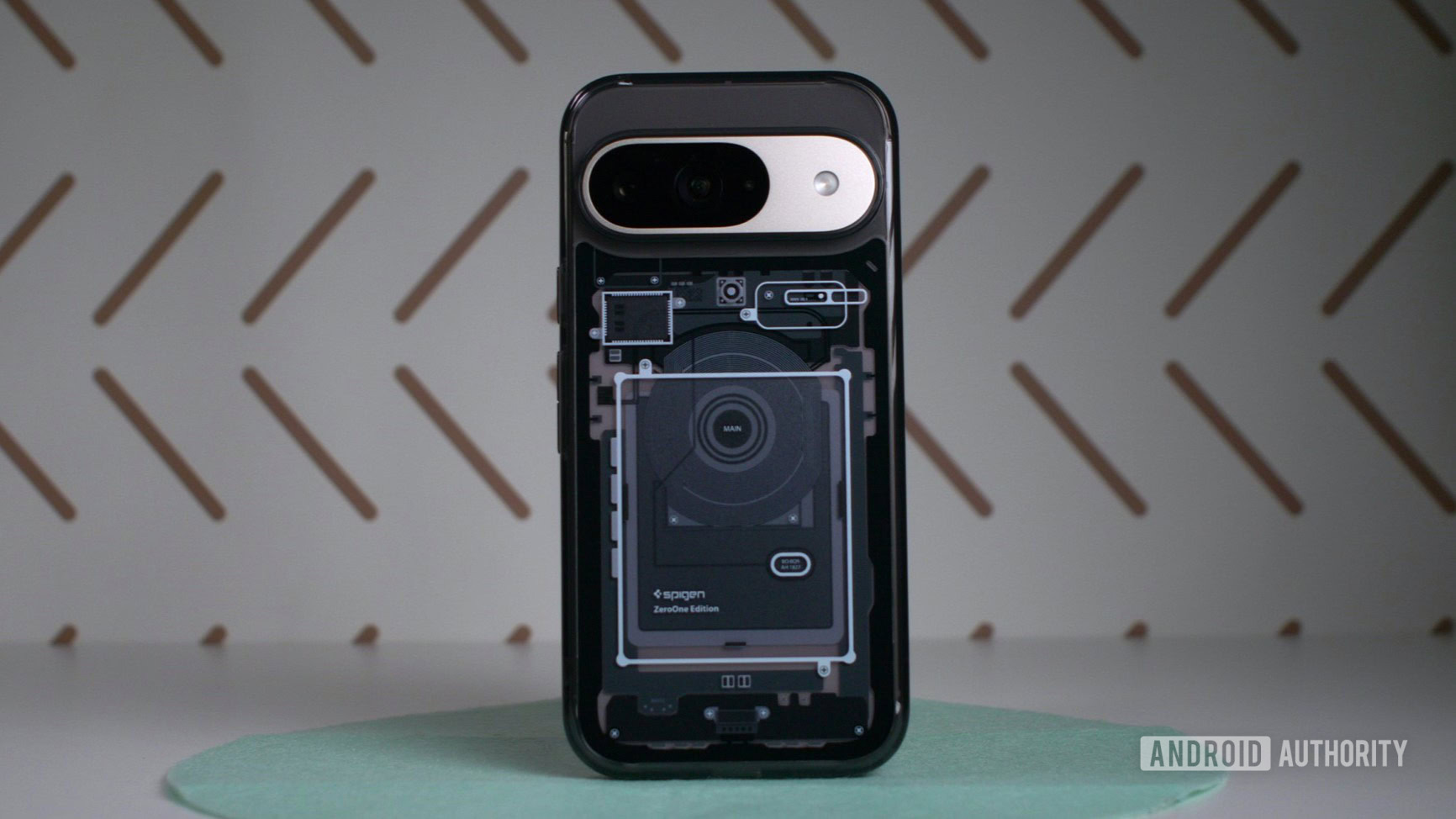
Spigen Ultra Hybrid Zero One Pixel 9 back


Loser

Arch-Supremacy Member
Joined
May 7, 2019
Messages
23,509
Reaction score
10,422
Looks like Google is ditching the camera bar, similar to the design of the Pixel 9a
Seems like no more 激凸 but hope that doesn't mean the camera hardware downgrade and compensate with software.

Or maybe just prototype case they don't care about camera bump protection.
 

limmk

High Supremacy Member
Joined
Jul 5, 2001
Messages
38,734
Reaction score
7,938
Seems like no more 激凸 but hope that doesn't mean the camera hardware downgrade and compensate with software.

Or maybe just prototype case they don't care about camera bump protection.
Hardware downgrade, then later compensate with software, not the same one loh. but moi in favor of making the camera flush with the back of the phone and adding a bigger battery 💪 🔋
 
Important Forum Advisory Note
This forum is moderated by volunteer moderators who will react only to members' feedback on posts. Moderators are not employees or representatives of HWZ Forums. Forum members and moderators are responsible for their own posts. Please refer to our Community Guidelines and Standards and Terms and Conditions for more information.
Top