
jogging and motivation thread

rarenick

High Supremacy Member
Joined
Jul 12, 2008
Messages
26,158
Reaction score
3,661
By now, with all the studies, I think Creatine is the closest to a miracle supplement that has so many benefits that is supported by science.

Will it strain our liver or kidney if taken too much? We still have other supplements to digest as well.

 

WussRedXLi

Greater Supremacy Member
Joined
Jun 15, 2001
Messages
94,993
Reaction score
11,476
Will it strain our liver or kidney if taken too much? We still have other supplements to digest as well.

Looks like there is 1 documented case of kidney even with recommended dosage...... but really is risk benefit esp for those aiming for cognitive protection like my father. So far past 1.5 years havent screwed up my eGFR. This is a very well researched supplement.

Pharmacodynamics

Creatine is a essential, non-proteinaceous amino acid derivative found in all animals. It is synthesized in the kidney, liver, and pancreas from L-arginine, glycine and L-methionine. Following its biosynthesis, creatine is transported to the skeletal muscle, heart, brain and other tissues. Most of the creatine is metabolized in these tissues to phosphocreatine (creatine phosphate). Phosphocreatine is a major energy storage form in the body. Supplemental creatine may have an energy-generating action during anaerobic exercise and may also have neuroprotective and cardioprotective actions.

Mechanism of action
In the muscles, a fraction of the total creatine binds to phosphate - forming creatine phosphate. The reaction is catalysed by creatine kinase, and the result is phosphocreatine (PCr). Phosphocreatine binds with adenosine diphosphate to convert it back to ATP (adenosine triphosphate), an important cellular energy source for short term ATP needs prior to oxidative phosphorylation.


https://pmc.ncbi.nlm.nih.gov/articles/PMC4421632/#:~:text=Even recommended doses of creatine,functions should be monitored regularly.

We report a case of a heretofore healthy 18-year-old man who presented with a 2-day history of nausea, vomiting and stomach ache while taking creatine monohydrate for bodybuilding purposes. The patient had acute renal failure, and a renal biopsy was performed to determine the cause of increased creatinine and proteinuria. The biopsy showed acute tubular necrosis. In the literature, creatine monohydrate supplementation and acute tubular necrosis coexistence had not been reported previously. Twenty-five days after stopping the creatine supplements, the patient recovered fully. Even recommended doses of creatine monohydrate supplementation may cause kidney damage; therefore, anybody using this supplement should be warned about this possible side effect, and their renal functions should be monitored regularly.
 
Last edited:

Ender

Arch-Supremacy Member
Joined
Jan 1, 2000
Messages
18,311
Reaction score
7,927
Looks like there is 1 documented case of kidney even with recommended dosage...... but really is risk benefit esp for those aiming for cognitive protection like my father. So far past 1.5 years havent screwed up my eGFR. This is a very well researched supplement.

Pharmacodynamics

Creatine is a essential, non-proteinaceous amino acid derivative found in all animals. It is synthesized in the kidney, liver, and pancreas from L-arginine, glycine and L-methionine. Following its biosynthesis, creatine is transported to the skeletal muscle, heart, brain and other tissues. Most of the creatine is metabolized in these tissues to phosphocreatine (creatine phosphate). Phosphocreatine is a major energy storage form in the body. Supplemental creatine may have an energy-generating action during anaerobic exercise and may also have neuroprotective and cardioprotective actions.

Mechanism of action
In the muscles, a fraction of the total creatine binds to phosphate - forming creatine phosphate. The reaction is catalysed by creatine kinase, and the result is phosphocreatine (PCr). Phosphocreatine binds with adenosine diphosphate to convert it back to ATP (adenosine triphosphate), an important cellular energy source for short term ATP needs prior to oxidative phosphorylation.


https://pmc.ncbi.nlm.nih.gov/articles/PMC4421632/#:~:text=Even recommended doses of creatine,functions should be monitored regularly.

We report a case of a heretofore healthy 18-year-old man who presented with a 2-day history of nausea, vomiting and stomach ache while taking creatine monohydrate for bodybuilding purposes. The patient had acute renal failure, and a renal biopsy was performed to determine the cause of increased creatinine and proteinuria. The biopsy showed acute tubular necrosis. In the literature, creatine monohydrate supplementation and acute tubular necrosis coexistence had not been reported previously. Twenty-five days after stopping the creatine supplements, the patient recovered fully. Even recommended doses of creatine monohydrate supplementation may cause kidney damage; therefore, anybody using this supplement should be warned about this possible side effect, and their renal functions should be monitored regularly.
But there are a lot on mass scale studies that says Creatine is safe. In general it's very safe, while there still be rare cases, (genetics maybe). Like there a recent post here about a video of a elite runner with low bone density of a 80 year old. Those who actually watched the video will know that this runner had a rare genetic condition that responded differently under impact loading, his mutated gene sent a different signal to lose bone material instead of building up under impact exercises. So in general, impact exercises are good, within the recommend dose, but there bound to have one or two individuals who don't respond the same way as the general population do.
 

Ender

Arch-Supremacy Member
Joined
Jan 1, 2000
Messages
18,311
Reaction score
7,927
Will it strain our liver or kidney if taken too much? We still have other supplements to digest as well.
Liver, don't know how is will affect.

For kidney, large scale studies have found them to be safe, unless you are one of the outlier, like the case posted by @WussRedXLi . Regular dosing of Creatine, and if you have very good muscle mass, will likley fail the kidney function test , with high Creatinine level in the blood. In such case, better talk to the doc, and let them know of Creatine intake and active lifestyle, coz people with significant muscle will also contribute to higher Creatinine level. Having high level of Creatinine level for such case in not an indicator of failing renal function, but a careful diagnosis is needed. Meaning we don't have a reliable way to test our renal function.

For public health system like polyclinic, I don't know how they are going to test our renal health, as measuring creatinine is the only subsidize method, as it no longer reliable for us.
 
Last edited:

WussRedXLi

Greater Supremacy Member
Joined
Jun 15, 2001
Messages
94,993
Reaction score
11,476
But there are a lot on mass scale studies that says Creatine is safe. In general it's very safe, while there still be rare cases, (genetics maybe). Like there a recent post here about a video of a elite runner with low bone density of a 80 year old. Those who actually watched the video will know that this runner had a rare genetic condition that responded differently under impact loading, his mutated gene sent a different signal to lose bone material instead of building up under impact exercises. So in general, impact exercises are good, within the recommend dose, but there bound to have one or two individuals who don't respond the same way as the general population do.

AI say one. Just do the faster shorter stuff, sprints will even increase BMD. And fuel properly.
Of coz anything if done in extreme ways would have -ve effects. Even for cycling/swimming, that's why i lan lan need to get 1 speed session and every day run to and from office including lunch, else my long distance cycling sure do me in one, and also paying attention to eating during pitstops (7-11, hawker centre and also some stuff that i carry along)
And of coz for upper body/spine, just hoot the strength stuff. I think if running ultras and FM and over a long number of years, safer to take note of this and dont skip the strength stuff.

Sprint training can increase and preserve bone mineral density (BMD) due to its high-impact nature, which stimulates bone growth by signaling to bone-building cells called osteoblasts. Studies have shown that master sprinters have greater hip and spine BMD compared to endurance runners and non-athletic controls. This is because the intense mechanical loading during sprinting helps bones adapt and become stronger.


AI Overview

Long distance running can potentially lower bone mineral density (BMD), especially in elite female athletes and in certain parts of the skeleton like the spine, due to factors such as excessive training volume, caloric deficits, hormonal disruptions (like those seen in the Female Athlete Triad), and low body weight. While running is a weight-bearing exercise beneficial for lower extremity BMD, it may not be sufficient for the spine or total body and requires adequate energy intake and strength training to offset negative impacts.

Factors contributing to lower BMD in endurance athletes:
  • Caloric Deficits:
    Intense training without adequate energy intake can create a caloric deficit, which can negatively impact bone metabolism and density.

  • Hormonal Disruption:
    Overtraining can lead to hormonal disruptions, particularly in female athletes, contributing to the Female Athlete Triad (disordered eating, menstrual dysfunction, and decreased BMD).

  • Low Body Weight:
    The association between high-level endurance performance and low body mass can be a risk factor for developing low BMD.

  • Insufficient Bone Loading:
    While beneficial for the legs, the mechanical loading of running is not as effective for the spine or other non-weight-bearing areas, potentially leading to lower BMD in these sites compared to other types of athletes.
Where BMD may be affected:
  • Spine:
    Some studies show lower BMD in the spine of long-distance runners, despite higher BMD in the lower extremities.

  • Total Body:
    Certain research indicates trends toward decreased total body BMD in long-distance runners.
Mitigating the risk:

  • Adequate Nutrition: Ensure a sufficient caloric intake to support training and bone health.
  • Strength Training: Incorporate strength training alongside endurance activities to provide different forms of mechanical loading on the bones, promoting density.
 
Last edited:

Ender

Arch-Supremacy Member
Joined
Jan 1, 2000
Messages
18,311
Reaction score
7,927
AI say one. Just do the faster shorter stuff, sprints will even increase BMD. And fuel properly.
Of coz anything if done in extreme ways would have -ve effects. And of coz for upper body/spine, just hoot the strength stuff.

Sprint training can increase and preserve bone mineral density (BMD) due to its high-impact nature, which stimulates bone growth by signaling to bone-building cells called osteoblasts. Studies have shown that master sprinters have greater hip and spine BMD compared to endurance runners and non-athletic controls. This is because the intense mechanical loading during sprinting helps bones adapt and become stronger.


AI Overview

Long distance running can potentially lower bone mineral density (BMD), especially in elite female athletes and in certain parts of the skeleton like the spine, due to factors such as excessive training volume, caloric deficits, hormonal disruptions (like those seen in the Female Athlete Triad), and low body weight. While running is a weight-bearing exercise beneficial for lower extremity BMD, it may not be sufficient for the spine or total body and requires adequate energy intake and strength training to offset negative impacts.

Factors contributing to lower BMD in endurance athletes:
  • Caloric Deficits:
    Intense training without adequate energy intake can create a caloric deficit, which can negatively impact bone metabolism and density.

  • Hormonal Disruption:
    Overtraining can lead to hormonal disruptions, particularly in female athletes, contributing to the Female Athlete Triad (disordered eating, menstrual dysfunction, and decreased BMD).

  • Low Body Weight:
    The association between high-level endurance performance and low body mass can be a risk factor for developing low BMD.

  • Insufficient Bone Loading:
    While beneficial for the legs, the mechanical loading of running is not as effective for the spine or other non-weight-bearing areas, potentially leading to lower BMD in these sites compared to other types of athletes.
Where BMD may be affected:
  • Spine:
    Some studies show lower BMD in the spine of long-distance runners, despite higher BMD in the lower extremities.

  • Total Body:
    Certain research indicates trends toward decreased total body BMD in long-distance runners.
Mitigating the risk:

  • Adequate Nutrition: Ensure a sufficient caloric intake to support training and bone health.
  • Strength Training: Incorporate strength training alongside endurance activities to provide different forms of mechanical loading on the bones, promoting density.
Not disagreeing with the long run has a risk for bone loss. But the mechanism, is not the impact stress, but the catabolism. It affects both muscles and bone. That's why I started intraworkout fueling with gels for runs that are 90 minute or longer. Good thing, that Goran also mentioned for performance too, which I haven't notice amy effect.
Anyway, I mentioned before, I had a DEXa scan done in Janaury. My spine has a bone density of a 30 yo, that is the peak of bone growth before people starts to lose muscle and bone mass. But however, my hip bone is at early stage of Osteopenia. So running helps in my spinal bone density, til there's hardly any degradation since 30 years old. But hip it doesn't help much. I guess it is likely due to targeted stress of my running form that somehow did not target the hip.
 

WussRedXLi

Greater Supremacy Member
Joined
Jun 15, 2001
Messages
94,993
Reaction score
11,476
Not disagreeing with the long run has a risk for bone loss. But the mechanism, is not the impact stress, but the catabolism. It affects both muscles and bone. That's why I started intraworkout fueling with gels for runs that are 90 minute or longer. Good thing, that Goran also mentioned for performance too, which I haven't notice amy effect.
Anyway, I mentioned before, I had a DEXa scan done in Janaury. My spine has a bone density of a 30 yo, that is the peak of bone growth before people starts to lose muscle and bone mass. But however, my hip bone is at early stage of Osteopenia. So running helps in my spinal bone density, til there's hardly any degradation since 30 years old. But hip it doesn't help much. I guess it is likely due to targeted stress of my running form that somehow did not target the hip.

Not sure if other supplements like Mg/D3 would help, even if it's just a little. You taking?

My wife just got her results yesterday, "only" 57 ng/ml of 25 hydroxy vit D. She tests every 3 months.
She is taking like 5-7 times 5000 IU every week, been taking for like 4 years already. (supposed to take daily, but sometimes will forget lah). The best she got was like just below 70ng/ml, think that period probably did not miss any days of supplementation.
5k IU daily probably no issue for the vast majority unless also getting lots of sunlight.
10k probably need like half yearly test to monitor for overdose (100 ng/ml)
 
Last edited:

fandango

Great Supremacy Member
Joined
Dec 4, 2003
Messages
69,984
Reaction score
23,775
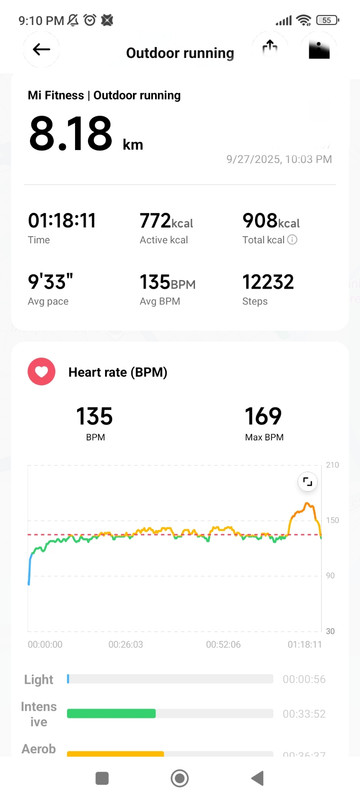
Hi everyone, I will post here for accountability. Started running again after a long break.
IMG-20250928-211156.jpg
 

bbbbbw

Senior Member
Joined
Jun 27, 2010
Messages
2,242
Reaction score
347
Last week my friend brought me to ntu and after cycling the slopes there, had calf pain lol.

then had a rear tyre puncture. In such case not advisable to ride anymore cos may damage tyre and rim?

my tyre is tubeless

I bought Boston 13 at 20% off on the app yesterday waiting to collect
 

rarenick

High Supremacy Member
Joined
Jul 12, 2008
Messages
26,158
Reaction score
3,661
Last week my friend brought me to ntu and after cycling the slopes there, had calf pain lol.
then had a rear tyre puncture. In such case not advisable to ride anymore cos may damage tyre and rim?
my tyre is tubeless
I bought Boston 13 at 20% off on the app yesterday waiting to collect

If tubeless then it should auto seal if it's small hole puncture. No point cycle if it's totally flat. Will spoil rim if the tyre drop out but most importantly your own safety. Anyway I helped a fren to insert a tube for his tubeless tyre before at road side, the whole tyre was sticky. Also very hard to remove as I only got 1 tyre lever meant for my own bike (normal clincher tyre, not tubeless).
 
Last edited:

WussRedXLi

Greater Supremacy Member
Joined
Jun 15, 2001
Messages
94,993
Reaction score
11,476
Will they get stunted growth or not?

Last time when i was helping my kid to do assisted pull ups, i also had a few folks (general public) asking me this Q.

Think wont, coz is a good stimulus. Stimulus can come in the form of impact (basketball, running) or strength compression based via weights/resistance, or maybe in the form of pull ups is pull based stimulus on the hands and spine (decompression)
In fact it is good for HGH Human Growth Hormone as well, but as usual need to be consistent.

But of coz max lifting like 1RM and gunning for PBs for 1RM would expose any individual (regardless of age) to injury risks coz just 1 slip up in form and that is it, but if doing at 8-30 reps kind of reistance you'd still have a bit of wriggle room for screw ups in form and you still might get away from injuries.
I go for failure/near failure depending on how i feel, but i dont do things like 1RM.


Of coz main factors still genetics and nutrition, but exercise/training is another part of the equation to maximise things.

Quick google
https://www.healthline.com/health/does-lifting-weights-stunt-growth
 

rarenick

High Supremacy Member
Joined
Jul 12, 2008
Messages
26,158
Reaction score
3,661
Recently added more weight for my squats. Now 18kg dumbells + body weight. Today did 1 x 20 reps and 2 x 30 reps. I think enough liao. Think I will progress to single leg in near future.

How much are u all doing for squats?
 
Important Forum Advisory Note
This forum is moderated by volunteer moderators who will react only to members' feedback on posts. Moderators are not employees or representatives of HWZ Forums. Forum members and moderators are responsible for their own posts. Please refer to our Community Guidelines and Standards and Terms and Conditions for more information.
Top