3i/Atlas Update!

Pearce

High Supremacy Member
Joined
Aug 17, 2012
Messages
28,795
Reaction score
9,807

NASA to Share Comet 3I/ATLAS Images From Spacecraft, Telescopes​


NASA will host a live event at 3 p.m. EST, Wednesday, Nov. 19, to share imagery of the interstellar comet 3I/ATLAS collected by a number of the agency’s missions. The event will take place at NASA’s Goddard Space Flight Center in Greenbelt, Maryland.

Comet 3I/ATLAS, discovered by the NASA-funded ATLAS (Asteroid Terrestrial-impact Last Alert System) observatory on July 1, is only the third object ever identified as entering our solar system from elsewhere in the galaxy. While it poses no threat to Earth and will get no closer than 170 million miles to Earth, the comet flew within 19 million miles of Mars in early October.

https://www.nasa.gov/news-release/nasa-to-share-comet-3i-atlas-images-from-spacecraft-telescopes

-------------

Will they show the original or doctored version?
 

tmkedmw

Banned
Joined
Feb 16, 2013
Messages
34,376
Reaction score
24,579
More astrophotographers sharing their images

https://avi-loeb.medium.com/magnificent-images-of-jets-around-3i-atlas-e4ad8acc723c

Magnificent Images of Jets Around 3I/ATLAS

Avi Loeb
5 min read
·
18 hours ago

1*o3GfvWv2y91x_mjqA1XDgQ.jpeg

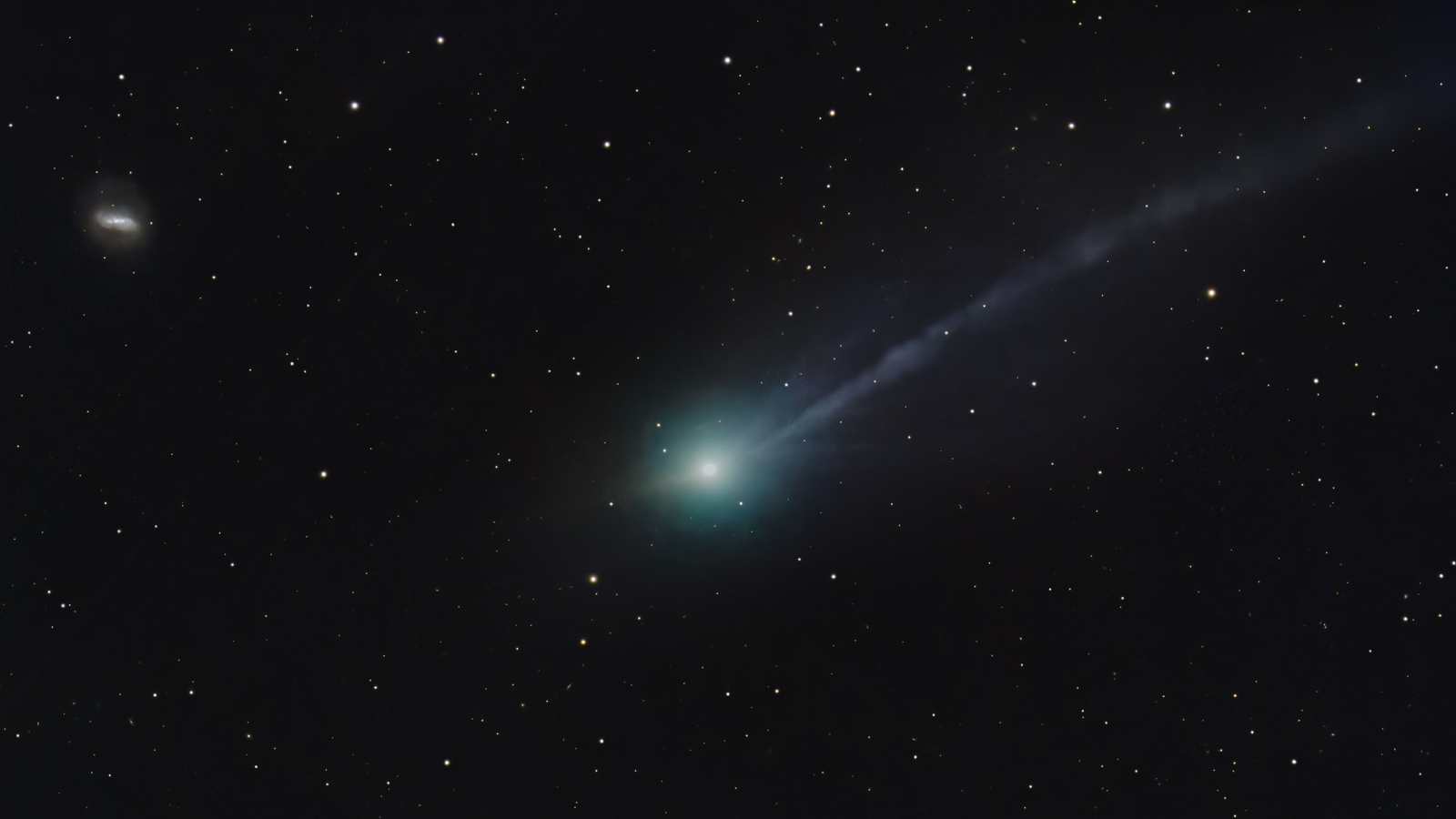
A sharp image of 3I/ATLAS, combining 24 exposures of 60 seconds each with a 0.2-meter telescope (Celestron EdgeHD 800) in New Mexico, USA between 11:53–12:23 UTC on November 16, 2025. The image shows multiple jets both towards and away from the Sun. The sunward direction is pointing to the lower left corner. (Credit: Satoru Murata)

The astrophotographer Satoru Murata released here a stunning image of the interstellar object 3I/ATLAS combining 24 exposures of 60 seconds each with a 0.2-meter telescope (Celestron EdgeHD 800) in New Mexico, USA, on November 16, 2025. The image shows multiple jets both towards and away from the Sun, including an anti-tail and a much longer tightly collimated tail.


1*7qAFNG4Vnxpzwvh8_cr8jQ.jpeg

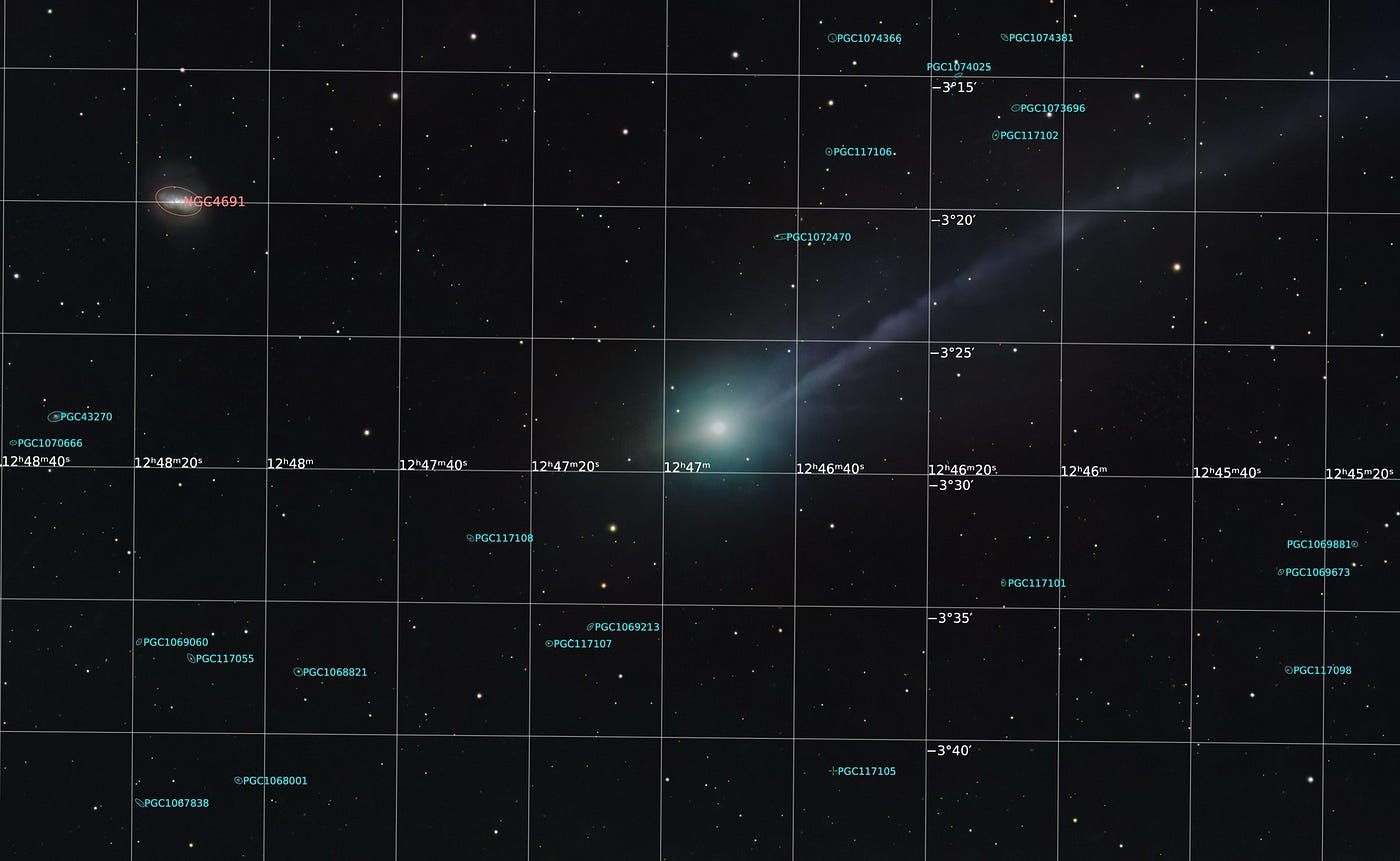
Same image on a coordinate grid with identified objects, such as the galaxy NGC4691 in the upper left. (Credit: Satoru Murata)

A day later, on November 17, 2025, a newer image of 3I/ATLAS was posted here by Francois Kugel, combining 22 exposures of 30 seconds each with a 0.4-meter aperture telescope.


1*cus8V7Hv0KaNdONbtUq0Gw.jpeg

An image of 3I/ATLAS, combining 22 exposures of 30 second each at 17:04 UTC on November 17, 2025 with a 0.4-meter aperture telescope. The sunward direction is pointing to the lower left corner. (Credit: Francois Kugel).
 

tmkedmw

Banned
Joined
Feb 16, 2013
Messages
34,376
Reaction score
24,579
https://www.livescience.com/space/c...-off-its-multiple-tails-in-stunning-new-image

'From another world': 3I/ATLAS photobombs a galaxy and shows off its multiple tails in stunning new image​

News
By Harry Baker published 10 hours ago
An incredible new image shows the multi-tailed alien comet 3I/ATLAS shooting past a distant galaxy in the night sky. The stunning scene is a reminder of the object's perfectly natural interstellar origins, photographer Satoru Murata claims.

A photo of 3I/ATLAS with a green coma and a long tail, as well as a second shorter tail. A spiral galaxy is also visible in the top left of the image.

The new photo shows the long tail and secondary anti-tail of 3I/ATLAS, as well as several other smaller jets emerging from its coma. The distant galaxy NGC4691 can also be seen in the top left of the image. (Image credit: Satoru Murata)

An astrophotographer has snapped a stunning shot of the interstellar visitor 3I/ATLAS photobombing a distant galaxy in the night sky. The remarkable image, which also captured the comet's multiple tails, is a reminder of the object's otherworldly nature — but that doesn't mean it was made by aliens, the photographer insists.

Satoru Murata, a New Mexico-based photographer who has previously worked on multiple astronomical research projects, captured the new image using a 0.2-meter (0.7 feet) telescope on Sunday (Nov. 16) shortly before sunrise. It shows a familiar green glow coming from 3I/ATLAS's coma, along with the comet's long ion tail and the reemergence of its shorter anti-tail, which is likely caused by excess dust blowing off its surface. In recent weeks, the comet briefly appeared to lose both these tails, although this was an optical illusion due to its position relative to Earth.

Eagle-eyed observers may also be able to see several smaller jets of gas shooting outward from the comet's coma. These are the result of "outgassing," which occurs when solar radiation heats comets' icy interiors, causing gasses to shoot out of cracks in their icy shells. This natural process provides a small amount of non-gravitational acceleration to the comet and was the basis of a recent rumor that wrongly claimed 3I/ATLAS had exploded.

In the top left of the image is the barred spiral galaxy NGC 4691, which is located around 70 million light-years from Earth. Seeing the interstellar comet alongside NGC 4691 "really gave the impression of the object being from another world," Murata wrote in a recent Facebook post. (However, the comet originated from a star system within the Milky Way, not another galaxy.)
 

tmkedmw

Banned
Joined
Feb 16, 2013
Messages
34,376
Reaction score
24,579
Avi's interview after NASA released the "highres" images.

One comment in the YouTube said amateur astrophotographer has better pictures from their few thousand dollar earth-based telescopes than NASA's multi million space-based telescopes....

NASA - Never A Straight Answer ?

 
Last edited:

spunkbrat

Arch-Supremacy Member
Joined
Jun 23, 2012
Messages
12,457
Reaction score
7,589
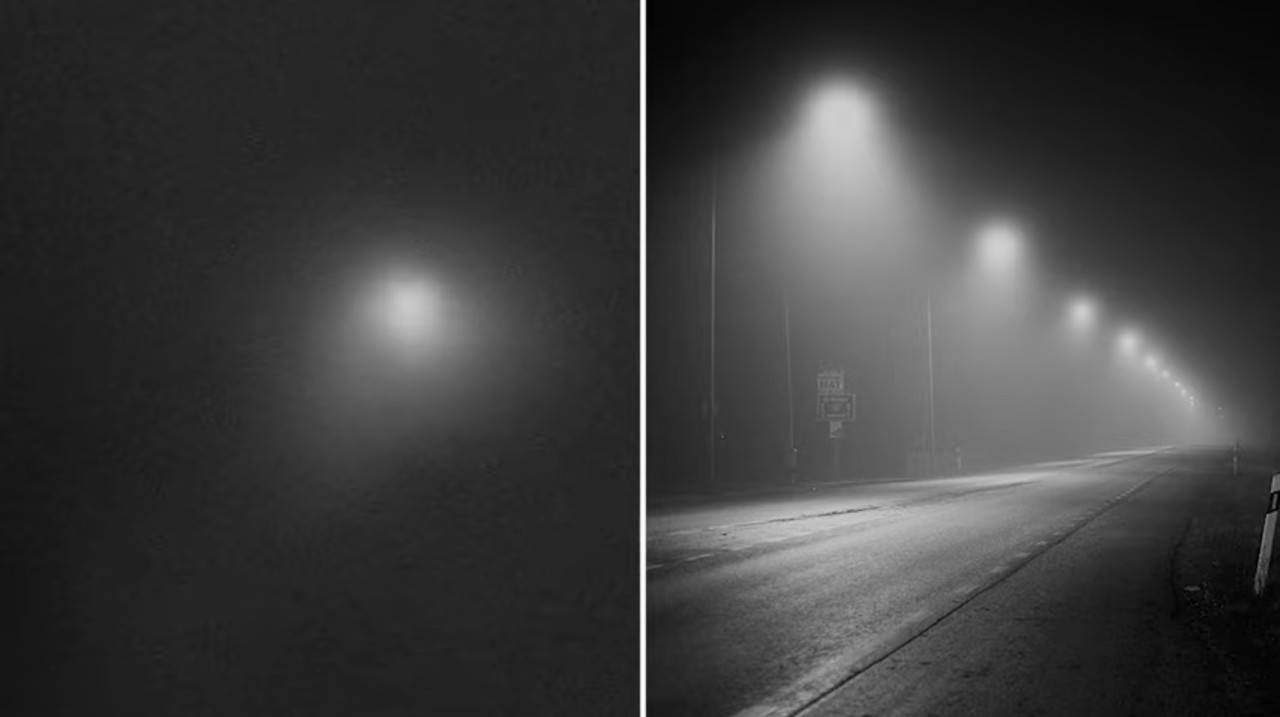
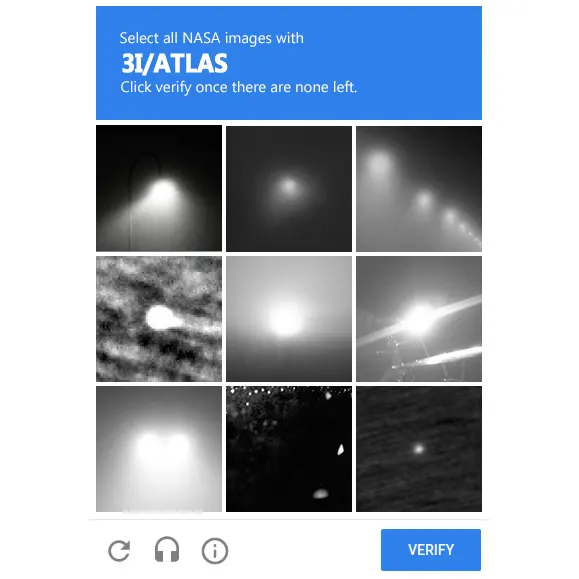
A 3.2 second exposure of 3I/ATLAS by the HiRISE camera onboard the Mars Reconnaissance Orbiter with a spatial resolution of 30 kilometers per pixel, looks like … 🤭

IMG-4773.jpg

- from Stefan Burns’ youtube
 

Pearce

High Supremacy Member
Joined
Aug 17, 2012
Messages
28,795
Reaction score
9,807
Last edited:

tmkedmw

Banned
Joined
Feb 16, 2013
Messages
34,376
Reaction score
24,579
A 3.2 second exposure of 3I/ATLAS by the HiRISE camera onboard the Mars Reconnaissance Orbiter with a spatial resolution of 30 kilometers per pixel, looks like … 🤭

IMG-4773.jpg

- from Stefan Burns’ youtube

See the pics from astrophotographers with their modest backyard telescopes. Eg Ray's astrophotography that I had posted in this thread. Contrast that with NASA million dollar space-based telescope that is much closer to atlas.

Don't know what to say of NASA... perhaps CCS famous comment is apt.
 

tmkedmw

Banned
Joined
Feb 16, 2013
Messages
34,376
Reaction score
24,579
https://avi-loeb.medium.com/there-i...sas-press-conference-on-3i-atlas-9b44e632771f

There is Nothing More Deceptive than an Obvious Fact: NASA’s Press Conference on 3I/ATLAS​

Avi Loeb
5 min read
2 hours ago

1*udzSUKrK70WEZBYZyLdTJQ.jpeg

A 3.2 second exposure of 3I/ATLAS by the HiRISE camera onboard the Mars Reconnaissance Orbiter with a spatial resolution of 30 kilometers per pixel.

Due to spacecraft jitter and motion during the observation period, the light from 3I/ATLAS is smeared by several pixels. The directions of the Sun and 3I/ATLAS’ motion are indicated by arrows.(Credit: NASA/JPL-Caltech/University of Arizona)

On November 19, 2025, NASA broadcasted a press conference here in which new data on the interstellar object 3I/ATLAS was shared for the first time after the U.S. government shutdown.

An hour earlier, I was asked by a reporter what I expect from the press conference and I replied: “I do not expect big news. NASA will repeat the official mantra that 3I/ATLAS is a natural comet and that they were unable to process the data until this week because of the government shutdown.

Both are boring messages. The HiRISE image will probably show a fuzzy ball of light, like the Hubble image here. But I hope to be surprised.”

I was not surprised. There was no big news. NASA repeated the official mantra that 3I/ATLAS is a natural comet and that they were unable to process the data until recently because of the government shutdown.

The image taken by the HiRISE camera onboard the Mars Reconnaissance Orbiter on October 3 and available here, shows a fuzzy ball of light. The image features a spatial resolution of 30 kilometers per pixel at 3I/ATLAS’ distance of about 30 million kilometers.

Due to spacecraft jitter during the observation period, the light from 3I/ATLAS is smeared by several pixels. In the coming days I will analyze this data quantitatively to extract the most important information out of it.

The collection of other new images from other space telescopes is available here. The new data includes fuzzier images that that of HiRISE and a UV spectroscopic detection of hydrogen by MAVEN that adds slightly to what we already learned this summer about 3I/ATLAS from the Hubble (here), Webb (here) and SPHEREx (here) space telescopes.

NASA’s representatives should have emphasized what we do not understand about 3I/ATLAS rather than insist that it is a familiar comet from a new birth environment.

They stated that 3I/ATLAS does what comets do, namely shed gas and dust and responds to gravity. But a spacecraft that collected dust and CO2, CO & H2O ices on its surface by traveling through the cold interstellar medium could have also developed an outer layer of dust mixed with ices that sublimate when illuminated by sunlight. We should not “judge a book by its cover,” because we all know about the Trojan Horse which appeared unthreatening to the guardians of the City of Troy.

When monitoring an interstellar visitor, we should not fall prey to traditional thinking but scrutinize new interpretations. The public resonates with science as a learning experience, where the collection of evidence leads the way to new knowledge rather than reinforces variants on past knowledge.

Sherlock Holmes noted: “There is nothing more deceptive than an obvious fact.” He also observed: “It is a capital mistake to theorize before one has data. Insensibly one begins to twist facts to suit theories, instead of theories to suit facts.”

I wish NASA’s representatives shared this wisdom.
Imaginative scientists master the humility to learn something new from anomalies rather than display the arrogance of expertise.

At the press conference, there was no mention of the 12 puzzles associated with 3I/ATLAS (as summarized most recently here), including the anomaly that its mass is a million times larger than that of 1I/`Oumuamua and a thousand times larger than that of 2I/Borisov.

Given the limited reservoir of material in interstellar space, one would expect to discover a million objects with the mass of 1I/`Oumuamua or a thousand objects with the mass of 2I/Borisov before finding a package as massive as 3I/ATLAS, unless this rare package was intentionally targeting the inner solar system (as discussed in my first paper on 3I/ATLAS here).

The unlikely (0.2%) alignment of the trajectory of 3I/ATLAS with the plane of the planets around the Sun (as discussed in my second paper on 3I/ATLAS here) made it an easy target for many NASA observatories. NASA’s officials should have at least acknowledged this unlikely fortune.

In case 3I/ATLAS is a natural icy rock as they suggest, mother Nature was kinder to NASA than expected from a random delivery of rocks by at least a factor of 100,000 based on the two anomalies mentioned above.

The most interesting new insights about 3I/ATLAS were obtained in recent weeks. After the closest approach of 3I/ATLAS to the Sun on October 29, new images were taken by amateur astronomers (see discussions here, here, here and here). These images show tightly collimated jets pointing towards and away from the Sun and reaching distances of order a million kilometers.

In retrospect, these amateur astronomer images are far more exciting than the HiRISE image shared by NASA’s officials.

In the coming weeks, larger ground-based telescopes as well as the Hubble and Webb telescopes will be able to characterize the jets of 3I/ATLAS by measuring their composition, speed and mass loading rate.

These details will inform us without a doubt whether the jets are produced by natural pockets of ice that are warmed by sunlight or by technological thrusters. We should know the answer by the time 3I/ATLAS is closest to Earth on December 19, 2025, a gift of new interstellar knowledge for the holidays.

Three weeks ago, I recommended to NASA to check whether they see any evidence for new objects that either accompanied 3I/ATLAS or left it towards Mars and Earth.

Related data from Mars rovers or orbiters or from Earth-based NASA satellites or Galileo Project observatories could reveal fragments from an iceberg that broke up or mini-probes released by a technological mothership.

Life is worth living if we allow for the unexpected to surprise us. Bureaucrats or unimaginative scientists want us to believe in the expected. But the rest of us know that the best is yet to come

 
Important Forum Advisory Note
This forum is moderated by volunteer moderators who will react only to members' feedback on posts. Moderators are not employees or representatives of HWZ Forums. Forum members and moderators are responsible for their own posts. Please refer to our Community Guidelines and Standards and Terms and Conditions for more information.
Top