jogging and motivation thread

Kuudere

High Supremacy Member
Joined
Nov 4, 2016
Messages
25,922
Reaction score
17,165
You wear carbon plate shoes confirm sub 8min liao.
At best, 2s off per lap. I will probably run 8.25. On the plus side, this is IPPT. So, likely to be slower since I didn't do transition training (situp/push up into running).

I remembered the 2nd best in cross country for my batch, ran 7.47 min for 2.4km minus the IPPT. And with IPPT, he became 8.13-8.15 min.
Fwah progress is real quick.....maciam beginner gains kinda improvement but made at advanced level teethering at (local) elite level.
In 12 months 10 mins improve to 8.5 mins (1 min 30s) is crazy. 13 mins drop to 11:30 level is significantly easier.

Young age really FTW.

I no pro for really longer distance (HM / FM), but i believe for 10k if got more hours put in shd be able to achieve it.
For me i think my musckuloskeleta pecah first. :ROFLMAO: (muscles / aerobic system etc move faster than musckuloskeletal)
I put around 20hrs of biking per week, but over half is like junky lah. Still i believe at least 8hrs quality and semi scheduled (intervals, rolling hill repeats, simi STARTS ultra low cadence push off from start in highest gear 8% hill climbs etc). Running mileage i'd put it as 30km/week but mostly broken up and no real long runs except sometimes wanna test 10k so just go push 10k.
I am definitely not a beginner. 3 things basically.

1: Planning >> I think most people tend to plan their workouts too idealistically either because: 1) they don't know their training pace 2) ego (want to achieve high goals). I plan my workouts so that I can hit the times and improve progressively over the weeks.

Also, with planning, I don't focus on long distance (21.1k and above). I focus on 5-10k, more speedwork and less distance.

2: Consistency >> Started 30-35km at end Feb then progress to 50km until July. July till now, 55km per week even when I was overseas. Keep the discipline to run the weekly mileage. And also to include some intervals/threshold runs.

3: Mental >> Rain or shine, will go for the run. Hot or cold, also go for it. Figuring out how to execute the best strategy for your run, is a mental game too. For 2.4km, I will start the first 2 laps fast, cruise middle 2 laps, burst the last 2 laps. Different people have different strategy. And different tolerance level. But ultimately, having a strong mental helps in running.

Damn fast! At that pace, I can only sprint 250m max.

That's why I like carbon plated shoes with high energy return. Need running aid. 😂
I was doing 200s the week before my 2.4km.

This is done at 800m race pace (Basically you take your best 2 splits from 6 x 400m (90s rest) and then average out.

2x(12x200) @ 35-34s with 100m walk/jog recovery

1st set: 34.2, 34.4, 33.6, 34.5, 34.3, 34.9, 34.6, 33.3, 33.5, 34.4, 34.1, 34.7

Jog/walk rest: 100m (~86s rest)

5 minute walk rest

2nd set: 35.4, 32.8, 34.1, 33.7, 34.6, 32.9, 33.3, 34.3, 35.9, 35.7, 32.7, 34.3

Jog/walk rest: 100m (~81s rest)

When I train for max speed, I will rest a lot more compared to what I run. So that, I can activate my fast twitch muscle and burst.
 

sunnyisandsingapore

Senior Member
Joined
Mar 23, 2022
Messages
2,366
Reaction score
2,410
I have a serious question for all of you here, like me, who are regular long distance runners. Have you ever thought, at some point later in life, might need kneecap replacement?

I have been feeling unnecessarily worried, even at my young age, that I might need kneecap surgery or some kind of leg surgery, due to the intensity level run. My knee is starting to feel slight pain even when walking, although a rest for a day or two will usually reduce the pain level.
 

Ender

Arch-Supremacy Member
Joined
Jan 1, 2000
Messages
18,287
Reaction score
7,906
I have a serious question for all of you here, like me, who are regular long distance runners. Have you ever thought, at some point later in life, might need kneecap replacement?

I have been feeling unnecessarily worried, even at my young age, that I might need kneecap surgery or some kind of leg surgery, due to the intensity level run. My knee is starting to feel slight pain even when walking, although a rest for a day or two will usually reduce the pain level.
Not worried for my knees. In fact I feel easy days are the key to built resilience. But not many know easy days are suppose to be easy. They do they long run till fatigue and call it easy coz it's at conversational pace or zone 2. But it is not, coz they are fatigue at the end and their HR rises at the end as they push. Easy days, is only easy when you end your run with more than half of your reserve. And your HR is steady all the way. If your HR is climbing at the end, even though you are keeping steady pace, it's no longer easy day.

And then you built on your highest mileage with your easy days. My weekly mileage now is above 70km, I say more than half of the mileage are from the easy days. I built my base alot during off season (i.e not on training plan) where more than 90% of my weekly mileage are easy days.
 

tanminghui1

Banned
Joined
Aug 26, 2024
Messages
2,976
Reaction score
2,403
I have a serious question for all of you here, like me, who are regular long distance runners. Have you ever thought, at some point later in life, might need kneecap replacement?

I have been feeling unnecessarily worried, even at my young age, that I might need kneecap surgery or some kind of leg surgery, due to the intensity level run. My knee is starting to feel slight pain even when walking, although a rest for a day or two will usually reduce the pain level.

Knee replacement is not uncommon in long-distance runners, especially those who have accumulated significant wear and tear on their knee joints over years of running. Factors such as biomechanics, training volume, and injury history may contribute to the need for knee replacement. Proper training techniques, cross-training, and listening to the body's signals can help mitigate the risk of knee problems in runners. For more insights on knee health for runners, explore my Quora Profile.i read long distance runner
 

sunnyisandsingapore

Senior Member
Joined
Mar 23, 2022
Messages
2,366
Reaction score
2,410
Knee replacement is not uncommon in long-distance runners, especially those who have accumulated significant wear and tear on their knee joints over years of running. Factors such as biomechanics, training volume, and injury history may contribute to the need for knee replacement. Proper training techniques, cross-training, and listening to the body's signals can help mitigate the risk of knee problems in runners. For more insights on knee health for runners, explore my Quora Profile.i read long distance runner
Sure!

May I know what is your Quora profile?
 

Mecisteus

Great Supremacy Member
Joined
Jun 16, 2002
Messages
55,703
Reaction score
12,194
I have a serious question for all of you here, like me, who are regular long distance runners. Have you ever thought, at some point later in life, might need kneecap replacement?

I have been feeling unnecessarily worried, even at my young age, that I might need kneecap surgery or some kind of leg surgery, due to the intensity level run. My knee is starting to feel slight pain even when walking, although a rest for a day or two will usually reduce the pain level.
What is your objective of running ?

For heart health or for accomplishments ?

For heart health, you don't need to run long distance. Recommended amount of exercise is just 150-300 minutes of moderate-intensity aerobic activity in a week.

For accomplishments, you need to follow strict training rules. Not following, then you risk knee injuries.
 

sph777

Senior Member
Joined
Mar 14, 2019
Messages
1,765
Reaction score
1,771


Ran my fastest ever 2.4km recorded on IPPT. 8 minute 38 seconds, with non-carbon plate shoes. Interestingly, most people don't wear carbon plate shoes and just wear the army shoes to run.

https://www.nusbcr.com/events/10km-competitive-run

Will be signing up for Bizad Charity Run 10km next (hilly 10k). Early bird deadline is 17 November 11.59 pm ($40).

Good job. I also do much faster in maju. This year didn’t sub 9 cause of my injury but still got 50 pts for my age haha. Did you go ask for the patch, they will give sub 9 min runners an ippt patch haha
 

WussRedXLi

Greater Supremacy Member
Joined
Jun 15, 2001
Messages
94,898
Reaction score
11,453
Talking about knee again......... hope the strength training helps.

As long as the patellafemoral joint tracks properly, it should be largely alright.


Share a vid that is pretty good that i have come across.
If anything and you like to run at faster paces coz of racing, i believe the calf raises esp if you can do the more advanced versions (eg hitting more of the soleus ) and the plyometric single leg pogo hop which has several variations really gives you good bang for the buck invested. Good returns for performance and injury prevention, but it would take a bit of time for the process to work.

Oh yeah , and if you are gonna focus a fair bit on the calves, a bit of tibialis raises would not hurt too.
Gotta keep things balanced.


Last edited:

WussRedXLi

Greater Supremacy Member
Joined
Jun 15, 2001
Messages
94,898
Reaction score
11,453
I have a serious question for all of you here, like me, who are regular long distance runners. Have you ever thought, at some point later in life, might need kneecap replacement?

I have been feeling unnecessarily worried, even at my young age, that I might need kneecap surgery or some kind of leg surgery, due to the intensity level run. My knee is starting to feel slight pain even when walking, although a rest for a day or two will usually reduce the pain level.

Well my solution is to cross train. Cycling and running. you can get quite the mileage / duration in with cycling....vs running.

And if you believe long distance running is the cause of knee issues (maybe also coupled with no sufficient strength training etc...whatever lah), then just dont do long distances? :ROFLMAO:

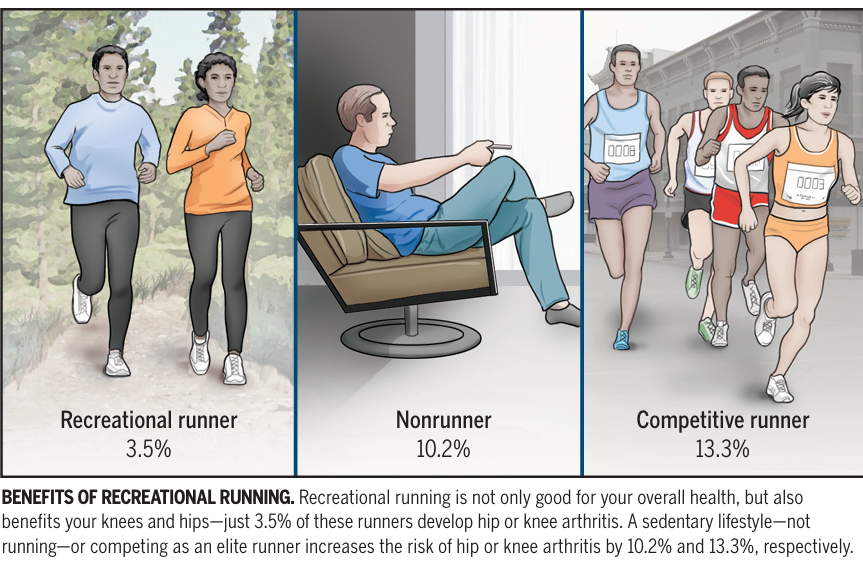
If talking about OA risk alone, yeah.......recreational runner risk is the lowest of them all, vs sedentary and the elite long distance runners. (not sure what is the definition and distinction between recreationals vs elites tho)


Can train for fast twitch muscles' explosiveness, make sure you are conditioned and progressively do it.
Limit the loss of fast twitch muscle fibers / the size reduction of them as you age.
Train your VO2max. These 2 powerful factors alone my belief is that it really helps as you really get into your middle age in the best shape as possible and so you'll have lots of buffer when you really get into your 70s and 80s. .

For eg, if in your 50s you only have VO2max of 30s, 40s......then you guess how much it would be when you are in your 70s and 80s with the inevitable decline.
Quite a fair number of people can get into 70s and 80s nowadays no issue at all esp with more advancements in medical science, issue is that i dont dig those kind of lifestyles that the elderly are having.
 
Last edited:

winningeleven

Arch-Supremacy Member
Joined
Mar 11, 2017
Messages
10,839
Reaction score
3,915


Ran my fastest ever 2.4km recorded on IPPT. 8 minute 38 seconds, with non-carbon plate shoes. Interestingly, most people don't wear carbon plate shoes and just wear the army shoes to run.

https://www.nusbcr.com/events/10km-competitive-run

Will be signing up for Bizad Charity Run 10km next (hilly 10k). Early bird deadline is 17 November 11.59 pm ($40).


Congrats on getting the gold and incentive u going to receive

I feel anyone who can run below 10 mins after NS is already fast. During my reservist period where I took IPPT . I ran 11mins 11 sec on my last cycle when I was 37 years old where I did run regularly during that period .

Unless those who ran IPPT are as serious runner like u. Don't think they will ever want to spend more than $150 on a carbon plated running shoe which probably cost even more
 

Ender

Arch-Supremacy Member
Joined
Jan 1, 2000
Messages
18,287
Reaction score
7,906
If talking about OA risk alone, yeah.......recreational runner risk is the lowest of them all, vs sedentary and the elite long distance runners. (not sure what is the definition and distinction between recreationals vs elites tho)

The scientific article concern is this.
https://www.jospt.org/doi/pdf/10.2519/jospt.2017.0505

The Elite level is defined as
These professional or elite athletes or individuals who participated in international competition had the highest rate of knee or hip arthritis at 13.3%
Other researchers who found a link between high-volume and -intensity runners with knee and hip arthritis defined high volume running as running more than 57 miles (92 km) per week.

Most of us serious amateur runners aren't near to this level training.

From the same article, the benefits of running for bone health compare to sedentary. Most people just ignore the anecdotal example of sedentary people getting knee replacement. Too many examples, and yet they ignore it as a concern for their knee health. But once a runner gets it, they will highlight it as the real cause for every knee replacement surgery ever.


Ender

Arch-Supremacy Member
Joined
Jan 1, 2000
Messages
18,287
Reaction score
7,906
Talking about knee again......... hope the strength training helps.

As long as the patellafemoral joint tracks properly, it should be largely alright.


Share a vid that is pretty good that i have come across.
If anything and you like to run at faster paces coz of racing, i believe the calf raises esp if you can do the more advanced versions (eg hitting more of the soleus ) and the plyometric single leg pogo hop which has several variations really gives you good bang for the buck invested. Good returns for performance and injury prevention, but it would take a bit of time for the process to work.

Oh yeah , and if you are gonna focus a fair bit on the calves, a bit of tibialis raises would not hurt too.
Gotta keep things balanced.


What many don't realize is runners are already doing both body weight concentric and eccentric loading their calves in tens of thousand reps per session. Depending of strike too, land of ball of the foot, alot of eccentric loading. Toe off, alot of concentric loading. And if they run outdoor on uneven terrain, this add variant of training various part of calves which controlled environment in the gym won't be able to target and this is functional training. Most comes from easy days, which allow recoveries since it is not intense.
 

WussRedXLi

Greater Supremacy Member
Joined
Jun 15, 2001
Messages
94,898
Reaction score
11,453
Wah u all better pray next next Sat is like today afternoon.
Sure Sunday early morning 27-28 deg C Heat Index

Night time will sure have N/NE winds, can cool down overnight.


XgJJROi.jpg


3SvCDE8.jpg
 

WussRedXLi

Greater Supremacy Member
Joined
Jun 15, 2001
Messages
94,898
Reaction score
11,453
What many don't realize is runners are already doing both body weight concentric and eccentric loading their calves in tens of thousand reps per session. Depending of strike too, land of ball of the foot, alot of eccentric loading. Toe off, alot of concentric loading. And if they run outdoor on uneven terrain, this add variant of training various part of calves which controlled environment in the gym won't be able to target and this is functional training. Most comes from easy days, which allow recoveries since it is not intense.

What you are talking about is also true for cycling. And many other sports. But the strengthening the vids are talking is not aiming to replicate that sorta functional training. Like the plyometrics, is merely "just a few reps" and a few sets, much lower than actual running 10k up to 30k for the long runs.

Like for cycling, i have been doing this for a few months, really could feel the improvement and it's pretty noticeable on the bike TTs / sprints, laps and speed around Sentosa's hills etc.

Is "merely" 7 reps per leg per set. 7 vs several tens of thousands.... Technically it should not help much if going by the few tens of thousands reps compared to real world running / cycling. :unsure:


I am not totally sure (not a pro), but my personal belief is that i attribute a good part of my progress (although it's slow) to such exercises be it plyometrics or regular strength exercises.
I dont know but i just trust the process/science of the vids and studies done, i guess. *shrugs*


WussRedXLi

Greater Supremacy Member
Joined
Jun 15, 2001
Messages
94,898
Reaction score
11,453
And if they run outdoor on uneven terrain, this add variant of training various part of calves which controlled environment in the gym won't be able to target and this is functional training. Most comes from easy days, which allow recoveries since it is not intense.

BTW for the others who might be interested, the single leg pogo hops front back left right and diagonals (plyometric) addresses this.

Can be done one.......same story with SG being flat terrain and so cannot train climbs (for cyclists). I just dont look at it that way. Just a matter of how one sees it.


But ultinately, the one other impt thing is that i do the majority of my strengthening in a cool server room env. :ROFLMAO: Including upper body and core. I have my bands in there too.
Saves heckloads of time so it just gets done consistently, and then i go for my ~ 30-35km/week runs and 20hr bikes. :ROFLMAO: Best of all worlds based on how i shape it now.
Only things left is how to recover bestest from all these etc
 
Last edited:
Important Forum Advisory Note
This forum is moderated by volunteer moderators who will react only to members' feedback on posts. Moderators are not employees or representatives of HWZ Forums. Forum members and moderators are responsible for their own posts. Please refer to our Community Guidelines and Standards and Terms and Conditions for more information.
Top