For those who are interested in a structured training and some data guided training, can have a look at this article on jakob Ingebristen's 6 months of prep for the Olympic.
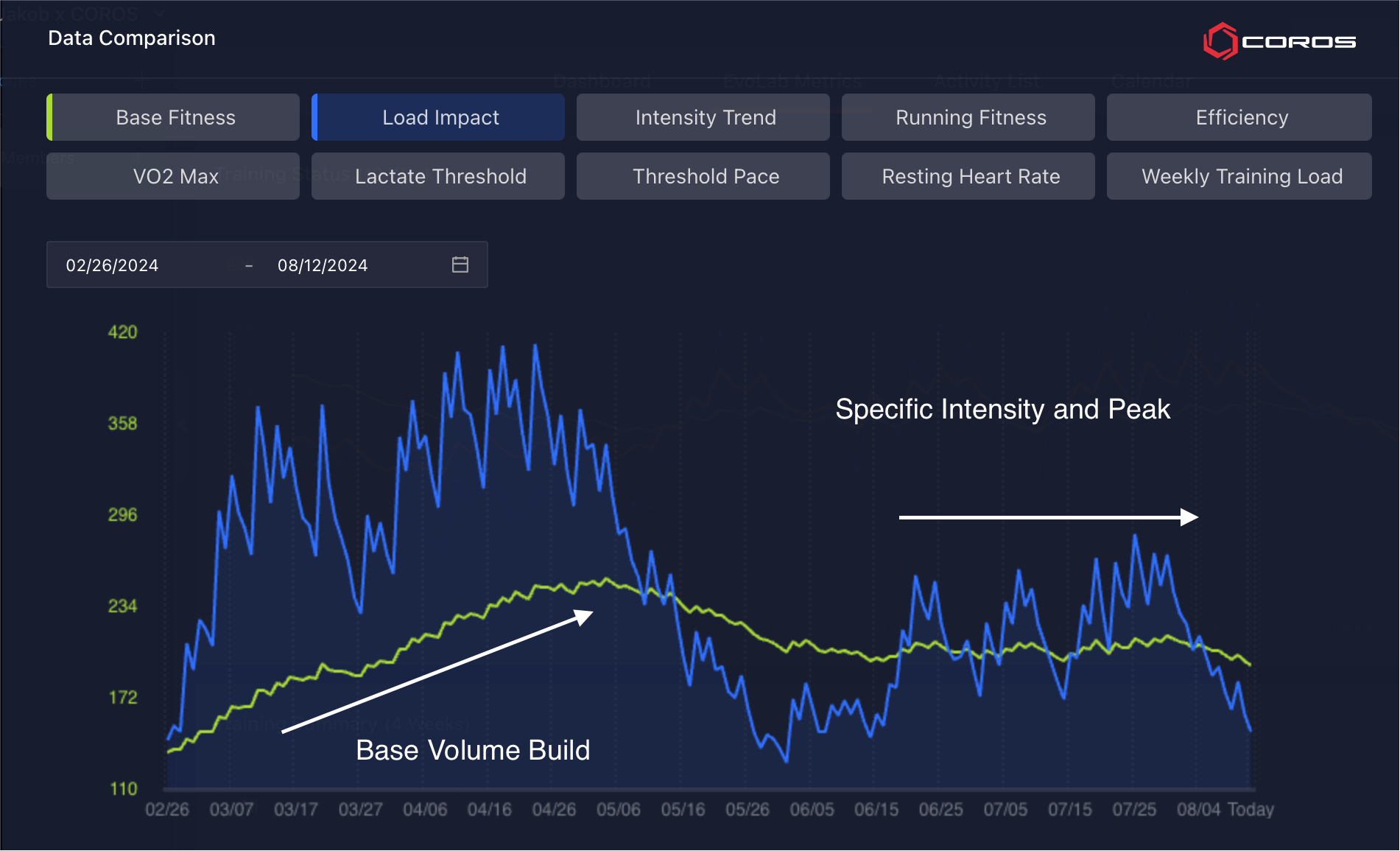
Take a look at the attached chart you can see he started with a very low base fitness (green line). His low base fitness was due to recovering from a injury, hardly trained at all causing the drop in base fitness. From the chart you can guess there are three mesocycles in the 6 months.
1. Base Building with high volume. (8 weeks). Basically, low intensity, but high mileage runs (blue line indicate training load (factors are mileage, HR intensity)), this can improve base fitness a lot.
2. Recovery phase, in Elevated Strava terms(italic) which I more familiar than COROS terms, this will reduce
Fatigue, improve
Form but at the expense of
Fitness. As can see his base fitness dropped a little. But for 5km training, this is not a big issue, because he had already built a huge base fitness during the first 8 weeks of base building. Let it drop a little is more than enough for his next phase which 3.
3. Intensity and Peak. Can look at the pie chart, of his intensity distribution in the linked article. A lot of zone1 + zone2, and even more zone 6. Very little in the middle zones intensity. 50/50... This peaking phase, don't think I can survive this training.
I shared his carrot philosophy of not testing your fitness during training period. You just have to trust your structured training plan, or in my case TAO, that our peak fitness will be on our race day. That is why even for tune up races, I don't go fully out so I don't need a full day to recover. Also why some runners labelled certain race as their 'A' races, these are the race where our fitness are projected to peak if our training plan goes smoothly.
Can look at his HR data during the race, also interesting. Match it with his different phase of strategy.
https://coros.com/stories/more-than...bers-jakob-ingebrigtsen-5000-meter-gold-medal