learning japanese

yuukiXkaname

Junior Member
Joined
Nov 26, 2009
Messages
52
Reaction score
0
Thanks for the reply yuukiXkaname さん,
Noob me think that there are two parts to answer this question fully.

To simply things, Noob me think that you may want to start with learning and understanding the ~のだ form construction which dimitri_can sensei recommended. This would explain the grammer part of this question.

Next is to understand the background of the usage which is provides explanatory, secondary, or supporting information (which could be a reason, a cause, or other fact the speaker feels would aid in the listener's understanding). Noob me would say that the use of the use of の does not have an equivalent in English Language, so sometimes your sensei may need to explain the from the Classicial Han Chinese Language (Han~Tang dynasty). This would explain the cultural context part of this question but noob me think its out of scope of this question but added for information purposes. In summary, I think dimitri_can sensei explanation would be in scope and more appropriate.

Allow me to apologise if the overload of explanation confuses you more that answer your question.

Conversation Tips: It's not how RIGHT you say it but how NICE you say it. :D

All the best!

Noob me would like to apologise for the typo error and would like to add on to my post.

In summary (a bit out of scope, for your info, please ignore all the Kanji) :D

The examples here were all ending particles (jp: 終助詞).

Question

Used to indicate inquiry. Inclining intonation.
User: Children as general, or ordinary people towards their close ones (friends, family).

てつお:明日どこか行くの?
Tetsuo: Are you going somewhere tomorrow?

Explanation

To explain a circumstance. Declining intonation.
User: Children, female people. Light mooded.

かなこ:うん、町内会でちょっと用事なの。
Kanako: Yeah, I've got something up with the neighbourhood association.

Assent

Confirmation expression. Intonation can be either inclining or declining.

てつお:へえ、かなこちゃんってよく町内会に参加してたの。
Tetsuo: Wow, Kanako's quite active in the association, huh. You can see that it implies a certain degree of surprise of unexpectedness.

Light volition

To express volition, either an order or a prohibition, in a light manner. Declining intonation. (warning: do not use this if your Japanese language command is weak.)
User: female, towards someone of lower rank (e.g. younger people).

かなこ:そうよ。てっちゃんもいい加減町内会をサボらないの。そんなんだからいつまでたっても人見知りなんだから。ほら、明日一緒に行くの。いい?
Kanako: That's right. And Tec-chan, you ought to stop skipping association meetings. That's why you are always shy of other people. Come on, you should go together tomorrow. Oorah?

The {Noun/なAdj}-なの or {いAdj/Verb}-の ending particle has various usage, and according to くろしお出版's 日本語文型辞典, the primary users are different according to usage.

For your info.

Ah okay. I can understand it already. Sorry about that. Really sorry about it. 本当にごめんなさい。

I apologise if I came across being rude, I have no intention of that. Really sorry about it.
 

dimitri_can

Supremacy Member
Joined
Jul 23, 2005
Messages
7,731
Reaction score
26
Actually, after discussing with ahkeong sensei privately, we felt that maybe at ur level, u dont need to know this...

Also, it might be a good chance to take lessons with a sensei. There are lots of benefits like ur pronunciation gets corrected, able to understand the grammar better, etc..
 

dimitri_can

Supremacy Member
Joined
Jul 23, 2005
Messages
7,731
Reaction score
26
Show case of my library... (front and back both have books)
Am thinking of opening up this library to those who have issues getting books that they want or buying books.


Ah_keong

Supremacy Member
Joined
Jun 5, 2008
Messages
7,801
Reaction score
1
Ah okay. I can understand it already. Sorry about that. Really sorry about it. 本当にごめんなさい。

I apologise if I came across being rude, I have no intention of that. Really sorry about it.

Its ok, Noob me encounter this question quite frequently in my old days.
I used to self-study Japanese language and understand the issues you faced.
Noob me is lucky to have a good mentor and a patient pen-pal to guide me through.

Do ask if you still do not fully understand, take your time to learn slowly and understand fully. The experts here and sensei tachi here are willing to share. Learning a third language is not easy. Noob me believe you would be introduce to this の in N4 / N3 level. Maybe then you would understand better in the cultural aspect and grammar aspect.

Meanwhile Noob me agree with dimitri_can sensei this question maybe too much information overload for you. You may want to find a good mentor or join a school (Bunka, Ikoma, JCS, etc) to enhance your understanding. If the fundamentals are learned wrongly or weak. It would affect greatly when you proceed to intermediate or advanced levels.

I have come across Japanese learners who have good JLPT certification (N1, N2) but very weak in application. Conversation is grammatically perfect but it is extremely taxing to converse as the tone is off.

Meanwhile have fun and enjoy learning the Japanese Language!

I apologise if I came across being too direct, I have no intention of that and hope you learn well and enjoy the learning. :D

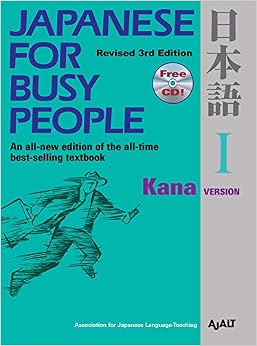
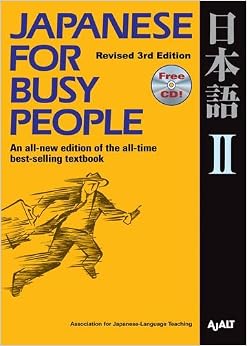
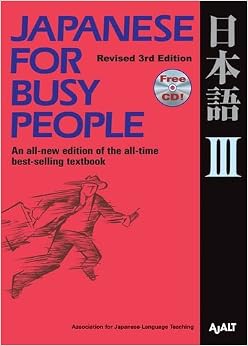
If you are taking the self learning route, Noob me would like to recommend the books I was recommended during my self learning days.

Textbook I
51iYBJce4OL._SY344_BO1,204,203,200_.jpg

Workbook I
9784770030344_p0_v1_s260x420.jpg


Textbook II
51mKZnkl2mL._SY344_BO1,204,203,200_.jpg

Workbook II
japanese-for-busy-people-ii_2552874.jpg


Textbook III
412%2Bxs8A8YL._SY344_BO1,204,203,200_.jpg

Workbook III
412toG97AZL._SY344_BO1,204,203,200_.jpg


When you finish these three sets. Noob me believe you are ready for JLPT N5 / N4. :D
 
Last edited:

dimitri_can

Supremacy Member
Joined
Jul 23, 2005
Messages
7,731
Reaction score
26
Both ah_keong and myself teach Japanese here, so feel free to approach any of us if you need additional help. =)
 

dimitri_can

Supremacy Member
Joined
Jul 23, 2005
Messages
7,731
Reaction score
26

RocKMaTiC

Senior Member
Joined
Feb 11, 2012
Messages
1,291
Reaction score
0
Is there any way to get connected to radiko on handphone or iPad? I really would like to listen to Japanese radio to improve my 聞く, but the app won't load by saying that the Internet is too slow probably due to the vpn. (I'm connected on a Japan vpn btw.)

ところで、


右側の方、テイルズシリーズじゃない?そのゲームは日本語を勉強し始めたんです!:D
 

dimitri_can

Supremacy Member
Joined
Jul 23, 2005
Messages
7,731
Reaction score
26
Is there any way to get connected to radiko on handphone or iPad? I really would like to listen to Japanese radio to improve my 聞く, but the app won't load by saying that the Internet is too slow probably due to the vpn. (I'm connected on a Japan vpn btw.)

ところで、


右側の方、テイルズシリーズじゃない?そのゲームは日本語を勉強し始めたんです!:D
そのゲームは日本語を勉強し始めたんです!
->文法は変です。

You wanted to say you started Japanese because of that game?
 

RocKMaTiC

Senior Member
Joined
Feb 11, 2012
Messages
1,291
Reaction score
0
そのゲームは日本語を勉強し始めたんです!
->文法は変です。

You wanted to say you started Japanese because of that game?

Yeah, すみません。:(

数年前に、このシリーズの英語版がまだ出来ませんでした。ストーリーを分かるために、日本語を勉強しました。
 

dimitri_can

Supremacy Member
Joined
Jul 23, 2005
Messages
7,731
Reaction score
26
そのゲームを理解するため、日本語を習いはじめました。
-> O

数年前、このシリーズの英語版はまだ売っていませんでした。ストーリーを理解するため、日本語を習いはじめました。
 

RocKMaTiC

Senior Member
Joined
Feb 11, 2012
Messages
1,291
Reaction score
0
そのゲームを理解するため、日本語を習いはじめました。
-> O

数年前、このシリーズの英語版はまだ売っていませんでした。ストーリーを理解するため、日本語を習いはじめました。

すみませんが、ためとためには同じでしょう?どうしたこんなところに「に」が残しますか?
 

dimitri_can

Supremacy Member
Joined
Jul 23, 2005
Messages
7,731
Reaction score
26
「君のため、書いた。」は、
君のためではあるが、書いたということに重点が置かれている場合。
「君のために書いた。」は、
「書いた」という行為よりも、「君のため」ということを強調したい場合。

「台風のため、土手が崩れた」は、
台風のためには違いないが、土手が崩れたということに重点が置かれている。
「台風のために土手が崩れた」は、
土手が崩れたのは確かだが、原因は台風であるという事に重点が置かれている。

「・・・のため~」は、「~」と後に続く方を強調したい場合。
「・・・のために~」は「・・・」と前の方を強調したい場合。
という気がします。
 

RocKMaTiC

Senior Member
Joined
Feb 11, 2012
Messages
1,291
Reaction score
0
「君のため、書いた。」は、
君のためではあるが、書いたということに重点が置かれている場合。
「君のために書いた。」は、
「書いた」という行為よりも、「君のため」ということを強調したい場合。

「台風のため、土手が崩れた」は、
台風のためには違いないが、土手が崩れたということに重点が置かれている。
「台風のために土手が崩れた」は、
土手が崩れたのは確かだが、原因は台風であるという事に重点が置かれている。

「・・・のため~」は、「~」と後に続く方を強調したい場合。
「・・・のために~」は「・・・」と前の方を強調したい場合。
という気がします。

うん。。えっと

つまり、 のため is to place emphasis on the following statement, and for のために is to place emphasis on the preceding statement.

「台風のため、土手が崩れた」= The riverbank(?) collapsed due to the typhoon.
「台風のために土手が崩れた」= Due to the typhoon, the riverbank(?) collapsed.

Is that correct?
 

dimitri_can

Supremacy Member
Joined
Jul 23, 2005
Messages
7,731
Reaction score
26
うん。。えっと

つまり、 のため is to place emphasis on the following statement, and for のために is to place emphasis on the preceding statement.

その通りです。


「台風のため、土手が崩れた」= The riverbank(?) collapsed due to the typhoon.
「台風のために土手が崩れた」= Due to the typhoon, the riverbank(?) collapsed.

Is that correct?

↑の文はちょっと微妙かな。。。赤で表示された説明を理解してもらえたら、使い分けがわかると思います。 =)
 
Last edited:
Important Forum Advisory Note
This forum is moderated by volunteer moderators who will react only to members' feedback on posts. Moderators are not employees or representatives of HWZ Forums. Forum members and moderators are responsible for their own posts. Please refer to our Community Guidelines and Standards and Terms and Conditions for more information.
Top