MoneyFace =p
High Supremacy Member
- Joined
- Dec 17, 2010
- Messages
- 35,380
- Reaction score
- 402
wah so honored to have admin like my post. isit my point capped? how come i cannot gain anymore liaoo
Because you really won the $800 1TB SSD liao.
wah so honored to have admin like my post. isit my point capped? how come i cannot gain anymore liaoo

borderless like abit too much a word. those on the market one say borderless, but still quite obvious leh.

The revolutionary Intel® RealSense™ Camera uses depth-sensing technology so your PC sees more like you do. Use the added dimension to scan 3D objects, control your PC with gestures, or create a more lifelike video chat environment. Reinvented video chat lets you customize your background, and share content with friends as if you're in the same room together.
Info from http://www.intel.com/content/www/us/en/architecture-and-technology/realsense-depth-camera.html
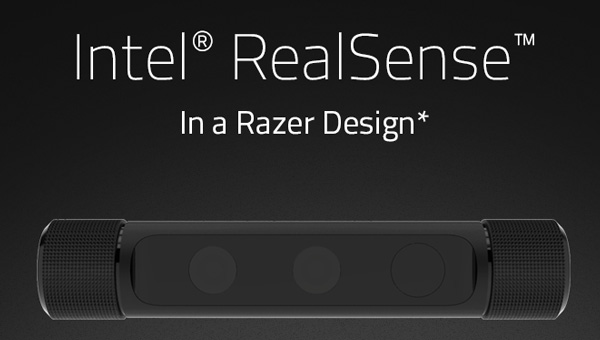
So this 3D RealSense Camera comes with 3 components:
Devices with Intel® RealSense™ Camera have three lenses: a conventional camera, an infrared camera, and an infrared laser projector. Together, the three lenses allow the device to infer depth by detecting infrared light that has bounced back from objects in front of it. This visual data, taken in combination with Intel® RealSense™ motion-tracking software, create a touch-free interface that responds to hand, arm, and head motions as well as facial expressions.
Expect amazing things from Intel® RealSense™ Camera. This is where it all changes.
Info from http://www.intel.com/content/www/us/en/architecture-and-technology/realsense-depth-camera.html
Didn't know this realsense camera technology already exist in current Dell Venue tablet lineup:
Here's an excerpt by Tom's Hardware:
RealSense cameras feature three lenses, a standard 2D camera for regular photo and video, along with an infrared camera and an infrared laser projector. The infrared parts allow RealSense to see the distance between objects, separating objects from the background layers behind them and allowing for much better object, facial and gesture recognition than a traditional camera. The devices come in three flavors: front-facing, rear-facing and snapshot.
Right now, the front-facing cameras are most common, appearing on a number of new PCs and allowing all kinds of gaming, gestures and communication. Rear-facing cameras will arrive on tablets later this year and focus more on 3D scanning. The Dell Venue 8 7000 tablet is the first device with RealSense SnapShot, which is made just for still photography and allows you to change the focus or measure real distances in a photo after it has already been shot.
Looking back at first few pages dunno how many people have leeched from quoting my post...
The revolutionary Intel® RealSense™ Camera uses depth-sensing technology so your PC sees more like you do. Use the added dimension to scan 3D objects, control your PC with gestures, or create a more lifelike video chat environment. Reinvented video chat lets you customize your background, and share content with friends as if you're in the same room together.
Info from http://www.intel.com/content/www/us/en/architecture-and-technology/realsense-depth-camera.html

The revolutionary Intel® RealSense™ Camera uses depth-sensing technology so your PC sees more like you do. Use the added dimension to scan 3D objects, control your PC with gestures, or create a more lifelike video chat environment. Reinvented video chat lets you customize your background, and share content with friends as if you're in the same room together.
Info from http://www.intel.com/content/www/us/en/architecture-and-technology/realsense-depth-camera.html[/QUOTE
And sometimes i do wonder if we can exploit this camera tech to measure women's 'depth' on the front
That will be awesome!
Hope i can win lor....XPS 13/15 models lah.

For those interested to find out more about Intel RealSense 3D and the products that incorporate them, here are more references:-
http://www.hardwarezone.com.sg/search/all/realsense+3d

And with the greenscreen feature i can foresee many instagrammers will take that advantage to let them 'travel' to different parts of the world for free...
Just discuss more

Nah all here
1. Realistic Avatars
RealSense is really good at scanning faces and turning them into objects that can be used, not only in 3D printing but also in software. I tested FaceShift, an application that replaces your real face with an avatar for video chats.
After leaning in for a few seconds so that the software could scan my face, I was able to chat as a robot, a red-haired boy or an ogre. As I moved my eyes, eye brows, lips and cheek muscles, the avatar followed my expressions closely. Unfortunately, it couldn't stick out its tongue when I did because it doesn't detect the inside of your mouth.
2. 3D Scanning for 3D Printouts
Though you won't be able to buy a system with a rear-facing RealSense camera until later in the year, Intel has a prototype tablet that can scan people's torsos and then 3D print them as decorative crystal paperweights.
The potential is there to create not just interesting paperweights, but fully-functional 3D-printed objects. Just imagine 3D scanning one screw in so you can print out another one.
Intel product manager Anil Nanduri told me that front-facing RealSense cameras can perform 3D scanning when used with the right software. Of course, the ergonomics of pointing your laptop webcam at an object presents a challenge. You'd have to lower the lid to just the right angle so you can get a small object in front of the deck and then carefully rotate it or use a rotating platform to capture all sides.
3. Green Screening Without a Screen
If you're doing a video chat and want someone to see your face, but not the messy living room behind you, a program called Personify will automatically remove the background and replace it with a graphic or a plain white space. In the past, you needed to film against a solid color background to separate your torso from the objects behind you, but RealSense's depth-sensors can tell the difference on its own.
Imagine doing a podcast about outerspace with animated stars behind you instead of your basement paneling. Picture yourself doing a video call from home with your boss and showing a blank white space behind you, rather than the wall your toddler just scribbled on.
4. Measuring Distances in Pictures
The Dell Venue 8 7000 tablet has the RealSense Snapshot camera, which adds depth information to photos it takes. With photos taken on the tablet, I was able to measure the distance between two points by drawing a line on the picture with my finger. For example, the software told me that the radius of a bike wheel in a photo was 27 inches.
Unfortunately, the software can't calculate everything. When I tried drawing measurement lines on a photo of an ice cream stand, the software informed me that many of my lines represented distances that were "too far" to measure.
5. Photo Layer Editing and Focusing
The Venue 8's camera also allows you to change which layers of a photo are in focus, long after you capture the image. You can even use filters that transform the color of some layers while leaving others untouched.
When I opened a photo of a vegetable stand and selected "Refocus" from the editing menu, I was able to blur or sharpen each set of vegetables, just by tapping on them.
I also enjoyed applying filters to the different layers on an ice cream stand photo so that the ice cream and the torch lights above the stand were in full color, but the buildings behind it were grayscale.
6. Holographic Navigation
Intel has shown a prototype PC with a virtual nav bar that appeared to float on air in front of the lower screen bezel. RealSense didn't create the holograph itself but it allowed me to interact with the virtual buttons by judging whether my fingers were at the right height to tap them.
7. Accurate Gesture Control
You can do gesture control with a regular 2D camera, but it doesn't always work well, particularly if your hand blends into the background or you put one hand in front of another. RealSense can easily distinguish all your fingers from each other and from your body and the world behind you.
At CES 2015, Intel had a giant wall of LED displays with a snow scene displayed on them and a series of RealSense cameras on top. As I raised my hand and moved my arms, the snow on the screen wall moved to shadow me.
8. Gaming With Your Body
A good used case for RealSense's gesture control is playing games. I got to play a spaceship game that relied on my movements for turning and firing.
RealSense Space Game
RealSense games can use other body parts as controls. In a LEGO racing game I tried, I moved a speed boat right and left by titling my neck. When I navigated up a ramp and jumped into the air, I could lift my hands to grab powerups.
9. 3D Gaming with Oculus
RealSense can add hand recognition to existing game systems such as the Oculus Rift VR glasses. Editor Mike Andronico played a game of volley ball on the headset, sticking his hands out in front of him to hit the ball. While Oculus has always provided the ability to play games in an immersive virtual world, it normally requires a controller. Adding Intel's depth-sensing cameras allows users to use their hands as the controller.
10. Object Avoidance
How do you make sure your new drone doesn't run into someone else's drone when you take it for a flight in the park? Intel showed off a sample drone with RealSense cameras on each side, allowing it to see how far it is from other objects and adjust its course to avoid a collision.
Apparently, it is not just the camera. Also a breakthrough in software. But some of them sounds too good to be true especially during this first approach. Reliability is a question.
Visit source with videos: http://www.tomsguide.com/us/intel-realsense-guide,news-20286.html
Im just joking haha.
But real consumer uses are what i mentioned, as well as taking photo with depth of field etc.
i think LG phone have the laser part quite similar to the Intel® RealSense™ Camera but probably less effective, since the Intel one can measure distance accurately
Intel RealSense Cameras can see both sides of our room~?


Nah all here
1. Realistic Avatars
RealSense is really good at scanning faces and turning them into objects that can be used, not only in 3D printing but also in software. I tested FaceShift, an application that replaces your real face with an avatar for video chats.
After leaning in for a few seconds so that the software could scan my face, I was able to chat as a robot, a red-haired boy or an ogre. As I moved my eyes, eye brows, lips and cheek muscles, the avatar followed my expressions closely. Unfortunately, it couldn't stick out its tongue when I did because it doesn't detect the inside of your mouth.
2. 3D Scanning for 3D Printouts
Though you won't be able to buy a system with a rear-facing RealSense camera until later in the year, Intel has a prototype tablet that can scan people's torsos and then 3D print them as decorative crystal paperweights.
The potential is there to create not just interesting paperweights, but fully-functional 3D-printed objects. Just imagine 3D scanning one screw in so you can print out another one.
Intel product manager Anil Nanduri told me that front-facing RealSense cameras can perform 3D scanning when used with the right software. Of course, the ergonomics of pointing your laptop webcam at an object presents a challenge. You'd have to lower the lid to just the right angle so you can get a small object in front of the deck and then carefully rotate it or use a rotating platform to capture all sides.
3. Green Screening Without a Screen
If you're doing a video chat and want someone to see your face, but not the messy living room behind you, a program called Personify will automatically remove the background and replace it with a graphic or a plain white space. In the past, you needed to film against a solid color background to separate your torso from the objects behind you, but RealSense's depth-sensors can tell the difference on its own.
Imagine doing a podcast about outerspace with animated stars behind you instead of your basement paneling. Picture yourself doing a video call from home with your boss and showing a blank white space behind you, rather than the wall your toddler just scribbled on.
4. Measuring Distances in Pictures
The Dell Venue 8 7000 tablet has the RealSense Snapshot camera, which adds depth information to photos it takes. With photos taken on the tablet, I was able to measure the distance between two points by drawing a line on the picture with my finger. For example, the software told me that the radius of a bike wheel in a photo was 27 inches.
Unfortunately, the software can't calculate everything. When I tried drawing measurement lines on a photo of an ice cream stand, the software informed me that many of my lines represented distances that were "too far" to measure.
5. Photo Layer Editing and Focusing
The Venue 8's camera also allows you to change which layers of a photo are in focus, long after you capture the image. You can even use filters that transform the color of some layers while leaving others untouched.
When I opened a photo of a vegetable stand and selected "Refocus" from the editing menu, I was able to blur or sharpen each set of vegetables, just by tapping on them.
I also enjoyed applying filters to the different layers on an ice cream stand photo so that the ice cream and the torch lights above the stand were in full color, but the buildings behind it were grayscale.
6. Holographic Navigation
Intel has shown a prototype PC with a virtual nav bar that appeared to float on air in front of the lower screen bezel. RealSense didn't create the holograph itself but it allowed me to interact with the virtual buttons by judging whether my fingers were at the right height to tap them.
7. Accurate Gesture Control
You can do gesture control with a regular 2D camera, but it doesn't always work well, particularly if your hand blends into the background or you put one hand in front of another. RealSense can easily distinguish all your fingers from each other and from your body and the world behind you.
At CES 2015, Intel had a giant wall of LED displays with a snow scene displayed on them and a series of RealSense cameras on top. As I raised my hand and moved my arms, the snow on the screen wall moved to shadow me.
8. Gaming With Your Body
A good used case for RealSense's gesture control is playing games. I got to play a spaceship game that relied on my movements for turning and firing.
RealSense Space Game
RealSense games can use other body parts as controls. In a LEGO racing game I tried, I moved a speed boat right and left by titling my neck. When I navigated up a ramp and jumped into the air, I could lift my hands to grab powerups.
9. 3D Gaming with Oculus
RealSense can add hand recognition to existing game systems such as the Oculus Rift VR glasses. Editor Mike Andronico played a game of volley ball on the headset, sticking his hands out in front of him to hit the ball. While Oculus has always provided the ability to play games in an immersive virtual world, it normally requires a controller. Adding Intel's depth-sensing cameras allows users to use their hands as the controller.
10. Object Avoidance
How do you make sure your new drone doesn't run into someone else's drone when you take it for a flight in the park? Intel showed off a sample drone with RealSense cameras on each side, allowing it to see how far it is from other objects and adjust its course to avoid a collision.
Apparently, it is not just the camera. Also a breakthrough in software. But some of them sounds too good to be true especially during this first approach. Reliability is a question.
Visit source with videos: http://www.tomsguide.com/us/intel-realsense-guide,news-20286.html

And with the greenscreen feature i can foresee many instagrammers will take that advantage to let them 'travel' to different parts of the world for free...
ginna pi can use to hao lian liao