M1 Mobile discussion thread

guni_man

Senior Member
Joined
Aug 14, 2001
Messages
1,091
Reaction score
23
Anyone roamed to Msia on M1?

Went to JB (many years never go) and latched on to Celcom.
Got signal, can receive call but cannot even access Google. on and off maybe got bits of data come in.
Did network reset on iphone but no avail.
What can M1 do if call them?
 

ragnarok95

Senior Moderator
Senior Moderator
Joined
Mar 9, 2004
Messages
125,079
Reaction score
6,327
Was in malaysia last yr, the celcom connection quite slow. Can load but takes time. :*(
 

eno_lc

Supremacy Member
Joined
Mar 11, 2005
Messages
9,952
Reaction score
4,718
Did M1 screw up its billing for this month? Log in to app then say I have overdue amount for June when I already paid two weeks ago, even the app transactions page says payment was successful for June bill

EDIT: Already fixed in the app
 
Last edited:

probablye

Junior Member
Joined
Jul 26, 2022
Messages
79
Reaction score
133
does anyone on M1 face a connectivity issue on the EWL at / around Lavender station? The signal is not the issue, but I would always be unable to load anything. Sometimes I try toggling airplane mode on/off, and I see my phone switching between 4G/5G, and then sometimes the data loads once it's on 5G, but sometimes it still doesn't! Very frustrating.
 

Jurong640

High Supremacy Member
Joined
Mar 22, 2011
Messages
41,418
Reaction score
16,225

The highs and lows of M1: From bright beginnings to delisting and proposed sale​


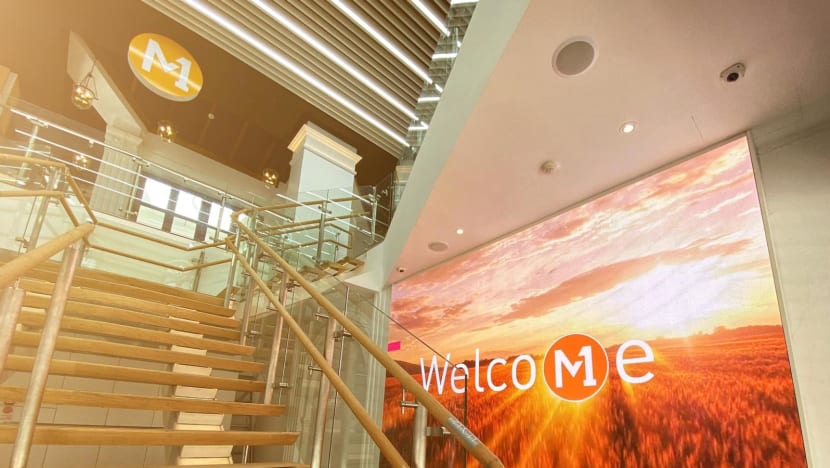
m1_orchard_road_store.jpg


When M1 launched in 1997, the telco's popularity grew quickly – within a month, it had captured 10 per cent of the market share, or 35,000 subscribers.

The company, which started life as MobileOne – a consortium formed by Keppel, Singapore Press Holdings (SPH), Cable & Wireless and Hong Kong Telecom – was the second telco in Singapore.

Its market share ballooned to a third in the next five years, with about 1 million subscribers. It launched an initial public offering and became a publicly listed company on the Singapore Exchange (SGX) in 2002.

The company was valued at between S$1.2 billion and S$1.5 billion then, making it the biggest share offering since 1999.

But it has not always been smooth sailing for M1, as it struggled with increased competition.

On Monday (Aug 11), Keppel announced that it would sell M1's telecom operations to Simba Telecom for an enterprise value of S$1.43 billion (US$1.11 billion).

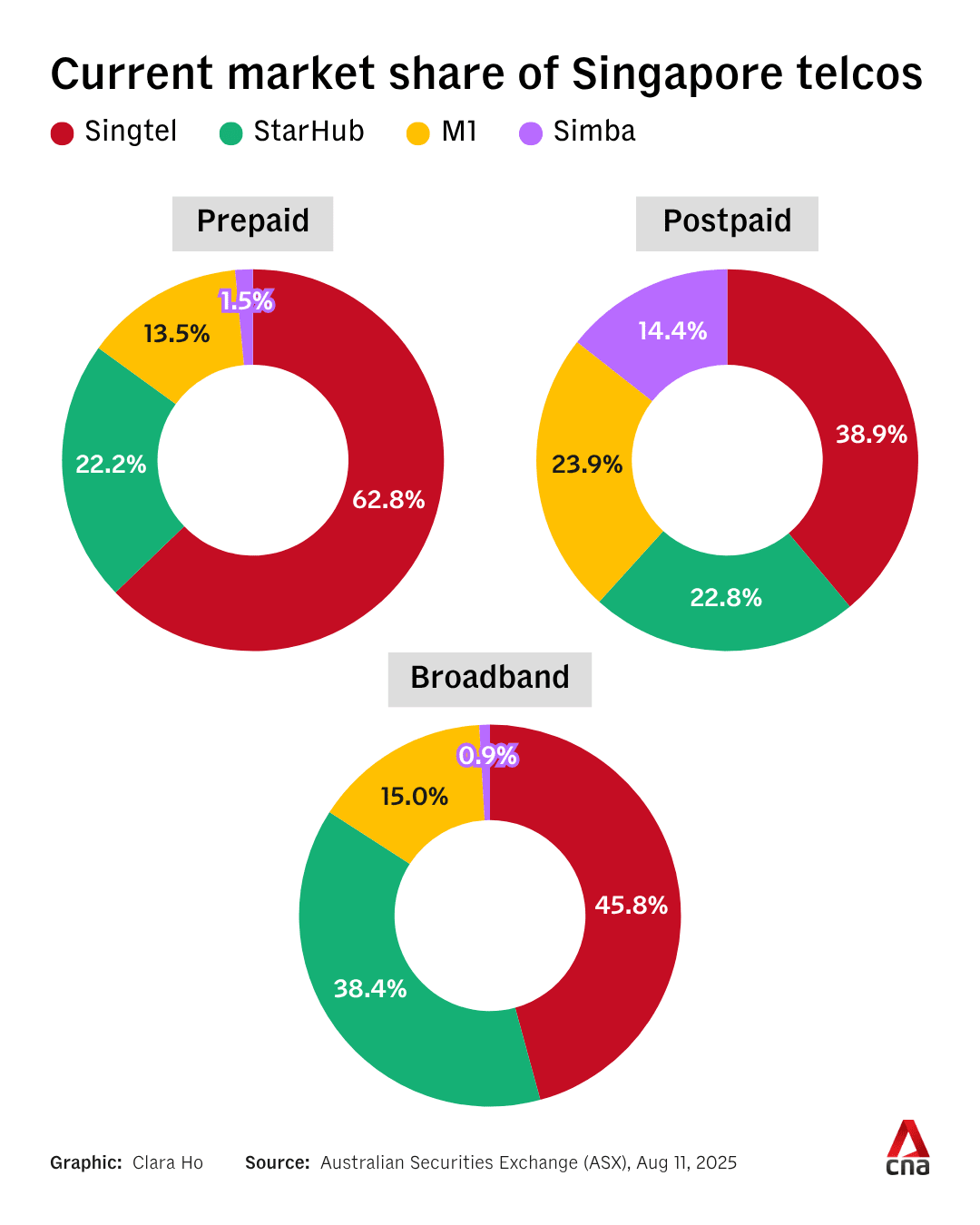
M1 currently has 13.5 per cent of Singapore’s prepaid mobile market, 23.9 per cent of the postpaid mobile market and 15 per cent of the broadband market, according to a regulatory filing on the Australian Securities Exchange by Simba’s owner, Australian-listed Tuas.
gfx-singapore-telco-market-share-breakdown-singtel-starhub-m1-simba.png


The company made significant inroads in its first two decades of service.

In 2005, M1 launched consumer 3G services – the first operator in Singapore to do so. That same year, Malaysian telecommunications conglomerate Axiata bought a 12.1 per cent stake in the company for S$260.8 million.

Over the next few years, it became the first in Singapore to launch an islandwide wireless broadband service as well as Southeast Asia's first 4G network.

M1 shares hit a high of S$3.99 in March 2015, but competition was never far away.

StarHub entered the market in 2000 as Singapore's third telco, followed in 2016 by TPG Telecom, which would become Simba.

The country also opened up to mobile virtual network operators (MVNOs), and contestation grew.

The competition took its toll, and a year later, M1 shares had almost halved in value. Reuters reported that M1's shareholders – SPH, Keppel and Axiata – had approached China Mobile to sell their majority stake.

More reports emerged that Chinese companies Shanxi Meijin Energy and China Broadband Capital were preparing to make separate bids for M1.

None of those deals materialised.
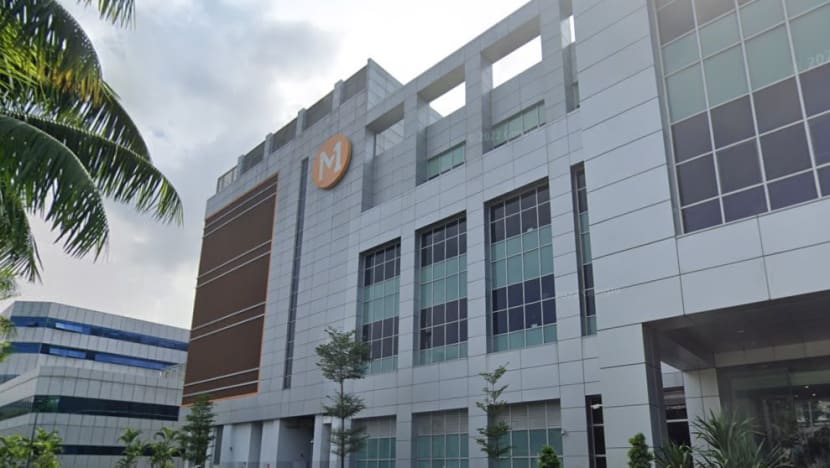
m1_headquarters_1.jpg


BUYOUT AND DELISTING

By September 2018, M1’s share price had dropped by almost 60 per cent since its high in 2015.

That same month, Keppel and SPH offered to buy shares they did not already own in M1. The companies said then the move was to “arrest the decline in M1 shareholder value through a combination of transformational efforts which are expected to take several years”.

The deal would allow M1 to cooperate further with other Keppel units and allow SPH to provide digital content through M1’s mobile platform, the companies said. At that point, the companies valued the telco at S$1.9 billion.

In December, Keppel and SPH announced their “firm intention” to make a voluntary general offer.

By January 2019, the two companies launched an offer to buy out majority shareholder Axiata and gain control of M1. That offer was accepted the following month and it sold its 28.7 per cent stake.

It meant Keppel and SPH collectively owned 90.15 per cent of M1’s shares.

To be listed on the stock exchange, the total number of shares in a company that is issued to the public must be at least 10 per cent. With M1 no longer meeting this requirement, it was delisted from the SGX in April 2019.

In 2020, a joint venture between M1 and Starhub won the rights to build Singapore's two nationwide 5G networks. The other telco was Singtel.

SALE

In its announcement on Monday, Keppel said it would receive S$1 billion in cash proceeds for its stake in M1.

Keppel will retain the information and communications technology business, including data centres and subsea cables.

The company said it hopes to complete the proposed sale "over the next few months", adding that Simba had submitted the strongest bid among interested parties.

Simba is wholly owned by Australia-listed Tuas. In a separate statement, Tuas said it is looking to raise at least A$416 million (US$271 million) through a placement and share purchase plan.

The deal is subject to regulatory approval by Singapore's Infocomm Media Development Authority (IMDA). Its considerations include ensuring there is "no significant lessening" of competition.

 

chari-men

Supremacy Member
Joined
Jul 14, 2025
Messages
5,652
Reaction score
2,289

The highs and lows of M1: From bright beginnings to delisting and proposed sale​


m1_orchard_road_store.jpg


When M1 launched in 1997, the telco's popularity grew quickly – within a month, it had captured 10 per cent of the market share, or 35,000 subscribers.

The company, which started life as MobileOne – a consortium formed by Keppel, Singapore Press Holdings (SPH), Cable & Wireless and Hong Kong Telecom – was the second telco in Singapore.

Its market share ballooned to a third in the next five years, with about 1 million subscribers. It launched an initial public offering and became a publicly listed company on the Singapore Exchange (SGX) in 2002.

The company was valued at between S$1.2 billion and S$1.5 billion then, making it the biggest share offering since 1999.

But it has not always been smooth sailing for M1, as it struggled with increased competition.

On Monday (Aug 11), Keppel announced that it would sell M1's telecom operations to Simba Telecom for an enterprise value of S$1.43 billion (US$1.11 billion).

M1 currently has 13.5 per cent of Singapore’s prepaid mobile market, 23.9 per cent of the postpaid mobile market and 15 per cent of the broadband market, according to a regulatory filing on the Australian Securities Exchange by Simba’s owner, Australian-listed Tuas.
gfx-singapore-telco-market-share-breakdown-singtel-starhub-m1-simba.png


The company made significant inroads in its first two decades of service.

In 2005, M1 launched consumer 3G services – the first operator in Singapore to do so. That same year, Malaysian telecommunications conglomerate Axiata bought a 12.1 per cent stake in the company for S$260.8 million.

Over the next few years, it became the first in Singapore to launch an islandwide wireless broadband service as well as Southeast Asia's first 4G network.

M1 shares hit a high of S$3.99 in March 2015, but competition was never far away.

StarHub entered the market in 2000 as Singapore's third telco, followed in 2016 by TPG Telecom, which would become Simba.

The country also opened up to mobile virtual network operators (MVNOs), and contestation grew.

The competition took its toll, and a year later, M1 shares had almost halved in value. Reuters reported that M1's shareholders – SPH, Keppel and Axiata – had approached China Mobile to sell their majority stake.

More reports emerged that Chinese companies Shanxi Meijin Energy and China Broadband Capital were preparing to make separate bids for M1.

None of those deals materialised.
m1_headquarters_1.jpg


BUYOUT AND DELISTING

By September 2018, M1’s share price had dropped by almost 60 per cent since its high in 2015.

That same month, Keppel and SPH offered to buy shares they did not already own in M1. The companies said then the move was to “arrest the decline in M1 shareholder value through a combination of transformational efforts which are expected to take several years”.

The deal would allow M1 to cooperate further with other Keppel units and allow SPH to provide digital content through M1’s mobile platform, the companies said. At that point, the companies valued the telco at S$1.9 billion.

In December, Keppel and SPH announced their “firm intention” to make a voluntary general offer.

By January 2019, the two companies launched an offer to buy out majority shareholder Axiata and gain control of M1. That offer was accepted the following month and it sold its 28.7 per cent stake.

It meant Keppel and SPH collectively owned 90.15 per cent of M1’s shares.

To be listed on the stock exchange, the total number of shares in a company that is issued to the public must be at least 10 per cent. With M1 no longer meeting this requirement, it was delisted from the SGX in April 2019.

In 2020, a joint venture between M1 and Starhub won the rights to build Singapore's two nationwide 5G networks. The other telco was Singtel.

SALE

In its announcement on Monday, Keppel said it would receive S$1 billion in cash proceeds for its stake in M1.

Keppel will retain the information and communications technology business, including data centres and subsea cables.

The company said it hopes to complete the proposed sale "over the next few months", adding that Simba had submitted the strongest bid among interested parties.

Simba is wholly owned by Australia-listed Tuas. In a separate statement, Tuas said it is looking to raise at least A$416 million (US$271 million) through a placement and share purchase plan.

The deal is subject to regulatory approval by Singapore's Infocomm Media Development Authority (IMDA). Its considerations include ensuring there is "no significant lessening" of competition.
I always tot starhub was the second Telco lol..
 

Jurong640

High Supremacy Member
Joined
Mar 22, 2011
Messages
41,418
Reaction score
16,225
Tbh, now M1 in my opinion is back on track and getting better after their Bespoke fiasco....
Their M1 CIS Sim Only not bad though. $11.95/mth get 5G SA, caller ID. they just slowly getting back on track. Now so many advertisements on TV. Then using maxx to counter eight / Simba and mvno.
 

froztheart

Supremacy Member
Joined
Aug 8, 2012
Messages
8,817
Reaction score
3,856
Their M1 CIS Sim Only not bad though. $11.95/mth get 5G SA, caller ID. they just slowly getting back on track. Now so many advertisements on TV. Then using maxx to counter eight / Simba and mvno.
Yeah, they were making good efforts to be back in the game again. 😥
 

froztheart

Supremacy Member
Joined
Aug 8, 2012
Messages
8,817
Reaction score
3,856
They can make it better, by making caller ID free for consumer plans. Though that is their cashcow, they should earn revenue elsewhere. Just ask Simba how, they are strong here.
Well, ST & SH still charges for Caller ID too.
I wonder too how SIMBA does not charge for caller ID unlike the OG 3.
 

Jurong640

High Supremacy Member
Joined
Mar 22, 2011
Messages
41,418
Reaction score
16,225
Well, ST & SH still charges for Caller ID too.
I wonder too how SIMBA does not charge for caller ID unlike the OG 3.
The reason the 3 BIG telcos charges for caller ID is because it's cash cow. Do also simple math and you will know how much they earn per month just from Caller ID.

Say singtel got 3 million post paid customers.
3,000,000 x$5 = $15m

Thats easy 15million. If they remove this, they will not earn $15m. That is why the 3 telcos still charge it.

Simba did something right, not charge something that is supposed to be free. Instead, they earn their profits from other avenues (i.e exceeding overseas data roaming), top up offers.

Because people are used to cheap data roaming and use more, and its cheap at $4/GB, so just exceed lor, pay abit only. So if one customer exceed 1GB, 1000 customers is $4000.
 
Important Forum Advisory Note
This forum is moderated by volunteer moderators who will react only to members' feedback on posts. Moderators are not employees or representatives of HWZ Forums. Forum members and moderators are responsible for their own posts. Please refer to our Community Guidelines and Standards and Terms and Conditions for more information.
Top