PiPiChew
High Supremacy Member
- Joined
- Nov 1, 2011
- Messages
- 40,818
- Reaction score
- 1,377

** I laughed

Sent from A Young Urban Professional Who Is Highly Sought After By At Least 3 Companies - Telco, Utility And Credit Card using GAGT

This old thread 2012 until now still not deleted?

This one is outside our world... but I guess it deserves to be here

The team of Beatriz Villarroel of the University of Stockholm and the Institute of Astrophysics of the Canary Islands (IAC) has now published the current status of their research in the journal Astronomical Journal. Villarroel also led the analysis of the first disappeared star in 2016. Now, the researchers have compared around 600 million celestial objects in the US Naval Observatory Catalog with a current catalog of the Pan-STARRS (Panoramic Survey Telescope and Rapid Response System) project. They have found, according to the information, 150,000 objects for which there is no equivalent in the newer Sky Atlas. They have manually reviewed 24,000 candidates and 100 "particularly interesting sources" have caught their attention.
Overall, the apparently disappeared in the meantime objects are redder and would move faster than typical objects in the ancient celestial catalog. If the stars actually disappeared, this could be an example of a new astrophysical phenomenon, the researchers explain the significance of their study. Normally, dying stars go through different states very slowly until they become a white dwarf star. Or they suddenly explode in a bright supernova. It is possible, for example, that so-called "failed supernovae" are behind the disappearance. According to theories, a star could collapse directly into a black hole.
Reference to extraterrestrial civilizations?
In their study against the scientists also on the possibility that extraterrestrial civilizations are behind the vanished stars, because "observations such as these pose a challenge for astrophysics". Therefore, one could think about whether it is about references to so-called Dyson spheres. Such structures, described only theoretically, completely envelop a star to absorb all energy released. Should such a one be found, that would be evidence of sophisticated, intelligent extraterrestrial life. Even targeted lasers could explain why the original points of light can no longer be found. At present, however, there are no clear references to extraterrestrial life in any of the sources examined, Lopez Corredoira states.
The VASCO project now has the potential to find rare and extremely variable objects. This could provide clues to extremely fast phases in the development of a star, which are extremely difficult to observe, complements with Sebastien Comeron from the University of Oulu another involved researchers. The team is currently considering how to make all 150,000 identified anomalies available to the public so that interested volunteers can help in the search for more copies. They want to do that as quickly as possible. This could be used, for example, to determine whether disappearing stars pile up in certain regions of the sky. In addition, they announce further analyzes of the already identified 100 vacancies.
Source: https://www.en24.news/2019/12/100-stars-disappeared-extreme-natural-phenomenon-or-extraterrestrial.html
This old thread 2012 until now still not deleted?

Let’s keep it alive

Any places in Singapore without light pollution can see the milky way just like in other countries?

Only on those islands off the mainland can very faintly see on a good night. Even then will still not be good view. Need to go overseas to see.
I see, these few days at home saw on YouTube in overseas they can view the perfectly during night time.
Just wondering whether Singapore have these kind of places anot.

Fox news: Mysterious large mass discovered on Moon bewilders scientists: 'Whatever it is, wherever it came from'
https://www.foxnews.com/science/mysterious-mass-discovered-moon
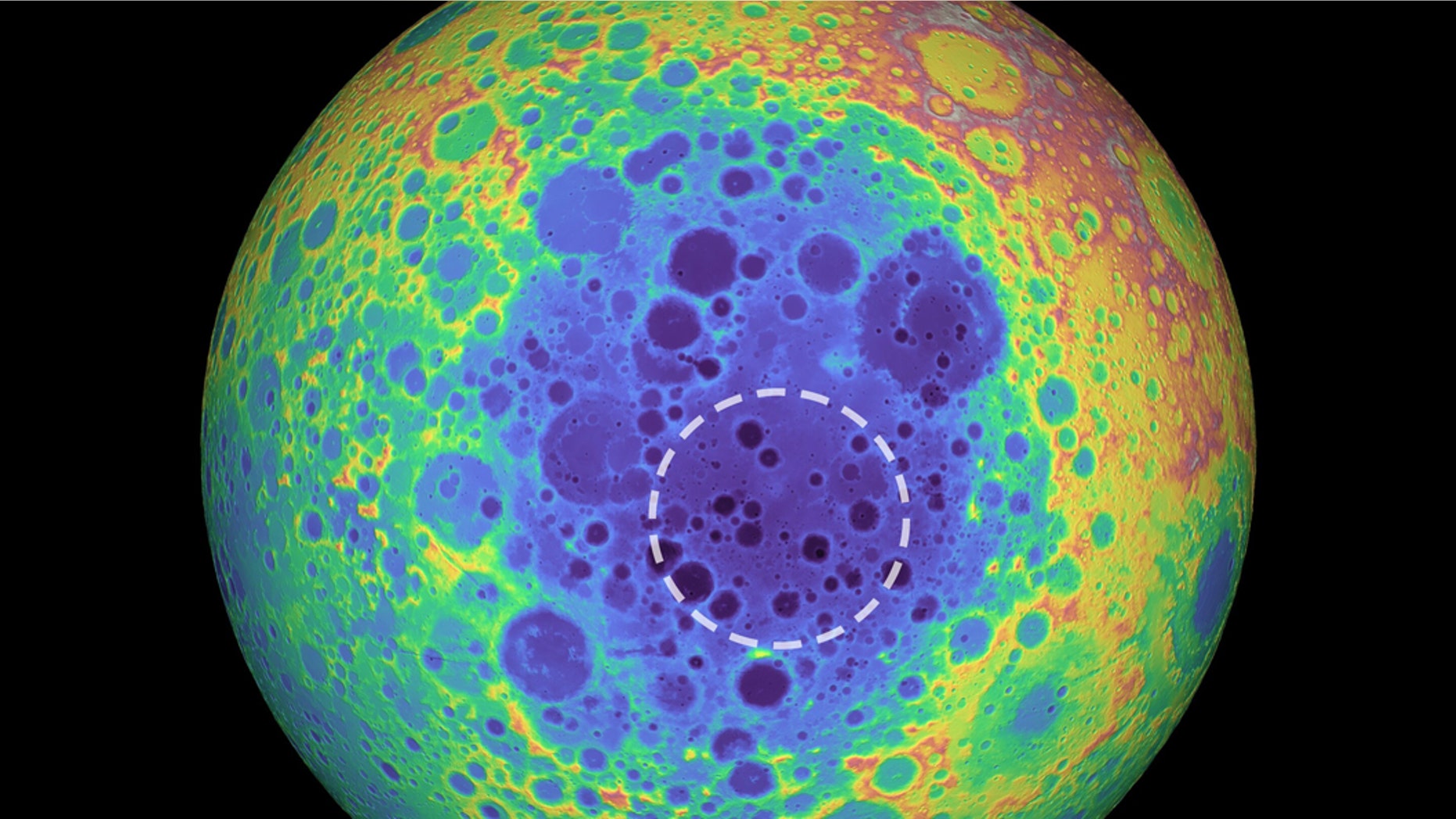
A large mass of unknown material has been discovered on the largest crater on the Moon and scientists aren't sure what it is.
According to an April 2019 study published in the journal Geophysical Research Letters, the researchers believe the mass could contain metal from an asteroid that crashed into the celestial satellite, which resulted in the aforementioned crater, known as the Lunar South Pole-Aitken basin.
"Imagine taking a pile of metal five times larger than the Big Island of Hawaii and burying it underground. That's roughly how much unexpected mass we detected," lead author Dr. Peter James, assistant professor of planetary geophysics at Baylor University, said in a statement.
In addition to being the largest crater on the Moon, the Pole-Aitken basin is also one of the largest known impact craters in the solar system and is thought to be approximately 4 billion years old.
James and his team looked at data from NASA's Gravity Recovery and Interior Laboratory (GRAIL) mission and the changes in gravity they discovered surprised them.
"When we combined that with lunar topography data from the Lunar Reconnaissance Orbiter, we discovered the unexpectedly large amount of mass hundreds of miles underneath the South Pole-Aitken basin," James said. "One of the explanations of this extra mass is that the metal from the asteroid that formed this crater is still embedded in the Moon's mantle."
The anomaly – "whatever it is, wherever it came from," James added – is weighing down the basin floor by more than half a mile. The team of researchers ran computer simulations that show the iron-nickel core of an asteroid could have been placed into the upper mantle of the Moon following impact.