Google Pixel 10 series

limmk

High Supremacy Member
Joined
Jul 5, 2001
Messages
41,191
Reaction score
8,166

Google Pixel 10: First phone case allegedly provides an early look at the camera design​


It’s still early days in the Pixel 10 leak cycle: besides a major specs leak about the Tensor G5 and G6, we haven’t even seen any leaked CAD models. But it won’t be long before more information trickles out. The first Pixel 10 case has appeared in the wild, offering some clues regarding the design of Pixel 9’s successor.

This really came as a surprise. Sonny Dickson, the X user usually known for Apple leaks, has shared an initial image of a phone case allegedly designed to fit the Pixel 9’s successor (see below). It is anyone’s guess whether this is real or not. Although we are currently unable to verify this, the leaker has a good reputation at least in the Apple community. It remains to be seen whether his Google leaks are just as reliable.

At any rate, the case looks very similar to those intended for the Pixel 9 (for comparison, here is the official cases for the Google Pixel 9 and 9 Pro on Amazon). The upper quarter of the case features a large horizontal cutout for the camera visor, which has always seen some slight change in appearance over the previous few Pixel generations. The case design suggests that the general Pixel camera design is going to stay the same. However, this naturally doesn’t reveal any details regarding potential changes in features.

Additionally, the leak suggests that the Pixel 10’s chassis will continue to sport rounded corners. Not much else can be gleaned from this leak right now. Of course, we can’t rule out the possibility that some third-party company is brazen enough to “think up” a Pixel 10 without solid basis. It is certainly unusual for pictures of a finished case to make the rounds before leakers like @OnLeaks provide their CAD-based renderings. Perhaps this marks the start of further design leaks for the Pixel 10 and 10 Pro in the upcoming weeks.

An early Pixel 10 case allegedly reveals more information about the back of the Pixel 9 successor.

Source(s)​

Sonny Dickson, notebookcheck
 

limmk

High Supremacy Member
Joined
Jul 5, 2001
Messages
41,191
Reaction score
8,166


TL;DR

  • Google is testing the MediaTek T900 modem in its Pixel 10 prototypes.
  • Not much is currently known about the modem, but it should support 3GPP Release 17 5G specification.


Over the past month, we’ve seen a lot of information about the future, fully in-house designed Google Tensor chips leak, including full specs of the Tensor G5 and Tensor G6, a list of features they might enable, and more. We went from knowing basically nothing to having a good idea of what the future Tensor chips and the Pixel handset they’ll power will have to offer.

One important unanswered question, however, is what modem would be used in the future Pixels. All the devices using Tensor chips designed in collaboration with Samsung used Exynos modems, presumably because they were the easiest to integrate, but with Google going fully independent, it doesn’t necessarily have a reason to continue that practice.

We finally got an answer to this question and it’s not what anybody expected. Thanks to a source inside Google, Android Authority has learned Google’s plans regarding the modem it intends to use in the upcoming Pixel 10 series.

Why MediaTek?​

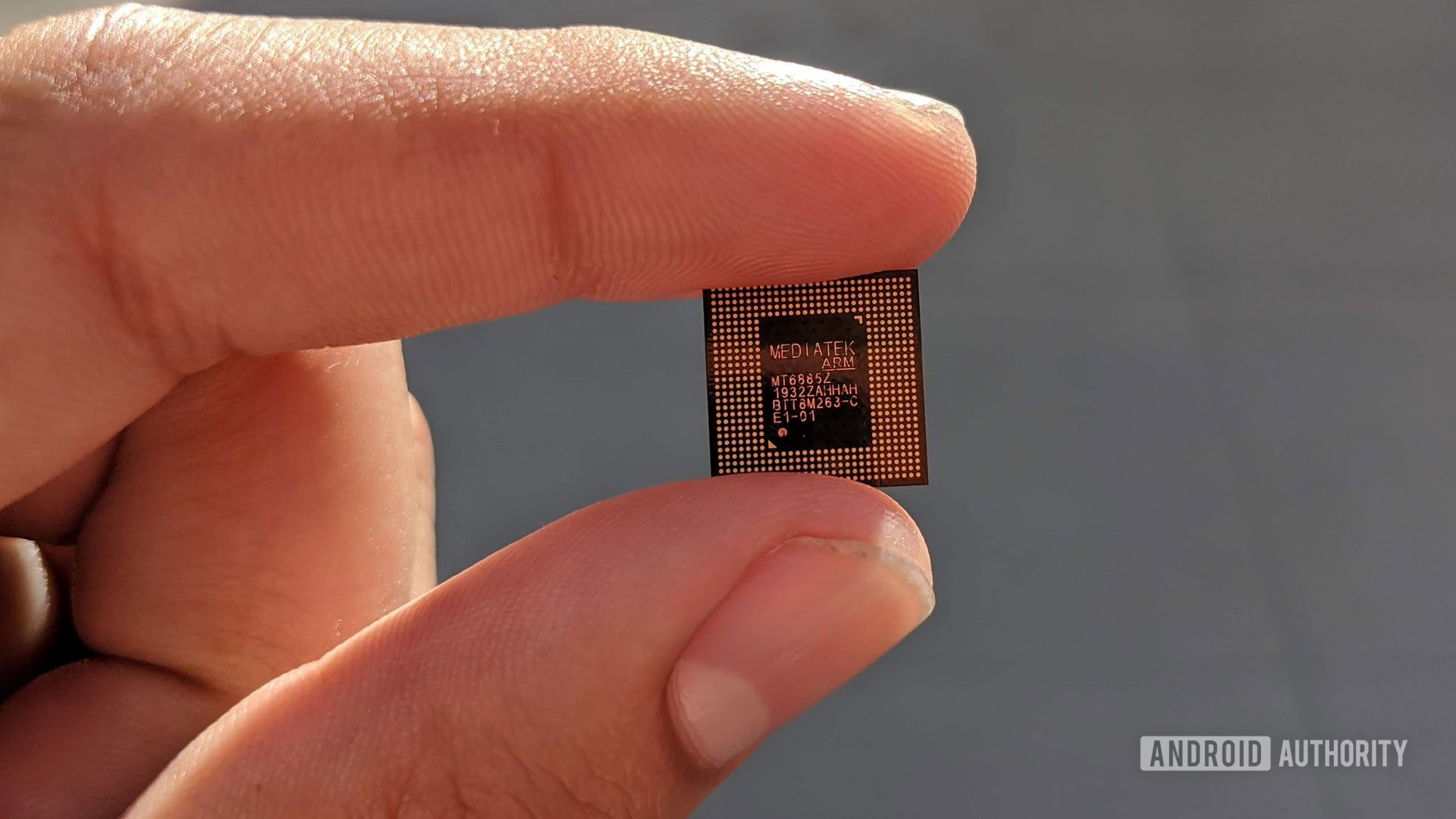
MediaTek 5G chipset.


There are currently only three companies with modern, 5G-capable modems: Samsung (S.LSI), Qualcomm, and MediaTek. Google didn’t have too much choice there, unless it wanted to build its own solution, which even with a premade 5G IP block, like Ceva’s PentaG2, would be risky and much more expensive.

Before making its decision, Google evaluated all the available options, including Qualcomm’s Snapdragon X75 modem, which is the same one used in Apple’s iPhone 16 series. Speaking of Apple, it plans to move away from Qualcomm to its inhouse modems in the coming years as well. Finally, though, for one reason or another, Google decided to go with MediaTek’s (not yet released) T900 modem.

Even after evaluating a modem from Qualcomm, Google decided to use one from MediaTek.

Unfortunately, we know basically nothing about this new modem, except that it’s based on MediaTek’s “M85” generation modem IP. For reference, “M70” supported 3GPP Release 15 5G specification, “M80” upgraded to Release 16, so it’s safe to assume “M85” will support Release 17 or even newer.

Unfortunately, we don’t even really know that much about MediaTek’s previous generation T800 modem to make assumptions. While we do have a specs sheet, it doesn’t tell us much (e.g., if it’s manufactured on a Samsung or TSMC’s process node). As far as I can tell no device has actually used it either.

Will the new modem be any good?​

Google Pixel 9 Pro XL Pixel 9 standing


We can’t really know how good the T900 will be, but I would cautiously assume that it will be at least okay. After all, Google is well aware that thermals and battery life are some of the largest issues with Tensor-based Pixels, in large part due to their modems, and I doubt they’d let the disaster that was the Pixel 6 happen again.

A MediaTek modem is definitely not what most expected — or wanted. A lot of you will probably even criticize this move after reading this article and declare the Pixel 10 a dead-on-arrival product, but I think it’s way too early to say anything like that. We basically don’t know anything specific about this modem and neither do we know much about how Qualcomm’s external modems perform, as the only devices using them are iPhones. Not to mention that even Samsung, heavily criticized by many, managed to release a relatively decent modem — the Exynos Modem 5400 — and as a result of that, the Pixel 9 series has a pretty solid battery life.

Ultimately, we’ll have to wait and see how things look when Google releases the Pixel 10 series, but I doubt it will be anywhere near bad. Google makes the choices it does for a reason, even if it sometimes doesn’t seem like it, and this definitely isn’t an exception.
 
Last edited:

Loser

Arch-Supremacy Member
Joined
May 7, 2019
Messages
23,592
Reaction score
10,487
TL;DR
  • Google is testing the MediaTek T900 modem in its Pixel 10 prototypes.
  • Not much is currently known about the modem, but it should support 3GPP Release 17 5G specification.


Over the past month, we’ve seen a lot of information about the future, fully in-house designed Google Tensor chips leak, including full specs of the Tensor G5 and Tensor G6, a list of features they might enable, and more. We went from knowing basically nothing to having a good idea of what the future Tensor chips and the Pixel handset they’ll power will have to offer.

One important unanswered question, however, is what modem would be used in the future Pixels. All the devices using Tensor chips designed in collaboration with Samsung used Exynos modems, presumably because they were the easiest to integrate, but with Google going fully independent, it doesn’t necessarily have a reason to continue that practice.

We finally got an answer to this question and it’s not what anybody expected. Thanks to a source inside Google, Android Authority has learned Google’s plans regarding the modem it intends to use in the upcoming Pixel 10 series.

Why MediaTek?​

MediaTek 5G chipset.


There are currently only three companies with modern, 5G-capable modems: Samsung (S.LSI), Qualcomm, and MediaTek. Google didn’t have too much choice there, unless it wanted to build its own solution, which even with a premade 5G IP block, like Ceva’s PentaG2, would be risky and much more expensive.

Before making its decision, Google evaluated all the available options, including Qualcomm’s Snapdragon X75 modem, which is the same one used in Apple’s iPhone 16 series. Speaking of Apple, it plans to move away from Qualcomm to its inhouse modems in the coming years as well. Finally, though, for one reason or another, Google decided to go with MediaTek’s (not yet released) T900 modem.

Even after evaluating a modem from Qualcomm, Google decided to use one from MediaTek.

Unfortunately, we know basically nothing about this new modem, except that it’s based on MediaTek’s “M85” generation modem IP. For reference, “M70” supported 3GPP Release 15 5G specification, “M80” upgraded to Release 16, so it’s safe to assume “M85” will support Release 17 or even newer.

Unfortunately, we don’t even really know that much about MediaTek’s previous generation T800 modem to make assumptions. While we do have a specs sheet, it doesn’t tell us much (e.g., if it’s manufactured on a Samsung or TSMC’s process node). As far as I can tell no device has actually used it either.

Will the new modem be any good?​

Google Pixel 9 Pro XL Pixel 9 standing


We can’t really know how good the T900 will be, but I would cautiously assume that it will be at least okay. After all, Google is well aware that thermals and battery life are some of the largest issues with Tensor-based Pixels, in large part due to their modems, and I doubt they’d let the disaster that was the Pixel 6 happen again.

A MediaTek modem is definitely not what most expected — or wanted. A lot of you will probably even criticize this move after reading this article and declare the Pixel 10 a dead-on-arrival product, but I think it’s way too early to say anything like that. We basically don’t know anything specific about this modem and neither do we know much about how Qualcomm’s external modems perform, as the only devices using them are iPhones. Not to mention that even Samsung, heavily criticized by many, managed to release a relatively decent modem — the Exynos Modem 5400 — and as a result of that, the Pixel 9 series has a pretty solid battery life.

Ultimately, we’ll have to wait and see how things look when Google releases the Pixel 10 series, but I doubt it will be anywhere near bad. Google makes the choices it does for a reason, even if it sometimes doesn’t seem like it, and this definitely isn’t an exception.

GG, wait for pixel 11 liao. :o
 

limmk

High Supremacy Member
Joined
Jul 5, 2001
Messages
41,191
Reaction score
8,166


Android Authority’s latest Pixel leak reveals that, given its choice, Google isn’t opting for Samsung or Qualcomm to build the modem in its upcoming Pixel 10 smartphone. No, it’s chosen MediaTek as its next radio partner, specifically the as-yet-unannounced T900 modem. In related news, Apple is reportedly gearing up to drop Snapdragon in its upcoming iPhone SE 4 and possibly some iPads in 2025, with plans to replace Qualcomm entirely as soon as 2027. Two major household electronics brands are looking at options outside of the US baseband giant in the next couple of years.

Both companies may have slightly different motives, but the loss of Apple will be acutely painful for the US’s biggest 5G phone silicon supplier. It’s worth pointing out that Apple’s iPhone commands over half the US market share at recent counts. Combined with powering Samsung Galaxy flagships in the US, Qualcomm’s modems are currently found in a considerable number of flagship phones in its home country — not to mention the rest of the world, where iPhones and Chinese Android flagships sell in abundance.

Although Qualcomm has a diverse product portfolio these days, it cut its teeth in mobile based on the strength of its baseband portfolio. The company has remained a key player in the 5G transition, with close ties to major phone brands and carriers, including Verizon. Losing two of the US’s more recognizable phone brands will undoubtedly sting, leaving it much more reliant on application processor sales in the Android market (and its extensive portfolio of networking patents, of course). Exactly how this plays out is yet to be seen, however, as Apple’s modem developments have been teased and delayed for years now.

Apple has long been trying to break away with custom modems, and the time is nearing.

Still, Apple has a variety of reasons for wanting to bring modem development in house. The high costs of a key component for its most prized products is an obvious one, although pursuing custom 5G modems isn’t necessarily a cheap option. Apple paid around $1 billion for Intel’s defunct modem business in 2019 and has yet to see a return after years of reported development issues and tiptoeing around Qualcomm’s extensive patent portfolio. Apple’s first 5G modem isn’t expected to be all that spectacular either and will likely be a downgrade on Qualcomm’s current best. It won’t support mmWave technology, for instance, making it a dud for major US networks like Verizon. Apple is still a few years away, at least, from realizing full modem independence.


Still, Apple has paid Qualcomm several billions in royalties over the past decade and has a deal in place until 2027, so it could be looking for more favorable financial terms from then on out. Apple also reportedly expects that it can best Qualcomm’s technology in the long run, with superior SAR limits, better support satellite capabilities, and efficiency improvements, but it would say that. Still, Apple is looking to make significant changes to its iPhone modem setup that it can’t simply buy off the shelf from elsewhere.

Apple has a growing portfolio that could all benefit from in-house radio connectivity.

Further down the line, there are markets beyond smartphones. Bringing 4G/5G capabilities to the MacBook series would close that particular gap with connected Windows PCs. The Vision Pro may be a precursor to more portable augmented reality glasses that would benefit from data connectivity. Automotive, wearables, you name it, you can stick a modem in it these days, and Apple would undoubtedly rather keep those profits than hand them to a key rival.

Bringing development in-house will, in theory, allow Apple to scale its design to meet various product segments more cost-effectively. Integrating its modem into its processor silicon will be the key milestone to make 5G widespread across its products, but once the modem is sat alongside Apple’s custom CPU, GPU, and NPU smarts, it’ll have a full-house (it’s working on Bluetooth and Wi-Fi for 2025 too). Furthermore, a modem is just the right place to build in technologies to assist with tighter integration between devices and level up Apple’s Continuity. Qualcomm has a similar idea with Snapdragon Seamless, but we’re yet to see it make an appearance — a perpetual problem with some of Qualcomm’s more interesting ideas.

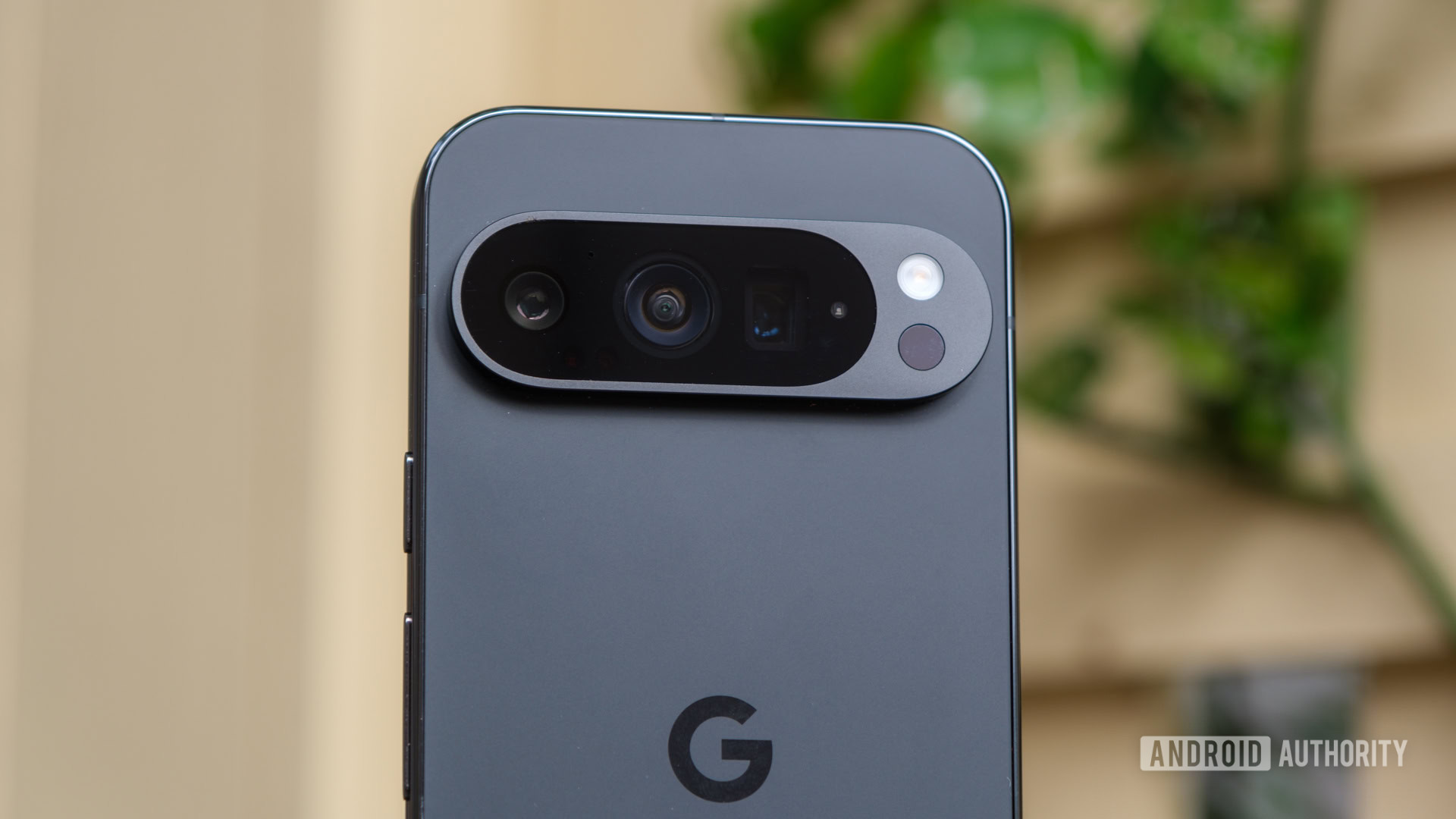
Google Pixel 9 Pro cameras


As for Google, it’s looking for a high-end partner after mixed success with Samsung’s Exynos modems paired with its Tensor chipsets. Qualcomm has long been considered the premium option and would have been many people’s go-to Exynos alternative, but if reports about the cost of its mobile processors are anything to go by, its high-end options are becoming increasingly expensive. Area, power, and other considerations will undoubtedly factor into decisions at team Tensor, as well as the price to obtain cutting-edge features like satellite connectivity.

Unfortunately, we don’t know anything about MediaTek’s T900 to really compare it against Qualcomm’s current best. However, MediaTek highlights that its current T800 model is highly power efficient, with integrated power and transceiver components to ensure a small footprint. It supports both sub-6Ghz and mmWave, making it suitable for global and US markets. While performance will obviously be key, the T800 is a premium-tier option, and the T900 will be better still.

Price and performance are likely key factors in Google shopping around.

Despite this, MediaTek is considered the more affordable player in the SoC and modem markets, and leaked documents recently highlighted that the cost of production is particularly important for Google’s goals with next-gen Tensor products. Of course, we don’t know the ins and outs of any Google/MediaTek deal, but it’s easy enough to piece the above together for Google’s benefit. For MediaTek, scoring a major US brand would undoubtedly be a big win for Taiwan’s finest — too often overlooked outside of Chinese brands.

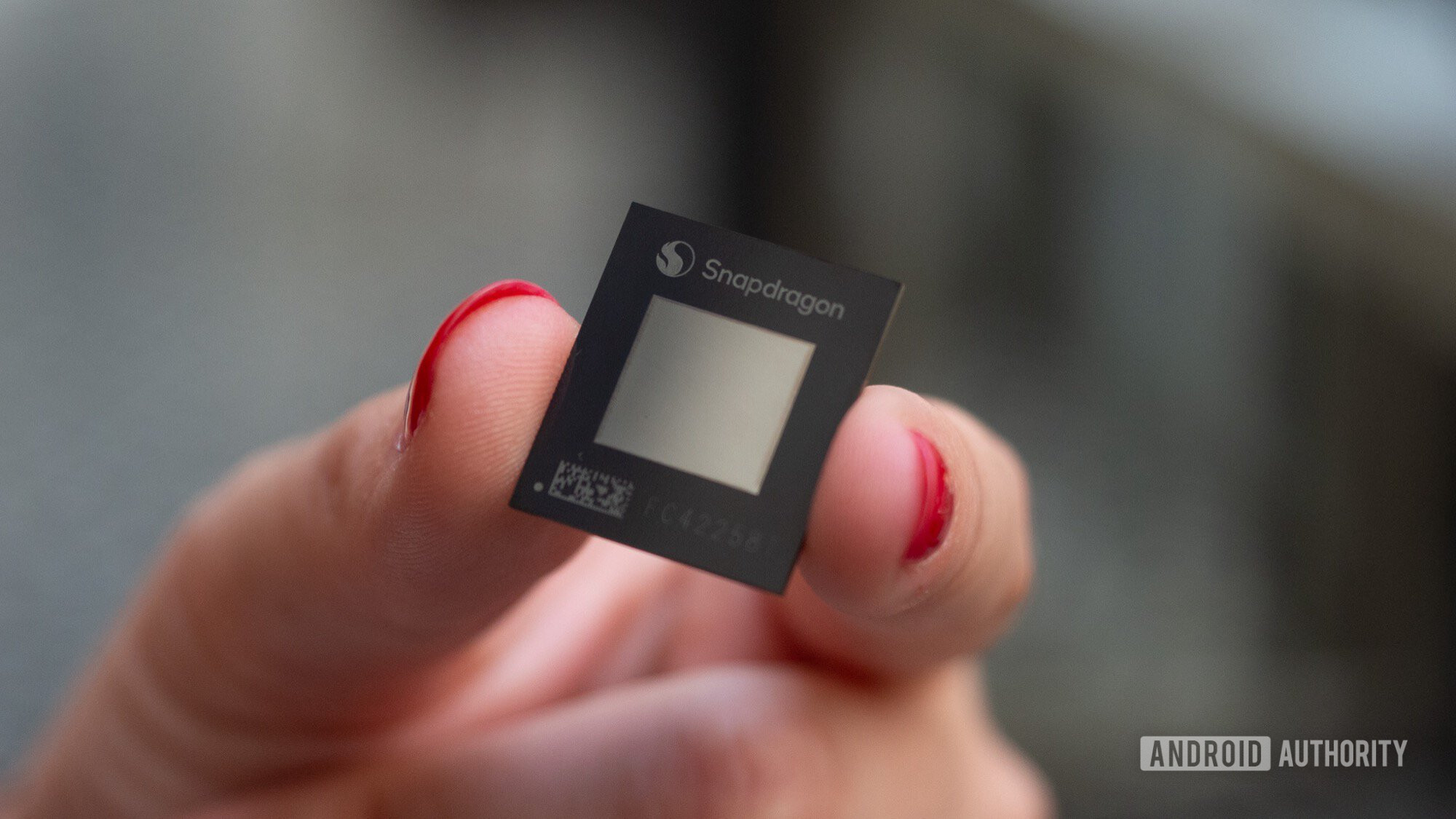
qualcomm snapdragon x plus chip in hand


Apple’s custom modem ambitions and Google’s pivot to MediaTek look set to mark a sharp reduction in leading phone brands’ reliance on Qualcomm hardware, but the road ahead is uncertain and fraught with challenges for both companies.

Apple’s potential for cost savings and tighter hardware-software integration may come at the price of early performance sacrifices. For Google, MediaTek’s value proposition could deliver affordability and efficiency, but it will need to prove itself in real-world performance against Qualcomm’s well-established flagship products.

These upcoming shifts could reshape the North American and even global mobile industry. However, Qualcomm still has plenty of lucrative 4G and 5G patent license agreements that’ll keep it a significant baseband player even if it’s not selling as many modems directly. It has already diversified its offerings well beyond modems as well, but future growth may now hinge on emerging technologies like automotive and Android XR rather than hitching a ride with some of the household smartphone brands.

 

Loser

Arch-Supremacy Member
Joined
May 7, 2019
Messages
23,592
Reaction score
10,487


Android Authority’s latest Pixel leak reveals that, given its choice, Google isn’t opting for Samsung or Qualcomm to build the modem in its upcoming Pixel 10 smartphone. No, it’s chosen MediaTek as its next radio partner, specifically the as-yet-unannounced T900 modem. In related news, Apple is reportedly gearing up to drop Snapdragon in its upcoming iPhone SE 4 and possibly some iPads in 2025, with plans to replace Qualcomm entirely as soon as 2027. Two major household electronics brands are looking at options outside of the US baseband giant in the next couple of years.

Both companies may have slightly different motives, but the loss of Apple will be acutely painful for the US’s biggest 5G phone silicon supplier. It’s worth pointing out that Apple’s iPhone commands over half the US market share at recent counts. Combined with powering Samsung Galaxy flagships in the US, Qualcomm’s modems are currently found in a considerable number of flagship phones in its home country — not to mention the rest of the world, where iPhones and Chinese Android flagships sell in abundance.

Although Qualcomm has a diverse product portfolio these days, it cut its teeth in mobile based on the strength of its baseband portfolio. The company has remained a key player in the 5G transition, with close ties to major phone brands and carriers, including Verizon. Losing two of the US’s more recognizable phone brands will undoubtedly sting, leaving it much more reliant on application processor sales in the Android market (and its extensive portfolio of networking patents, of course). Exactly how this plays out is yet to be seen, however, as Apple’s modem developments have been teased and delayed for years now.

Apple has long been trying to break away with custom modems, and the time is nearing.

Still, Apple has a variety of reasons for wanting to bring modem development in house. The high costs of a key component for its most prized products is an obvious one, although pursuing custom 5G modems isn’t necessarily a cheap option. Apple paid around $1 billion for Intel’s defunct modem business in 2019 and has yet to see a return after years of reported development issues and tiptoeing around Qualcomm’s extensive patent portfolio. Apple’s first 5G modem isn’t expected to be all that spectacular either and will likely be a downgrade on Qualcomm’s current best. It won’t support mmWave technology, for instance, making it a dud for major US networks like Verizon. Apple is still a few years away, at least, from realizing full modem independence.


Still, Apple has paid Qualcomm several billions in royalties over the past decade and has a deal in place until 2027, so it could be looking for more favorable financial terms from then on out. Apple also reportedly expects that it can best Qualcomm’s technology in the long run, with superior SAR limits, better support satellite capabilities, and efficiency improvements, but it would say that. Still, Apple is looking to make significant changes to its iPhone modem setup that it can’t simply buy off the shelf from elsewhere.

Apple has a growing portfolio that could all benefit from in-house radio connectivity.

Further down the line, there are markets beyond smartphones. Bringing 4G/5G capabilities to the MacBook series would close that particular gap with connected Windows PCs. The Vision Pro may be a precursor to more portable augmented reality glasses that would benefit from data connectivity. Automotive, wearables, you name it, you can stick a modem in it these days, and Apple would undoubtedly rather keep those profits than hand them to a key rival.

Bringing development in-house will, in theory, allow Apple to scale its design to meet various product segments more cost-effectively. Integrating its modem into its processor silicon will be the key milestone to make 5G widespread across its products, but once the modem is sat alongside Apple’s custom CPU, GPU, and NPU smarts, it’ll have a full-house (it’s working on Bluetooth and Wi-Fi for 2025 too). Furthermore, a modem is just the right place to build in technologies to assist with tighter integration between devices and level up Apple’s Continuity. Qualcomm has a similar idea with Snapdragon Seamless, but we’re yet to see it make an appearance — a perpetual problem with some of Qualcomm’s more interesting ideas.

Google Pixel 9 Pro cameras


As for Google, it’s looking for a high-end partner after mixed success with Samsung’s Exynos modems paired with its Tensor chipsets. Qualcomm has long been considered the premium option and would have been many people’s go-to Exynos alternative, but if reports about the cost of its mobile processors are anything to go by, its high-end options are becoming increasingly expensive. Area, power, and other considerations will undoubtedly factor into decisions at team Tensor, as well as the price to obtain cutting-edge features like satellite connectivity.

Unfortunately, we don’t know anything about MediaTek’s T900 to really compare it against Qualcomm’s current best. However, MediaTek highlights that its current T800 model is highly power efficient, with integrated power and transceiver components to ensure a small footprint. It supports both sub-6Ghz and mmWave, making it suitable for global and US markets. While performance will obviously be key, the T800 is a premium-tier option, and the T900 will be better still.

Price and performance are likely key factors in Google shopping around.

Despite this, MediaTek is considered the more affordable player in the SoC and modem markets, and leaked documents recently highlighted that the cost of production is particularly important for Google’s goals with next-gen Tensor products. Of course, we don’t know the ins and outs of any Google/MediaTek deal, but it’s easy enough to piece the above together for Google’s benefit. For MediaTek, scoring a major US brand would undoubtedly be a big win for Taiwan’s finest — too often overlooked outside of Chinese brands.

qualcomm snapdragon x plus chip in hand


Apple’s custom modem ambitions and Google’s pivot to MediaTek look set to mark a sharp reduction in leading phone brands’ reliance on Qualcomm hardware, but the road ahead is uncertain and fraught with challenges for both companies.

Apple’s potential for cost savings and tighter hardware-software integration may come at the price of early performance sacrifices. For Google, MediaTek’s value proposition could deliver affordability and efficiency, but it will need to prove itself in real-world performance against Qualcomm’s well-established flagship products.

These upcoming shifts could reshape the North American and even global mobile industry. However, Qualcomm still has plenty of lucrative 4G and 5G patent license agreements that’ll keep it a significant baseband player even if it’s not selling as many modems directly. It has already diversified its offerings well beyond modems as well, but future growth may now hinge on emerging technologies like automotive and Android XR rather than hitching a ride with some of the household smartphone brands.

Good good, Qualcomm getting arrogant with pricing also.

More competition is good for consumers.
 

limmk

High Supremacy Member
Joined
Jul 5, 2001
Messages
41,191
Reaction score
8,166
🤮

The Google Pixel 10 series will be released in 2025. A new concept design has emerged regarding the highly anticipated device. Google's next flagship smartphone has expanded our imagination with a video published by the 4RMD channel. Concept images of the device, which will have a vertical camera module, have attracted great interest. Here are the details...

Google Pixel 10 Pro concept offers eye-catching design

The 2-minute video shows a device with thinner edges, rounded corners, and flat bezels, similar to what you see on the iPhone. The rear brings major changes, highlighting a vertical camera module that will house three photo sensors, the flash, and the Google logo.


In the concept design of the Google Pixel 10 Pro model, the camera module is positioned in the middle even at the top of the device and has three lenses: the main lens 64 MP, the ultra-wide lens 64 MP and the telephoto 64 MP, with the promise of zooming up to 50x.

In terms of performance, the new Pixel model will be equipped with the Tensor G5 chip. In addition, the published concept shows four color variations for the smartphone, in addition to the Gorilla Glass Victus 2 protection for the 6.9-inch display, which has a brightness of 4,000 nits for viewing even in strong light. Also highlighted in this concept is the battery, which exhibits a capacity of 5,300 mAh.

// 4RMD, Shiftdelete
 
Last edited:

halocast

Great Supremacy Member
Joined
Feb 19, 2005
Messages
58,222
Reaction score
1,630
if only google pixel 10 use the snapdragon 8 elite :o

Looking forward to what tensor G5 can do for the P10.
 

limmk

High Supremacy Member
Joined
Jul 5, 2001
Messages
41,191
Reaction score
8,166

Exclusive: Google Pixel 10 series model numbers leaked in GSMA Database​


Main Image

Google’s upcoming Pixel 10 series is generating significant excitement as leaks continue to emerge. All models of the Google Pixel 10 series (except the Pixel 10A) have been listed in the GSMA database and the model numbers of the products have officially leaked. The SmartPrix team will be revealing the model numbers of the Google Pixel 10 series in this article. This information is taken from the GSMA database and the information is highly reliable.

Google Pixel 10 series showed up in GSMA database​

The Google Pixel 10 series is currently expected to include four models: Pixel 10, Pixel 10 Pro, Pixel 10 Pro XL, and Pixel 10 Pro Fold. Each of these devices has now been spotted in the GSMA database, revealing their respective model numbers. The Pixel 10A hasn’t been added to the database yet, but that doesn’t mean the device won’t be unveiled. We expect the new Pixel 10A to be added to the IMEI database in a few months. With the information we have for now, we will reveal which model numbers the devices in the Google Pixel 10 series will have.

Pixel-10-GLBW0.png


These model numbers provide strong evidence that Google has officially registered the upcoming Pixel devices, making this one of the most concrete leaks regarding the Pixel 10 series.
  • Google Pixel 10 will have model numbers “GLBW0″, and “GL066”,
  • Google Pixel 10 Pro will have model numbers “G4QUR”, and “GN4F5”.
  • Google Pixel 10 Pro XL will have model number “GUL82”.
  • Google Pixel 10 Pro Fold will have model number “GU0NP”.
These registrations in the GSMA database indicate that Google is finalizing regulatory approvals for its next-generation smartphones. As these records stem directly from Google’s official filings, the record provides official confirmation of the existence and impending launch of the Pixel 10 series.

Google Pixel 10 lineup’s most important upgrade will be the Tensor G5​

One of the most anticipated upgrades in the Pixel 10 series is its new processor. Google has partnered with Samsung in the past to produce its Tensor SoCs. However, previous SoCs like the Tensor G4 struggled to match the performance and efficiency of competitors’ flagship chipsets.

Previous leaks from Android Authority suggest that Google is shifting production to TSMC for the first time with the Pixel 10 series. We expect the Tensor G5 SoC to be manufactured by TSMC to deliver significant improvements in both performance and power efficiency. This marks a crucial step for Google to overcome the limitations faced by previous Tensor chips.

Going back in time, there were also significant performance differences between Snapdragon 8 Gen 1 and Snapdragon 8+ Gen 1. The TSMC-manufactured Snapdragon 8+ Gen 1 ran cooler and faster. Qualcomm contracted the production of the Snapdragon 888 and Snapdragon 8 Gen 1 to Samsung. These SoCs suffered from overheating and power consumption issues.

The company realized this and decided to have TSMC manufacture its new flagship SoCs, and the Snapdragon 8+ Gen 1 was manufactured by TSMC. Tensor G5 should offer significant performance and efficiency improvements compared to Tensor G4. The new Pixel 10 series is expected to be cooler and faster than the previous series. This will also be reflected in-game performance.

Here’s the expected launch date of the new Pixel family​

We expect Google’s Pixel 10 series to be unveiled in August 2025. With confirmed model numbers and an improved Tensor G5 processor, the Pixel 10 series is shaping up to be a major upgrade over its predecessors. Still a long 6-7 months away from the launch of the products, and we expect to have more leaks about the Google Pixel 10 series as time goes on.

// smartprix
 

limmk

High Supremacy Member
Joined
Jul 5, 2001
Messages
41,191
Reaction score
8,166


This is the Google Pixel 10, which is expected to launch in August 2025.

Thanks to Onleaks, we are able to give you a first look at the Google Pixel 10 and also confirm its approximate dimensions. Google is sticking with a 6.3-inch display again this year with the Pixel 10, and it will have a triple rear camera, according to the CADs that Onleaks is working off of.

Speaking of dimensions, the Pixel 10 will have dimensions of 152.8 x 72 x 8.6mm. The camera module will measure in at an additional 3.4mm, making it 12mm thick in total. That is roughly the exact same as the Pixel 9, making it a hair thicker at 8.6mm versus the 8.5mm thickness on the Pixel 9.

Since the screen size is staying the same, and dimensions are virtually the same, it appears that the bezels will be staying the same too. They aren’t too bad on the Pixel 9 and Pixel 9 Pro, but we always want to see thinner bezels on smartphones. At least Google has made the bezels symmetrical now with its latest Pixel devices.

Google is sticking with the flat sides and reverse power, volume button location​

As we can see in these renders, the Pixel 10 will be sticking with the flat sides once again, which do appear to be slightly curved at the edge, making it easier to hold onto. The Pixel 10 appears to be using matte sides once again. Google is also putting the power button above the volume rocker, which is the complete opposite of every other phone on the market today.

The Pixel 10, as we leaked back in September, is going to be code-named ‘Frankel’, and as we can tell so far, there’s not a lot of changes here. At least when it comes to the design. However, based on the timing of its release, it should at least launch with Android 16, since that will be launching in June. A full two months ahead of Google’s Pixel 10 launch.

Pixel 10 5K3
Pixel 10 5K2
Pixel 10 5K1
 

limmk

High Supremacy Member
Joined
Jul 5, 2001
Messages
41,191
Reaction score
8,166


Here is the Google Pixel 10 Pro. This year, it will be identical to what the Pixel 9 Pro was last year. All the way down to its dimensions. The Pixel 10 Pro is going to sport dimensions of 152.8 x 72 x 8.6mm, making it just a hair thicker than the Pixel 9 Pro, which was 8.5mm thick. It also sports the same size display at 6.3 inches.
Keen observers will also notice that these are the same dimensions and screen size that we published yesterday for the Google Pixel 10 leak. And that’s true. Just like with the Pixel 9 series, the Pixel 10 series will also sport a base and a pro model at the exact same sizes. The good news is that cases for either phone will fit both.

As we can see from these leaks, the Pixel 10 Pro will also sport a triple-camera setup, including a periscope telephoto camera. It also sports the power button above the volume rocker and glossy sides. This is something that smartphone makers tend to do, as they believe it makes the phone look higher-end, going with glossy sides. But in reality, it just makes the phone look disgusting after a few days if you like to use it without a case.

Pixel 10 Pro should be the first to sport a TSMC-manufactured Tensor chip​

The Pixel 10 series will be the first to use the new Tensor G5 which is expected to be manufactured by TSMC. Google had previously been using Samsung Foundry to manufacture their chipsets for Pixel, and it showed. Google had problems with overheating, the processor was pretty slow, and the modem was bad too. However, Google did fix the modem and mostly fixed the overheating issues with the Tensor G4 on the Pixel 9 series.

We are expecting some big gains in terms of performance on the Tensor G5, however, we also have to keep in mind that this chipset is being built specifically for the Pixel. Google is going to prefer AI performance over raw performance.

Pixel 10 Pro 5K3
Pixel 10 Pro 5K2
Pixel 10 Pro 5K1
 
Important Forum Advisory Note
This forum is moderated by volunteer moderators who will react only to members' feedback on posts. Moderators are not employees or representatives of HWZ Forums. Forum members and moderators are responsible for their own posts. Please refer to our Community Guidelines and Standards and Terms and Conditions for more information.
Top