Better to go for OT because your injured part(cast or splint) is inactive for a long time.
During army time I had operation and cast. After cast removed, the hand become like frozen.
OT will train you to reactivate and strengthen the injured part.
Also if your work and daily life require specific movement, OT will teach you how to better regain those activities.
If dont wanna waste too much money Just go for like 3 sessions to have an idea and ask (indirect) questions on what are they trying to do and achieve. Unfortunately, some of the older more lao jiao esp private ones do not like to do that, conflict of interest, and they know what you are trying to squeeze out. Your leg's tan lines might already be a give away even if you do not explicitly tell them what happened.
Usually, it is pretty easy one, in fact too easy for quite a few of us and we have been doing way tougher/advanced/broader stuff.
Better go for the first few sessions ba. At least until doc appointment.I had a cast for 5 weeks for my left wrist and then changed to splint (another 5 weeks till doc follow up).
So I take off my splint every night to wash my hand and rotate my wrist which the OT suggested
I would adopt a wait, see and self recovery approach.oh I wore the cast for 5 weeks and after ct scan shows the bone in my wrist joining back, doc allow me to wear splint for another 5 weeks till the next follow up with doc in Jan.
I have feeling doc will remove the splint based on the xray result so I don’t want to waste time to see the OT when I can rotate my wrist without pain and splint removed
furthermore see OT no Mc . If doc close my case in Jan I don’t want to take leave just to see OT
this is a nice pace! We live pretty close to each other!Happy new year 2026 .
Did a long run just now after checking wed 4d result! Wanted to do a 30km but in the end. Only 27km. But at least it was 1km more than my previous 26km done 2 weeks ago. I believe I didnt eat enough before that and also didn't consume any gel during the run. Just depend on plain water at 11km, 21km and 25km.
Despite out of 6 weeks due to injury . I still managed to clock almost 1500km in 2025. More than what I ran in 2024. I hope this year I can hit 2000km. Stay injury free and do a full marathon.
[url=https://ibb.co/SXSJbXFn]![]()
[/URL]
I remb U ran 3000km in the year 2025. Wow. I don't think I can hit this mileage. I have to retire and stop working to achieve thatthis is a nice pace! We live pretty close to each other!
I finally 'retired' my Nike Pegasus after today's morning jog. 3-year usage.
Gave it to the Bangla cleaner in my neighbourhood.
Ever since this LSD, i found my right feet tends to lean outwards, having discomfort around the metatarsal and tarsals areas when i wear shoes, and there are some discomfort at the inner talus area. There was more wearing out of my outer heel of the pair of running shoes in the above run. Looks like my supination on my right feet is getting worse.end the year and welcome 2026 with a 25.26km LSD.
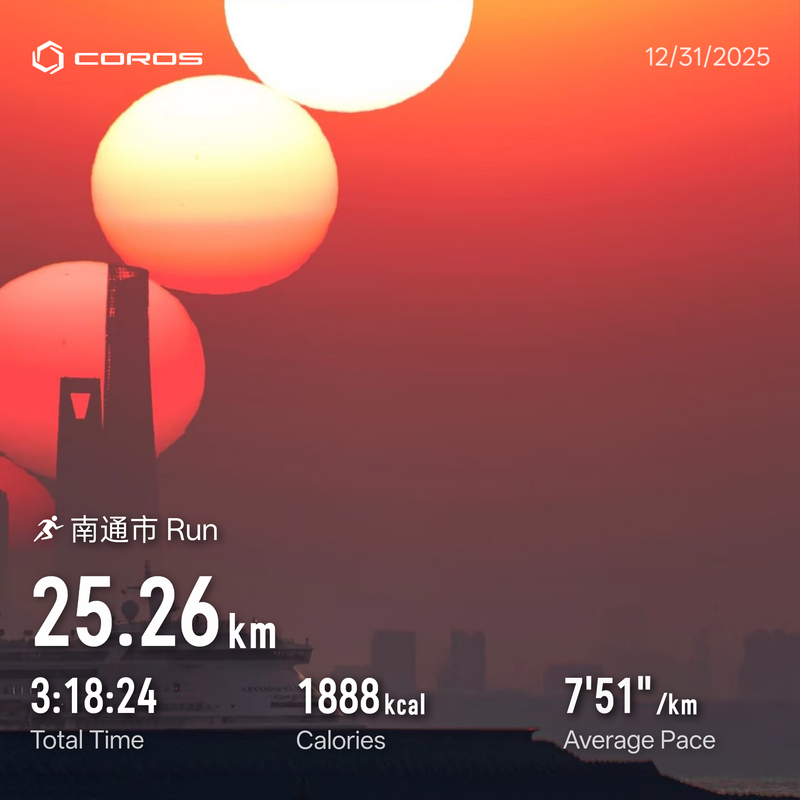
![]()
Ever since this LSD, i found my right feet tends to lean outwards, having discomfort around the metatarsal and tarsals areas when i wear shoes, and there are some discomfort at the inner talus area. There was more wearing out of my outer heel of the pair of running shoes in the above run. Looks like my supination on my right feet is getting worse.
Tried standing on just my right foot. The foot wobbles and leans outwards. I felt a dull discomfort in the tarsal (mid-foot) area.
GEMINI’S DIAGNOSIS:
The fact that your foot wobbles and causes dull mid-foot discomfort when you stand on one leg is a significant clinical sign. In podiatry, this is often a "software" problem (nerves and coordination) rather than just a "hardware" problem (bones).
Since this appeared suddenly, it is likely that your body is using compensatory supination. Your brain is subconsciously leaning your foot outward to protect an injured structure on the inner or middle part of your foot.
The fact that your foot wobbles and causes dull mid-foot discomfort when you stand on one leg is a significant clinical sign. In podiatry, this is often a "software" problem (nerves and coordination) rather than just a "hardware" problem (bones).
Since this appeared suddenly, it is likely that your body is using compensatory supination. Your brain is subconsciously leaning your foot outward to protect an injured structure on the inner or middle part of your foot.
1. "Functional" Instability & Proprioception
Your foot has thousands of tiny nerve endings (proprioceptors) that tell your brain where your foot is in space.
• The Wobble: This indicates that the sensory feedback loop is broken. The muscles that should keep you steady—specifically the peroneal muscles on the outside of your ankle—are likely "misfiring" or weakened.
• The Lean: If the Posterior Tibial Tendon (which supports your arch) is strained or inflamed, your body will lean outward to take the tension off that tendon. This is common in early-stage Posterior Tibial Tendon Dysfunction (PTTD).
2. Midtarsal Joint Stress
The tarsal bones (mid-foot) act as a "locking" mechanism to create a stable platform when you stand.
• The Dull Discomfort: A dull ache in this area during weight-bearing often points to a stress reaction (the precursor to a stress fracture) or a ligament strain in the Lisfranc or mid-tarsal joints. The wobble occurs because the "lock" isn't holding, and the bones are shifting slightly under your weight.
3. Tarsal Tunnel or Nerve Entrapment
The discomfort you feel at the inner talus (inner ankle bone) is exactly where the Tarsal Tunnel is located.
• If the nerve inside this tunnel (the posterior tibial nerve) is compressed or irritated, it can cause weakness in the small muscles of the foot. This weakness leads directly to that unstable, "wobbly" feeling when you try to balance.
Looks like old issue is back which X-ray & MRI couldn’t detect anything. Need to go back to basics of strengthening intrinsic muscles to correct the wobble and supination issue. Possibly have to stop running for a while.
thx for sharing.Not a pro, and I havent really looked into this but i know my shoes outer sides (front and heel) wear out faster than the inner. And i sometimes get metatarsal discomfort (niggle) which would then quickly turn into pain if i'd just continue for even a short 500m farther (you know, we usually heck it and dont stop at the first instance of a slight discomfort/niggle, 500m or 1km is like nothing also)...... when i go over-distance too fast/too much since i dont have much weekly volume. (which is unsurprising of coz). So that's why i just stay at the single digit km distances that i am most familiar and comfortable with.
But wierd thing is that past close to 3 years, i never get PF or AT or any of those running injuries. Not sure if S&C got anything to do with it coz i am really into calves for years now coz i wanna grow them. I only have this metatarsal pain thingy and 4X i kena a hamstring niggle dull discomfort bordering on slight pain at my upper hamstrings (might be tendon area) and also the occasional front lower patellar pain. Maybe the bones strength only get really stimulated by the repeated impact or what.